Book Review:  Cold Service by Robert B. Parker

Book Review: Cold Service by Robert B. Parker

This review is dedicated to the people of Boston.

I’m still surprised when I run across someone who is a mystery novel fan but who has never read a book by Robert B. Parker, creator of the Spenser novels that have come to define the mystery genre. His tough-as-nail-with-heart-of-gold private detective, whose first name we never know, is as much a part of the Boston landscape for me as Copley Square or Harvard Yard. The hardback editions of the books–and there around 40 in the series–include a map on the flyleaf with all of Spenser’s haunts labelled on it. Locke-Ober’s Restaurant, Faneuil Hall, his apartment on Marlborough Street and the oft-mentioned swan boats in Boston’s Public Gardens.

But we don’t just read Spenser mysteries for the Boston scenery. We read them for great characters, perfect plots, the crisp sparse language.  And Spenser’s firmly rooted code of ethics. He may be a private eye and a self-admitted thug, but he’s got a clear and believable moral compass and expresses it in a way we don’t see very often any more. COLD SERVICE is the Spenser novel that best sets out that code which includes loyalty to friends, standing your ground, but never striking without provocation.

In COLD SERVICE (the title is derived from the saying that revenge is a dish best served cold) his friend Hawk is shot and left for dead. Hawk was protecting a Boston bookie from a Ukrainian mob trying to muscle into the area. Needless to say the bookie and family are dead. With Spenser’s help, Hawk recovers, infiltrates the mob, and stops it from gaining a foothold in Boston.

Not many of the Spenser books revolve so closely around Hawk, although the enigmatic thug/hitman/bodyguard/boxer who plays wingman in almost all the books. Dialogue between them is nearly a work of art:

  • “They tell me I ain’t gonna die.”
  • “That’s what I heard.”
  • There were hard things being discussed, and not all of them aloud.

Without giving away the plot twists, let’s just say this is one of the best of the Spenser series, which is one of the best mystery series out there. The Ukrainian mob is opaque and brutish. Help comes but cannot be trusted.  Strange alliances must be forged to get at the mob, but they are tenuous at best.

The mayor of a small town near Boston holds the key; his administration is synonymous with corruption. Hawk’s quest for vengeance distances him from the surgeon he’s dating and his refusal to adjust his own code eventually pushes her away. Spenser understands Hawk’s code but will not pursue revenge in the same brute force way.

The end is a terrific nail-biter.

robert b. parker

Book Review: A Sunless Sea by Anne Perry

Book Review: A Sunless Sea by Anne Perry

William Monk is back and better than ever in A SUNLESS SEAthe latest novel by Anne Perry about the amnesiac cop-turned private detective-turned head of law enforcement on the Thames River in 1860’s London. As always, Perry’s vivid descriptions put us right there–aboard the river police boats, turning up our collar as Monk shivers and water plays about his feet, or on the streets of old London with a wide variety of the city’s denizens from high society spoiled girls to the prostitutes who ply their pathetic trade along the city’s wharves.

Plot + Twist

The book starts with a bang as Monk is drawn to the edge of the river by screams and discovers the body of a woman who has literally been gutted. His investigation into her identity and murderer leads to a curious set of circumstances and a perfect plot twist along the way that made me read the discovery twice. Like so many Monk books, the ending weaves together careful clues and secondary characters whose motive makes you curl your lip in dismay.

Pitch-Perfect Characters

All of the series regular characters get a part to play as Monk tries to unravel the mystery, as usual racing against time to provide evidence at a trial. Oliver Rathbone, the lawyer who defends the accused has his moments in the book as he copes with a dissolving marriage, his still unresolved feelings for Monk’s wife Hester, and damning evidence from a previous case he has inherited. Hester, who had more prominence in earlier Monk books but who still stands tall here as the crusading nurse, helps Monk, further defining her role as an independent woman in contrast to London high society’s gawd-help-us types.

Monk himself has gentled a bit from when we first met him in MAN WITHOUT A FACE. Perry demonstrates his emotional journey quite brilliantly. Read the Monk books with Daniel Day-Lewis in mind; I’m quite sure if the author had a movie dreamcast he’d be her pick for the role.

Bottom Line

Like some of Perry’s books, there is some repetition in A SUNLESS SEA as characters spend time mentally rehashing known facts, as if the author wants to keep reminding us of the action so far. But like all the Monk books, it is full of great characters, a well-done historical setting, and an outcome that leaves you wondering when the next book is coming out. A great addition to the series.

Sunless Sea

The Girl on the Cutting Room Floor

The Girl on the Cutting Room Floor

Book editing is a ruthless business. How much of a book gets rewritten when an author comes back to an old manuscript?

In the book editing case of HAT DANCE, the second Emilia Cruz novel coming 30 July, it looks like about 50% of what I wrote 18 months ago will hit the cutting room floor. Included in the discard party is female arson investigator Betty Estefan.

Bye bye, Betty

Betty uses her sexuality to get ahead; a direct contrast to Emilia whose approach is to fight her way through. But with a fully-loaded book plot (Fire! Hookers! Missing girl!) Betty’s antics  quickly became excess baggage.

But even mean girls need their 15 minutes of fame so I’m sharing Betty before I hit “delete” on her brief and troubled virtual life.

The set-up

  • An upscale Acapulco restaurant was set on fire, just as Emilia and her date were leaving. Acapulco’s famous mayor was in the restaurant at the time.
  • Chief Salazar is Acapulco’s chief of police
  • Rufino is the new chief of detectives
  • Obregon is head of the police union for the state of Guerrero
  • Silvio is the senior detective who’d actively opposed Emilia coming into the squadroom as the first and only female detective in Acapulco but now has to work closely with her

What got cut

Chief Salazar looked grim. His bald dome shone faintly yellow under the squadroom’s weak florescent lights. “Everything’s by the book this time, with our visiting arson expert showing the way.”  

The woman next to him stepped forward.  “Betty Estefan will be with us for a few weeks,” Salazar went on. “She’ll be leading the investigation and teaching arson investigation techniques to the rest of you. Betty’s from Mexico City, an instructor from the national bomberos training school.”

“Thank you, Chief Salazar,” Betty said without hesitation. “I’m looking forward to the challenge of this investigation and getting to know the detective team here in Acapulco.”

She was a curvaceous woman whose figure was contained by a plain white blouse and well-fitting but not tight jeans. Betty wore pale brown work boots, which Emilia figured were useful for walking through ashy fire scenes but which would be hellishly hot on Acapulco’s beaches and superheated tarmac. Blonde hair—dyed but it suited her well—was pulled back and wound into a bun at the nape of her neck. She was older than Emilia by a few years at least, probably in her mid-thirties. The look in her eyes as she scanned the detectives in the squadroom said she’d seen their types before.

“Betty will need some local expertise to assist in the investigation,” Obregon said. The union boss let his eyes sweep the squadroom and Emilia resisted the urge to hide under her desk. Obregon almost certainly had been involved in the drug smuggling mess that had gotten Rico killed. She had no proof, just her gut instinct. And Obregon knew it. Their last encounter some months ago had staked out the distance between them.

“Cruz was at the scene,” Chief Salazar stepped in front of Obregon and the unspoken power battle between the two men flared. Emilia could almost smell a gust of anger. Chief Salazar went on. “Silvio, you and Cruz help Betty settle in and take her over to El Tigre today.”

“Maybe that should be Lieutenant Rufino’s call,” Obregon said smoothly. Emilia had only ever seen him wear black and today was no exception; black leather coat, black jeans, a v-necked shirt that forced the eye up to his face and those high indio cheekbones.

Chief Salazar’s face tightened. He gestured at Rufino. “Get her situated. Make sure the front desk sergeant knows her phone number.”

Gomez, never one to feel the tension in the room, raised a hand. “Does Betty replace the two detectives we’re missing?” he drawled around the gum in his mouth.

Salazar pressed his lips together in annoyance. “No,” he said. “She’s only here temporarily.”

“But those positions are going to be filled, right?” Castro asked.

“Lieutenant Rufino–,” Salazar started.

“Chief Salazar’s recommendations will be reviewed by the union as soon as they’re available,” said Obregon.

The meeting ended on that knife-edge, the pressure they’d started with now cranked to fever pitch by the tension between Salazar and Obregon. Both left, Obregon ahead of Salazar who feigned a conversation with Rufino and Betty in order to loiter while the detectives all feigned busywork at their computers.

When Salazar left, Rufino and Betty went into the lieutenant’s office. As soon as the door closed behind them Gomez and Castro bolted up and started acting like idiots, talking about how Betty looked like she knew her way around, how they were going to make it with her.

“Shut the fuck up,” Silvio growled.

“Cruz pulling on your leash, Silvio?” Castro jeered.

Silvio half rose out of his chair and Castro and Gomez crashed their way out of the squadroom. They were going to mangle the El Pharaoh casino money laundering case, Emilia knew, and there was nothing she could do about it.

Ten minutes later, Betty came out of Lt.  Rufino’s office. She touched her hair, smoothing it back toward the blonde bun, then fingered the buttons running down the front of her blouse.

“I’m ready whenever you are,” she said to Silvio.

“Great,” Emilia said. She got her shoulder bag out of her desk drawer and stood up.

Betty ignored her. The woman’s attention was fixed on Silvio, a fuck you smile curving her lips. The top of the demure white blouse gaped wider than when Chief Salazar was in the room and Emilia saw the edge of a pink lace camisole.

Silvio stared back, his mouth tight.

Emilia permitted herself a tiny grin. This was going to be good.

If you liked “The Girl on the Cutting Room Floor” about book editing, please sign up to join me on this mystery writing journey! We’ll pick apart motive, catch a few killers, have a margarita or two. And if you are worried about privacy, rest assured your email will never be shared.

You may also like

cutting room

The Art of Travel Without a Camera

The Art of Travel Without a Camera

The art of travel is being able to create memories. But how can we relive the experiences and relationships of an exciting or romantic or never-again adventure? Think outside the camera–the right postcard can be more of a memory-maker than all those digital photos that never leave the device.

Travel + Postcards

When I was younger and couldn’t afford to take alot of pictures I found myself traveling through Europe on a student budget. It was the era of 35mm cameras  and the cost to develop pictures was out of my reach. I began buying postcards instead, not to mail, but to keep as souvenirs.

The postcards were easy to share and display. The collection grew. I often rifle through the cards and they never fail to do what a good souvenir does–bring back memories.

Related post: The Kitchen UN

Buying Tips

People have asked about my postcard purchases and so without further ado, the three most important tips for collecting the art of travel:

  1. Only buy a postcard from a place you’ve actually been. It’s tempting to buy a beautiful scene or a painting and heck, it’s only a dollar, right? But when you get home you won’t have any association with it. So don’t bother. Stay authentic to your experience.
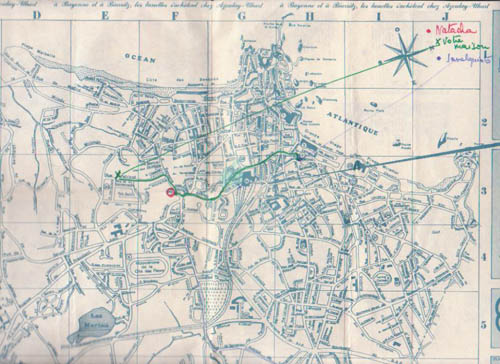
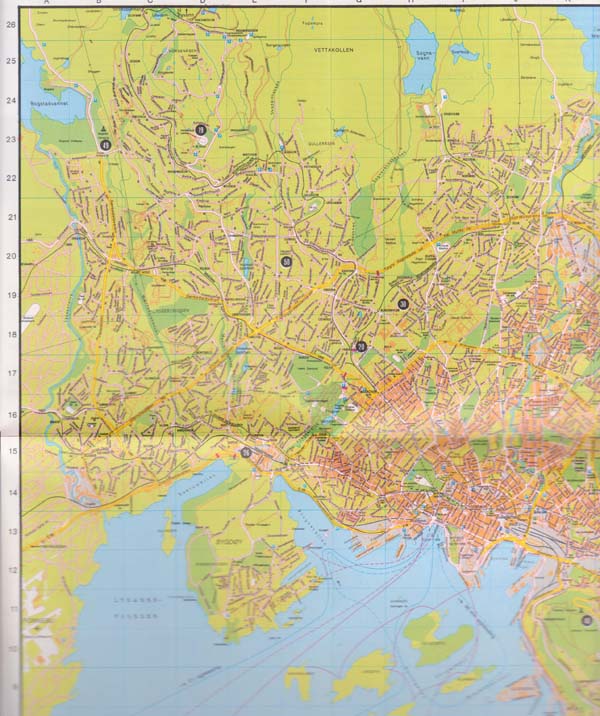
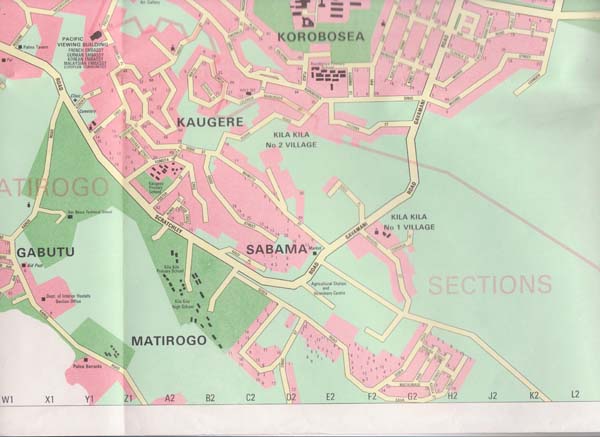
  2. Go beyond the ordinary color photo postcard and go with a theme. Collect map postcards. Drawings. Vintage scenes. Hunting a postcard that corresponds to the theme of your collection can liven up a trip.
  3. Look for postcards in quirky places. Museums and souvenir shops are the expected places but churches, antique malls, university bookstores, and art galleries are also good places to check, especially if you collect a theme.

The Gallery

To get your imagination going, here are some of mine and the stories they tell:

manuscript page

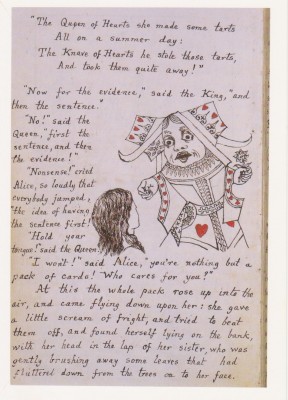
A British Library postcard of a page of Lewis Carroll’s handwritten and illustrated manuscript of Alice in Wonderland.  This was my first trip to London as an adult, when I went to the British Library and Sir John Soanes’ Museum and was a hopeless Anglophile for a week.

Irises

This postcard of Vincent Van Gogh’s Irises was purchased during a student trip to Amsterdam. My roommate and I rode the train from Paris and met up with a motley group of foreign students with whom we went to the Van Gogh Museum. This painting, with its thickly daubed paint and eye-popping colors fascinated me. I could have stared at it all day.

Related post: Girl Meets Paris

Amsterdam postcardThis postcard is a double art bonus: it shows both sides of the Prinsengracht canal in Amsterdam but also reflects the colors and layout of the flag of the Netherlands.

German village

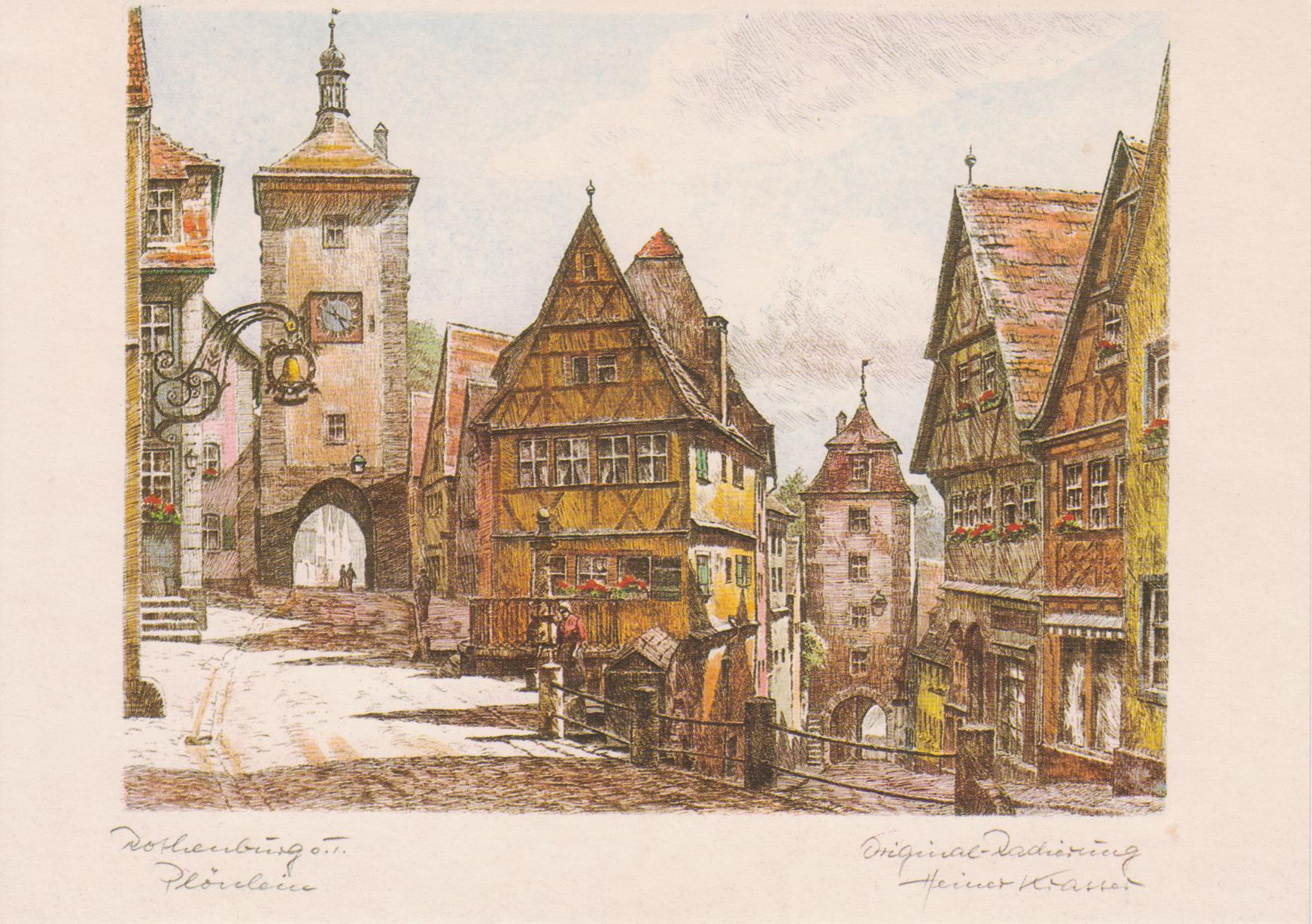
This postcard of the medieval walled village of Rothenburg ob der Tauber in Germany will always bring forth the memory of a trip through Germany and Austria with my mother. Rothenburg was the scene of a particularly funny beer drinking event during which my mother did herself proud at 11:00 am.

1940s postcard

The Ritz Hotel has been mentioned in many books and always seemed the epitome of high society. I crossed it off my bucket list several years ago when I had brunch there (coffee and toast that cost as much as my first car) and picked up this postcard from the lounge on my way out.

postcard of WWII

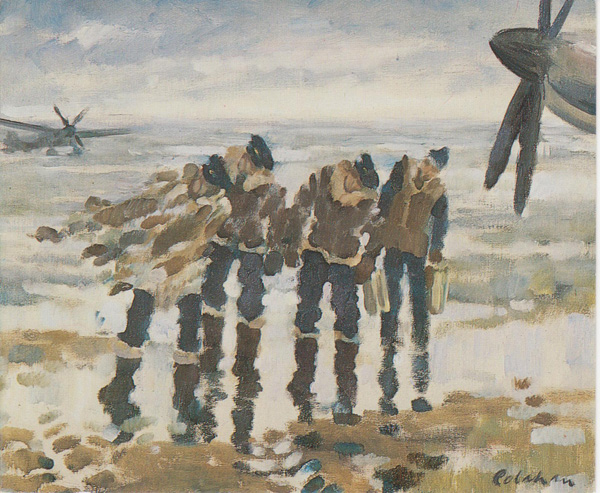
Australian artist Colin Colahan painted “Ballet of Wind and Rain” in 1945 as an official artist with Australian forces in the UK during WWII. I purchased the postcard at the Australian War Memorial in Canberra, one of the most moving tributes to fallen soldiers I’ve ever seen.

Face of Virgin of Guadalupe

This is a photo of image of the Madonna imprinted on a cloth garment (the famous tilma of San Juan Diego) which now hangs in the Basilica of the Virgin of Guadalupe in Mexico City.  I got it at the  Basilica gift shop. The postcard is simply a photo with “Expression de los ojos de la Virgen” stamped on the back and space for postage and the recipient’s address.

Scrapbook Diaries-postcards 001

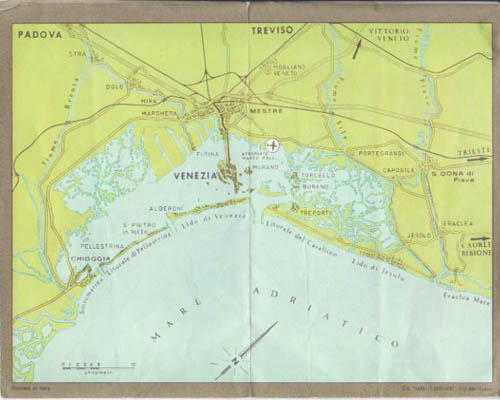
This is an oversized postcard for an oversized item, namely the Viking ship or “Oseberg-stavnen” in the Viking ship museum in Oslo, Norway. On the same trip I went to the Fram Museum, the final home of the ship that took Roald Amundsen to Antarctica. I doubt the Viking tradition will ever die out in Norway.

You may also like

art of travel

Book Review: The Man Who Smiled by Henning Mankell

Book Review: The Man Who Smiled by Henning Mankell

Books starring the depressed Swedish police detective Kurt Wallander are growing on me, but not as fast as the portrayal of him by British actor Kenneth Branagh.  I like the book plotlines, the descriptions of rural Sweden, the nice balance of character introspection and action. His perpetual unhappiness, stilted dialogue, and self-searching angst are part of Henning Mankell’s moody style, and Branagh captures it perfectly.

In THE MAN WHO SMILED, Wallander can’t come to grips with the fact that he killed a man in the line of duty. He’s drinking himself into oblivion, emerging briefly for a sex-addict’s blurred holiday in Thailand. After an intervention by his grownup yet unseen daughter Linda, he takes his angst to the windswept beaches of Jutland and plans to retire from his job as senior police detective in Ystad, Sweden. But an old friend approaches him to investigate the death of his father, then later turns up murdered. Wallander pulls himself together and heads back into his police career.

He’s been gone for over a year. The squadroom has changed, notably with the addition of a young female detective. As I write a mystery series about a lone female detective in a squadroom full of hostile men, this character really resonated with me. Her attitudes, dialogue and action scenes were very well done.

The book showcased the way Wallander pieces together multiple murders. I enjoyed the pacing of the discovery of clues and the logic thread which made the mystery one of the best in the Wallander series.

But there was one epic fail and it surprised me, given that the rest of the book came together so well. The wrong part would have been very easy to leave out or adjust to make sense. Without giving it away, it involved a switch by the bad guys after the good guy was dead and they simply could have taken the clue when they left the scene of the crime. Or Mankell could have left the original item to be found as the clue. Either way the plot elements would have hardly been affected.

I often look for solid motive in a mystery. The bad guy’s motive was a bit thin, but Mankell sold it as an appalling disregard for human life. It worked—but barely.

Henning Mankell

Book Review: Doors Open by Ian Rankin

Book Review: Doors Open by Ian Rankin

Ian Rankin is one of my favorite mystery writers, with robust, imaginative characters that are true to their environment, beautifully paced plots, and locations that I’ve visited and love despite the flaws he exposes. Up front I’ll admit that I’m prejudiced in favor of his Detective Inspector John Rebus books. My favorites are Resurrection Men, the Falls and Exit Music.

DOORS OPEN by Ian Rankin is a standalone suspense novel with a plot that revolves around Edinburgh’s art scene. The main character, rich and bored Mike Mackenzie, ends up with two unlikely cohorts in a scheme to steal paintings from the National Gallery of Edinburgh. The partnership is anything but smooth–no one truly trusts anybody in this novel, for good reason–and soon the action is complicated by thugs and cops.

Rankin’s heavy in the book, Chib Calloway, is a reincarnation of Big Ger Rafferty in the Rebus books, but with a bit less finesse. “My town, my rules,” the character snarls at one point.

The ending has a bit of a wow factor, in that everyone gets what is coming to them, but the book moves more slowly than the Rebus books. The theme of doors opening, as in new opportunities, is overused and soon gets tiresome. While I won’t say don’t give it a try, if you’re looking for a great suspense novel set in Scotland, go with one of Rankin’s Rebus novels. They are all 5 star winners.

P.S. A movie was made from the book, starring among others, Stephen Fry who in his youth starred opposite Hugh Laurie in the wonderful Jeeves and Wooster BBC series based on the P.G. Wodehouse books. Others will recognize him as Mycroft Holmes in the Robert Downey Sherlock Holmes movies.

Fry obviously couldn’t keep the DOORS OPEN movie from a lukewarm reception, however, and it only rates 5.9 out of 10 on imdb.com: http://www.imdb.com/title/tt2371315/

Doors Open Ian Rankin

Solve Problems Like a Detective

Solve Problems Like a Detective


In CLIFF DIVER, Detective Emilia Cruz starts piecing together a police investigation by using a timeline. Emilia’s love of timelines will be an element of her crime-solving skills in every book in the Emilia Cruz mystery series. It’s her go-to problem-solving device and the best way she knows to start organizing the many disparate threads running through every case.

Off the pages of a mystery series and into real life, however, a timeline is a better planning device than a decision-making tool, in my view. Alone, it can’t help you narrow down solutions or predict consequences.  But pair it with one of the tools below and you have a powerful way to resolve issues:

Pros and Cons

I once bought paper pre-printed with two columns, one reading PRO and the other reading CON. I actually pulled it out when a friend could not choose between a new job that was a risk and the current, safe, job where he felt stale. We literally brainstormed both sides of going vs staying. It was a simple exercise but helped him see solutions through an unemotional lens.

Plot the pros and cons on a timeline to know the time frame each will require. In my friend’s case he took the higher risk job because when he counted up all the pros of the new opportunity, they far outweighed not only the cons, but also the limited pros of staying where he was.

Action items

For years when I felt blue, worried, or stuck, I’d make a list of what was going wrong on the left side of a legal pad. On the right side I’d list all possible action items for changing the situation and achieving a solution.  I’d timeline the actions to see how long they’d take or if I could do them immediately, in the next few days, or in the distant future. Inevitably I’d find something I could do to improve the situation and know when I could do it.

Maybe the list won’t make the problem completely go away but the exercise always leaves me with a feeling of greater control and that is half the battle.

Related: The Ultimate Secret to Productivity

Linear Thinking

A lot of problems feel bigger than they are because we are afraid of unknown consequences. So diagram the linear logic thread and figure out what and when some of those consequences might be/take place. It’s a basic “this action will lead to this outcome” exercise. But in order to work you have to be both realistic and honest.

For example, when we lived in Mexico, friends rarely paid their gardener on time. He stopped showing up and they attributed it to “typical” laziness. A more honest, linear thinking mindset might have recognized that if they wanted a nice yard, they’d have to pay for the work on time. The gardener could not afford transportation to get there on Thursday when he wasn’t paid for his work on Monday, even if they were prepared to pay him for both days on Thursday.

These problem solving ideas are likely to make their way into the investigations in the Emilia Cruz mystery series. But will they help her find a solution to her problems with Kurt Rucker? She might have to deal with corrupt politicians, dirty cops, and drug cartels in Acapulco, but Kurt is without a doubt her biggest challenge!

You may also like

solve problems

Book Review: Thursday’s List by V. S. Kemanis

Book Review: Thursday’s List by V. S. Kemanis

The Amazon.com description of legal thriller THURSDAY’S LIST doesn’t do justice to what is a revealing dive into the legal tangles involved in catching and convicting foreign money launderers in the US.

Set in 1988, with a pre-cell phone, pre-9/11 and pre-Patriot Act feel, it revolves around an investigation by New York City prosecutors into the flow of drug money by Colombia’s Cali cartel. The 80’s were the heyday of the Colombian drug cartels and the book shines brightest when describing money laundering activities and the agonizing work to find bank accounts, checks, couriers, and other links to the Colombian bad guys. Swept up in the churn is rookie attorney Dana Hargrove. Her best friend not only works in a bank being used by the cartels but is married to a bookish Colombian who thought he’d left his country’s drug mess behind him long ago.

The story starts with action and great atmospherics as Hargrove yawns her way through a shift as prosecutor at a dumpy NYC night court, complete with surly judge in a scene that put me in mind of a darker and more serious episode of the old TV sitcom Night Court. A bad smelling case, however, takes her out of the court rota and into a unit investigating financial crimes.

The financial crimes colleagues are neither forthcoming nor trustworthy and although still young and making mistakes, Hargrove is savvy enough to realize she’s being used. The suspense here isn’t the whodunit variety or a complex plot twist but turns on the question of how long the heroine and her best friend can survive being used by the system before the system catches the bad guys.

I was particularly struck by how THURSDAY’S LIST is the flip side of the fight against drug cartels that I wrote about in THE HIDDEN LIGHT OF MEXICO CITY. Hargrove is tracking the money trail on the US side of the border (albeit in 1988) and is subject to US laws and restrictions. In HIDDEN LIGHT, Mexican attorney Eddo Cortez Castillo uses whatever legal, military, and ultimately private means he can in today’s Mexico to investigate money laundering in an effort to get close enough to a drug cartel to take action. Both books describe the practice known as “layering” that cartels use to move and hide money.

Comparing the two descriptions gave me some sad but universal truths about fighting drug cartels and their violence. This book review isn’t about that but the similarities are striking.

FYI–THURSDAY’s LIST is a legal thriller that requires the reader’s full attention. The US legal intricacies of tracking money are complex and dominate the first half while the reader lives inside the heads of Hargrove and her friend for much of the second. An added complication is the book’s non-standard way of referring to characters that are variously called by their first names, last names, nicknames, or in some cases merely by job title.

book review

How to Power Up Your Creativity

How to Power Up Your Creativity

For years I thought creativity belonged exclusively to artists, writers and musicians and longed to be part of such a creative elite. Wow, was I wrong. Now that I’m older and wiser (hopefully) I know that we all have the ability to be creative in any part of our lives that we choose.

Creativity is a major component of staying emotionally balanced, finding joy in small things, and boosting self-esteem. Think of creativity like a vitamin supplement. We can exist without it but are healthier and have more energy with it.

Here are my top ways for making creativity happen:

Change your perspective

Seeing things from a different point of view sounds good in theory but is harder to do than it sounds. A great way to enable a change in perspective is to actually see something out of the ordinary.

But while we’d all love to follow in the footsteps of Eat Pray Love, few of us have the funds to take a trip to Italy, India, or Bali. Here’s how to do it on the cheap:

  1. Buy a piece of art that appeals to you on an emotional level. It can be as simple as a art postcard from a museum, a batik fabric from an art fair, or a poster that has an clever or inspirational image. Put it where you’ll see it frequently.
  2. Read a couple of magazines on topics that you don’t usually read. I find that my husband’s watch magazines are unique and different sources of inspiration. Read history, crafts, photography, cooking—anything that you don’t normally read.
  3.  Get a book on industrial design. The images and ideas in books such as Creative Workshop by David Sherwin or Logo Design Love by David Airey stretch your mind. Leaf through your book now and then, asking yourself why certain images resonate, what made your linger on that page, what can you apply to your own environment. Start thinking critically.

Inspiration from the experts

A lot of experts in different industries think about creativity a lot more than most of us and happily share their ideas across social media platforms. If you’re on Twitter, once a week search for #creative and/or #design. You’ll be amazed at all the ideas you find and how you can apply them to any task or problem you are trying to solve.

A few links to check out:

  1. The lifehacker.com website is the king of creativity ideas, including this one on–you guessed it–9 ideas for boosting creativity by Gregory Ciotti.
  2. Jonathan Gunston of bestsellerlabs.com writes about coping with writer’s block with great ideas for moving beyond “stuck” that are relevant for everybody, not just writers.
  3.  I ran across a blog post at destination-innovation.com talking about what not to say when you hear a new idea at work. The advice works at home, too.
  4.  Gretchen Rubin’s happiness-project.com blog and related books are full of thoughtful yet fun ideas for boosting happiness, which contain big doses of creativity-boosting ideas as well.

Get Moving

I’m probably not the first one to say that getting the blood flowing will help generate new ideas.

  1. Take a walk to gain a fresh perspective both by boosting endorphins and making your eyes focus on something new.
  2. Swimming in a pool creates a rhythm without being hard on your feet while a beach swim is a feast for the senses—the sound of waves, the grit of sand, the smell of coconut oil. I always get new ideas while water walking.
  3. Stretching is amazingly underrated. Yoga is a good time investment but so is just simply stretching at home. Dr. Mehmet Oz has a wonderful website with stretching videos and instructions.

As the writer of the Emilia Cruz mystery series I can always use more ideas for boosting creativity. Do you have a tip to share?

creativity


MORE INSIGHTS


Inside my CIA Career: Variety and the Spice of Life

Inside my CIA Career: Variety and the Spice of Life

What did I do? Whenever I’m asked, “What did you do in the CIA?” I’m a bit stuck. There’s no good snappy answer. I did a variety of things, many of which can't be defined in layman's terms. One of the reasons for such a varied career was that I was balancing work and...

read more
Inside my CIA Career: Encounter with a Spyplane

Inside my CIA Career: Encounter with a Spyplane

FLYING Several years ago, my husband got his private pilot’s license and we owned a small Piper aircraft. Our son was in kindergarten and promptly fell in love with all things aviation. This rubbed off on me. Our family was soon immersed in flying stories, books about...

read more
Book Review: THE THURSDAY MURDER CLUB by Richard Osman

Book Review: THE THURSDAY MURDER CLUB by Richard Osman

THE THURSDAY MURDER CLUB by Richard Osman What happens when the residents of a bucolic senior living community in England get together to investigate a murder? For starters, one murder becomes . . . many. I’d read so many positive reviews of this book that I was...

read more


Subscribe

FYI: Carmenamato.net uses Amazon Affiliate links.

Book Review: The Lost Ones by Ace Atkins

Book Review: The Lost Ones by Ace Atkins

THE LOST ONES by Ace Atkins is a well-crafted police procedural featuring the new sheriff of a small Mississippi county. Quinn Colson is back in his home town, fresh from war, and his old high school buddies are, too. Not everyone has come back to gainful employment, however, and Quinn has his hands full as an old crony gets into a gun-running scheme and another turns to drink as a way of escaping the misery of being left with only one arm. Quinn himself has ghosts to lay to rest that include a messed-up sister whose backstory is entwined with Quinn’s–and skillfully explained in a series of flashbacks–as well as the legacy of his uncle, the former sheriff whose last days were marred by scandal.

Perfect-pitch voices

Ace Atkins has a gift for capturing the voices of his characters and is able to assemble a cast who speak to each other–and the reader–with clearly defined personalities which all perfectly fit the rural Mississippi location and their divergent motives. Quinn is clearly the good guy, trying to do the right thing while keeping his own vulnerabilities under wraps. He’s the star of the ensemble but the gun-runner is painted the perfect shade of gray–a once likable small-time guy who went to the show and now finds the small town too confining–but isn’t smart enough to see very far beyond it. By the same token the women in Quinn’s life–notably his mother and his best deputy–have fit themselves into the small town and are trying to make the best of it.

Although the personalities take top honors in this mystery, the action moves  along at a fair pace as Quinn hunts for a couple who are selling children and mistreating them along the way. Switches between Quinn’s investigation through the wilds of rural Mississippi and the crony who is selling weapons to a Mexican gang keeps the suspense going.

Ace Atkins as Spenser

The two plotlines converge nicely and the book wraps up cleanly, making for a classic police procedural mystery. Quinn and the supporting cast make for an excellent read and a series with all the hallmarks of the very best a reader cold want in this genre. It is clear why Atkins was selected to continue Robert B. Parker’s Spenser series–he has the same tempo, gift for authentic dialogue and ability to create compelling characters.

Ace Atkins

How Mexico’s Union Boss “La Maestra” Inspired a Mystery

How Mexico’s Union Boss “La Maestra” Inspired a Mystery

When fellow fiction writers ask where to find inspiration for characters I usually reply “minor league politicians.” There is always something to be found in the actions and words of those hungry for political power. In the same spirit, I channeled Elba Esther Gordillo, head of Mexico’s national teacher’s union, the Sindicato Nacional de Trabajadores de la Educación (SNTE), when creating the character of Victor Obregon Sosa, head of the police union for the state of Guerrero in the Emilia Cruz mystery series.

Here’s how Obregon is introduced in CLIFF DIVER, the first book in the series:

The two newcomers surveyed the room. One of them looked vaguely familiar, as if he’d been in the newspaper lately. He was in his late thirties, with longish dark hair slicked back from a high forehead and the sort of angular cheekbones that spoke of a strong indio heritage. He wore a black leather blazer over a black tee shirt and cuffed pants. There was a slight bulge under the left arm. He looked around as if he owned the place. Emilia stopped typing. The man exuded power.

La Maestra

Elba Esther Gordillo, nicknamed “La Maestra,” (The Teacher) has been head of the teacher’s union for more than 20 years; wheeling, dealing, passing out favors, burying bodies, and living on the national stage. Obregon, a continuing character throughout the Emilia Cruz mystery series, borrows much from her:

  • Expensive trappings of office—cars, clothes, attitude
  • Enough money and political power to manipulate politicians and keep them in his pocket
  • Able to effectively block reform and initiatives that could threaten his kingdom
  • Rewards loyalty with best jobs, gifts, favors
  • Likes power and isn’t shy about showing it off
Mexico's union boss

Elba Esther Gordillo photo courtesy of guardian.co.uk

Imagine my surprise—the imagination reels at what I can do with this via fiction–when Elba Esther was arrested on embezzlement charges last week. The shock wave is still rippling over Mexico where Elba Esther is as famous and powerful as Jimmy Hoffa at the height of his Teamsters power. She is charged with embezzling millions in union funds to support a lifestyle that includes private jets, plastic surgery, luxury homes in San Diego, secret bank accounts in Switzerland and a nearly $3 million credit-card bill at Neiman Marcus. The SNTE has around 1.4 million members and apparently that translates into a lot of dues.

Fictional Education

Of course, it’s not like Elba Esther’s profligate lifestyle was only recently discovered but as they say, timing is everything. (See article on La Maestra corruption from April 2011) The day before her arrest, President Peña Nieto signed into law a major education reform that the SNTE had aggressively opposed. It would allow teachers to be evaluated and possibly fired. This is a big blow to the union’s current status quo: teachers don’t have to have a degree, can never be fired, and high rates of absenteeism are tolerated.

While the president may be sending the message that he’s serious about corruption, Elba Ester’s excesses would have been easier to tolerate if Mexico’s education standards were in better shape:

  • Passing grade on the annual test used to award teaching positions in Mexico is only 30%, according to an article by education writer Arjan Shahani in the Americas Quarterly.
  • 5.3 percent of Mexico’s GDP goes to education. That’s more than Canada, Costa Rica and Australia and just under the United States. Over 80% of that amount goes to teacher salaries, shortchanging school infrastructure, scholarships, etc.
  • Only 62% of students who graduate from elementary school go on to attend middle school, and only a quarter of those go on to higher education. Only a primary education is mandatory in Mexico.
  • PISA (Programme for International Student Assessment) places Mexico’s reading comprehension levels second to last among OECD countries.
  • Mexican students perform badly in the OECD tests measuring  standards in 65 industrialized countries. In the last study published in December 2010, Mexican 15-year-olds came 46th in reading, 49th in mathematics and 51st in science.

Looks like Elba Ester has alot to account for and no doubt she’s working up a slick defense as she waits in a woman’s prison near Mexico City. I’m sure it will be inspiring . . . at least to a mystery writer!

2016 Update

Mexican President Pena Nieto’s education reforms have sparked a slew of protests across Mexico, as teachers protest a system overhaul, including evaluation tests every three years. The reforms also include competitive hiring, more control to the federal government, and a salary system to protect against graft and waste.

But in southern Mexico, this past summer protests got violent. Nine people were killed in clashes with police in Oaxaca. Highways were blocked, leading the government to airlift food into rural areas around the city.

While the main union has fallen in line with the reforms, combatative factions are leading the protests and vowing to close Mexico’s highway system. This comprehensive NY Times article from June 2016 focuses on the violence and extremism in Oaxaca.

You may also like

Mexico's union boss

Book Review: Over the Shoulder by Jason Beech

Book Review: Over the Shoulder by Jason Beech

Not only do I write thrillers and a mystery series, but I read them, too. I post reviews on amazon and Goodreads as well as on this site.

Over the Shoulder by Jason Beech is a Goodfellas-type crime drama set in Sheffield, England, where a dysfunctional family of small-time thugs is trying to be more than its individual members can manage. In a clever premise, the would-be patriarch Tony Mortimer, has gathered together his motley assortment of half-siblings in an attempt to honor his criminal father, build an empire, and bring local neighborhoods under his “protection.” His efforts put him in competition with Sheffield’s big-time crime boss, for whom Tony works as an enforcer. Add into the mix a series of doomed relationships, tenuous drug and smuggling deals, and a thick streak of Mortimer family mental instability for a fast-paced and engrossing tale of a dog-eat-dog criminal underworld.

The writing is confident, occasionally providing some descriptive gems. Flashbacks are used to good effect, giving the very different backstories of the three main Mortimer brothers. Hidden details are key and the conclusion is built piece by suspenseful piece as Tony and his brothers use each other in a series of nail-biting love-hate moves. The end is a twister and an ultimate Goodfellas moment. For such a well-plotted book, however, the numerous punctuation and spelling errors were an unwelcome surprise. Fortunately, they did not detract from the suspense or character development of this raw gem of a book.


book review

Pin It on Pinterest