Virgibooks Publishes Detective Emilia Cruz Stories in Italian

Virgibooks Publishes Detective Emilia Cruz Stories in Italian

27 September 2020

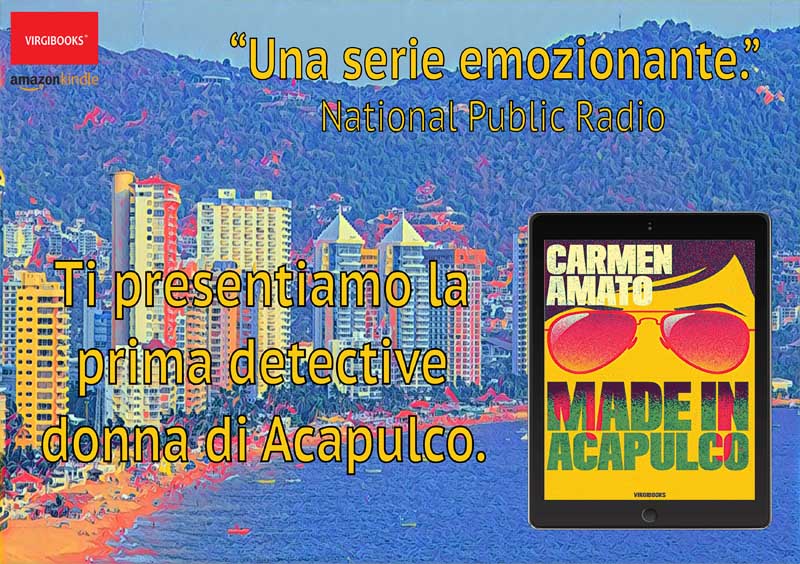
The Italian translation of MADE IN ACAPULCO was released this week by Italian publisher Virgibooks. Specializing in short stories and novellas, Virgibooks will translate and distribute additional Detective Emilia Cruz titles in 2020 including “The Angler” and “Feliz Navidad from Acapulco,” introducing the first female police detective in Acapulco to a new international audience.

See Virgibook’s offerings here: http://www.virgibooks.com/

2020 Poison Cup Award from CrimeMasters of America

2020 Poison Cup Award from CrimeMasters of America

13 September 2020

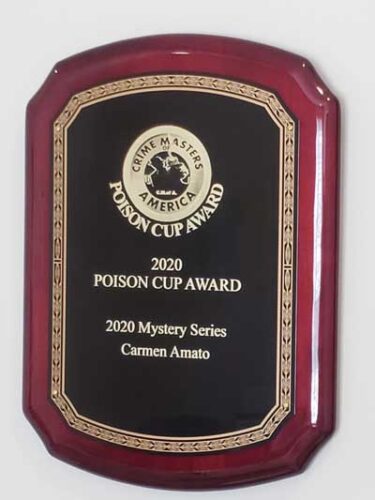
The Detective Emilia Cruz police procedural series received the 2020 Poison Cup Award from CrimeMasters of America, the second year in a row that the series has been honored with the award. A peer award, the Poison Cup is a significant and coveted honor.

Crime Masters award

CrimeMasters of America seeks to elevate independent mystery authors and their work through Facebook Group activities and annual awards including:

  • Poison Cup Award (Annual); Best Book and/or Series, Audio. Best support in editing, cover design, audio talent, graphic design.
  • Masters Poison Cup (Annual) Most group support from a member. Most active member through sharing, mentoring, educating.
  • Yorick Skull Award (Annual) Best First Book ( must be written and published/self-published the prior year of the award.
New York to Mexico and Back Again

New York to Mexico and Back Again

ONCE UPON A TIME

My hometown of Rome, New York, was a close-knit community where almost everyone was Italian, Irish, or Polish and a Roman Catholic. Five hours away from New York City and the Statue of Liberty by train, the city was surrounded by dairy farms, with milk delivered to the insulated box on our back porch every day. The backbone of the local economy was Revere Copper and Brass. The company turned out tea kettles and ship hulls, earning Rome its “Copper City” nickname.

Spargo Wire and Rome Cable made more things out of metal. Griffiss Air Force Base kept us all safe, with the occasional sonic boom to prove it. Going to Goldberg’s or Nelson’s department stores with my grandmother was an Event, as was church on Sunday and sleepovers with my cousin.

The Fourth of July meant picnics. Christmas meant shopping downtown with my sisters and lunch at the Candyland Restaurant. We all shoveled snow before school on wintry mornings.

Rome was Mayberry, just colder and more Catholic.

Copper City

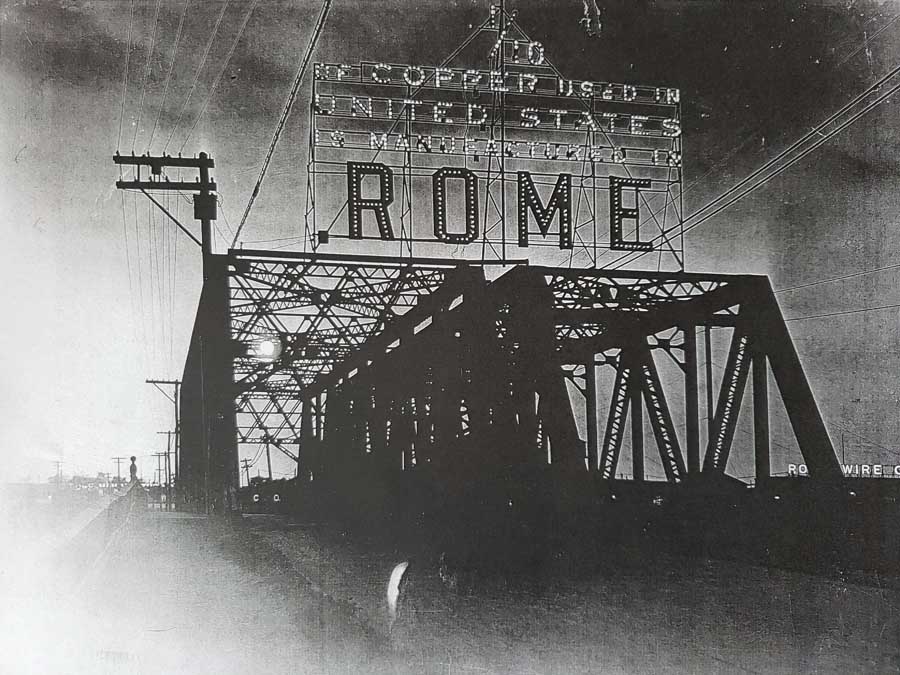
The illuminated sign over the bridge proclaims that 90% of the copper used in manufacturing in the US comes from Rome.


Related: Announcing the new GALLIANO CLUB series

BIT BY THE TRAVEL BUG

By the time I graduated high school, I was ready to explore the wider world.  I headed off to college in the big city of Syracuse, an hour away. I took the train and saw the Statue of Liberty. I spent my junior year in Paris.  Graduate school at the University of Virginia led to a job with the Central Intelligence Agency outside Washington, DC.

Through the years, every time I visited Rome the city had lost another round in the quality of life sweepstakes. New York state’s high taxes sucked up wages and jobs. The federal government shuttered the air base. Prolonged union strikes led to the closure of major manufacturers. A major facility for the disabled and mentally handicapped was turned into a prison. The commercial district was razed to build an exact replica of Fort Stanwix, but the expected influx of tourists never came.

OFF TO MEXICO

An assignment in Mexico brought unexpected reminders of my childhood. Despite the stress of the drug war that no one seemed to be winning, I embraced life there. In this mostly Catholic country, where family comes first, I rediscovered familiar rhythms and values.

In Mexico, family bonds were formed and strengthened in the kitchen, from preparing meals together to eating together. Community was built around a Catholic church tending its flock, not just with Sunday Mass, but with numerous opportunities to gather.

Not everything was instantly available; money was tight for most Mexicans. Necessity led to creativity, just like when I was growing up.

My past and present sparked together to make new energy, like flint striking steel to build a fire. I began to write fiction.

COMING HOME TO NEW YORK

Now with 10 books set in Mexico under my belt, I’m being tugged home. Not to present-day Rome, which is still struggling, but to the vibrant city where my grandparents built their family.

Bustling Rome, New York, of the early 20th century is the inspiration for fictional Lido, New York, in my forthcoming GALLIANO CLUB series. I’m writing through the lens of history but also through the eyes of my grandparents.

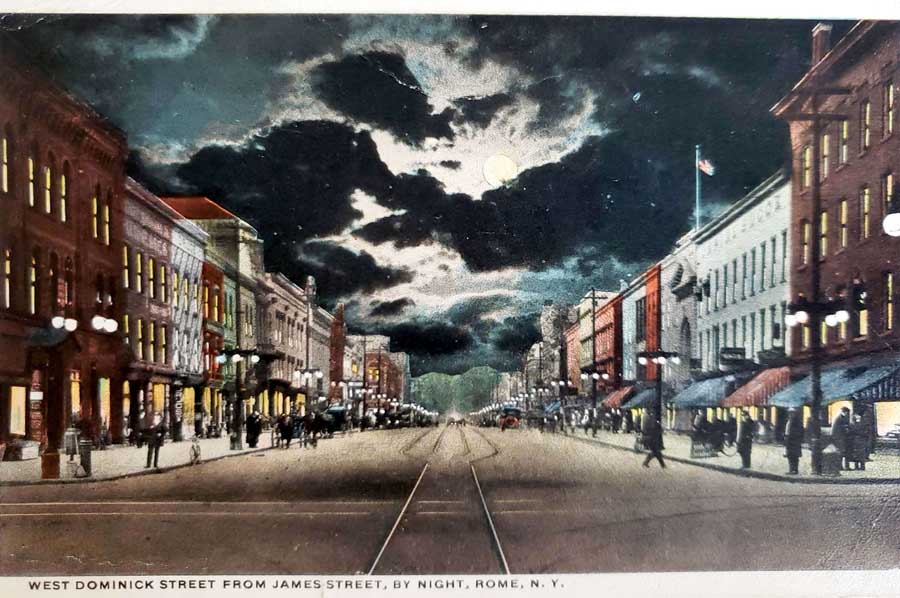
Dominick Street in Rome

Color postcard, circa 1919, showing a main street in Rome, NY. Few of those buildings exist today.


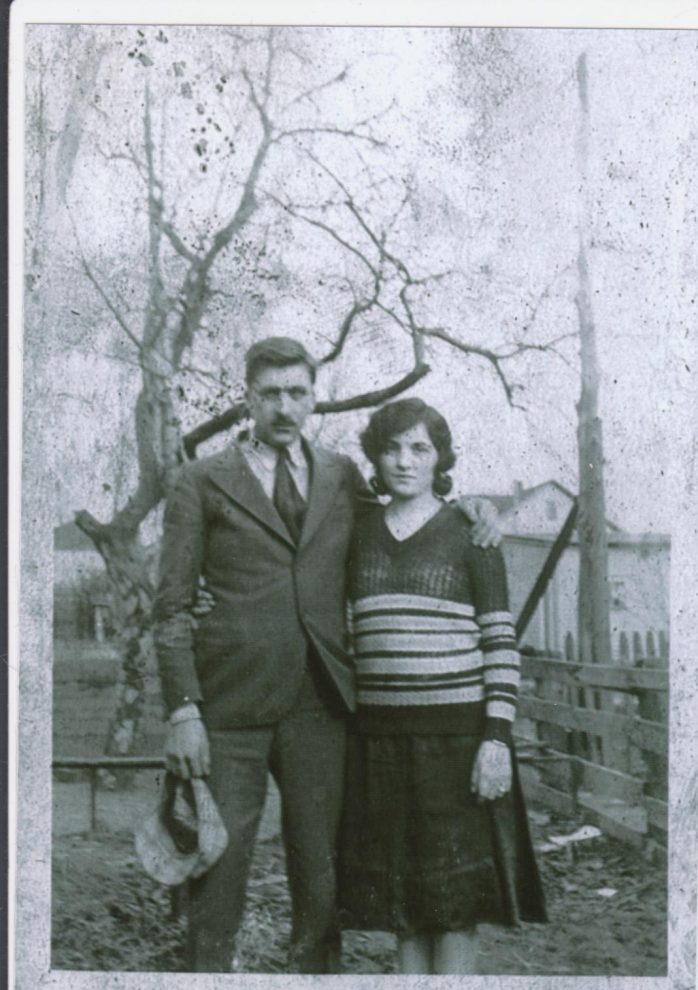
They got married in Rome, during the height of Prohibition. My grandfather played saxophone in the civic band. My grandmother’s nickname was Sheba, slang for a sexy girl.

My grandparents, circa 1928

Ann and Joe, circa 1928


None of the characters in the GALLIANO CLUB novels are directly based on either of my grandparents, but my memories of them make the books echo with authenticity.

Yet, if I’d never gone to Mexico, would I be writing fiction today?

If I’d never written books set in Mexico, would I have learned how to create a setting that pulls at a reader’s heartstrings?

I have come full circle, from New York to Mexico and back again.

All the way to Lido, New York, circa 1926.


From New York to Mexico

You may also like

Book Review: THUNDERSTRUCK by Erik Larson

Book Review: THUNDERSTRUCK by Erik Larson

Non-fiction author Erik Larsen (DEAD WAKE, THE DEVIL IN THE WHITE CITY, THE SPLENDID AND THE VILE, etc.) writes true crime with the sweep, suspense, and vocabulary of the best fiction authors. THUNDERSTRUCK may not be his best known book but it is the incredible saga of a true crime that will leave you as breathless as any bestselling thriller.

The book pits two men against each other in a brilliant match-up aboard the SS Montrose as the ship churns across the Atlantic toward Canada. The captain of the ship is the linchpin. This is where THUNDERSTRUCK begins, hooking the reader with a little-known, but absolutely crucial moment in history.

The first man in this unlikely battle is Guglielmo Marconi, a wealthy and eccentric Italian youth who is obsessed with science and turns his family’s attic into a private laboratory. The socially inadept Marconi will be credited with the invention of the wireless telegraph, aka, radio. He’ll monetize his invention and transform global communications via ambitious experiments, risky marketing, British mentors, and his family connections.

Related: Book Review: The Maria Kahlio series 

The immediate value of Marconi’s wireless is the ability to communicate with ships at sea. Soon every major vessel has a Marconi cabin and telegraph operators sending and receiving Marconigrams.

Next up is Hawley Crippen, a mild-mannered American medical man who moves to London to peddle patent medicines. His wife Cora dreams of becoming an opera singer and spends every penny Crippen makes. In due time, she renames herself Belle Elmore, is a minor failure on the British vaudeville circuit known as varieties, and takes a lover who is more dashing than her husband.  Crippen takes solace in a relationship with his very young secretary, Ethel Le Neve.

The lives of Marconi and Crippen move in parallel, each in their own fascinating way. Marconi is willful, selfish, demanding. Crippen is meek, abused, long-suffering.

When Crippen tells Belle’s friends that his wife was called home to California and perished there of pneumonia, they go to Scotland Yard. Crippen and Le Neve drop out of sight. Scotland Yard mounts a manhunt. Marconigrams fly through the ether.

Meanwhile, a father and teenaged son board the SS Montrose for an 11-day crossing. The captain identifies them as Crippen and Le Neve in disguise. Scotland Yard’s lead investigator boards a faster ship.

Related: How to be an Armchair Traveler

What happens next is stranger than fiction. Thanks to Marconi, the entire world except for the passengers aboard the SS Montrose knows about the nail-biting chase through the Atlantic. Will Scotland Yard catch up to Belle’s murdering husband or will the disguised lovers reach Canada first and disappear into the wilds?

The book is absolutely riveting. Larsen spins out the story like a master storyteller, tantalizing and leading us from one key piece of the puzzle to the next. Highly recommended.

Get it on Amazon >>> https://geni.us/thund

More book reviews

Book Review: Bone Canyon by Lee Goldberg

Book Review: Bone Canyon by Lee Goldberg

I love Goldberg’s Ian Ludlow series, starting with the ridiculously wonderful KILLER THRILLER, in which a nerdy writer repeatedly saves the world, but I was willing to go along for a more serious ride in BONE CANYON. A traditional police procedural, BONE CANYON...

read more

You may also like

How to Survive a Pandemic from Polar History’s “Wicked Mate”

How to Survive a Pandemic from Polar History’s “Wicked Mate”

I was recently asked if the coronavirus pandemic had changed what readers want from mystery authors.

Maybe.

Right now, I think readers appreciate a good tale of overcoming the odds.

That’s why polar history resonates with me right now. The early exploration of Antarctica and the North Pole regions is replete with true stories of resilience and fortitude when all hope seems lost. The exploits of Ernest Shackleton, Douglas Mawson, and Roald Amundsen are the stuff of legend.

One of the best known episodes from the so-called Heroic Age of exploration is the competition between Robert F. Scott and Roald Amundsen to be first to the South Pole. To recap, in 1912 Scott led a British team on a grueling march halfway across Antarctica to the South Pole, only to find that Norway’s Amundsen and his dogsledders had already come and gone.

Scott’s entire team died of illness and starvation on the return journey. Amundsen’s team dumped excess food as they sprinted back to their expedition’s hut.

There are a thousand lessons to be learned from the Scott-Amundsen race. But if you want to survive a pandemic, study the “Northern Party,” an all-but-forgotten sideshow to the Scott disaster.

It’s one of the most amazing survival stories you’ve never heard of.

Meet the “Wicked Mate”

Victor Campbell was a 34-year-old lieutenant in the Royal Navy when he accepted Scott’s invitation to join the British Antarctic Expedition. Campbell was named First Officer of the expedition ship Terra Nova and third in command overall (after Scott and Lieutenant Edward “Teddy” Evans.)
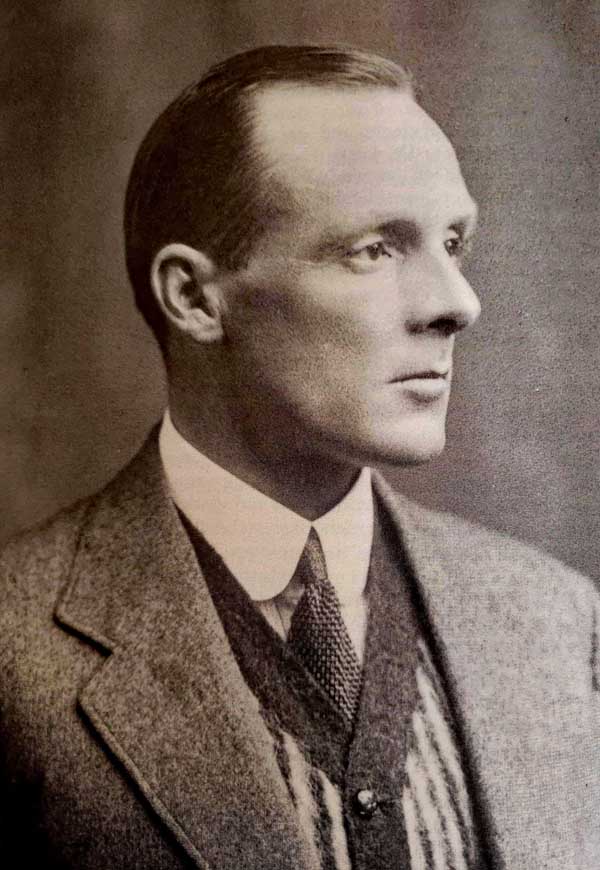
Victor Campbell

Victor Campbell in 1913


The rest of the British Antarctic Expedition were British Navy officers and sailors, civilian scientists, a Norwegian ski expert, and a Russian dog handler.

The expedition’s primary mission was to plant the Union Jack on the South Pole.  Scott’s Southern Party would march south from basecamp at Cape Evans.

The secondary mission was scientific discovery. Most of Antarctica was unmapped and untapped; a blank slate. A host of scientific programs was laid out that could be completed within range of Cape Evans.

The exception was the much smaller Northern Party, led by Campbell. This 6-man team would focus on geological discovery, mapping, and weather observations in the area south of New Zealand.

Apsley Cherry-Garrard, in his gripping account THE WORST JOURNEY IN THE WORLD, wrote “Lieutenant Evans . . . was in charge . . . to cement together the rough material into a nucleus which was capable of standing without any friction the strains of nearly three years of crowded, isolated and difficult life, ably seconded by Victor Campbell . . . in whose hands the routine and discipline of the ship was most efficiently maintained. I was very frightened of Campbell.”

Campbell’s nickname of “Wicked Mate” came from the “mixture of respect, awe, admiration, trust, and finally affection” of the men who served under him, according to H.G.R. King, the editor of his diary. The Wicked Mate had a reputation for shyness but it came with a sense of humor, along with imperturbability and discipline. He was comfortable with authority.

Those traits would save lives.

Forging a team

Besides Campbell, the Northern Party was comprised of geologist Raymond Priestly, Royal Navy surgeon Murray Levick, and Petty Officers G.P. Abbott, F.V. Browning, and H. Dickason. The group spent most of 1911 at Cape Adare where the 1899 expedition led by Carstens Borchegrevink was the first to spend a winter on the continent.

Priestly wrote in his book ANTARCTIC ADVENTURE, “We left [Cape Adare] in January 1912 a well-knit party, reasonably satisfied with the scientific record we had achieved, to which every one of the six had made notable and essential contributions.” Cape Adare’s near-constant blizzards hampered their scientific work yet forged a team spirit of ingenuity and inventions that ranged from a makeshift alarm clock dubbed a “Carusophone” to a face mask to prevent frostbite.

More importantly, the now tight-knit team was accustomed to Campbell’s habits of naval discipline.

The expedition ship Terra Nova left its winter berth in New Zealand (to avoid being caught in pack ice) and took them from Cape Adare to the aptly named Inexpressible Island. The plan was for the Northern Party to continue scientific discovery there for a few weeks. Terra Nova would return in February to ferry them to the Cape Evans basecamp 230 miles away.

Ice blocked the Terra Nova from returning. As February turned into March and winter descended with furious wind that tore their canvas tents, Campbell realized the Northern Party was stranded.

Remember, this was 1912. They were at the bottom of the world. No electricity. No communication.

No help.

How could six men survive the 9-month polar winter, with bone-cutting temperatures and days of 24-hour darkness, with nothing more than a couple weeks’ worth of dried food and rapidly disintegrating tents?

Priestly summed up the situation: “It was evident that three things were absolutely necessary, and perhaps only three. We must have light, shelter, and hot food.”

The Sooner the Better

“The outlook is not very cheerful.” Campbell’s diary, 16 March 1912

Campbell quickly recognized that circumstances had changed and made no attempt to sugarcoat the situation. He embraced the brutal truth fast and didn’t waste time on self-pity or wishful thinking.

As early as 26 February, he set aside the remaining rations, fuel, and clothing designed for polar sledging, worried they would be needed for the trek over uncharted territory to Cape Evans. For all Campbell knew, the Terra Nova had sunk or was trapped in ice somewhere in the Antarctic Circle and he had to get his team back to basecamp on his own.

The next day, with three off exploring the island on a scientific trip, Campbell and two others began hacking a cave out of solid ice to serve as winter shelter for all six men. The result was 9 x 12 feet, with a max height of 5’6”. The tunnel to access it was 2’6” x 1’6”.
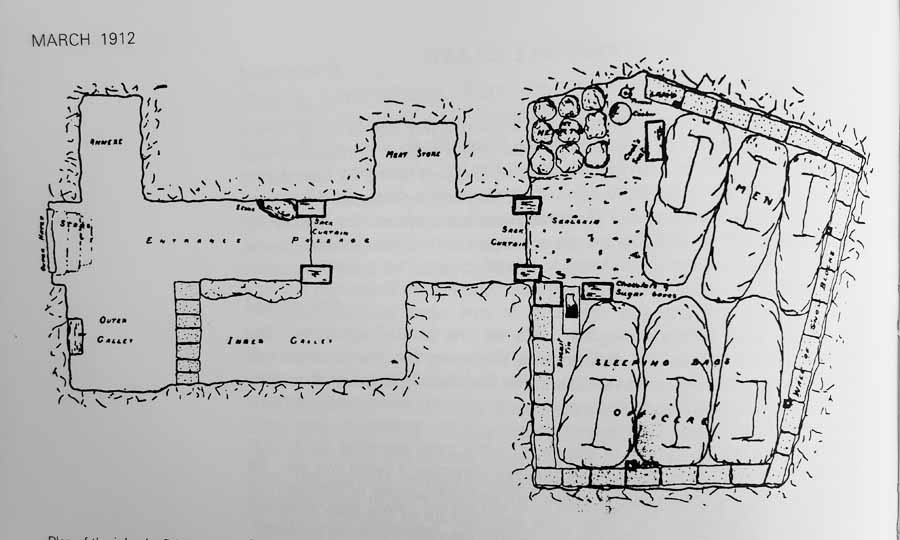
Diagram of cave by Raymond Priestley

Diagram of cave by expedition geologist Raymond Priestley


Campbell also calculated how many penguins and seals they’d need to kill before the full onset of winter when the animals took shelter and it was too dark to hunt.

By 19 March, the ice cave was home and the perpetual hunt to stock the larder despite frostbite and blizzard was on. The cave gave them the light, shelter and hot food Priestley deemed essential but not much else. A diet of meat, seaweed, and saltwater began to take a heavy toll on digestive systems. Seal blubber was used as fuel, so the floor—and the men—quickly became coated in greasy soot.

As blizzards raged outside and freezing temperatures reigned inside, the men spent most of their time in sleeping bags. Following Navy tradition, Campbell bisected the tiny space into “decks” for officers and sailors. An unwritten law decreed that what was spoken in one deck was not “heard” in another. When Campbell and Levick were seriously worried about Browning’s health during the winter, however, they passed notes.

Lesson from Campbell: The sooner you recognize that the situation is changed and adapt, the greater your chances of getting ahead of negative consequences. Refuse to see that the situation you expected has been overtaken by events? You risk a cascade of secondary problems.

Critical routines

“We take it in turns to be cook and messman.” Campbell’s diary, 9 April 1912

By June the sun had completely disappeared. Tucked inside the dark cave, with only crude blubber lamps for light, Campbell used routine to hold insanity at bay and maintain a sense of passing time:

Duty roster: Three teams of two men took turns as the day’s cook and messman, or cook’s helper. When on duty, the team was responsible for preparing meals, cleaning up, gathering snow for water, etc. The workday began at 7:00 am with breakfast preparations. Dinner was at 5:00 pm.

Food: To augment the diet of seal and penguin, they doled out minute portions of sledging biscuit—like a heavy graham cracker. Cocoa five days of the week. On Sunday they had 12 lumps of sugar and tea, which was reboiled for Monday, and then dried to be used as pipe tobacco. The last day of the month was celebrated with raisins, as were birthdays. On Wednesdays and Saturdays, they each got 1 ounce of chocolate. Birthdays were celebrated with extra treats as well.

Events: Singing concerts (a “sing-song”) took place Saturday nights. Campbell held a church service on Sundays “which consisted of my reading a chapter of the Bible followed by hymns.” Levick read aloud after dinner each night. When the books ran out, he gave lectures on human anatomy.

Priestley wrote: “The celebration of all special occasions proved to be a godsend . . . such gala days were looked forward to for a week or more and remembered for as long; they seemed to break the monotony of winter.”

Lesson from Campbell: Locked down by the pandemic? Don’t let your days become one big long blur. Create order and routine. Celebrate milestones, even in a small way. This approach creates a sense of control and forward progress.

Continuous improvement

“Levick some days ago designed a new stove which we call ‘The Complex’ in opposition to our old one, ‘The Simplex.’ The reason the ‘Complex’ did not catch on with the rest of us he put down to professional jealousy, but today I came in to find the designer using the old ‘Simplex’ while a much battered ‘Complex’ lay outside on the drift where it remained the rest of the winter.” Campbell’s diary, 7 June 2012

Throughout the winter, the men sought to improve the situation, going above and beyond the ingenuity shown at Cape Adare.

They created:

  • An “outhouse” by the entrance.
  • A ventilation system made of biscuit tins, snow blocks, and a bamboo sledge pole to prevent carbon monoxide poisoning and smoke inhalation.
  • A variety of stoves using blubber for fuel that “reduced preparing and cooking the food to a fine art.”
  • Systems for cutting, storing, and transporting meat for the trek to Cape Evans.

Priestley wrote about their improvements saying, “As one difficulty after another disappeared we became more and more convinced that we were going to pull through, and this although we had at this time only enough seal to keep us going on half-rations until the end of July.”

Lesson from Campbell: You can always make your immediate environment better. No matter where you are, look around and make small improvements that support your goals. Each improvement is a force multiplier.

Get Ready for the Next Step

“We have been discussing our best route down, whether to go round the Drygalski [Glacier] on the sea ice or over the tongue. I, myself, don’t think the ice can be depended on round the Drygalski; it runs so far into the Ross Sea.” Campbell’s diary, 1 June 1912

At the end of September, the Northern Party left the ice cave on Inexpressible Island and struck out for Cape Evans. There was no way to know they would encounter sand-like snowdrifts, waist-high sastrugi ice waves, pancakes of sea ice, and the dangerous crevasses of the Drygalski Glacier.

Campbell had the fresh items he’d held in reserve for the journey. In every other way, the odds were against all six men surviving a 230-mile journey over uncharted territory.

But they prepared:

  • All the men were weak and suffered from swollen feet and ankles from months spent lying down. A stretching and isometric exercise regime prepped them for distance walking.
  • Browning was seriously ill with ptomaine poisoning. Levick experimented with his diet, which necessitated sacrifice for others but saved his life.
  • The sledges were damaged from wintering in snowdrifts outside the cave, but essential for hauling supplies. They brought them inside and repaired them using rudimentary tools.
  • Their sleeping bags had molted and were covered in grease. Tents had been shredded in March. Repairs were made to the extent possible.
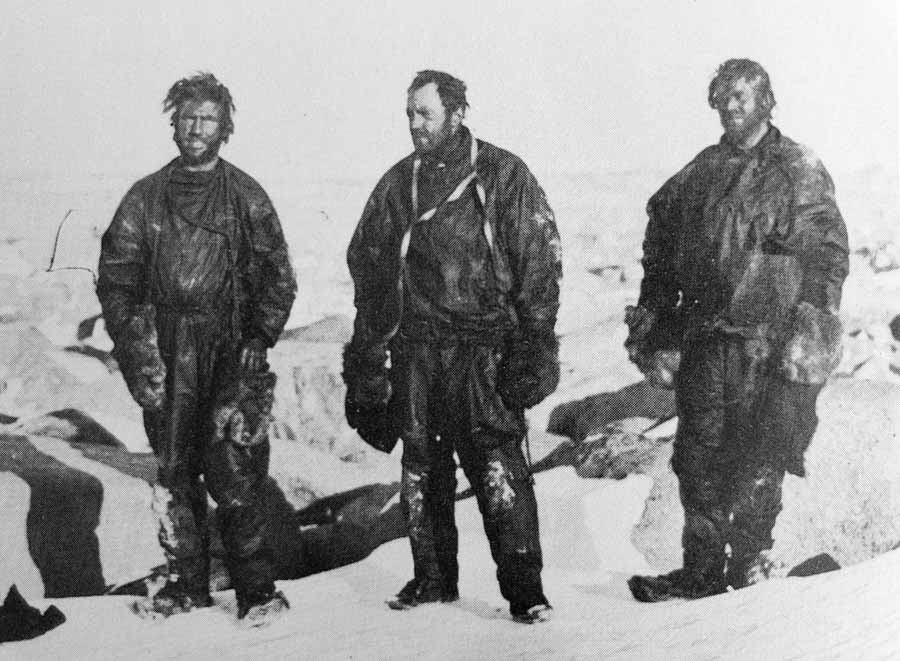
Northern Party 1

Abbott, Campbell and Dickason leaving the ice cave, 30 Sept 1912
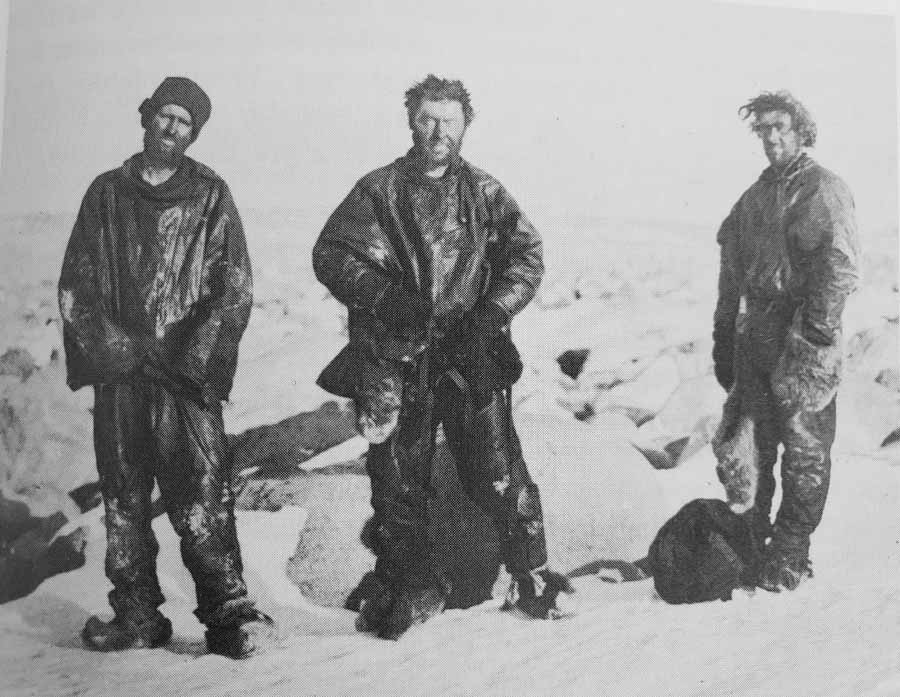
 

Northern Party 2

Priestley, Levick and Browning leaving the ice cave, 30 Sept 1912


Priestley’s account of the journey is harrowing. Roped like horses to pull the heavily burdened sledges, they burned more calories than they could take in. Starvation dogged them. At times, the surface was so difficult they resorted to relaying supplies. The unwieldy sledges sometimes dragged them over the ice or got stuck in crevasses.

Only the routine, discipline, and ingenuity they had established during the winter saved their sanity and pushed them on. “Our tempers had stood an almost unparalleled strain during the past winter,” Priestley wrote. “And stood it successfully; we knew each other more thoroughly than most men ever know their companions.”

After almost a month, they found food depots left by other members of Scott’s expedition. The fear of starvation was finally banished.

Lesson from Campbell: Work on your health and optimism. Uncertainty will always be with us. There is always going to be another hurdle. Time spent preparing is never wasted time.

And Afterwards

The Northern Party arrived at Cape Evans on 6 November, only to hear that Scott’s Southern Party had never returned. They would not know what happened until later that month when a search party stumbled in, having found Scott’s tent and the frozen bodies of Scott, Edward Wilson and Henry “Birdie” Bowers. The diaries of the dead men told of losing the race to the Pole and the tragic journey which ended 11 miles from a food depot.

The Terra Nova returned to Cape Evans on 11 February 1913 and brought the survivors back to civilization. The British Antarctic Expedition was over.

The Wicked Mate was honored for his polar service. Campbell commanded fleet vessels with distinction during World War I, including at the Battle of Jutland. He retired in 1922 with a chest full of medals, moved to Canada, and was largely forgotten by historians.

Let’s not make that mistake twice.

All photos from THE WICKED MATE: The Antarctic Diary of Victor Campbell, edited by H.G.R. King

Pin How to Survive a Pandemic

You may also like

7th Detective Emilia Cruz Mystery is Finalist for 2020 Silver Falchion

7th Detective Emilia Cruz Mystery is Finalist for 2020 Silver Falchion

30 July 2020

RUSSIAN MOJITO, the 7th installment of the Detective Emilia Cruz police procedural series set in Acapulco by Carmen Amato, is a finalist for the 2020 Silver Falchion Award from the Killer Nashville International Mystery Writers Conference. See the press release here: https://killernashville.com/2020-killer-nashville-silver-falchion-award-finalists-announced/

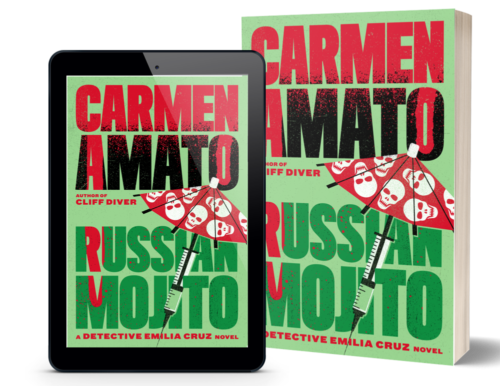
Russian Mojito book iPad

Amato was awarded the Silver Falchion in 2019 for the Detective Emilia Cruz bilingual short story “The Artist.”

Published June 2019 by Laurel & Croton, RUSSIAN MOJITO pits the first female police detective in Acapulco against ruthless kidnappers and thieves targeting Mexico’s underground gas pipelines. It is available from Amazon in both ebook and paperback formats here: https://geni.us/russian-mojito

Book Review: GRAY GHOST MURDERS by Keith McCafferty

Book Review: GRAY GHOST MURDERS by Keith McCafferty

I know nothing about fly fishing and have never been to Montana. Nevertheless, the Sean Stranahan mystery series by Keith McCafferty has me hooked.


(Sorry, could not resist.)

The series has elements of both the Longmire and Mike Bowditch series, but with a gentle charm you don’t see too often in a mystery series. Add top-notch writing and evocative descriptions of the Montana wilderness and it’s an absolute winner.

THE GRAY GHOST MURDERS is the second in the Sean Stranahan series but they are all standalones. I picked this up, frankly, because of the cover. But author McCafferty, an editor at Field and Stream magazine, is an accomplished writer whose characters are so appealing, you can’t help but be drawn into their world of rural Montana and the outdoors, not to mention the art and science of fly fishing.

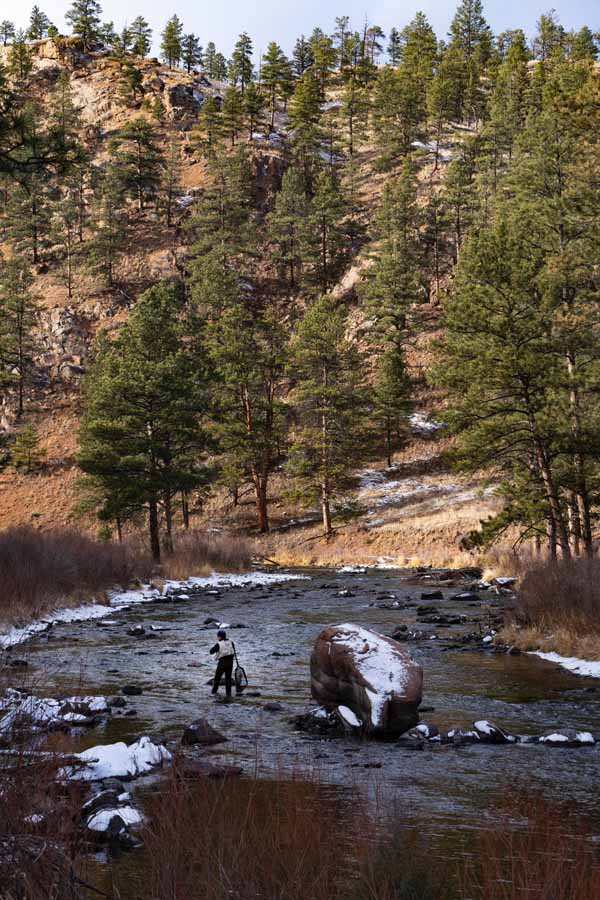
Rugged landscape and fisherman

This evokes the setting for the book, with the fly fisherman with his net. Photo by Matt Noble via Unsplash


Sean is an artist, fishing guide, and sometime sheriff’s deputy in Hyalite County, Montana. He’s also a former detective who worked for a law firm in Boston before he moved to Montana. Not rich, he bunks in his art studio and gets an unexpected windfall when a wealthy group of anglers asks him to find two valuable vintage fishing flies that were stolen from their summer camp.

And thus we learn of the world of rare fishing flies, which are auctioned like rare books.


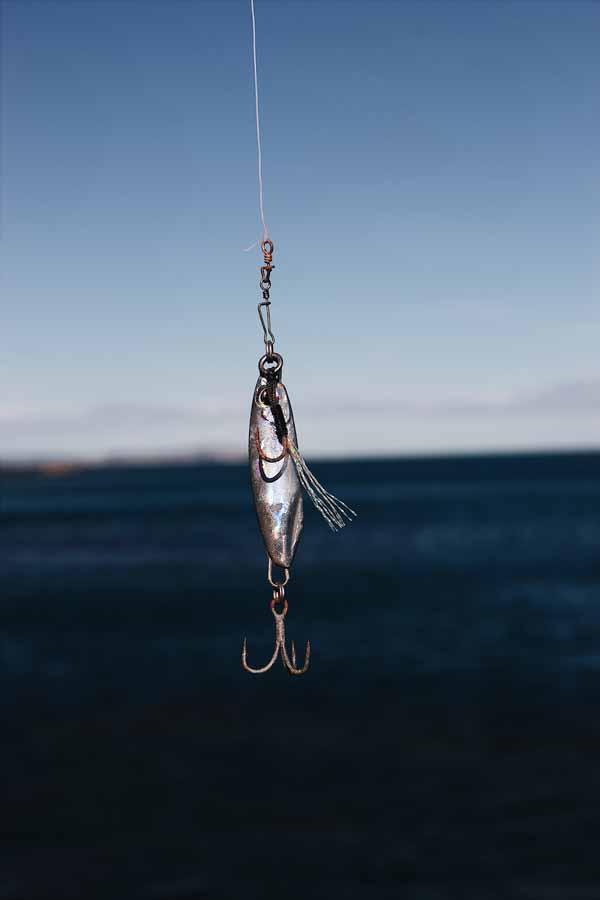
Fishing lure

Fishing lure. Even if you know nothing about fishing, this book series will captivate. Photo by Mael Balland via Unsplash


At the same time, Sheriff Martha Ettinger asks Sean to help investigate the suspicious deaths of two men whose bodies are found on Sphinx Mountain. The secondary characters, including Martha and a cast of deputies are all so well drawn we’re sifting through clues on the mountaintop with them, bear repellent at the ready.

Throw in a cat-loving barista, a manipulative politician, and an old school cowboy, and the pages turn themselves.

The whodunit aspect of investigating the two dead men hinges on a number of clues, as well as a few red herrings. It’s an unusual premise, but it works well for this unusual but highly satisfying read. As the series continues, the relationships between Sean, Martha, and the secondary characters are as important as the crimes. New characters introduced along the way spring to life from Montana’s small towns, rivers, and history.

Get THE GRAY GHOST MURDERS on Amazon >>> http://mybook.to/gray-ghost/

You may also like

Book Review: Dublin Trilogy by Caimh McDonnell

Book Review: Dublin Trilogy by Caimh McDonnell

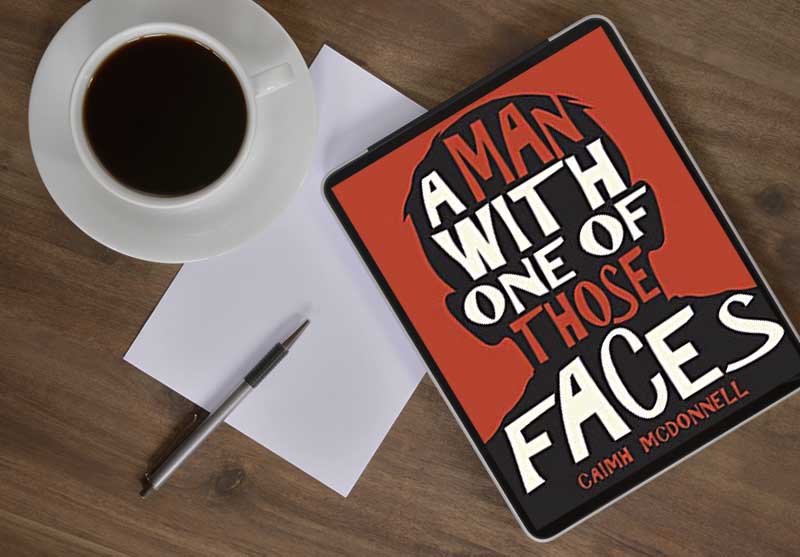
Author Vee James gifted me this book and a tip of the hat to him. THE MAN WITH ONE OF THOSE FACES is the first book in McDonnell’s Dublin Trilogy about the very funny, yet seriously intriguing misadventures of Paul Mulchrone, Brigit Conroy, and Garda detective Bernard “Bunny” McGarry.

The Man With One of those Faces

DUBLIN-BOUND

Don’t worry if you have never been to Dublin, because by the end of all of the books, you will be intimate with the city and its people, plus the law enforcement powers and politics of the Garda, the national police agency. The unique sport of hurling. Shopping on Grafton and Carroll. The restorative powers of Irish whiskey and Guinness beer.

hurley stick

Find out more about the Irish sport of hurley on wikipedia

I was in Dublin awhile back–long before travel became virtual–and McDonnell captures the city’s essence. It’s The Commitments, but with less music and better characters.

Get in the mood for my book review with a few scenes of this scrappy Irish city. I didn’t take them, although I wish I did!

Dublin photo by Andrea Leopardi,

Dublin photo by Andrea Leopardi,courtesy of Unsplash

Dublin photo by Lucas Swinden,

Dublin photo by Lucas Swinden courtesy of Unsplash

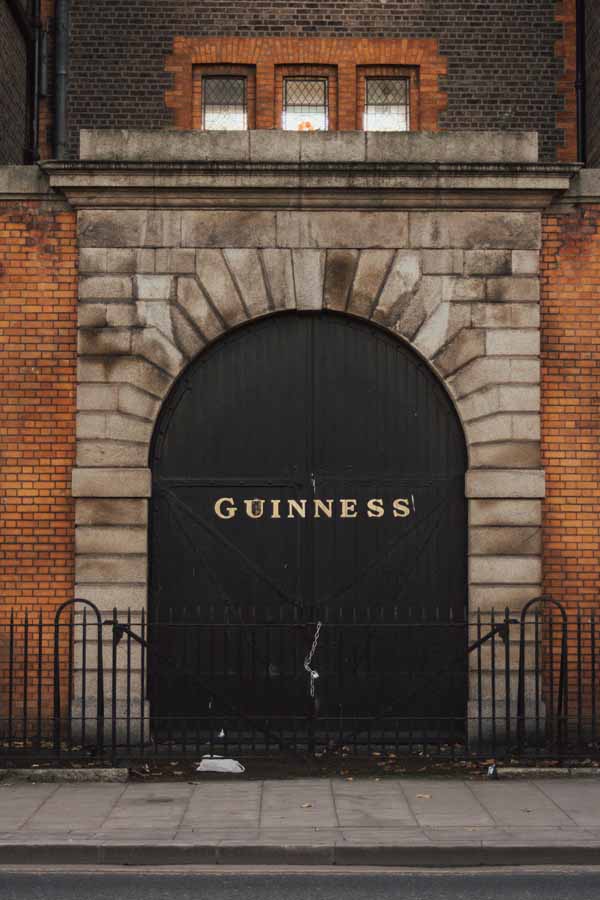
Guinness warehouse by Tavis Beck, courtesy Unsplash

Guinness warehouse by Tavis Beck, courtesy Unsplash


Ready? Step up to the bar and drink deeply of this terrific book series.

CLEVER START

Paul had a rough start in life. He was orphaned at a young age, and his only stability was the hurling club presided over by Bunny McGarry, the larger-than-life cop with his own way of meting out justice. Now an adult, Paul is trapped by a will awarding him a subsistence stipend as long as he does charity work.

He regularly visits a nursing home to fulfill the requirements. One day a resident mistakes Paul for someone else and tries to kill him before dying of shock. When the dead man is found to be a gangster thought to be long dead, Paul and Brigit, a nurse, are targeted by the gangster’s old enemies. Bunny McGarry, who has a soft spot for Paul from hurling club days, steps in, along with a few local mobsters.

The plots of all the books in the DUBLIN TRILOGY series connect from one book to the next. The mix of white knights and black sheep throws gray shadows on many of the characters while relationships develop in smart and clever ways.

UNFORGETTABLE CHARACTERS

The real charm of this series lies with dialogue and descriptions, both of which evoke some real laugh-out-loud moments. There’s a line about anybody who could “cut two holes in a tea cozy thought he was John Dillinger” that still makes me laugh at odd moments.

THE DAY THAT NEVER COMES and LAST ORDERS are the next two books in the trilogy. ANGELS IN THE MOONLIGHT is a prequel that is nonetheless listed on Amazon as #3 in the 4-volume set. The numbering is just one of the quirks of this charming, funny, and breathlessly paced series.

Highly recommended.

Get THE MAN WITH ONE OF THOSE FACES on Amazon.

PS: If you have never seen the film The Commitments, about the rise and fall of a club band in Dublin, you can watch it on Amazon’s Prime Video. 

You may also like

How to be an Armchair Traveler

How to be an Armchair Traveler

I keep waiting for coronavirus to call a time out but, uh, so far . . . no.

It’s turning me into an armchair traveler. You, too?

I have missed museums. Not that I’m a rabid art hound, but museums are a great reason to get up and go somewhere new to refuel my creative engine.

Thankfully, mystery series top up the tank, too. (Like the Detective Emilia Cruz series!)

For a great armchair traveler “getaway,” match a mystery series with an online museum tour with Google’s Arts and Culture project. You can take virtual tours of scores of museums around the world. The technology gives you an experience like Google Earth, with the ability to “walk” through an exhibit.

It’s pretty amazing. Here are some recommended books to read, along with a virtual museum tour to give the story shape in your imagination.

Related: Matching books and museums in Mexico City

São Paulo, Brazil

Series: Chief Inspector Mario Silva series by Leighton Gage

With a stubborn and brooding demeanor, Chief Inspector Mario Silva of Brazil’s federal police has been described by Booklist as “South America’s Kurt Wallander.” BLOOD OF THE WICKED sets up Silva as a good cop with a rag-tag but loyal band of underlings caught in Brazil’s pervasive corruption. Expect high quality writing and an insider’s view of a fascinating culture.

blood of the Wicked

Find on Amazon: >>> BLOOD OF THE WICKED https://geni.us/blood-wic

Museum: Explore the contemporary Museu de Arte de Sa͂o Paulo  >>> https://artsandculture.google.com/partner/masp

Paris, France

Series: Aimée Leduc murder mysteries by Cara Black

Leduc is a private detective in Paris juggling single motherhood, disappearing lovers, and a shadowy organization called The Hand. Her late father was a Paris cop killed by the group, while her super-spy American mother pops in and out of Aimée’s life. MURDER IN THE MARAIS begins the series, which showcases French fashion and culture.

Murder in the Marais

Find on Amazon >>> MURDER IN THE MARAIS https://geni.us/marai

Museum: Explore the Musée d’Orsay in Paris >>> https://artsandculture.google.com/partner/musee-dorsay-paris

Moscow, Russia

Series: Arkady Renko series by Martin Cruz Smith

Arkady Renko is an ageless Moscow cop who has survived the collapse of the Soviet Union and the rise of a Mafia-riddled Russia. The series is dense and absorbing, with rich descriptions of Russia, the Russian character, and decrepit Lada cars. The first is the scene-setting but slow moving GORKY PARK, but second book, POLAR STAR, is a tour de force–all the action takes place on a rust bucket of a Soviet fishing vessel. WOLVES EAT DOGS, set in the aftermath of the Chernobyl disaster, is hauntingly memorable. Skip the last two books.

Polar Star

Find on Amazon: >>> POLAR STAR https://geni.us/pola

Museum: The State Tretyakov Gallery in Moscow >>> https://artsandculture.google.com/partner/the-state-tretyakov-gallery

More museum tours

Besides these, the Google Arts and Culture website has links to digital tours from scores more such as the British Museum, Mexico’s Anthropology Museum, and Greece’s Acropolis Museum. While armchair travel to a great museum isn’t exactly the same, think how much you’ll save by avoiding the museum shop . . . 

https://artsandculture.google.com/partner

WARNING: Highly addictive!

You may also like

Armchair traveller

Announcing the Galliano Club new historical mystery series

Announcing the Galliano Club new historical mystery series

What??!! A new historical mystery series? But, but . . .

Read on.

One of my earliest memories is of my grandfather coming home from Revere Copper and Brass, yelling “Ann!”  When my grandmother replied, he inevitably came back with “Huh?” the first sign of the industrial deafness that would plague his later years.

My grandparents circa 1960

My grandparents making pasta, circa 1960

Related: Ann Amato Sestito: A Tribute

We lived next door to them in Rome, NY. It was a good place to grow up.

In 1825 the Erie Canal connected the Hudson River to the Great Lakes and spurred economic development across upstate New York. Rome became a bustling version of Jimmy Stewart’s Bedford Falls. In the early days of the 20th century, Italian immigrants like my great-grandparents flocked to the area after a stop at Ellis Island. People with names like Lombino, Sestito, Russo, and Ferlo settled in cities with names like Syracuse, Verona, Utica, and Rome.

Central New York voices have a lilt leftover from these immigrants that includes double and triple negatives. For example: “No, I didn’t give Tommy no five dollars.” My grandfather’s friends either worked “down ta mill” or “down ta muck.”

The mill meant the Revere Copper and Brass Rolling Mill, Spargo Wire, or one of the several other metal-based manufacturers along the Mohawk River. Muck referred to the small truck farms along Muck Road; so-called because their produce fit in the back of a truck, or so I was told.

Good recordkeeping

My grandfather retired as a foreman after 40 years at Revere, but before that he was deputy sheriff of Oneida County. He was also City Marshal for years, leaving behind a pile of ledgers filled with entries about court cases and debt collection penned in my grandmother’s neat hand. He generally was paid a percentage of the money that was owed. Entries show debts repaid in installments; no doubt my grandfather didn’t get his fee until the debt was paid in full.

Random ledger page

A random page from his ledgers as City Marshal, showing court cases and his fees

His ledgers are a snapshot in time featuring feuds, rivals, debts, businesses, lawyers, and judges. The Carissimo and Verro family feud resulted in 7 summons in the month of April 1958 alone, netting my grandfather $17.50.

No wonder he went out armed.

My grandfather’s stories

We always went to my grandparents’ house for coffee and doughnuts after Mass on Sunday. If we were lucky, somebody got my grandfather to talk about his deputy sheriff days, Prohibition, and the long arm of the Mafia. The Mafia wife with 22 children. Hiding out in a cemetery with his buddy Hank to catch thugs who’d buried illegal booze with a dead body. The double murder of feuding wedding guests.

He warned me about dating boys from Utica, too. Their fathers were all Mafia.

Announcing the Galliano Club new historical mystery series

All this is the run-up to my big announcement. I’m taking a short break from the Detective Emilia Cruz series (don’t worry, still much ahead for our intrepid Acapulco detective) to focus on a Prohibition-era trilogy inspired by my grandfather’s stories.

The Galliano Club mystery series has been in the back of my mind for some time. Last year I spent a day with Rome’s historian, sifting through old pictures like the ones below. Between those images and the visions conjured by my grandfather’s stories, a new cast of characters has taken shape in 1926 against a backdrop of brick storefronts, rattling Model T Fords, church steeples, and immigrant families.

Risk, power, & corruption in 1926

The Galliano Club is an Italian men’s social club in the fictional town of Lido, NY. Luca Lombardo is the bartender, supported by club owner Vito Bottini, former vaudeville dancer Ruth Cross, plus Mafia thugs, rum runners, a scheming mill accountant, and a crooked cop.

There will be true-to-life rivalries between the Italian, Polish, and Irish populations. The Mafia’s grip tightens as Prohibition-era moonshiners vie for business.

Incidentally, the real Galliano Club building still stands, a reminder of Rome’s heyday. It’s one of a handful of historic buildings that survived the sad wholesale razing of the downtown area to rebuild Fort Stanwix in the 1970’s. For 4 years, I took tap lessons from a dance instructor on the second floor.

I can’t wait to throw open the doors to readers!

Keep scrolling for a gallery of inspiration from the archives of the Rome Historical Society, with special thanks to Arthur L. Simmons III, the Executive Director.


Madonia fruit market

Madonia’s fruit market was owned by a friend of my grandfather.

Copper City sign over Mohawk River

For years, most of the copper used in the US came from the Revere mill in Rome, as proclaimed by the lit sign over the Mohawk River.

Rome NY 1927 motorcycle race

An early motorcycle race through downtown Rome, circa 1926

Rome NY 1927

Rome decked out to receive Charles “Lucky Lindy” Lindbergh in July 1927

Rome NY 1926

Multi-storey brick buildings lined downtown while streetcars clanged up and down.

Galliano Club mystery series announcement

You may also like

Detective Emilia Cruz Mysteries Released in Spanish

Detective Emilia Cruz Mysteries Released in Spanish

25 June 2020

CLIFF DIVER, the first thriller in the Detective Emilia Cruz series by Carmen Amato has been released in Spanish as LA CLAVADISTA. Emilia Cruz, the first female police detective in Acapulco, dives into an ocean of secrets, lies, and murder when she investigates the death of her own lieutenant.

The prequel collection of short stories, MADE IN ACAPULCO, which reveals how Emilia Cruz became the first female police detective in Acapulco, has also been released in Spanish under the title HECHO EN ACAPULCO. View descriptions in Spanish here.

Translations for both books were done by Karen Leclair Ayestas. In addition, the editor of LA CLAVADISTA is Gabino Iglesias, author of COYOTE SONGS, etc.

Both HECHO EN ACAPULCO and LA CLAVADISTA are available at Amazon in ebook and paperback editions. Please see the global links below:

HECHO EN ACAPULCO: https://geni.us/44fk4wv

LA CLAVADISTA: https://geni.us/clav

Mini Masterclass: How to Write a Mystery Series

Mini Masterclass: How to Write a Mystery Series

Did you ever want to write a mystery series? Have an idea for a character but nothing else? Maybe you need a blueprint for finally getting that mystery series written.

True Story

When I worked for the CIA, diving into real-life mysteries, I loved reading mysteries like the Spenser series by Robert B. Parker. So much so that I wanted to write my own.

When I wrote the first Detective Emilia Cruz story, drawing on my counterdrug experience, the plot came together easily. The rest was a hard slog.

Inventing a compelling main character was just the start. What about the secondary characters and the tensions they bring to the story? Plots ahd to be unique to the setting. What cultural elements helped do that?

Beyond all that, each book had to create anticipation for the next. I wanted readers to stay up all night navigating complicated plot lines, wondering if the main character had what it takes, and devouring every book in the series.

By the time I finished the 3rd book, DIABLO NIGHTS, I had unknowingly created a blueprint for the series. Each book wasn’t a one-off, but part of a richer whole.

Mystery masterclass logo

The formula

Eight books and some short stories later, I’ve distilled what it takes to create a page-turning mystery series into a 5-part formula that I call the Mystery Shark Method.

Yes, SHARK.

S = Setting

H = Hero/Heroine

A = Arc

R = Run time

K = Killjoy

I’ve put together an entire free Mystery Shark Method mini masterclass for you. Each SHARK element is explained, with examples. There’s also some writing exercises to help you create your own blueprint for a page-turning mystery series.

Find the mini masterclass here: http://carmenamato.net/mystery-masterclass

You may also like

Mystery Shark Method masterclass

Pin It on Pinterest