



Book review: ALL THE DEVILS ARE HERE by Louise Penny

Book review: ALL THE DEVILS ARE HERE by Louise Penny

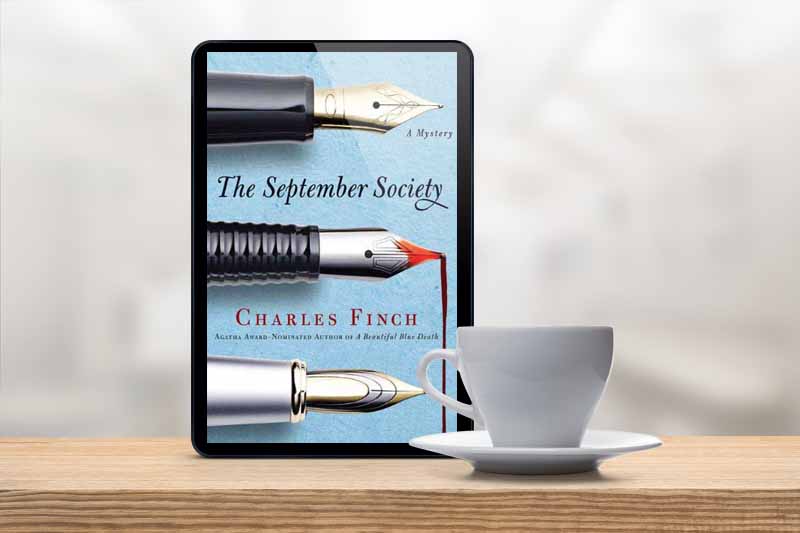
ALL THE DEVILS ARE HERE by Louise Penny

An entry in the Gamache mystery series that doesn’t take place in Three Pines? What is the world coming to??

Paris.

The premise

Armand Gamache is once again head of Homicide for the Sureté de Quebec. He is on vacation in Paris to visit his grown children and await the birth of his newest grandchild. His billionaire godfather Stephen is there, too, making for a happy family reunion. That is, until Stephen is critically injured by a hit-and-run driver.

Witness to the accident, Gamache and his wife know this was no random accident but attempted murder.

Aided by his son-in-law Jean-Guy Beauvoir, until recently Gamache’s second-in-command and now working for a Paris-based multinational engineering firm, Gamache is determined to find out who wanted to kill his godfather. Together, they will uncover a string of mysteries, including a dead body in Stephen’s lux pied-a-terre and questionable links to the French Resistance during World War II, plus funny business at the engineering firm.

The action ranges across Paris, giving us an armchair tour through rainy arrondisements. We are swept across the city, from the legendary Georges V hotel to the wounded Notre Dame cathedral to the Luxembourg Gardens and dozens of points in between. Secrets and the unexplained nip at our heels.

Note on Style

The style is often staccato, with short, sharp sentences to heighten emotional impact.

She grabbed him to her again, and they held on to each other.

Weeping for Stephen.

For themselves.

A little of that goes a long way for me and I wish it was used more sparingly, but this technique keeps the drama high.

The plot of ALL THE DEVILS ARE HERE, the 16th Gamache mystery, is solid. The climax was wholly believable and connected all the dots, especially when it comes to character development.

Bottom line

I loved the way the ending became a happy turning point for the Gamache narrative. My guess is that subsequent books will enjoy the original atmosphere and framework which underpin the success of the series.

Highly recommended.

Get ALL THE DEVILS on Amazon

Inside my CIA Career: Parting Words

Inside my CIA Career: Parting Words

I had a retirement photo opportunity with then-CIA Director John Brennan. He greeted me with a CIA keepsake coin and a firm handshake. We posed for the photographer and chatted for a minute about favorite assignments over my 30 year career.

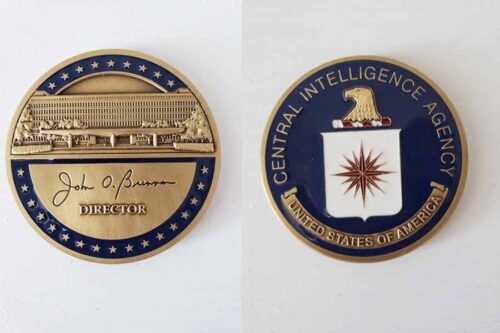
CIA Director keepsake coin

Front and back of Director Brennan's keepsake challenge coin


He asked me what I was going to do in retirement. I told him that I would be a full-time mystery and thriller author.

It wasn’t a long meeting and I knew he was very busy. As the secretary ushered me out, Director Brennan stopped me. I turned around.

After a long pause he said, “Be kind to us.”

It was an awkward moment. I murmured something brilliant like "Of course," and left.

Those were his parting words. At the time, I assumed he meant the CIA.

But now that he’s a talking head on MSNBC, I’m not so sure.

You may also like

Inside my CIA Career: The Point of It All

Inside my CIA Career: The Point of It All

Before retiring, I took a seminar about transitioning to the private sector. All the students were fellow CIA intelligence officers.

At one point, somebody raised a hand and said what everybody was thinking: “I’ve been an intelligence officer my entire professional career. It’s a very unique job. Who would want to hire someone with my skills?”

Related post: Glutinous but not Unflavorful

We all made sympathetic noises.

The instructor gave a laugh. “How many problems did you solve as an intelligence officer? Really, hard problems?”

“More than I can count,” the student replied.

“Every employer wants a problem solver,” the instructor said. “CIA officers know how to solve problems. In the private sector, that can be a rare commodity.”

The instructor’s words really resonated. Intelligence work is about answering the hard questions in support of US national security, like “Where is Osama Bin Laden?” or “What will the Soviet Union do if Germany reunifies?” or “What will motivate Kim Jong Un to give up his nuclear ambitions?”

The answers are not found in the New York Times or the Washington Post.

A CIA career means solving the problem of how to get those answers.

You may also like

Inside my CIA Career: Variety and the Spice of Life

Inside my CIA Career: Variety and the Spice of Life

What did I do?

Whenever I’m asked, “What did you do in the CIA?” I’m a bit stuck.

There’s no good snappy answer. I did a variety of things, many of which can't be defined in layman's terms.

One of the reasons for such a varied career was that I was balancing work and family. The Central Intelligence Agency might not seem like an employer who accommodates such a balance, but by being flexible and honing transferable skills like communication and decisonmaking, I was able to have it all.

Taking a helicopter view, I was an analyst for the first 7 years and an intelligence collector for the next 23.

Thirty years is a long time, but I can honestly say I was rarely bored during my CIA career. Many colleagues became life-long friends. I have good memories and some great souvenirs.

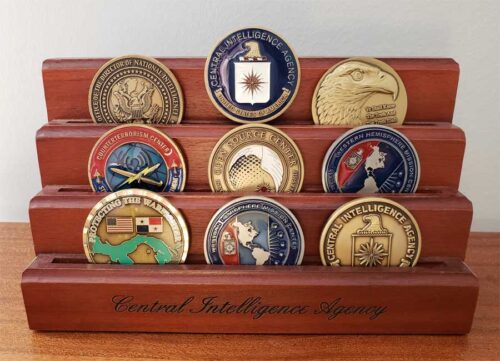
CIA challenge coins

Challenge coins from the CIA and other intelligence agencies.


Related post: Inside my CIA Career: The Analysis Puzzle

Mission areas

Unlike most officers who remain in one “mission” area for the entirety of their Central Intelligence Agency CIA career, I was lucky enough to work in all mission areas:

  • analysis,
  • operations,
  • science and technology,
  • digital innovation.


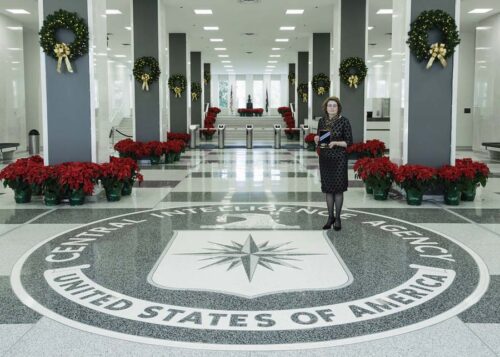
Carmen Amato at CIA 2016

Nove 2016, on the CIA seal with my Career Intelligence Medal.


I also worked in three collection disciplines.

HUMINT: information provided by human sources,

SIGINT: information gleaned from electronic signals and systems used by foreign targets, such as communications systems, radars, and weapons systems, and,

OSINT: information gleaned from publicly available sources.

Playing Favorites

Looking back, my favorite positions were all in the intelligence collection arena. As a collector, I felt the greatest sense of purpose, accomplishment, excitement, and job satisfaction.

There is nothing like being faced with a key intelligence question, especially during a crisis, and knowing that a major national security decision could hinge on some nugget of information you ferret out.

Yes, lives could be at stake. Outcomes mattered.

What you did made a difference. Sometimes you knew that, other times you didn't.

It's all about the People

I had the best bosses in those jobs, too. People who were dedicated to results. They understood the dangerous consequences of doing a job with indifference.

They kept indifference at bay by creating inclusive work environments that kept us motivated.

I had some terrific colleagues, too.

The CIA attracts a very high caliber of employee. Unique skills and talents are required, as well as the willingness to adapt to swiftly changing events and requirements. A unity of purpose quickly develops when you work with someone on matters of critical national security.

The work is unique.

You may also like

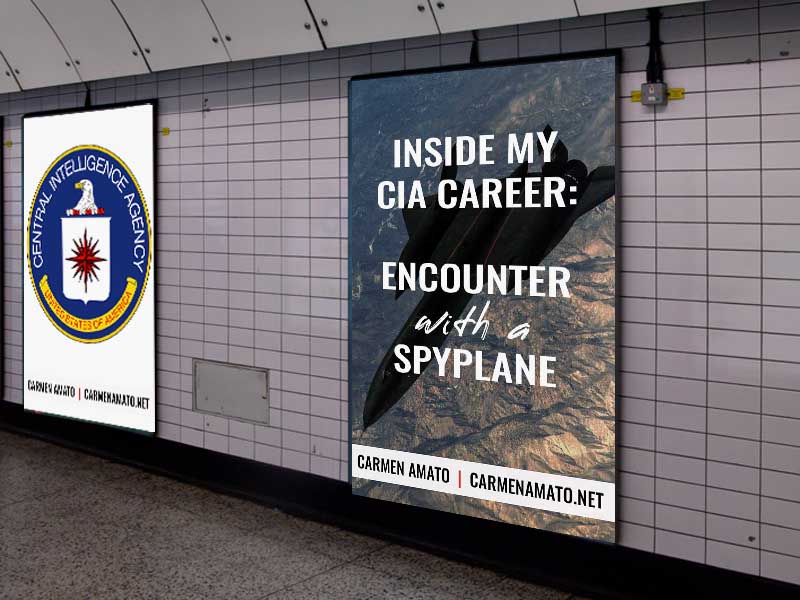
Inside my CIA Career: Encounter with a Spyplane

Inside my CIA Career: Encounter with a Spyplane

FLYING

Several years ago, my husband got his private pilot’s license and we owned a small Piper aircraft. Our son was in kindergarten and promptly fell in love with all things aviation.

This rubbed off on me. Our family was soon immersed in flying stories, books about airplanes, model airplanes, and innumerable trips to the Smithsonian’s Air and Space Museum to see among, other aircraft, the SR-71 Blackbird spyplane.

I even wrote an aviation adventure story for my son, entitled THE SECRET BLACKBIRD. It was the start of a Hardy-Boys-meets-Dale-Brown middle grade fiction series. The second book in the series was entitled THE PACIFIC GHOST.

Both books remain on a floppy drive (!) in some desk drawer and were never published.

The real secret Blackbird

Work gave me another reason to be enthralled with the SR-71.

In the 1950’s, as the Cold War ramped up, the CIA wanted a way to peer down at the Soviet Union to determine military capabilities and such. The U-2, built by Lockheed’s "Skunk Works," was doing the job, but was slow enough to be shot down, as happened to pilot Gary Francis Powers.

Lockheed built a new plane for the CIA. The new aircraft was designed to defeat Soviet air defenses by flying higher and faster than anything else in the world. This meant a whole host of innovations, materials, designs, etc.

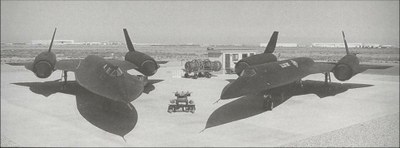
The single seat A-12 OXCART emerged after 2 years of development. The overall design and titanium construction was the basis for the more well-known SR-71, the Air Force variant. The two-seat SR-71 was slightly larger and carried a different camera and sensor load.

SR71 and Oxcart spyplanes

Comparing the SR-71 and the A-12, courtesy cia.gov


After flying 29 missions in Southeast Asia During the Vietnam War, the OXCART program was shut down. The SR-71 Blackbird continued to fly and became infinitely more famous.

A scale model of the A-12 hangs from the ceiling of the atrium connecting the two main buildings of the CIA Headquarters compound. I have a paper model created for the CIA’s 50th anniversary.

What happened to the A-12?

Eight are in museums. One stands guard over the CIA Headquarters compound.

Encounter of a distant kind

I drove onto the compound one sunny day shortly after the A-12 OXCART was installed on a special platform with two stars carved into the marble to remember the CIA crew members who died in the line of duty.

Now, general parking at CIA HQ is a bit like Disneyworld. You have to remember which parking lot and which row.

But that day, there was no need to memorize my parking space. The nose of the A-12 OXCART was pointing right at my car. Perfect line of sight.

When I was ready to leave, I just had to follow the trajectory to my spot.

I was in awe of the enormous sleek black aircraft, a reminder of our intelligence heritage. I crossed the parking lot to the massive titanium plane and read the information display before heading inside.

The day passed. When I was ready to head home I took another walk around the A-12 before following its nose to my car.

Except like a portrait whose eyes follow you, the A-12’s nose pointed at all the cars in the parking lot. Acres of cars.

For the next hour, no matter where I walked in that $%&$# parking lot, every time I turned around there was the A-12 in the distance, pointing straight at me.

I eventually found my car.

But now I know why they call it a spyplane.

See the aircraft on the CIA compound in this short video from the National Air and Space Museum:

You may also like

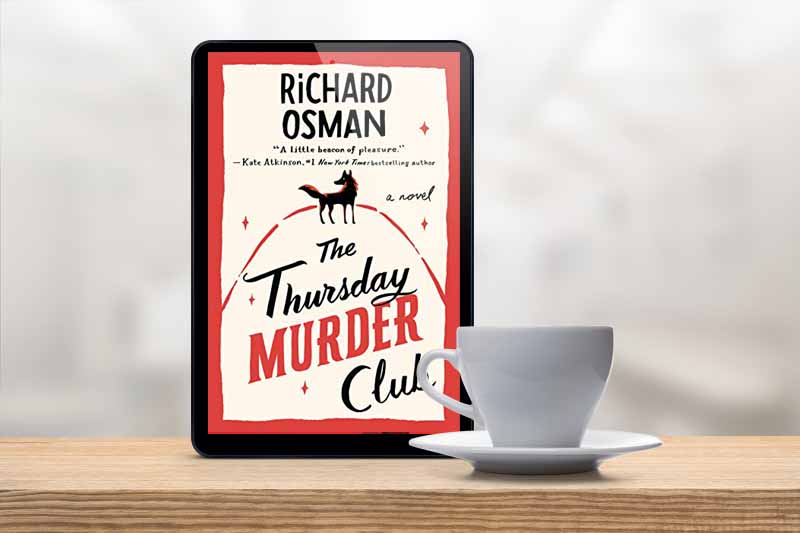
Book Review: THE THURSDAY MURDER CLUB by Richard Osman

Book Review: THE THURSDAY MURDER CLUB by Richard Osman

THE THURSDAY MURDER CLUB by Richard Osman

What happens when the residents of a bucolic senior living community in England get together to investigate a murder? For starters, one murder becomes . . . many.

I’d read so many positive reviews of this book that I was primed to love it. And I did.

The premise

A local developer wants to add on to the Coopers Chase Retirement Village, home to Elizabeth, Joyce, Ibrahim, and Ron. They are the nucleus of the Thursday Murder Club, which gets together to review cold case files. The files belong to Penny, a retired police officer who has suffered a stroke and is incapacitated. The club is kept afloat by Elizabeth, Penny’s best friend and a wily former intelligence officer with contacts everywhere.

When the property developer dies under mysterious circumstances, throwing his plans to destroy the adjacent cemetery into disarray, the club decides to solve his murder. Elizabeth is the prime mover and uses the skills of each of the members to brilliant effect. Along the way, they’ll solve several other crimes that drift across the book like errant red herrings.

The style

The novelty of the book is not only the subject matter, but the format. Joyce’s first-person diary entries are interspersed with scenes written from other points of view. All the voices carefully pull each other along through the complex case as each goes on their own small “hero’s journey.”

The more we get to know them, the more we love shrewd and mysterious Elizabeth, Joyce the man-chaser, Ibrahim the methodical retired therapist and Ron, the still-famous union activist and his son, a prize fighter making the circuit of talent competitions for the formerly famous. Add to the mix the two police officers who end up helping the club, as well as each other.

Bottom line

These well-drawn characters are so relatable that by the end of the book you’re ready for a drive to Coopers Chase. Luckily, I hear there is going to be a sequel.

Find THE THURSDAY MURDER CLUB on Amazon

Inside my CIA Career: Media Matters

Inside my CIA Career: Media Matters

What the heck is OSINT

My resume includes this line:  OSINT Analyst/Editor, Foreign Broadcast Information Service. Wrote, edited, and briefed analytical conclusions and OSINT reporting content to all levels of inter-and intra-agency audiences.

OSINT is shorthand for intelligence gleaned from openly available sources.

The Foreign Broadcast Information Service (FBIS) was one of the forerunners of the CIA’s Directorate of Digital Innovation. It began its government life (as the Foreign Broadcast Monitoring Service) as part of the Federal Communications Commission in early 1941 to listen to Japanese and German short-wave broadcasts. The new organization hired linguists and social scientists to listen, translate, and analyze radio broadcasts.

Some basics about FBIS are on Wikipedia: https://en.wikipedia.org/wiki/Foreign_Broadcast_Information_Service

After swift growth during World War II, FBIS became part of CIA when the latter organization was created in 1947.

Closed media

The FBIS mission quickly outgrew radio to include all forms of publicly available media. Newspapers, journals, and television became staple sources of critical intelligence.

During the Cold War, FBIS focused on monitoring Soviet and Chinese media.

All media in the Soviet Union, the Communist nations of East Europe, and Communist China were centrally controlled. Except for illicit broadcasts from the BBC or Radio Free Europe, citizens only had access to whatever information was released by centrally controlled news sources, such as the Soviet newspaper Pravda, East German's Neues Deutschland newspaper, or China's Xinhua news agency.

It seems unreal in this day of online information oversaturation, doesn't it?

Decoding "fake news"

With this monopoly on information, controlled media can basically say anything. Yes, this was the birth of fake news.

Thank you, Stalin, Khrushchev, and Brezhnev. Thank you, Mao and Deng. You paved the way.

Critical messages were hidden in plain sight in the news coming out of Beijing and Moscow, both for their citizens and for the overseas audience. There was intelligence to be gleaned, if you knew:

  • the meaning behind certain keywords,
  • editors and influencers in their media organizations,
  • how those media outlets connected to the ruling party and select leaders,
  • the difference between news reports for the domestic and the international audiences.


Related post: The Analysis Puzzle

Controlled media during the Cold War put out a mix of real news and propaganda.The history website, HistoryCollection.com described the Soviet approach:

Communist propaganda in the Soviet Union was used to indoctrinate citizens with the Marxist-Leninist ideology in order to promote the Communist Party. In societies where censorship was pervasive, propaganda was a ubiquitous method of controlling people’s thoughts.

The main Soviet censorship body, the General Directorate for the Protection of State Secrets in the Press under the Council of Ministers of the USSR (Glavlit), was established in 1922 to “ensure that the correct ideological spin was put on every published item.”

During the Stalin Era, deviation from the dictates of official propaganda was punished by execution or deportation to Gulag labor camps. After Stalin, such hash disciplinarian methods were replaced by punitive psychiatry, prison, denial of work placement, and loss of citizenship.

See the full article and a great poster collection: https://historycollection.com/50-communist-propaganda-posters-soviet-union/

To pull back the Iron Curtain, so to speak, we had lists of editors and news commentators and knew their ideological and political affiliations. If they deviated from their usual themes and phrasing, it could be a red flag.

For example, every Thursday, China’s Foreign Ministry made a statement to the press. As negotiations for the end of the 99-year British lease of Hong Kong began, everyone was worried. Could another lease be negotiated? If not, how would Communist China handle raucous and democracy-loving Hong Kong? (FYI, those fears are apparently playing out today.)

Certain buzzwords were known to be messages to the West. If they appeared in the briefing it meant the Chinese wanted to officially emphasize that point. That would surface in the public negotiations.

But if the words appeared in in a minor news outlet, it might be just a trial balloon. Testing a harder line, perhaps. Or seeing how the people in Hong Kong reacted before the government espoused the policy.

For more on the Hong Kong handover, check out this article from CNN: https://edition.cnn.com/2017/06/18/asia/hong-kong-handover-china-uk-thatcher/index.html

Fake news techniques

Media analysis was quite a fascinating discipline. It was an insider's view of how an audience could be groomed/indoctrinated.

Here are a few techniques used by both official Chinese and Soviet media:

  • Media reports are slanted or shaded a certain way,
  • Context or pivotal details are left out (how much and for how long),
  • Headlines mislead, exaggerate, or dismiss  (i.e. clickbait),
  • Facts that do not align with the article’s intended slant are buried at the bottom or massaged into long and dull paragraphs,
  • Phrasing of the intended message is lively, impactful and emotional; rival concepts are portrayed as dull, dangerous or otherwise unappealing,
  • Minor news stories are used to obscure/deflect attention from more important but potentially troublesome stories,
  • Multiple news outlets use the same exact terminology to create repetition and uniform coverage in order to emphasize/downplay/heighten an event.
  • Absence of reporting diminishes a story when "authoritative" media outlets fail to report on a story or offer only a partial report.
  • Gaslighting to confuse or deny events, enabling media to claim that an earlier political promise or position "never happened."
  • If editors disappeared or got demoted after a controversial story--early versions of cancel culture.

Imagery can also follow these patterns. For example, certain politicians are shown as grim by one news outlet and smiling by another. Who was on the grandstand at Soviet parades was always an indicator, especially if they were in one picture but not in others, etc.

To reiterate, as an OSINT analyst for a few years during the Cold War, I looked at “closed” media, which meant all the media was controlled by the central government. The population did not have access to news reports from other outlets. This suppression of information made it relatively easy for the government to shape opinions.

Remember, this was before the internet, smartphones, and Google.

It was a fascinating job. Now and then I include a bit of media wonk in the Detective Emilia Cruz mystery series.

But lately, every time I turn on the news, I get a feeling of déjà-vu.

You may also like

Inside my CIA Career: Secrets of Great Dialogue

Inside my CIA Career: Secrets of Great Dialogue

Competing Motivations

As happened so many times over the course of a 30-year CIA career, I was either a participant or an observer in a dialogue.

Not the conversation that happens when you are both talking about the same thing or want the same thing, but a conversation in which what you want is light years away from what the other person wants.

There's more than one goal at risk or agenda being carried out.  I'm not talking about arguments, but carefully nuanced conversations. Goals and agendas are hidden.

In these situations, revealing a personal agenda, or “laying it all on the line” could become a vulnerability the other person could exploit.

As an intelligence collector, I became closely acquainted with those types of conversations. Over and over, without really knowing it, I got a lesson in crafting great dialogue by picking apart a transcript or recording to discover those hidden agendas.

Mystery author's CIA challenge coins

Part of my collection of CIA challenge coins. These keepsakes are from internal components and/or Director of National Intelligence agencies.


Related post: Inside my CIA Career: The Analysis Puzzle

Dialogue Techniques

Based on what I learned during my CIA career, here are the techniques I use to create tension-filled dialogue, especially in the Detective Emilia Cruz mystery series:

Deceptive behaviors: Deception, obfuscation, bluffs, rabbit holes, misdirection, failure to answer questions or rebutting a question with another question—all of that can happen during the course of a dramatic piece of dialogue.

A deeply desired objective: If at least one character has a focal point or a desired end state, dialogue can twist and turn around that objective. The scene becomes even more emotionally charged if the probability of achieving a desired outcome waxes and wanes.

Be the obstacle: Start dialogue by giving each character an emotionally-driven agenda AND make sure one of them actively tries to prevent the other from achieving something vital. Stick with one character’s inner voice to drive the tension.

Resources

I'm often asked what is the biggest mistakes authors make when writing spy thrillers and my answer is always the same. Not enough deception. (Hmmm. Maybe someday I'll write the fiction author's guide to lying.)

Books by John LeCarre and Jason Matthews layer on the deception and are very authentic as a result.

Related post: Book Review: RED SPARROW

Here are a few resources to help you understand the power of deception in writing:

In SPY THE LIE, by former CIA officers Philip Houston, Michael Floyd, and Susan Carnicero, there is a great vignette in which CIA officer Phil is speaking to Omar, who has been an asset for 20 years. Phil suspects Omar of also working for an enemy intelligence service.

Phil’s agenda: find out the truth and be sure Omar isn’t concocting the story he thinks Phil wants to hear.

Omar’s agenda: conceal the truth and convince Phil he’s honest.

While the book doesn’t include a transcript of the conversation, it’s a great example of competing agendas.

Another great resource is THE COMPLETE GUIDE TO VERBAL MANIPULATION by James K. Van Fleet. Yes, such a book really exists. I think it is out of print. Hunt a copy in used bookstores.

Beyond the words, there’s the body language. I dislike scenes in which there’s paragraphs of dialogue without any idea how the characters are behaving physically. THE EMOTION THESAURUS by Angela Ackerman and Becca Puglisi is a great resource for suggesting behaviors that indicate stress, lying, or deliberate obfuscation.

You may also like

Inside my CIA Career: Make it “Actionable”

Inside my CIA Career: Make it “Actionable”

CIA career

During my 30-year CIA career, it was always impressed upon me that we were stewards of the taxpayer’s money. With that in mind, there was effort to make sure the CIA and sister agencies got value for the money when it came to intelligence collection.

Several times during my Agency career, I spearheaded assessments to evaluate intelligence. Basically, this involved surveying customers in a systematic way to see if the information was useful.

Users of classified intelligence are found across the US government.The customer could be another CIA component, a US military command, the intelligence section of the US Treasury, the Department of Energy’s scientific laboratories, etc.

Related post: What I did in the CIA: Wordsmithing

User needs

One word that often comes up in these situations is “actionable.” In short, did the intelligence enable the customer to take action? We also asked what the customer would do if the information stream was reduced or even ended.

Every evaluation effort meant connecting with many conflicting agendas. The intel collector wants feedback to do a better job, the analyst wants more specific ways to answer intelligence questions from above, and the customer wants a crystal ball.

Bin Laden compound

An example of "actionable" intelligence: overhead imagery of the Bin Laden compound in Pakistan, courtesy CIA.gov

Transferable skill

Dealing with this mixing bowl of agendas created a transferable skill which I've adapted to being a mystery author. This means trying to make every character want something, which is key to building conflict between characters.

Do I draw on real-life experiences to write this type of conflict? You betcha.

Scenes in which competing desires rise to the surface are some of the more impactful things I have written. One of my favorite scenes is the conversation in THE HIDDEN LIGHT OF MEXICO CITY between anti-corruption crusader Eduardo "Eddo" Cortez Castillo and a drug kingpin calling himself El Toro:

Gomez Mazzo laughed, a shouted bark that rang in the cabin. “El Toro likes this man!” he exclaimed to his bodyguards. He leaned forward. “A mutual blackmail, no? We have each other by the short hairs, eh?”

Eddo grinned and it felt like death.

“El Toro keeps the CD and Hugo’s, ah, operation, as you say, goes away.” Gomez Mazzo waved the rum cooler bottle in the air, his battered hand dwarfing it. “But you have a copy of the information and can take it to the media or the army or whoever you think will help if I don’t keep my part of the bargain. But if you make it public, we leak that you made a deal with the El Toro cartel.” He took a pull from the bottle, still smiling in triumph. “Romero’s pretty boy the dirtiest of them all. You would not survive prison.”

“That would appear to be the deal on the table,” Eddo said evenly.

Gomez Mazzo gestured at another bodyguard who took out a small laptop. Eddo handed over the CD. He could feel Tomás rigid next to him. Gomez Mazzo watched the screen intently. His jowly face hardened as he toggled through various files.

Eddo lost track of how long they sat in the cabin, the boat rocking gently as Gomez Mazzo combed through the data on the CD. Tomás was seasick for sure. His breathing was hoarse and his fingers dug into his thighs.

“We can come to an agreement, Señor Cortez,” Gomez Mazzo said at length. “El Toro may have lost a president but won an Attorney General.”

Eddo swallowed back a retort and took out copies of Luz’s sketches and a picture of Miguel. “These men aren’t part of the agreement,” he said. “If I find them, I will kill them.”

Gomez Mazzo looked at the Asian, whose only reaction was a barely perceptible lift of one shoulder.

“These are not El Toro’s men,” Gomez Mazzo said.

“So you won’t miss them.”

A smile flickered at the corner of Gomez Mazzo’s mouth. “She was a maid.”

Eddo met the other man’s eyes. “Nobody touches her.”

“Some maids are very good with . . . starch.”

“Just so we understand each other,” Eddo said.

CIA career

Find HIDDEN LIGHT on Amazon. #Free for Kindle Unlimited readers.

Did it make a difference?

But enough about me. Did these intel evaluations make a difference to national intelligence?

In a word, yes.

In one case, the evaluation was sponsored by the Director of National Intelligence and directly led to the creation of a new channel of actionable intelligence.

DNI logo

DNI logo and agencies that make up the US Intelligence Community

In another, CIA and NSA joined forces to shift resources and collect critical intelligence in the most cost effective manner.  My official resume says:

  • “Led CIA team, negotiated unprecedented partnership with National Security Agency” and,
  • “Findings served critical US Intelligence Community resource allocation debate and decisions.”

Although we didn’t know it at the time, the joint evaluation effort, coming shortly before the terrorist attacks on 9/11 and subsequent wars in Afghanistan and Iraq, meant that a significant stream of intelligence helped inform US military forces in the war zone.

You may also like

Inside my CIA Career: The Moving Picture Show

Inside my CIA Career: The Moving Picture Show

Thanks to my CIA Career

If you’ve read the last few books in the Detective Emilia Cruz police series set in Acapulco, you may have noticed that video plays an important role in providing clues and solving the mystery.

In 43 MISSING, the footage from police interviews and metadata information embedded in video, as well as speech-to-text video searching, are all vital plot elements. Emilia creates a database, using metadata, in order to do keyword searches against raw video.

43 MIssing

Get it on Amazon. Free for Kindle Unlimited, too!

In RUSSIAN MOJITO, the killer is spotted on surveillance video inside the luxurious hotel where Emilia lives.

Russian Mojito cover

Get it on Amazon. Free for Kindle Unlimited, too!

In NARCO NOIR, a hidden camera jumpstarts the action while a bit of movie making leads Emilia to a game-changing decision.

Narco Noir by Carmen Amato

Get it on Amazon. Free for Kindle Unlimited, too!


All of these ideas for how video helps to create or solve a plot element comes from my CIA career and my experience using video as an analyst, collector, or teacher.

Video for Intel Purposes

Video is an unparalleled tool for understanding environment, culture, industrial capability, personalities. The sources of useful video are legion.

Traditionally, news footage was the primary source of video content. From North Korea to Latin America, video has provided key insights. For example, we tracked the failing health of Fidel Castro and Hugo Chavez. We tracked failing economies and crumbling infrastructure.

Related post: Inside my CIA Career: Analysis

Here's a particularly affecting piece of video from BBC on Venezuela.


Recently, The New York Times, PBS, and other media outlets have published powerful video of China imprisoning its Uighur population even as Beijing denies it.


Social media has exploded video content. People enthusiastically reveal much about themselves, their environment and their vulnerabilities.

From dashcams to screen captures, there are so many new sources of video that can potentially be exploited for intelligence (and mystery novels!).

Video is also a learning tool. As the head of one of the US intelligence tradecraft schools, I incorporated video in training courses to illustrate intelligence challenges and formulate role-playing exercises.

Technical collection

I really learned the power of video as a technical intelligence collector. I spent hours monitoring surveillance video, tweaking camera angles, and identifying patterns of behavior.

The job was both tedious and exhilarating. Some footage was trash, other minutes were treasure.

But just like in the Detective Emilia Cruz books, grainy surveillance footage yielded actionable intelligence.

You can learn a lot from people when they don't know they are on camera.

You may also like

Book Review: True Fiction by Lee Goldberg

Book Review: True Fiction by Lee Goldberg

TRUE FICTION by Lee Goldberg

This outrageously campy thriller is pure escapism. Prepare to suspend disbelief, enjoy a zany premise, and get carried away.

The premise

Ian Ludlow, author of the he-man soldier of fortune Clint Straker thriller series, is a former TV writer from L.A. who is nothing like his heroic protagonist. But Ian is famous enough to be invited to a CIA-sponsored retreat with other action-adventure writers to dream up villainous scenarios so the Agency can prepare for the world’s emerging threats.

(Note: the CIA has lots of folks imaginative enough to write their own scenarios. See blog series above, thanks 🙂

Two years later, Ian is on a book tour in Seattle when the crazy scenario he developed for the CIA actually happens. Panicked, he reaches out to the other retreat writers, only to find out that they are all dead.

Suddenly, Ian’s recent rash of accidents don’t seem so random. When another attempt is made on his life, he goes on the run, dragging along a dog walker who works part-time for his publisher.

Ian doesn’t know the retreat wasn’t sponsored by the CIA but by a power-hungry corporation determined to use his scenario to take over US national security agencies. Ian is a loose end that needs to get tidied up.

The twist

Knowing that he’s being tracked, Ian needs help. Luckily the TV show he wrote starred the sort of help he needs. As the TV show comes into focus, it’s one of the funniest parts of the book.

Hollywood and the Vine. The tagline of the TV show is hysterical: Half man, half tree. All cop.

Sort of Starsky and Hutch meet The Ents.

Overall, the pace is slick, the writing is punchy, the situations are almost believable, and the campy fun never stops.

Bottom line

Although TRUE FICTION wraps neatly at the end, Ian’s saga continues. I can’t wait to grab the next book in this series.

Find TRUE FICTION on Amazon.

Inside my CIA Career: the Coup Kit

Inside my CIA Career: the Coup Kit

Coups

My official resume says this about the 5 years during my CIA career when I was an all-source analyst:

Performed all source analysis of geographic topics of intelligence interest in support of US national security, including National Intelligence Estimates

Action officer during 24/7 analytic coverage of coup d’état events in Africa, the South Pacific, and East Asia.

Let me direct you to the phrase “coup d’état.” When you are an intelligence analyst assigned to cover a country, and that country becomes engulfed in civil unrest, a military takeover, etc., you are the person expected to pull all the information together, provide analysis of fast-breaking events, and brief stakeholders, i.e. key decision makers like the President.

Related post: Inside my CIA Career: Analysis

Carmen Amato in the South Pacific

In the South Pacific, circa 1988

Step 1: Ask

The first question to be answered in a coup event was always “Are any Americans in danger?”

If the country is a major US partner or ally, if the US has a national security or geographical interest there, or if someone in the current administration has ties to that country, then there’s even more pressure to swiftly assess the situation, distill facts, and provide judgments in written reports and verbal briefings.

Step 2: Get a list

When I was an analyst, there were so many coups in Africa, the South Pacific, and East Asia that we developed a checklist of what to do if there was a coup in your country. My boss Jerry, who favored plaid sport coats and ran around in his socks, was an experienced officer who kept a “coup kit” in the office.

It was an actual box with checklists, phone numbers, and exemplar reports from previous coup events so when things fell apart in your country and you were called into the office at 2:00 am, you weren’t starting from scratch as the phone rang off the hook.

Related post: A taxi ride in Fiji and other tales

The coup kit also included a blanket and snacks.

Coup d’états aren’t always fast. A prolonged coup event could be a grueling marathon of reporting, briefings, targeting planning, and meetings scheduled to coincide when people across the world are awake.

Few meetings take place at your desk, but could be held at the State Department, the Pentagon, etc. I recall a particular week-long coup attempt in a country that was an important strategic ally for the US. We worked in three shifts to ensure 24/7 coverage, constantly trying to make sense of fragmentary and conflicting information.

Teams had to prep for twice daily video conferences, a stream of ad hoc special reports, and the regular intelligence publications.

Jerry’s coup kit was a great lesson in giving yourself the best possible advantage when you know hard things loom ahead.

Step 3: Apply the lessons

I’ve tried to adapt that lesson to being a mystery author by developing systems to streamline my publishing efforts and create repeatable processes. Every so often, I update my writing coup kit with checklists and resources to help me navigate the publishing world. A system of clipboards keeps everything organized.

Red cabinet in my office

Red cabinet in my office

And snacks.

What’s in your coup kit?

Backpack photo by Zephan Ayoob on Unsplash

You may also like

Pin It on Pinterest