
You are here: Detective Emilia Cruz series > DIABLO NIGHTS > Researching the book
RESEARCH NOTES: DIABLO NIGHTS
I was in Rome, Italy for a conference and stumbled upon a gift shop near the Vatican filled with rosaries, religious souvenirs, and books about popes and saints.
A small paperback called MEXICAN MARTYRDOM caught my eye and introduced me to a shocking and heart-wrenching episode in Mexico's history I'd never known.
Combined with a controversial skyscraper project in Panama and homegrown Mexican militias, my Vatican discovery ignited a startling story.
CRISTERO WAR
I learned about the Cristero War in a small volume that I found in that Vatican gift shop. The small paperback, which I still have, is MEXICAN MARTYRDOM by Wilfred Parsons, S.J. The author name's name was buried in the text on the back cover which told of "true stories of the persecutions" and the "atrocities of those times" and the "heroic resistance of Mexican Catholics" in the 1920's.
In the late 1920's the Mexican government of President Plutarco Calles tried to outlaw the Catholic Church, provoking what became known as the Cristero War. The reasoning behind the move was a belief that the Catholic Church, the center of life in most communities, running schools, higher education and charitable programs, was a rival for power in Mexico, having more influence over day-to-day lives than any government. Church property was seized. Under pain of execution, priests were prevented from carrying out the Sacraments.
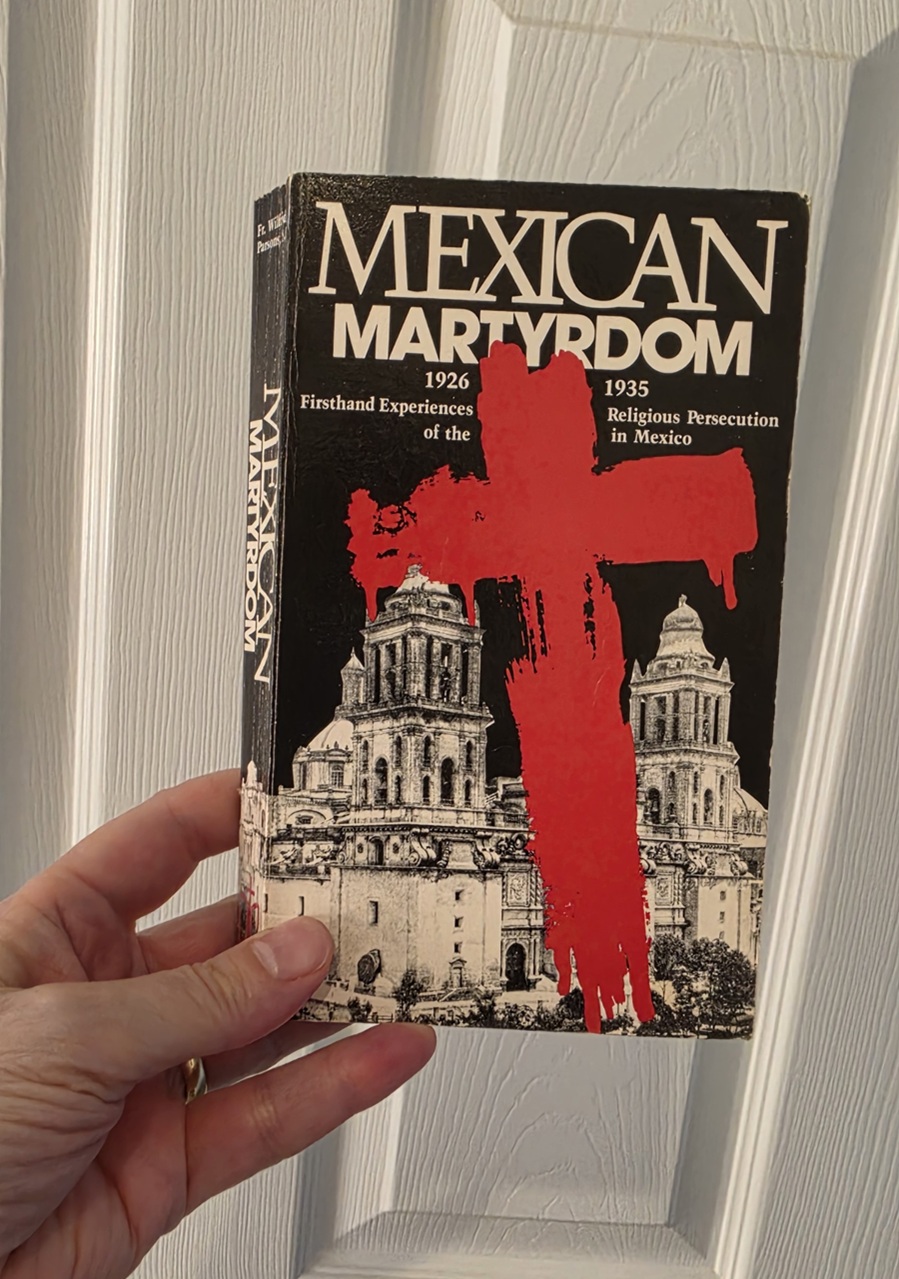
PHOTO: Holding the (now) dog-eared book I found in a Vatican shop.
Much of MEXICAN MARTYRDOM is devoted to the story of Miguel Pro Juarez, a Jesuit priest executed by firing squad in 1927. Padre Pro, as he was called, was born in Mexico, ordained in Belgium, and returned to Mexico at the height of the crackdown on the Church. Wearing disguises, he walked, bicycled, and took taxis to carry out his priestly duties, evading soldiers and writing about his escapades and flair for the dramatic with humor. A legend grew around him as being “untouchable” but after a year of near-misses he was finally caught by government soldiers and sentenced to death without a trial.
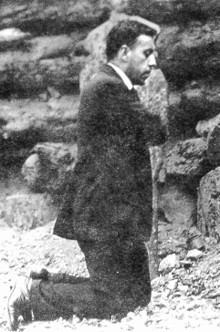
PHOTO: Padre Pro kneeling to pray before being executed by firing squad, from catholic.org.
Much of MEXICAN MARTYRDOM is devoted to the story of Miguel Pro Juarez, a Jesuit priest executed by firing squad in 1927. Padre Pro, as he was called, was born in Mexico, ordained in Belgium, and returned to Mexico at the height of the crackdown on the Church. Wearing disguises, he walked, bicycled, and took taxis to carry out his priestly duties. A legend grew around him as being “untouchable” but he was finally caught by government soldiers and sentenced to death.
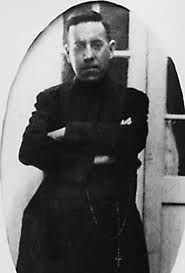
PHOTO: Miguel Pro in better days from catholicglasses.org
When Pro was executed on 23 November 1927, the government made sure that a photographer was there to record the event, aiming to make an example out of Pro’s demise. What happened next was not part of the government plan: Padre Pro blessed the head of the firing squad, forgave him, then flung out his arms, holding a cross in one hand and a rosary in the other, and shouted “Viva Cristo Rey.”
Pictures of the execution were published in newspapers the next day and had the exact opposite effect. Padre Pro was so well known that 40,000 lined streets to see his casket go by. Pro’s words became the rallying cry of those opposing the government's attempt to eradicate the Church, marking the beginning of the end of the Cristero War.
Pro was beatified by the Vatican in 1988 (first step on the road to sainthood) and is now known as Blessed Miguel Pro.
I found more details in the biography BLESSED MIGUEL PRO by Ann Ball. The publisher kindly let me use a poem by Pro as the quote at the beginning of DIABLO NIGHTS.
Also in 1988, the Miguel Agustín Pro Juárez Human Rights Center (PRODH) was established in Mexico. PRODH is an advocacy center, training hub and reporting organization focusing on victims of violent crimes, missing persons, and other key human rights issues. I frequently turn to the center’s statistics and analysis when I’m researching the Detective Emilia Cruz series.
SELF DEFENSE GROUPS & CROOKED COPS
Known as grúpos de autodefensa, self-defense groups are growing in size and numbers in Mexico. These are private militias that often spring up organically when a community takes security into their own hands, filling the gap when law enforcement or military troops can’t or won’t defend against organized crime.
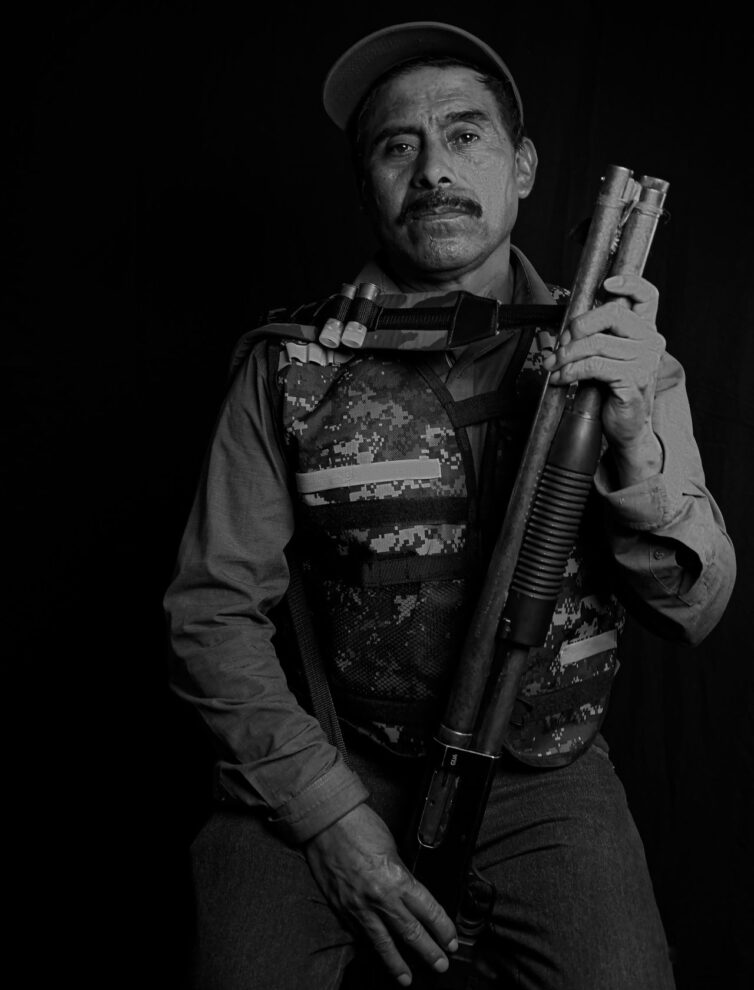
PHOTO: An unidentified autodefensa member by omar william david williams via Pexels.com
Although autodefensas have been successful in protecting their neighborhoods, farmland, and people against organized crime, their arms and actions often put them at odds with government forces.
What happens when crooked cops enter the picture?
In DIABLO NIGHTS, Detective Emilia Cruz skates dangerously close to the Acapulco police department's version of Internal Affairs, because of a rookie she is assigned to train.
THE SCREW
The F&F Tower in Panama City is a 52-story office skyscraper in Panama City, Panama completed in 2011. It’s known locally as the “Tornillo” (screw) for its spiral architecture.
.
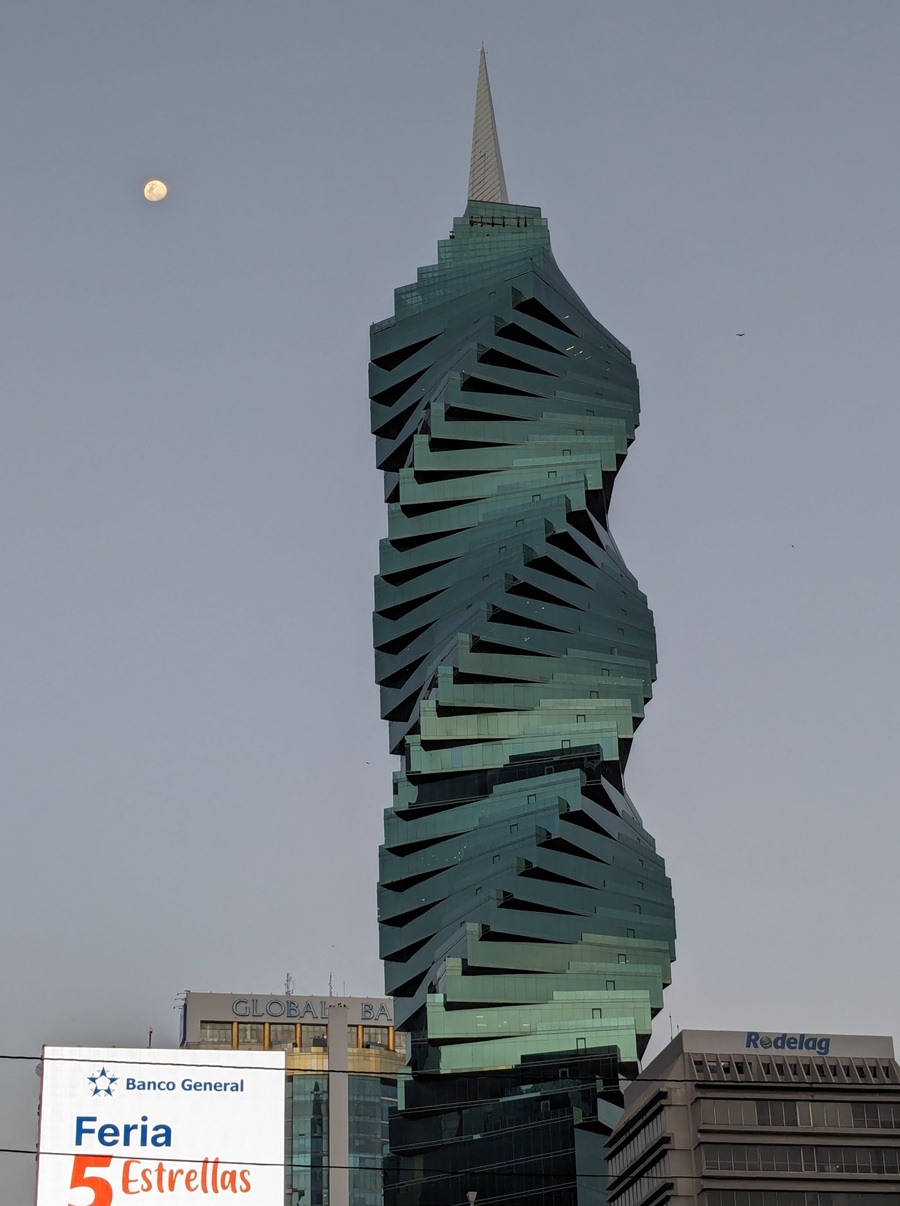
PHOTO: The spiral FandF Tower in Panama City, Panama by Maysam Yabandeh via pixnio
It’s one of the tallest buildings in Panama City, with a glass façade that looks as if each floor is twisting away from the one below.
We lived in Panama while it was being built, to the accompaniement of rumors about bribes. The construction was no easy feat and its opening was delayed for months because of questions about the stability of the ground.
Just imagine being on top of the building before the upper floors were competed. Looking down and seeing all the jutting glass angles . . .