


Friday Fiesta: The Real Big Bird, Famous Birthdays, and Beer for Fido

Coming 30 January! CLIFF DIVER: An Emilia Cruz Noveldog in birthday hatAs a fiction and mystery author I love to weave  unique cultural gems into the plot. Most of the time I draw on my own world travels and experiences living in Mexico and Central America.

In these Friday Fiesta posts I highlight cultural stories worth celebrating. The unique, the odd, the thought-provoking. Join the movement and share your own good news stories on Twitter with hashtag #FridayFiesta.

Red Robin

The 1to1media.com website carried this super story about the Red Robin restaurant chain’s official policy of random act of kindness. Red Robin’s signature “Ymmmmm” also means that management and wait staff are empowered to cut customers’ bills, offer on-the-spot specials for customer events and other actions that elicit customer testimonials. We’re not talking just a few comments a sidebar. There are so many comments on the Red Robin website that it is a whole section. Now go get a burger.

Sistine Chapel aged 500 and colder

About three years I was lucky enough to tour the Vatican. I walked through the Sistine Chapel with my head canted back in awe and the rest of me roasting in a herd of tour groups. This amazing space celebrated its 500th anniversary last October and several websites like the Cultural Travel Guide celebrated the occasion with a story or retrospective. But keeping this 500-year-old wonder in good shape is a herculean act of historic preservation: dust, dander and other “bodily debris” from the thousands of tourists who pass through every day dirty it up. The UK’s Guardian quoted the director of the Vatican museums, Antonio Paolucci as saying that the Vatican will install a special carpet and air handling systems to ensure that “visitors who traipse sweat, dust, skin flakes and hair into the 16th-century chapel will be ‘dusted, cleaned and chilled.’” Maybe next time I'll bring a sweater. One that doesn't shed, of course.

A Tubular Birthday

London’s subway system, the Tube, is 150 years old this year. Guardian reporter Stephen Moss celebrated with a 52-mile ride on the Central line, including the 6 miles used before 1994. His commentary is consummately British and clever (From Epping I go just one stop – to Theydon Bois. I've never been to Theydon Bois, but have always been captivated by the name, which suggests a Victorian actor-manager or a well-meaning but talentless amateur captain of the England cricket team c 1910) and the journey, as well as key moments in Tube history, comes to life in his words. He does mention the price of a go-anywhere ticket, which made me gulp, but it is a ride on a piece of history.

Beer in the Doghouse

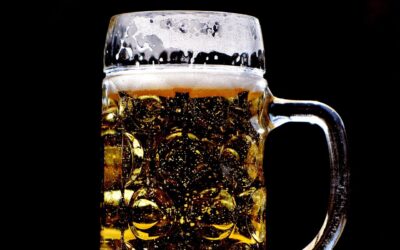
According to paste.com, Boneyard Brewery in Bend, Oregon, has created an alcohol-free beer for dogs made of vegetable broth, water and spent grain from the brewery. Paste.com says the beer, which is sold in 16 ounce bottles, can be enjoyed by Fido as a treat by itself or mixed with dry food for the ultimate dinner. Let the party start!
Carmen's books on amazon.com

The Friday Fiesta: An Outdoor Seat, Music, Chocolate, and a Story

As a fiction author I love to weave  unique cultural gems into the plot. Most of the time I draw on my own world travels and experiences living in Mexico and Central America.

In these Friday Fiesta posts I highlight cultural stories worth celebrating. The unique, the odd, the thought-provoking. Enjoy and share to make the world a little smaller today.

Have a Seat

The website theverybestop10.com brings us a montage of park benches around the world that is surprisingly startling and thought-provoking and nearly had me running for my passport. From a bench that looks as if it is part of a giant slingshot by German artist Cornelia Konrads to book-shaped benches in Istanbul and a shark attack bench in Bangkok, these photos and the imagination behind them are a guaranteed smile. Check it out—there might be a bench near you.

The Landfillharmonic

There are a few YouTube videos on the small orchestra created in Cateura, Paraguay, using instruments made from trash from a local landfill. I recommend a quick view of this 3 minute short. The stringed instruments sport odd shapes and labels from the boxes, cans, and other containers cannibalized to make them but the music—and obvious dedication of the music teacher--is worth celebrating. You can check out this Facebook page for more about the orchestra and the documentary about it from an often overlooked part of the world.

Saving Chocolate

The cultureist.com online magazine—one of my favorite feel-good online locations—carried this interesting story about cocoa farmers in the impoverished Democratic Republic of the Congo. Candy maker Theo is producing two new organic, fair trade certified chocolate bars: Pili Pili Chili, "an intensely warming blend of cocoa, vanilla, and spicy peppers; and Vanilla Nib, a scrumptious mix of cocoa, creamy vanilla, and crunchy cocoa nibs." The website reports that Theo says the “fast-growing, high-yield crop requires minimal re-planting, prevents deforestation, commands solid global prices, and is a major source of income.” Theo chocolate is sold online and at Whole Foods Market stores.

Story Sees the Light of Day

“The Tallow Candle,” a handwritten early story by Danish storyteller Hans Christian Anderson—author of “The Little Mermaid” and other famous tales--was recently unearthed in a box of miscellany by local historian Esben Brage in the National Archive in Odense, Andersen’s home town. Published in English by Danish media outlet politiken.dk after validation by experts including Ejnar Stig Askgaard of the Odense City Museum, Bruno Svindborg of the Royal Library and Professor Johan de Myliu, you can read it here. As the UK’s guardian.co.uk reported, “The story tells of a little candle, dirtied by life and misunderstood, which eventually finds happiness after a tinder box sees the good at its heart and lights it.” Given the news lately, this discovery is pretty timely. We all need a little more light in our lives.

Find Carmen's books on amazon.com today

Walking the Mouth of Hell

Walking the Mouth of Hell

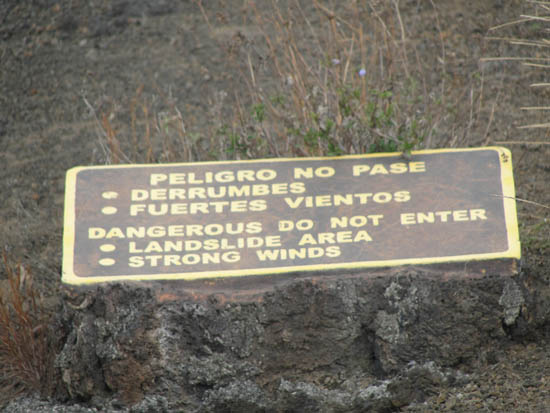
warning signI ended up with the yellow hard hat but what I really needed were safety goggles. My eyes watered from the cinders in the air. Heat rose from the black porous rocks that lined the uphill path and within minutes my jeans were damp with sweat. The smells of sulphur, rotten egg, brimstone, eddied in the strong wind.

We were climbing the marked paths around the multiple calderas of the still-active Masaya Volcano, 23 kilometers from Managua. The area is a well-preserved Nicaraguan national park--the country's first--that includes Volcán Nindirí, which last erupted in 1670, and Volcán Masaya, which blew in 1772. The relatively new Santiago Crater was formed between the other two in 1852. Moon Guides has more about the volcano here.

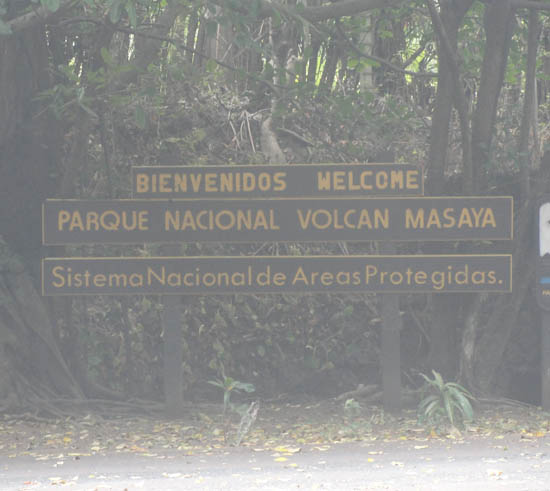
park entrance Masaya

Masaya is a well laid out national park

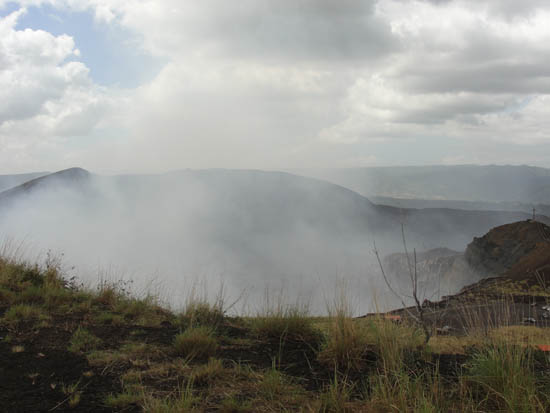
Masaya crater

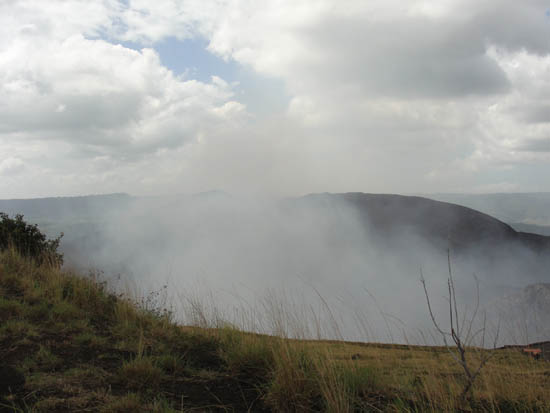
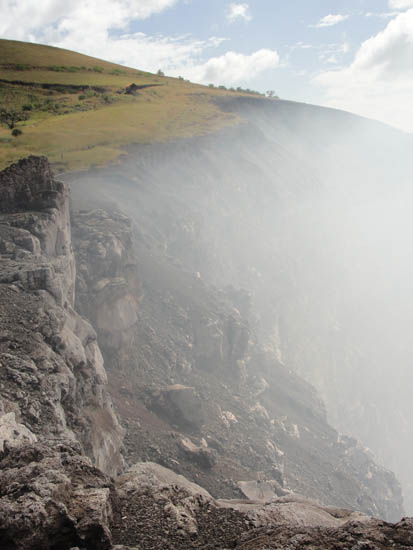
Steam billows from the Santiago crater, which experienced a partial eruption in April 2012

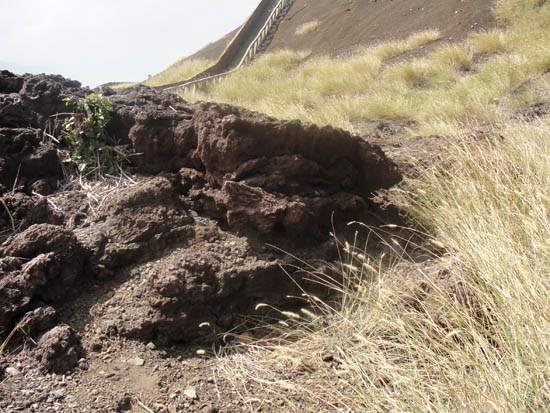
At the top of the first rise, we turned and tried to catch our breaths, heat wafting up from the path that wasn’t so much of a path as it was a long series of steps cut into the sides of the craters. The visitor’s center only a few kilometers from the park entrance had offered an informative series of rooms about geology, tectonic plates, Central America’s volcanoes and other scary things cloaked in science, where we’d learned that the Masaya volcano occasionally belched out the type of magma that hardened into lava bombs upon exit. The steps we climbed were bound by lumber and these big lava chunks.

rocks

Bubbly black lava rock was everywhere

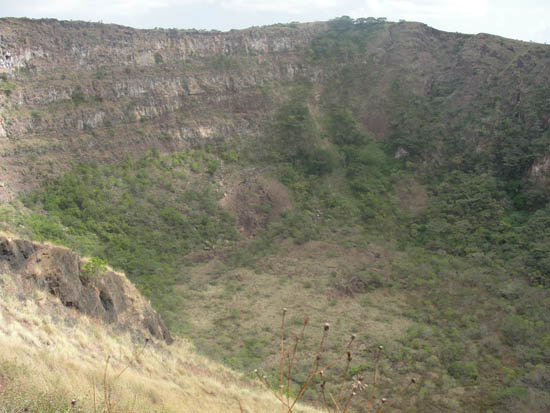
We found the relatively small San Francisco crater at the top of the path. San Francisco was long dormant and the big bowl in the ground was now covered in grass and scrubby shrubs, with the occasional yellow flower poking through. As I looked over the stunning landscape with the crater at my back, the wind threatened to whip the camera out of my hand.

crater

The San Francisco crater looks like a green bowl

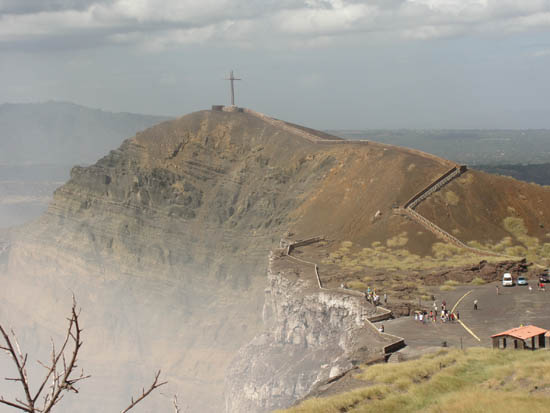
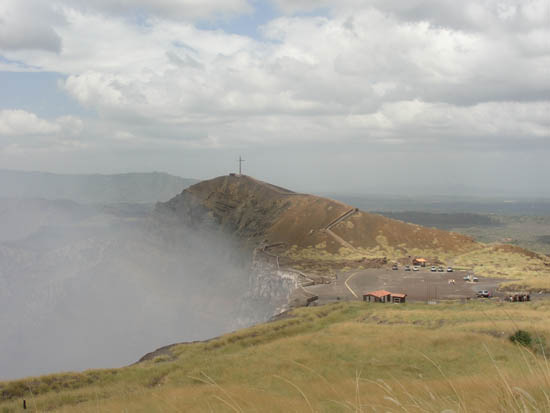
Nearly a mile away, we could see the smoking Santiago caldera. Above it was the cross placed there in 1529 by Father Francisco Bobadilla to exorcise the demons he believed lived within. The Spanish explorer Gonzalo Fernandez de Oviedo called the smoking volcano the “mouth of hell.” He had himself and another man, Friar Blas del Castillo, lowered into the caldera thinking to find gold there. He didn’t find gold but probably spent the next two days blowing ash out of his nose and wondering why his ear wax had turned black.

cross above volcano

The cross high above the volcano dates from 1529. The walkway to it is closed due to landslides.

Mother Earth has a sense of humor, I thought to myself as I watched steam billow out of the Santiago crater. It was a unique sight. Powerful and a little scary. We watched the steam drift, getting thicker and thicker, until it obscured the far side of the crater’s lip.

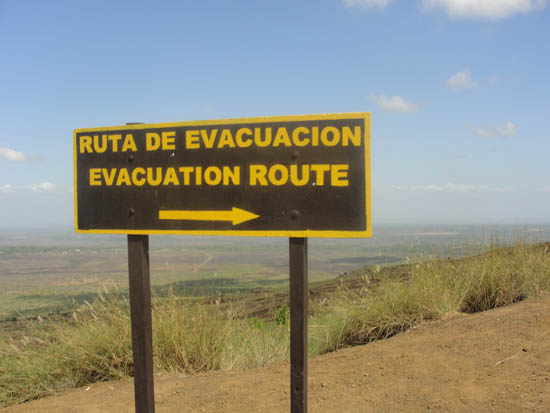
When we’d first driven up to the main viewing area, along a curving road that led up from the visitor center and the guard who handed out the hard hats, we’d been able to see maybe a third of the edge but now most was hidden behind a white cloud. All parking was facing out, in case an evacuation was in order. The wall built at a low point in the crater’s lip barely came to our knees but any rush of vertigo was lost in the stunning view.

sign

In case the lava bombs start falling and we have to know which way to run

We started back down, our shoes crunching on the black lava gravel. We were heated by the rocks but cooled by the wind. I started thinking about some of the other odd places I'd been and the risks I'd taken and the choices I'd made.

drop off edge

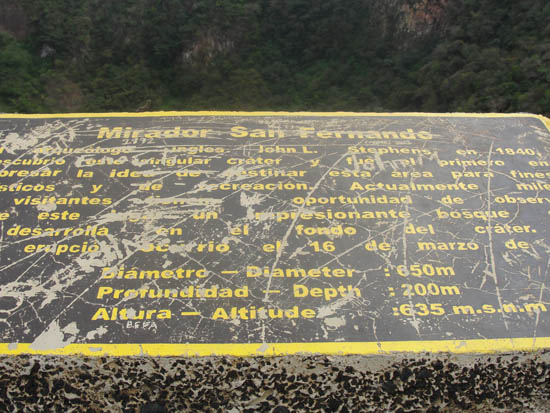
The Santiago crater is 1640 feet wide and 656 feet deep. I didn't measure it.

volcano plain

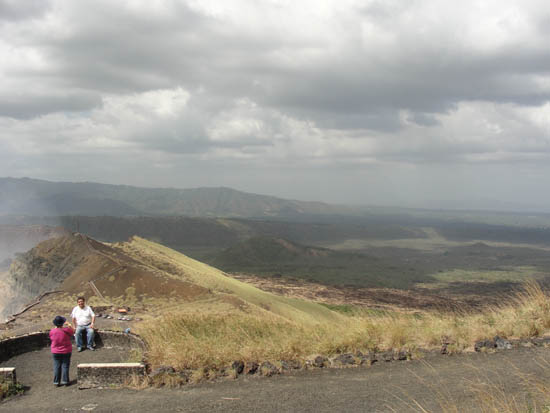
Looking out over the plain at the craters left by the inactive volcanoes

signs

Older signs are scratched and damaged by eruptions

Masaya volcano

An incredible, majestic view

An active volcano is an unexpected thing, a sign that the solid earth is alive and moving to its own inner music. We can't control it, which means there are risks along the lava path. But when you reach the top, inspiration and power are there for the sharing.

You may also like

A Nicaragua Christmas: The Treasures of Alter Eco

A Nicaragua Christmas: The Treasures of Alter Eco

Advertising in Managua, Nicaragua, can be hit-or-miss so I wasn't quite sure what I'd find when I walked into Alter Eco, which bills itself as an alianza hecho a mano. This "alliance" is actually a cluster of artist shops and studios near the big art and antiques store Mama Delfina.

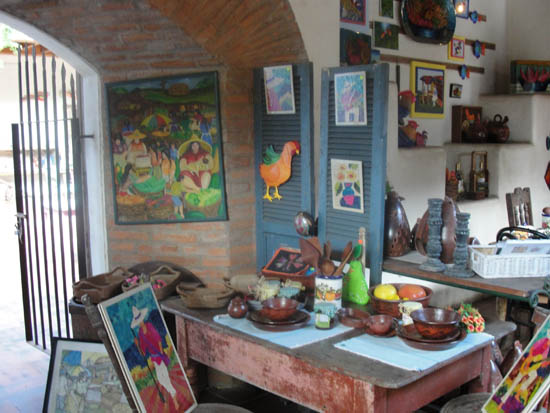
The displays and inventory would be at home in New York or London or Mexico City. Here are some of the treasures I discovered.

cotton clothing

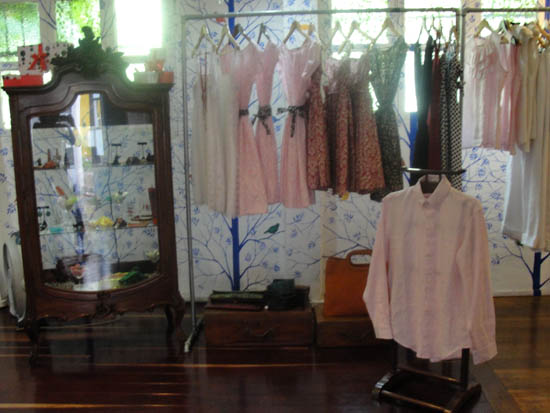
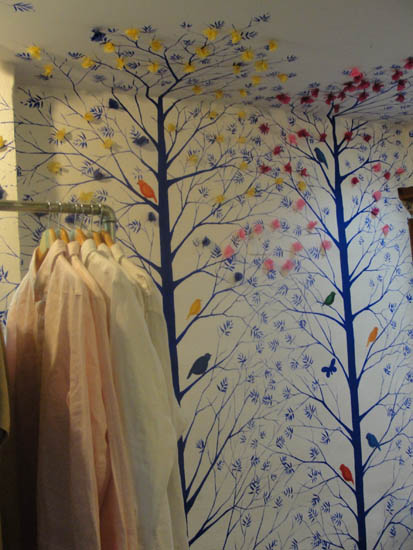
This charming clothing and accessories boutique has a Laura-Ashley-meets-Chanel vibe. Simple cotton and linen pieces kept to a pink, rust, and gray palette.


boutique

Visitors to the boutique are immediately drawn in by the charming wall decor featuring trees, birds and 3-D blossoms


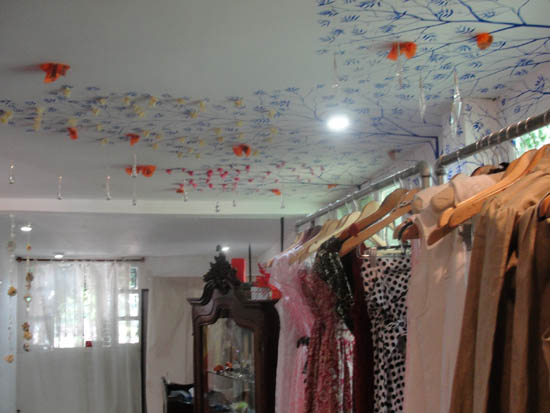
boutique ceiling

Silver "raindrops" fall from the tree branches and blossoms on the ceiling


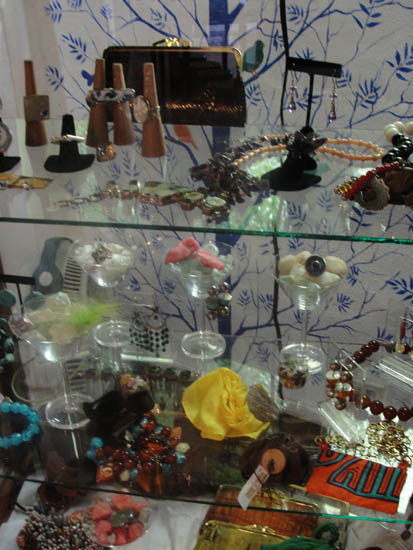
jewelry

Accessories included locally-sourced jewelry and lizard clutches and belts


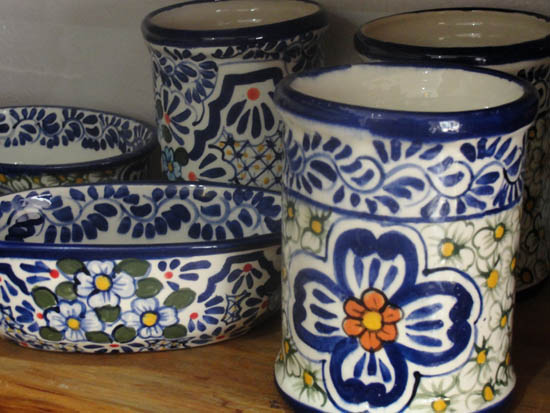
talavera

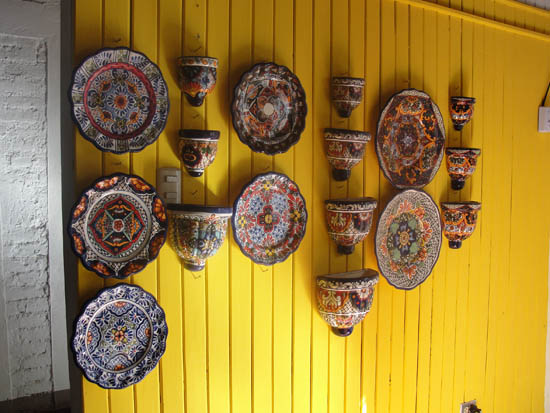
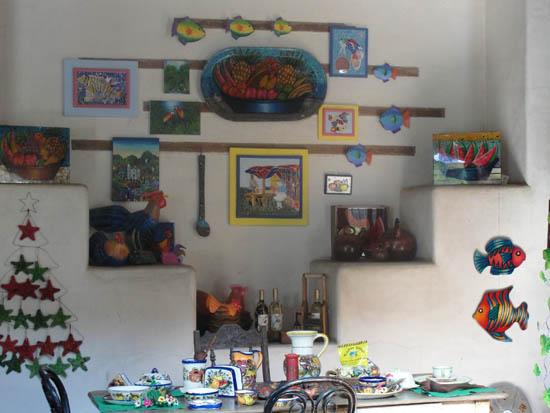
The ceramics studio had a beautiful selection of Mexican talavera


Talavera pottery pops against a yellow wall at Alter Eco


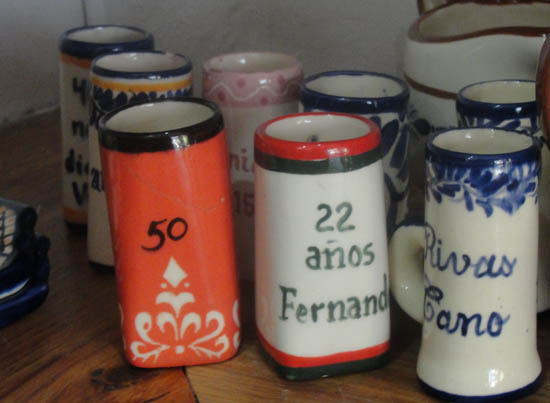
The place to go for customized tequila shot glasses!

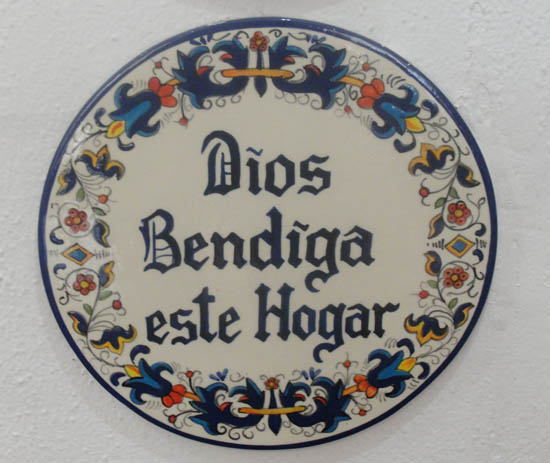
Talavera plaque reading "God Bless This Home." My wish for you this holiday season.

A Nicaragua Christmas: Shopping at Mama Delfina’s

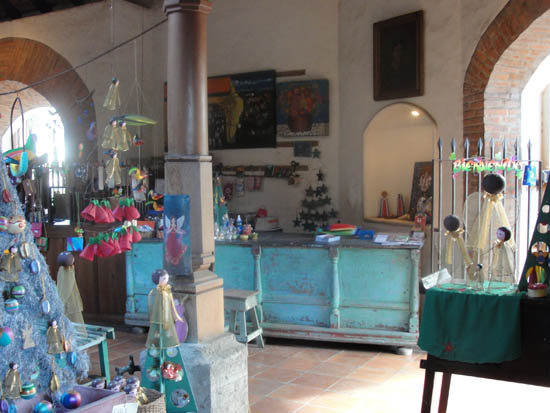
Managua, Nicaragua, is full of surprises including the beautiful art and antique store, Mama Delfina's.  Housed in a large white Spanish colonial building with an open courtyard and beautiful old brickwork, the place is a treasure trove of handmade holiday gifts and decorations, carefully curated to offer a collection of best locally-produced items.

While the original Delfina, whose picture is above the cash register, looked on with stiff-necked amusement, the staff graciously let me roam around and take pictures. I hope you enjoy the experience as much as I did!

Mama Delfina entrance

An old picture of Delfina and a painting of the store hang above the antique blue counter


artwork at Mama Delfina

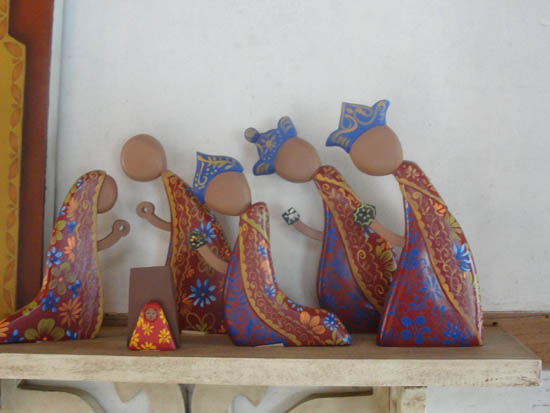
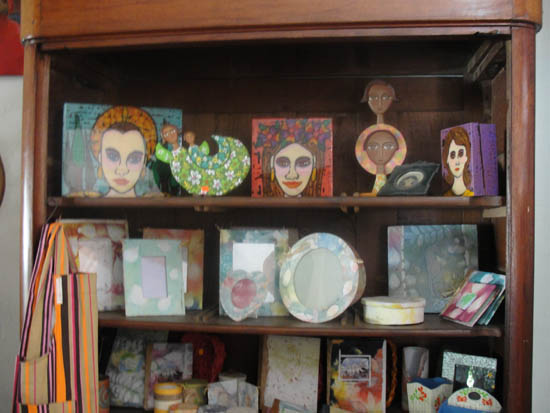
The store features beautiful displays of painted boxes, frames, wooden angels and handmade paper goods


Silver frames

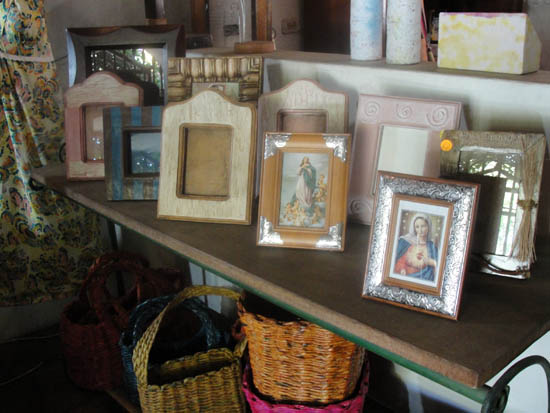
Some of the frames are of intricately punched metal, a technique that in Mexico is called repujado


Christmas ornaments

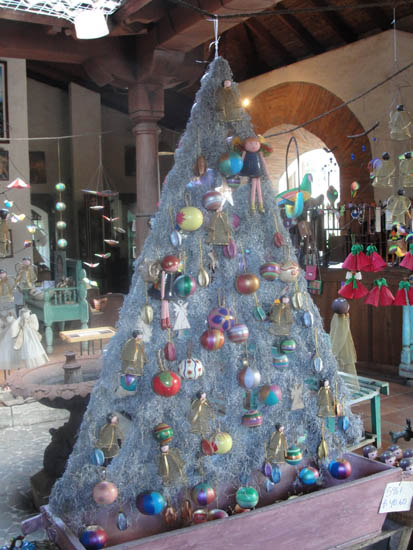
All the Christmas ornaments at Mama Delfina's are one-of-a-kind


Boxes

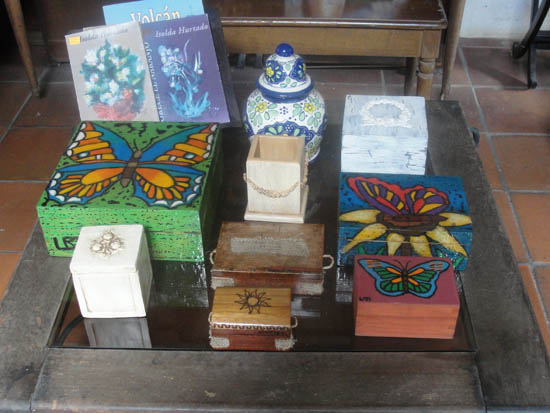
Each painted box was a mini-masterpiece of abstract art. Loved the wonderful tablescapes throughout the store.


desk

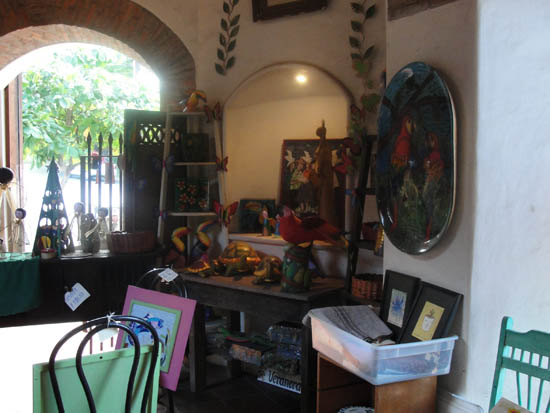
The store is arranged as a series of vignettes showcasing art and antiques.


textile bags on display

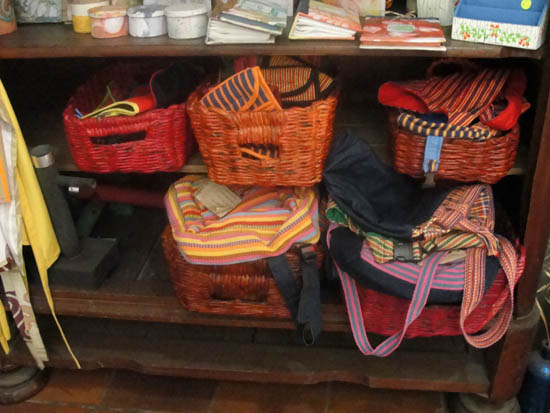
The store carries a line of bags made from a loomed woven fabric that was prohibited during the Samoza regime but is now being reproduced in Nicaragua


archways of art

A beautiful vignette of art, holiday items, and antiques


art on wall

The store chooses and displays art with a practiced eye

The Mary/Mujer Paradox

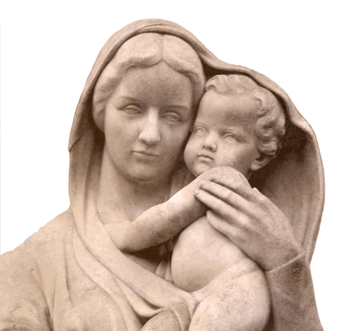
Madonna statueDecember is a big month for Mary, the mother of Jesus. On 8 December Catholics celebrate the Immaculate Conception, the day She became pregnant with the son of God without benefit of sex. On 12 December there is the feast day of the Virgin of Guadalupe to commemorate the day She appeared to the humble San Juan Diego in Mexico. And of course on 25 December we celebrate the day She gave birth in Bethlehem to Her son Jesus.

The feast day of the Immaculate Conception of Mary is a major event in Nicaragua, with celebrations dating to colonial times. My neighborhood, like so many others, enjoyed about 40 hours of intermittent fireworks (which reduced the dog to jelly), late-night festivites the evening before and a Mardi Gras-like celebration at the church up the road on the actual feast day.

The build-up to the weekend was as big a deal as for Thanksgiving in the US. For weeks the newspapers reported preparations across the country. Major stores ran related ads. Billboards and banners strung across telephone poles repeated words like joy, purity, conception, virgin, sainted.

The news reports were detailed—guardians of the tradition were interviewed, one chuch had a special “washing” of the silver before the big day, in many parishes the faithful carried the church’s statue of Mary in local pilgrimages, others planned concerts or novenas, the capital’s cathedral would feature a statue of la Santísima Virgen de la Purísima that is three meters tall and weighs two tons. The faithful call known as La Gritería was everywhere: What causes so much joy? The conception of Mary!

I grew up with Catholic ritual and love the traditions and symbolism. But this weekend, as the fireworks boomed, I found it hard to reconcile a fixation on feminine purity with the high rates of violence against women in Nicaragua.

And along the same lines, I can’t help but link violence rates with the societal attitude that brings us the sex position of the week in the newspaper. Once a week, there's a "tasteful" drawing of a couple doing it, with tips for getting it right.

Femicide rates in Nicaragua have exploded in the past ten years. Univision reported recently that there were 29 cases of femicide in 2000 and 89 in 2010. While this may be less than on a bad week in Chicago, this is a significant trend for the relatively small Nicaraguan population.

Newspaper La Prensa reported in August that 48 women were murdered in Nicaragua during the first half of 2012, including two under 12, while some 96,000 women are in a "vulnerable state." Of the 48 murdered, eight were raped before getting killed and 14 were known to the National Police to be victims of abuse, according to a report by the non-governmental organization Red de Mujeres contra la Violencia. The organization also noted that 78% of violence against women occurs in their homes and females between 18 and 45 years account for 61.25% of all assault victims.

I’m a little worried about what will be in the newspaper in the coming week. Univision reported that the special prosecutor for Women in Nicaragua, Deborah Gradinson, said that gender violence is multiplied by three when there are major celebrations.

So Mary’s on a pedestal as the woman who never had sex, real women are available to be kicked around, and new ideas for the sex beforehand are right here in the paper.

What causes so much joy? The conception of Mary!

Mary, Mother of God, pray for us.

The Friday Fiesta: Safari, Snow, Scotland and Surprising Films

world holiday ornamentAs a fiction author I love to weave  unique cultural gems into the plot. Most of the time I draw on my own world travels and experiences living in Mexico and Central America.

In these Friday Fiesta posts I highlight cultural stories worth celebrating. The unique, the odd, the thought-provoking. Enjoy and share to make the world a little smaller today.

Join the Virtual Safari

National Geographic’s Andrew Evans is on the move again, this time on safari in Tanzania. He is documenting his trip with a series of blog posts, photographs and short videos, as well as tweeting his way through some tense moments with skittish wildlife. Evans is a great communicator, managing to keep us on the edge as he tweets his adventures. His longer blog posts provide more thought-provoking reports on conservation and the beauties of Africa. Follow him @WheresAndrew.

Let it snow

Images of the winter wonderland that is Zurich, Switzerland were featured on Anisha Shah’s website this week. The photos are beautiful, showing gentle blankets of snow tucked around iconic European motifs. The result is a Christmas feast for the eyes, a gentle, dreamy fairytale digital experience. Everybody who is looking forward to a snow-less holiday season, like me here in the tropics, should spend a moment savoring these images. I especially loved the swan amid the snowflakes.

Glasgow transformed

My perceptions of Glasgow, Scotland, have been shaped a little too firmly by Ian Rankin’s novels, which are set in the seemingly much-preferred Edinburgh, so I was intrigued by artist Claire Biddles’ article in the online edition of UK’s Guardian talking about the transformation of the city into a “culture city.” According to Biddles, “The role that artist-run spaces have had in Glasgow's reinvention as a creative city cannot be underestimated, and as long as the artistic community continues to develop, this image will be sustained – attracting artists and art lovers alike to the city.” The article describes several of the art spaces in Glasgow, painting a picture (pun intended) of a vibrant and effective effort to enrich the city “culturally and economically.” Tourists and travelers take note; there’s more to Glasgow than ever before.

Films to Inspire

Roman Coppola, son of legendary director Francis Ford Coppola, teamed with W Hotels to offer a film competition: screenwriters had to submit screenplays with two ingredients: location is a W Hotel and there’s an Intel Ultrabook somewhere in it. The winners produced four short films which were recently featured on the Gadling website. The films take place at W Hotels in Doha, Qatar; Mexico City, Mexico; Washington, DC; and the Maldives. The website said, “The results are quirky, touching, and sometimes eerie, but most of all great ways to inspire travel and help emerging talent get their feet off the ground.” I agree. With the help of sponsors like W Hotels and Intel, this is a great way to showcase locations, open doors to a new culture, and give wanna-be filmmakers a chance to do what they love!

5 Life Lessons from a Month of Writing Dangerously

5 Life Lessons from a Month of Writing Dangerously

NaNoWriMo can be described as a cult phenomenon, a virtual writers gathering, a very strange hobby or God's gift to global coffee sales. As I've mentioned elsewhere in this blog, the goal is to write a 50,000-word novel during the month of November. It’s a tough thing to do—not tough as in survive cancer or send a rocket into space sorts of tough—but it truly tests your self-discipline, imagination, and relationships with others.

If you do it right, NaNoWriMo becomes a month-long learning experience. Here are a few universal lessons I took away from it this year:

 A goal is different from a plan

Writing 50,000 words is a goal. The plan to get that done defines the steps to take to achieve the goal. The more detailed the plan, the better the chances of achieving the goal. In this case, outline + schedule = plan. In my case, both the outline and the schedule changed but the initial planning helped me stay on track.

Use the Deadline, Grasshopper

A deadline is an overlooked luxury. It defines the project and allows you to work backwards from the hard line. This is a variation on Covey’s excellent axiom: Begin With the End in Mind.

You Can Have it all, not just all at the same time

Maureen O’Sullivan (Jane to Johnny Weismuller’s Tarzan) said this in response to why she quit acting to have a family. By taking on a big project like NaNoWriMo, something else had to come off my plate. We stared at splotchy yellow dining room walls the whole month; your truly finished the paint job on 3 December.

Learn to Prioritize or Learn to Fail

My mother always said all you have to do is want it. Two things are implicit in her words: that her kids would be able to A. prioritize and B. not slack off. If we want something that bad, the actions to achieve it will consistently and consciously be at the top of the daily to-do list. I wrote about 1700 words each day, with a couple of spurts so I could skip a day here and there. A writing buddy friend who had to juggle exams in November wrote in bigger and fewer spurts but did nothing else those days.

Rewards R Good

A reward was in order because I’d set out a tough thing for myself and got it done. Yay me. When challenges are quiet and don’t get a lot of external attention, it doesn’t mean they aren’t worthy, they’re just quiet. A reward is still in order. It’ll help muster enthusiasm for the next challenge. (I bought a fish-shaped talavera jug. Don’t judge, it is waaay cool.)

So, yes, I "won" my NaNoWriMo challenge this year with a 50,303-word draft manuscript tentatively entitled SUN GOD. Over the next year, I’ll add another 20,000 words and rewrite a bunch of it and eventually, maybe, just maybe, it will become the 3rd EMILIA CRUZ mystery novel. It was great to spend the month in Acapulco with Emilia and Kurt . . . but let me tell you, it’s hot down there . . . 

2016 Update

SUN GOD got pushed to the side. DIABLO NIGHTS (Detective Emilia Cruz Book 3) and KING PESO (Detective Emilia Cruz Book 4) needed to be told first. SUN GOD was renamed PACIFIC REAPER and will be the 5th book in the Emilia Cruz series, slated for release in February 2017.

You may also like

NaNoWriMo

Crafting a Christmas at the Mercado

This is the year my Christmas won't be Made in China. Instead of the usual commercial shiny things we all know and love, I'm aiming for a simpler reminder of what the holiday is all about. Decorations, cards, and gifts will reflect skill, art, and natural materials instead of glossy plastic and machined perfection.  My sources will be local craftsman, a few boutique stores, and several charities.

A stroll through the mercado de artesanias in Masaya, Nicaragua last weekend was the starting point.

typical market scene

Just a typical aisle in the market which is located in an old colonial building with plenty of light and a restaurant on one side.


woven textiles

Most of the textiles in the mercado are from Guatemala. We saw scarves, table runners, and placemats but only a few larger pieces.


The terracotta pots on top look like smiling faces. Or maybe the Kool-Aid jug guy.
I had a sizzling pollo a la plancha after a day of hard shopping and it was delicious. Washed it down with a local beer and was ready to spend a little more!
Pottery plate

This beautiful plate is typical of the colors and motifs found in Nicaraguan pottery.

If you are having Christmas in Mexico this year, check out my post on favorite markets in Mexico City and have a wonderful time!

The Friday Fiesta: An Odyssey, An Artist, Manners, and the Radio

dog and globeAs a fiction author I love to weave  unique cultural gems into the plot. Most of the time I draw on my own world travels and experiences living in Mexico and Central America.

In these Friday Fiesta posts I highlight cultural stories worth celebrating. The unique, the odd, the thought-provoking. Enjoy and share to make the world a little smaller today.

His Odyssey Expedition

Daily Telegraph reporter Graham Hughes started 1 January 2009 on a trip that would take him around the world without any airplane travel. After 1,426 days on the road and more than 200 countries across six continents, Hughes wrote this fabulous wrap-up in which he said: “I undertook this challenge for many reasons: to set a Guinness World Record, to raise money for the charity WaterAid, to have great stories to tell the grandchildren. But the main reason was that I wanted to prove it was possible: to show that all the great travel adventures have not already been done; to show that the world isn't the terrible scary place so often portrayed in the media; to show that, yes, with a British passport, a fistful of dollars and the right amount of tenacity, grit and patience you can – if you really want to – go anywhere.” Hughes’ determination, accomplishment and the resulting article are all terrific.

 In the Tradition of Art Saving Wildlife

Following in the tradition of the Audobon Society and the World Wildlife Fund, both rooted in work by noted wildlife artists, California artist David Tomb has started a conservation effort called Jeepney Projects Worldwide to save endangered birds including the great Philippine eagle. A Huffpost article quoted him as saying: "Making artwork of the birds is a way to connect and personalize my experience of seeing the birds . . . The ultimate goal is to have people think: 'That animal is incredible.'" Tomb’s artwork, included in the article, is also incredible and worth a look, if for no other reason that the Philippine eagle, weighing in around 18 lbs., is an arresting and unique creature.

 Asian Etiquette

Did you know that religious views play a role in good manners in Asia? The website backyardtravel.com, devoted to Asian travel, writes “The sole of the foot is considered such a dirty thing that it is even seen as an aggressive, rude gesture in Thailand to show someone the sole of the foot – similar to ‘flipping the bird’ in the USA, or ‘putting two fingers up’ in the UK. Continuing the theme on feet, shoes must also be removed when entering someone’s house in Asia, and in Thailand never, ever stand on anything with an image of the King on, like money or postage stamps for example.” This short and useful article gives other good tips for showing good manners when travelling in Asia. Related to this is my Rude in Any Culture post, with a similar foot warning.

Salaryless Radio Host in Peru Still Going Strong

Peruvian radio host Maruja Venegas has been on the air for 68 years, making her the longest-running radio host ever, according to Guinness World Records. Venegas is 97 and her fans are still listening to her show "Radio Club Infantil" which airs Sundays at 6-6:30 pm on Santa Rosa, a religion-oriented station. The show, which started in 1944 as a broadcast for sick children, has expanded and contracted over the years—impacted by Peru’s political and economic circumstances. Venegas, who has never been paid for the show, is her own producer and has got her formula down; the show now always includes a story, music, advice and commentary. The story is a salute to tenacity and for doing something you love and think is important enough to do, regardless of the reward.

The Mexican Scatter Plot Diagram

Blood spatterDedicated news junkies like myself can generally identify trends. But this week the news about Mexico has some of everything—the good, the bad, the hopeful and the bleak. If I was an infographic specialist and did a scatter plot diagram of Mexican news stories, the result would be either a blood spatter or a constellation, depending on your point of view.

What to make of it?

A. Possible changing Mexican narrative: economy vice drugs

B. Dead women in the news get more attention than dead men

C. I’ll never run out of grist for the Emilia Cruz mystery series.

Here are some of the stories in the news this week:

Port-mortem on death of Maria Santos Gorrostieta

The UK’s Daily Mail online edition carried the most comprehensive story I found. CNN had a video story and Fox News Latino carried some of the same pictures as the Daily Mail. BTW, I wrote a blog post when the news of her death broke last week.

Drug deaths and debate

Miss Sinaloa is killed: Fox News Latino reported that the local beauty queen had a gun in her hands at the time of her shooting.

Mass graves in Chihuahua: Fox News Latino story

Noted law professor on drug war tactics in The Daily Beast

Jailed cartel leader La Barbie accuses top officials with bribes/corruption

Mexican police deny La Barbie charges, reported by CNN

Pres-Elect Enrique Peña Nieto Goes to Washington

Peña Nieto met with President Obama and lawmakers with a message of expanding economic ties. Here are stories by ABC/Univision and the BBC which often has an interesting perspective on Mexico.

http://abcnews.go.com/ABC_Univision/Politics/obama-pea-nieto-pledge-close-ties-us-mexico/story?id=17821987#.ULd6s6xX1ic

http://www.bbc.co.uk/news/world-latin-america-20521268

And for fun: Senator John McCain’s picture of EPN and new friends: https://twitter.com/SenJohnMcCain/status/273812798759378945/photo/1

The Economist on the US-Mexican relationship

The Coming Presidential Transition

LA Times on How Times and Ties have changed

Noted author Alan Riding on the shift in the NY Times

The Washington Post: Mexico “subdued” ahead of ceremony

Outgoing President Felipe Calderon

Calderon will take a 1 year fellowship to Harvard’s John F. Kennedy School of Government where according to Reuters he will “meet with students, collaborate with scholars and researchers and help develop case studies on policy challenges.”

Defending His Record, from CNN

Mexico Through the Lens of a Survey

Management consulting firm Vianovo, together with national marketing communications and advertising company GSD&M, conducted a survey on US views of Mexico. Upshot: 50% unfavorable rating, only 2 points below Saudi Arabia, Osama Bin Laden’s birthplace.

At the Table

Calvin Trillin writes enticingly about food in Oaxaca in this week’s New Yorker

23 Chicago-area Mexican restaurants to receive awards

 Fashion

ABC/Univision profiles a designer in Oaxaca

Business

Mexican start-ups seeks social change

The Friday Fiesta: Turkish Delight, Brit Food, Art and Drink

As a fiction author I love to weave  unique cultural gems into the plot. Most of the time I draw on my own world travels and experiences living in Mexico and Central America.

In these Friday Fiesta posts I highlight cultural stories worth celebrating. The unique, the odd, the thought-provoking. Enjoy and share to make the world a little smaller today.

Not Everybody’s Eating This Turkish Delight

Muhtesem Yuzyil, or Magnificent Century, is either a blasphemous mess or a cultural revolution, depending which side of the television the viewer is on. Magnificent Century is a primetime soap opera about Suleiman the Magnificent and Hurrem, the slave who became his powerful wife, set in the mid 1500’s with the same production values and historical punch of the BBC’s Henry VII series The Tudors. The show debuted in January 2011 and immediately elicited 70,000 (!!) complaints, including from Turkey’s prime minister, according to the online edition of The Guardian newspaper.

WeBlogtheWorld.com picked up the story this week, noting that the show sparks both controversy and huge audiences (a recent episode was watched by 85 million viewers in 45 countries including half of all Muslim women over the age of 15)  because “the show presents women as equal to men. There are scenes of kissing, drinking and sex that are formerly unheard of on Middle Eastern television, and, in the case of Magnificent Century, a Muslim leader famous for his religious tolerance and ability to work with people of other faiths.” Popularity and controversy = cultural change? Yikes. Stay tuned.

Surprising British Food

I’ve spent a lot of time in London and generally avoided restaurants with traditional Brit fare (except for Fortnum and Mason, of course) because Brit food is doughy, tasteless, and unchanged since the Battle of Trafalgar.

But matadornights.com is convincing me I’m wrong with a great story entitled “Why British food isn’t as bad as you think.” The post lists the best Brit food, including fish and chips, bangers and mash, chicken tikka masala, Yorkshire pudding AND tells you where the best can be found. With pictures! That actually look good!

The Middle Eastern Art Scene

Abu Dhabi leads the arts and cultural preservation scene in the Middle East and thenational.com does a great job of tracking developments. The website recently ran journalist Jessica Holland’s guide to buying Middle Eastern art. Holland advises collectors to look for a story related to the artwork and understand how the value will be impacted by the country the artist is from. Trending now: art by Syrian and Egyptian artists. Nice to know there’s more going on in the region besides what’s on CNN.

Drinking Advent

I love advent calendars. Remember the bit from the BBC show The Vicar of Dibley with Dawn French?

Geraldine: How many chocolate advent calendars should a greedy person have?

Alice: I don’t know. I should think about 30.

But societeperrier.com’s Cocktail Culture has something even better than chocolate. The ultimate in advent calendars is the Whiskey Advent Calendar! A dram of single malt for each day. One season, two religious experiences.

© 2016 Carmen Amato.

Hello

I'm author Carmen Amato. I write romantic thrillers and the Detective Emilia Cruz mystery series set in Acapulco. Expect risk, power, corruption. And relationships with heat.  More

Essentials

Pin It on Pinterest