
The Friday Fiesta: An Odyssey, An Artist, Manners, and the Radio

dog and globeAs a fiction author I love to weave  unique cultural gems into the plot. Most of the time I draw on my own world travels and experiences living in Mexico and Central America.

In these Friday Fiesta posts I highlight cultural stories worth celebrating. The unique, the odd, the thought-provoking. Enjoy and share to make the world a little smaller today.

His Odyssey Expedition

Daily Telegraph reporter Graham Hughes started 1 January 2009 on a trip that would take him around the world without any airplane travel. After 1,426 days on the road and more than 200 countries across six continents, Hughes wrote this fabulous wrap-up in which he said: “I undertook this challenge for many reasons: to set a Guinness World Record, to raise money for the charity WaterAid, to have great stories to tell the grandchildren. But the main reason was that I wanted to prove it was possible: to show that all the great travel adventures have not already been done; to show that the world isn’t the terrible scary place so often portrayed in the media; to show that, yes, with a British passport, a fistful of dollars and the right amount of tenacity, grit and patience you can – if you really want to – go anywhere.” Hughes’ determination, accomplishment and the resulting article are all terrific.

 In the Tradition of Art Saving Wildlife

Following in the tradition of the Audobon Society and the World Wildlife Fund, both rooted in work by noted wildlife artists, California artist David Tomb has started a conservation effort called Jeepney Projects Worldwide to save endangered birds including the great Philippine eagle. A Huffpost article quoted him as saying: “Making artwork of the birds is a way to connect and personalize my experience of seeing the birds . . . The ultimate goal is to have people think: ‘That animal is incredible.'” Tomb’s artwork, included in the article, is also incredible and worth a look, if for no other reason that the Philippine eagle, weighing in around 18 lbs., is an arresting and unique creature.

 Asian Etiquette

Did you know that religious views play a role in good manners in Asia? The website backyardtravel.com, devoted to Asian travel, writes “The sole of the foot is considered such a dirty thing that it is even seen as an aggressive, rude gesture in Thailand to show someone the sole of the foot – similar to ‘flipping the bird’ in the USA, or ‘putting two fingers up’ in the UK. Continuing the theme on feet, shoes must also be removed when entering someone’s house in Asia, and in Thailand never, ever stand on anything with an image of the King on, like money or postage stamps for example.” This short and useful article gives other good tips for showing good manners when travelling in Asia. Related to this is my Rude in Any Culture post, with a similar foot warning.

Salaryless Radio Host in Peru Still Going Strong

Peruvian radio host Maruja Venegas has been on the air for 68 years, making her the longest-running radio host ever, according to Guinness World Records. Venegas is 97 and her fans are still listening to her show “Radio Club Infantil” which airs Sundays at 6-6:30 pm on Santa Rosa, a religion-oriented station. The show, which started in 1944 as a broadcast for sick children, has expanded and contracted over the years—impacted by Peru’s political and economic circumstances. Venegas, who has never been paid for the show, is her own producer and has got her formula down; the show now always includes a story, music, advice and commentary. The story is a salute to tenacity and for doing something you love and think is important enough to do, regardless of the reward.

The Mexican Scatter Plot Diagram

Blood spatterDedicated news junkies like myself can generally identify trends. But this week the news about Mexico has some of everything—the good, the bad, the hopeful and the bleak. If I was an infographic specialist and did a scatter plot diagram of Mexican news stories, the result would be either a blood spatter or a constellation, depending on your point of view.

What to make of it?

A. Possible changing Mexican narrative: economy vice drugs

B. Dead women in the news get more attention than dead men

C. I’ll never run out of grist for the Emilia Cruz mystery series.

Here are some of the stories in the news this week:

Port-mortem on death of Maria Santos Gorrostieta

The UK’s Daily Mail online edition carried the most comprehensive story I found. CNN had a video story and Fox News Latino carried some of the same pictures as the Daily Mail. BTW, I wrote a blog post when the news of her death broke last week.

Drug deaths and debate

Miss Sinaloa is killed: Fox News Latino reported that the local beauty queen had a gun in her hands at the time of her shooting.

Mass graves in Chihuahua: Fox News Latino story

Noted law professor on drug war tactics in The Daily Beast

Jailed cartel leader La Barbie accuses top officials with bribes/corruption

Mexican police deny La Barbie charges, reported by CNN

Pres-Elect Enrique Peña Nieto Goes to Washington

Peña Nieto met with President Obama and lawmakers with a message of expanding economic ties. Here are stories by ABC/Univision and the BBC which often has an interesting perspective on Mexico.

http://abcnews.go.com/ABC_Univision/Politics/obama-pea-nieto-pledge-close-ties-us-mexico/story?id=17821987#.ULd6s6xX1ic

http://www.bbc.co.uk/news/world-latin-america-20521268

And for fun: Senator John McCain’s picture of EPN and new friends: https://twitter.com/SenJohnMcCain/status/273812798759378945/photo/1

The Economist on the US-Mexican relationship

The Coming Presidential Transition

LA Times on How Times and Ties have changed

Noted author Alan Riding on the shift in the NY Times

The Washington Post: Mexico “subdued” ahead of ceremony

Outgoing President Felipe Calderon

Calderon will take a 1 year fellowship to Harvard’s John F. Kennedy School of Government where according to Reuters he will “meet with students, collaborate with scholars and researchers and help develop case studies on policy challenges.”

Defending His Record, from CNN

Mexico Through the Lens of a Survey

Management consulting firm Vianovo, together with national marketing communications and advertising company GSD&M, conducted a survey on US views of Mexico. Upshot: 50% unfavorable rating, only 2 points below Saudi Arabia, Osama Bin Laden’s birthplace.

At the Table

Calvin Trillin writes enticingly about food in Oaxaca in this week’s New Yorker

23 Chicago-area Mexican restaurants to receive awards

 Fashion

ABC/Univision profiles a designer in Oaxaca

Business

Mexican start-ups seeks social change

The Friday Fiesta: Turkish Delight, Brit Food, Art and Drink

As a fiction author I love to weave  unique cultural gems into the plot. Most of the time I draw on my own world travels and experiences living in Mexico and Central America.

In these Friday Fiesta posts I highlight cultural stories worth celebrating. The unique, the odd, the thought-provoking. Enjoy and share to make the world a little smaller today.

Not Everybody’s Eating This Turkish Delight

Muhtesem Yuzyil, or Magnificent Century, is either a blasphemous mess or a cultural revolution, depending which side of the television the viewer is on. Magnificent Century is a primetime soap opera about Suleiman the Magnificent and Hurrem, the slave who became his powerful wife, set in the mid 1500’s with the same production values and historical punch of the BBC’s Henry VII series The Tudors. The show debuted in January 2011 and immediately elicited 70,000 (!!) complaints, including from Turkey’s prime minister, according to the online edition of The Guardian newspaper.

WeBlogtheWorld.com picked up the story this week, noting that the show sparks both controversy and huge audiences (a recent episode was watched by 85 million viewers in 45 countries including half of all Muslim women over the age of 15)  because “the show presents women as equal to men. There are scenes of kissing, drinking and sex that are formerly unheard of on Middle Eastern television, and, in the case of Magnificent Century, a Muslim leader famous for his religious tolerance and ability to work with people of other faiths.” Popularity and controversy = cultural change? Yikes. Stay tuned.

Surprising British Food

I’ve spent a lot of time in London and generally avoided restaurants with traditional Brit fare (except for Fortnum and Mason, of course) because Brit food is doughy, tasteless, and unchanged since the Battle of Trafalgar.

But matadornights.com is convincing me I’m wrong with a great story entitled “Why British food isn’t as bad as you think.” The post lists the best Brit food, including fish and chips, bangers and mash, chicken tikka masala, Yorkshire pudding AND tells you where the best can be found. With pictures! That actually look good!

The Middle Eastern Art Scene

Abu Dhabi leads the arts and cultural preservation scene in the Middle East and thenational.com does a great job of tracking developments. The website recently ran journalist Jessica Holland’s guide to buying Middle Eastern art. Holland advises collectors to look for a story related to the artwork and understand how the value will be impacted by the country the artist is from. Trending now: art by Syrian and Egyptian artists. Nice to know there’s more going on in the region besides what’s on CNN.

Drinking Advent

I love advent calendars. Remember the bit from the BBC show The Vicar of Dibley with Dawn French?

Geraldine: How many chocolate advent calendars should a greedy person have?

Alice: I don’t know. I should think about 30.

But societeperrier.com’s Cocktail Culture has something even better than chocolate. The ultimate in advent calendars is the Whiskey Advent Calendar! A dram of single malt for each day. One season, two religious experiences.

© 2016 Carmen Amato.

Hello

I’m author Carmen Amato. I write romantic thrillers and the Detective Emilia Cruz mystery series set in Acapulco. Expect risk, power, corruption. And relationships with heat.  More

Essentials

Be Angry and Pray Hard

Be Angry and Pray Hard

Maria Santos Gorrostieta Salazar, 36, who for nearly 4 years had served as the mayor of Tiquicheo, Michoacan, Mexico until early 2012, was found murdered last Friday. Her body was discovered in a remote area of the state and bore signs of torture.

An earlier attack on the politician in October 2009 left her wounded and killed her husband, another former Tiquicheo mayor, Jose Sanchez.

Organized crime elements–not further identified–are likely responsible, according to the Michoacan State Attorney General’s Office.

I learned about her death from the website DrugWar101, which does an amazing job keeping us up to date on things that often do not make it into the American mainstream press, despite the whole doorstep issue. Meanwhile, more Mexican drugs get gobbled up by American consumers. Don’t read my blog post on that. It is unkind.

I never knew this woman and I’ve never been to Tiquicheo. But her story made me so angry my vision blurred. Mexico is an amazing country, with a rich culture, beautiful artwork and crafts, food, history, museums, resorts, beaches. By killing Maria and others who are trying to maintain civil society, the cartels are destroying the country’s soul.

This is why I write the books I write, why I try to use fiction to show that good people are getting swallowed up whole by cartel violence and money. Fiction can be a catalyst. Maybe I’m dreaming that this will ever make a difference but hopefully it can be a way to get more people to pay attention.

Related: Book Review: Federales by Christopher Irvin

Please light a candle tonight for Maria. Maybe one to Saint Jude, the patron saint of impossible causes.

You may also like

The Friday Fiesta: Travel, Time and Not Enough Sparkly Wine

As a fiction author I love to weave  unique cultural gems into the plot. Most of the time I draw on my own world travels and experiences living in Mexico and Central America.

In these Friday Fiesta posts I highlight cultural stories worth celebrating.The unique, the odd, the thought-provoking. Enjoy and share to make the world a little smaller today.

Are You This Kind of Traveler?

The online Sydney Morning Herald reported on a Skyscanner survey of flight attendants that revealed the top 10 most annoying things that air travelers do. Snapping fingers at flight attendants is number 1, not a big surprise. Trying to get out of the plane before the light goes off and stuffing too much into the overhead bin are numbers 2 and 3.

I read the list with great smugness until I came to number 7: leaving trash in the seat pocket. Er, um, yes, the used tissues, empty sugar packets, and crumpled newspaper from seat 7B were gifts from me.

For more tips on how to be a bad traveler read my list of 25 Ways to Be the Worst Traveler in the World.

Not All Time is Equal

I’m often struck by cultural differences in time management. For example, in one country the gardener wanted to come every 15 days, rather than every other Wednesday (but mostly he never showed up at all) while in another place the cable TV bill was not always for the same duration, making each a surprise. The website yourlanguageplace.com had a thought-provoking article entitled “How Language Can Shape the Perception of Time” that is worth a read. It is an excellent discussion of how different cultures have different perceptions of time and how language feeds into that. This issue is a small but meaningful part of interacting with people from different cultures on a daily basis. Related to this is my post on cultural differences regarding money.

Changes in Latitude

The codesign website brings us a gallery of photos from 70 degrees north latitude. I clicked through the photos, riveted by the simple images that represent a photographic line through the United States. From N 40° 00’ 00” W 97° 00’ 00” Hollenberg, Kansas, 2007, to N 40° 00’ 00” W 109° 00’ 00” Rangely, Colorado, 2000 and so many other locations, this imagery collection is a significant achievement in terms of research, photography, and curation.  What I didn’t expect to find but did: a view into the culture of rural America. Added cool thing: website scrolling is horizontal, mimicking the concept of latitude. Check it out. Just lovely.

The Coming Champagne Crisis

The Huffingpost Post reports that hail storms and fungus due to overly wet weather will reduce France’s champagne grape harvest by 40%. Champagne takes at least 15 months to ferment, meaning that champagne prices for the summer of 2014 could be higher despite a reserve built up by lowered demand in previous years due to recession in the US and Europe. But demand is on the rebound at least in the US. So what’s a discriminating consumer to think?  Spoiler alert for weddings, graduation parties and book launch events.

10 Mexican Proverbs for Readers, Writers, and Other Adventurers

10 Mexican Proverbs for Readers, Writers, and Other Adventurers

These Mexican words of wisdom were found in Guy A. Zona’s book EYES THAT SEE DO NOT GROW OLD, a collection of proverbs from Mexico, Central and South America.

He who does not venture has no luck.

He who follows his own advice must take the consequences.

The clown is best in his own country, and the gentleman anywhere. 

A good man finds his native soil in every country.

Pay what you owe and you will know what you are worth. 

Each one knows with how many threads he sews.

He who doesn’t look ahead is left behind. 

The thief thinks that all men are thieves. 

He who is ignorant at home is ignorant abroad.

Everyone is the son of his own works.

You may also like

The Friday Fiesta: A Ride, A Book, Olives and Remembrance

Party tootsAs a fiction author I love to weave unique cultural gems into the plot. Most of the time I draw on my own world travels and experiences living in Mexico and Central America.

In these Friday Fiesta posts I highlight cultural stories worth celebrating. The unique, the odd, the thought-provoking. Enjoy and share to make the world a little smaller today.

Would You Ride?

The world’s longest and highest cable car service will reopen early next year in Merida, Venezuela, according to a BBC report. The cable system is more than 7 miles long, rising to more than 15,330 feet above sea level at the summit of Pico Espejo — one of the highest peaks in Venezuela’s Andean mountains. Originally built in 1960, the trip of around 2 hours takes intrepid travelers from Merida to the magnificent scenery of the Andes. From the report: “On a clear day, the craggy outcrop of Pico Espejo — where the resident Virgin Mary statue is sometimes covered in ice — provides panoramic views of the surrounding range, as well as a bird’s-eye view of Merida in the distant valley below.” Equal parts amazing and scary.

War and Remembrance

TheWorldisWaiting.com blog gave us a unique take on war museums this week, including some little known museums that capture events and places that are all too easily forgotten. I’ve been to three museums on the list: the Imperial War Museum and the HMS Belfast, both in the UK, and the Checkpoint Charlie Museum in Berlin and recommend them all. But of special note is the JEATH Museum, Kachanburi, Thailand. “JEATH stands for Japan, England, America, Australia, Thailand and Holland, which represent the nationalities of the prisoners of war forced to work on the construction of the famous Bridge on the River Kwai.” It wasn’t just a movie.

In the same vein, here’s my blog post on resistance museums.

The Olive Harvest

Did you know how olives are gathered to make olive oil? Check out the blog post by @ItalianNotes for beautiful photographs and a video on how “In our part of Puglia the old contardini swears by the scopetta. With an old organic broom they sweep a circle around every single olive tree making the red earth hard, smooth and clean, so that olives can easily be gathered, when they are ripe and ready to fall off the tree.” The post is lovely—a simple snapshot of a an industry that reminds us of the value of tradition and the calm that comes from living close to the earth.

The First Book and it’s Not the Bible. 

John Wainwright, a computer specialist, ordered the first book from amazon.com in 1995. Do you remember amazon’s radio ads from that time? They were in an interview format, with the interviewee claiming amazon had enough books to fill an aircraft carrier and other huge spaces.But I digress.

According to The Atlantic online magazine, which has a photo of the book and the original packing slip, the book Wainwright ordered was Douglas Hofstadter’s Fluid Concepts And Creative Analogies: Computer Models Of The Fundamental Mechanisms Of Thought. A bit of light reading. But that first book illustrates that amazon has been so successful (the website sells my books so of course it is successful!) because it carries something for every interest.

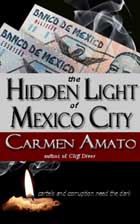
Book cover The Hidden Light of Mexico City“Romantic and suspenseful! A great mix!”
Get THE HIDDEN LIGHT OF MEXICO CITY on amazon.com today.

The Day of the Dead Disordered Dictionary

The Day of the Dead Disordered Dictionary

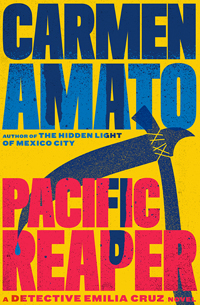
Mexico’s Day of the Dead traditions figure prominently in PACIFIC REAPER, Detective Emilia Cruz Book 5. The holiday focuses on gatherings to pray for and remember friends and family members who have died.

Pacific Reaper

Emilia investigates a voodoo-like cult dedicated to Santa Muerte, Mexico’s forbidden saint of death.


People visit cemeteries to be with the souls of the departed and build private altars commemorating those who have passed away. If the souls return, they will hear the prayers of the living and perhaps offer comfort.

So in no particular order, here’s a guide to celebrating death—and life.

Muertos

These skeleton figurines symbolize the departed and the Day of the Dead but have become part of the mainstream Mexican art world as well. Muertos wear different clothes to represent specific people and occupations. Markets across Mexico sell them, dressed as virtually anything you can think of, from mermaids to aliens and everything in between.

People even dress in muerto costumes.

Adults dressed as muertos for the Day of the Dead

Photo by Alonzo Reyes via Unsplash

In PACIFIC REAPER, muerto figurines left as a gang’s signature during a grisly turf war help Emilia track down a killer.

La Catrina

The Catrina, popularized by artist and cartoonist José Guadalupe Posada (1852-1913), is a muerto of a high society woman and one of the most popular figures of the Day of the Dead celebrations in Mexico.

Catrina figurines in fancy hats

Traditional Mexican catrinas, dressed to kill.

Ofrendas

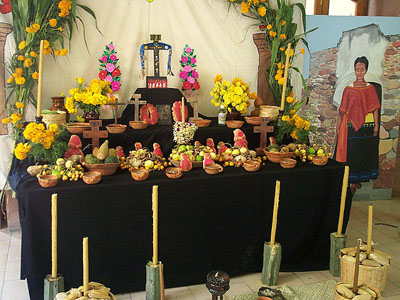
This is the offering left to attract the souls of the dead, notably in the form of altars. There are guidelines as to how the items should be set out and what is to be used such as toys for children, bottles of alcohol, food, candy, etc. They can range from a simple home tabletop to hugely elaborate displays in schools, churches, and shopping malls.

Altar photo by Steve Bridger

Calavera

Literally, “skull.” Sweets, notably chocolate, in the shape of skulls are sold everywhere for Day of the Dead festivities. In October, the city of Toluca hosts a sugar market that dominates the main plaza with vendors selling every size and shape of candy calavera imaginable. I was there a few years ago. The city center was transformed into an outdoor market, with thousands of sugar skulls.

Los angelitos

Children who have died and are remembered in a special way with altars decorated with toys and candy. I knew a woman in Mexico City who set out an elaborate altar for a child she’d lost several years previously as a way of coming to terms with the child’s death. She told me that as she placed the last item on the altar she felt the child’s spirit and knew that she shouldn’t mourn any more.

Pan de muerto

Sweet bread made with eggs, usually baked into a round or oval shape and decorated with white sugar icing to symbolize bones. I use the same recipe for basic sweet rolls.

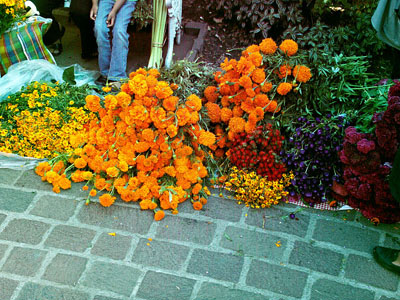
Marigolds photo by Juan Scott

Flor de muerto

Marigolds are most often used to decorate altars, graves, etc. Sometimes masses of marigolds are shaped into skulls for parades and other events. The flower is thought to summon the spirits of the dead.

La Llorona

A legend throughout Latin America of a woman who lost her children. Grief turned her into a banshee and her screaming can be heard at night. The story is a little different in each place but in Mexico the tale is a star-crossed drama of spurned love tangled up with the Spanish conquest.

Don’t forget to pick up your copy of PACIFIC REAPER. The Kindle edition is just $1.99 through October.

What McDonald’s Taught Me And It’s Not About The Food

What McDonald’s Taught Me And It’s Not About The Food

In my quest to find connections across cultures I’ve been thinking about how different cultures influence what we eat (salsa, anyone?) But if we turn that around to look at how a food influenced different cultures we come to one inescapable word: McDonald’s

Yep. The fast food giant has had its share of cultural impact.

After all, the Soviet Union was formally dissolved less than 2 years after McDonald’s opened in Moscow in early 1990. Maybe it was just a coincidence but maybe not . . .

So not to be outdone by the end of the Cold War, here are my top culture-meets-McDonald’s moments:

Vienna

In the weeks after Romanian Communist dictator Nikolai Ceausescu was overthrown, Romanians came by the busload to Vienna, the closest big Western city, to see how the rest of the world lived. They all looked as if they’d suddenly got out of prison. Their clothes were drab, they were all thin, and they looked fearful and excited at the same time.

My husband and I were in Vienna’s two-story McDonald’s. We each tucked into a substantial fast food meal; Big Macs, fries, the works. A Romanian couple our age was in the booth across the aisle, sharing the equivalent of a hamburger Happy Meal. They each took small bites, savoring the strange food, still in their coats as if they expected to be chased out at any moment.

Mexico City

It was my housekeeper’s anniversary and I took her to the big mall in Santa Fe to pick out a king sized bed for her and her husband. After arranging to have it delivered to their house, we went to the food court. She said she wanted to eat at McDonald’s but would not say what she wanted to order.

After a strange and frustrating exchange about the menu she finally said she’d have whatever I had. It turned out that she’d never eaten at a McDonald’s before.

She was 28.

Wellington

New Zealand’s capital is a bit more lively these days but when I was there 20 years ago it was a sleepy town, especially on the weekend. There was shopping and a city tour on Saturday but most things were closed on Sunday. Except the one McDonald’s a couple of miles from my hotel. I walked there for lunch, then went to the movies, then walked back to McDonald’s for dinner.

Without McD’s I would have starved. Or had the hotel’s cold mutton buffet for all 3 meals.

Athens

The Olympic stadium in Athens housed the biggest McDonald’s we’d ever seen and my kids were as fascinated by the restaurant as by the Olympic events. No mix-and-match fast food here, you could only order from a short list of preset meals, including the first salad any of us had ever eaten at a McD’s. We sat in the middle of the huge space listening to the babble of  languages and watching the array of national costumes.

My kids got it then–the fact that not everybody is like them. Meeting people who aren’t is exciting. The Frenchman in the skinny white capri pants and Puma flats is still remembered fondly.

You may also like

McDonalds

5 Talents You Didn’t Know You Had

5 Talents You Didn’t Know You Had

Right now it is storming outside and my dog is going nuts. Trying to wriggle under the desk when thunder booms, scurrying into the bathroom shower stall when lightning flashes, running between me and the door as if to blame me for the rain. She’s gotten eccentric as she has gotten older, not that she was ever a normal dog to begin with, and I seem to have no talent for soothing her. Nor do I have any website editing talent and cannot figure out the mystery of robot.txt files, how to download wordpress themes properly, or why the search term “Mexico” never hits my website when all my books to date are set in that country and the word is splashed all over my pages.

Micro vs Macro

I could choose to bemoan the fact that I am wholly without talent today. Or I could see the situation as a temporary lack of “micro-talents” and remember that I still possess the “macro-talents” that will allow me to achieve my own definition of successful. You have these macro-talents, too. It’s just a matter of reminding ourselves now and then what they are:

The power to listen powerfully

We can all harness our attention and focus on one thing. Good politicians often look as if they are doing this when talking to Anderson Cooper or Wolf Blitzer and I suppose they are. This means listening with your full attention, making sure the other person knows you are listening and responding to what you have heard. Powerful listening forms a bond.

The ability to persevere

Winston Churchill said it best: “Never, ever, ever quit.” If attaining a certain goal is important to you, simply keep at it. Find a way to go around obstacles. Ignore the doubtful noises and simply keep at it. Churchill had to save the British Empire. Chances are your goals are more manageable.

 A creative streak

No one is wholly without creativity. But we often think of creativity in a narrow way. Someone is creative if they are a painter, a ballet dancer, a poet. Expand that to include the mom who finds an original way to stop her toddler’s meltdown, the teacher who gets a class discussion going, the homeowner who fixed their own toilet. There is a big element of creativity in attaining small goals that should never be discounted.

The ability to see the opposite point of view

In her book FINDING YOUR WAY IN A WILD NEW WORLD, Martha Beck talks about the power of examining opposites. I can say that today I hate rain but what possibilities open up if I say I love rain? My thoughts go in an entirely different direction—I like the green of Central America’s rainy season, the rain will bring cooler temperatures, and a lunatic dog that thinks I have the power to stop rain is sort of heartwarming. Huh. The dynamic of my day just changed for the better.

The recognition of priorities

We prioritize every day. Food, clothing, work, school, caregiving. We prioritize without even thinking about it. Taking it to the next level is more conscious and should begin with a list. Write down 3 things to get done today that are related to a goal. Get them done and you will have harnessed that macro-talent you didn’t know you had.

You may also like

talents

Chain of Fools

Chain of Fools

The little church in Mexico City was decorated for Christmas with 100 red poinsettias. Every pew was filled, many with sleepy but excited children, for a special Christmas Eve midnight mass. Father Richard was leading us in the Prayer of the Faithful when a man staggered up the center aisle, his limbs jerking as he alternately murmured and shouted incomprehensible words. We all shrank back as he made his way towards the altar, an unexpected and volatile presence.

As the congregation looked on in growing panic, the man accosted Father Richard on the altar. The priest didn’t move or stop the prayer, just dug through his robes for a pocket. He pulled out a few pesos and pressed them into the man’s hand.

By that time several of the male congregants had come onto the altar as well and they gently propelled the drug-addled man down the altar steps and through the church to the rear door.

We continued Christmas mass and the addict remained nameless to the shaken congregation. But he was evidence that Mexico’s own drug problem was growing as more and more drugs transited the country en route to the United States.

So the question of the day is what does this anonymous addict, Charlie Sheen, Lindsay Lohan, slain border agent Brian Terry, and 17 mutilated bodies found this month in the Mexican state of Jalisco all have in common?

The answer is that they are all part of the chain of American demand and Mexican supply of illegal drugs. The links are forged by the unthinkable amounts of cash and pop-culture icon status to be made in Mexico from satisfying that American demand. And until that demand is eliminated, the rewards will always be greater than the risks for many Mexicans who have little upward mobility in their country’s formal economy.

But is reducing American demand a real possibility? Although President Obama discussed it in a recent interview with Univision, drug policy isn’t a deal-breaker in the US presidential elections.  Hollywood–the arbiter of too many things deemed cool in US pop culture–is hardly a force against drug use.

But CNN reported this week that the term “war on drugs” is giving way to “prevention.”

I hope there is something tangible behind that word. It’s a very strong chain.

You may also like

A Little Taste of CLIFF DIVER

A Little Taste of CLIFF DIVER

Just to whet your imagination here’s a snippet of CLIFF DIVER, the first Emilia Cruz novel . . .

The diver stretched to his full extension then pushed off. His back arched and his arms stretched wide and he looked like a crucifix as he sailed over the rocks. His arms raised up over his head and his hands came together right before he impacted with the water. A spume of froth shot skywards and he disappeared into the depth as the crowd on the plaza gasped and applauded.

The diver popped out of the water beyond the rocks and the crowd applauded again. It took a few minutes before the next diver climbed onto the tiny platform on the cliff face. He was older, with a black suit and a heavy torso, and a less athletic look than the younger man. When he carefully turned his back to the ocean the crowd murmured excitedly.

“He’s got balls,” Kurt said. The back of his hand brushed against Emilia’s.

The diver launched backwards off the cliff face and twisted in the air. As his body rotated close to the cliff the crowd gasped, but he made a clean entry into the ocean, the water rippling out around him. The applause was wild.

As the sun set, they watched the other men laboriously climb up the cliff face to the small natural platform, stretch and limber their muscles and dive past the rocks to the perfect spot in the ocean far below.

“That’s me,” Emilia said as the youngest diver in the red suit stood poised on the platform, the spectacular sunset behind him.

“What do you mean?” Kurt asked. His hand turned and a finger stroked the inside of Emilia’s thumb and forefinger.

“That’s me.” Emilia’s hand turned of its own accord and gently played with Kurt’s. He was looking at her, not at the cliff divers, and Emilia heard herself babble nervously. “Falling off a cliff, not ready for it. Not knowing if I’m going to hit the rocks and be smashed to pieces or not.”

Emilia watched as the young diver swung his arms and rolled his neck and she wondered if he was doing it for the crowd’s benefit or if it was a release for his fear and nervousness. He hunched his shoulders forward, then pulled them back. His knees bent and his thigh muscles rippled and then he launched himself into the air. For a moment he was silhouetted against the blue sky and then he curled himself into a somersault. The crowd gasped as one as his body rotated and his hair seemed to kiss the cliff face. Then he stretched out, straining for distance, and completed a soaring arc that plunged him into the water like an arrow shot from a bow and Emilia felt the strain and the pain and the rush of cold water.

Cliff DiverGet it today on Amazon!

You may also like

Pin It on Pinterest