The mysterious case of 4 Jars of Inspiration

The mysterious case of 4 Jars of Inspiration

Ready to sweeten life? Throw out a sour mindset?

As the author of a mystery series–a relatively solitary occupation–I can’t afford to let my inspiration  ebb away. I’m constantly looking for new sources of motivation, the confidence to tackle new projects, an trying to keep negative thoughts (I’ll never sell a book again) at bay.

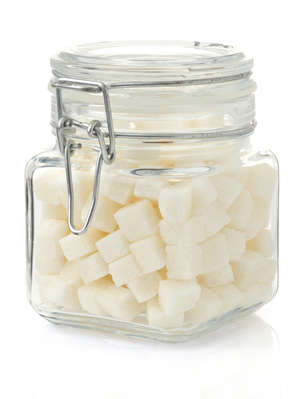
Here are a couple of ideas to keep the inspiration flowing and the motivation high. Go get a couple of empty jars, some paper to cut into slips, and a pen. Now.  Really.
The Small Victories Jar

This is a variation on one of the rituals I wrote about in a New Year’s blog post. Keep a jar somewhere you’ll see it every day before you go to bed, along with some slips of paper and a pen. Before you go to bed write down at least one small achievement for that day. Maybe you resisted temptation and didn’t buy a latte. Maybe you didn’t make a cutting remark to that co-worker. Maybe you got that report done on time.

When you are feeling blue, read the slips of paper that have accumulated. You will realize that you have more strength than you thought.

The Memory Jar

This suggestion for a jar comes from www.shoegirlcorner.com. (She’s nice. Read her blog.) Her suggestion is to write down good things that happen and put them in a jar. Date the slips of paper and write a short description of the event. To take it a step further, have everyone in the family contribute. Pull the papers out and read them on special occasions or anytime you are feeling nostalgic.

The Pay It Forward Jar

The December edition of InStyle magazine had this tip in its Entertaining section. When you are hosting a party, fill a jar with notes that contain a suggestion for random acts of kindness. As your guests depart, let them each pull out a suggestion they could do the next day, such as “Let someone else go first in line” or Compliment a stranger.”

Take this one step further by pulling out a suggestion yourself once a week or so. See if what they say about acts of kindness rebounding on the giver comes true.

The Purposeful Tip Jar

When I was young, my family held formal meetings where we made group decisions about things like buying a new television. We took turns recording the minutes (years later my mother and I found my sister’s entries in the meeting notebook and laughed until we cried) and all contributed to the fund for big purchases. The lesson about incremental saving was a powerful one.

Start saving change with a specific goal in mind. It is amazing how much change we all have lying around. Gather it up, put a label on a jar and give it a purpose. Not only will it ensure that pennies don’t get sucked up by the vacuum cleaner but when you have saved enough for the item, you can put a new entry into the Small Victories jar!

Do you have a suggestion for creating inspiration? I’d love to hear it!

You may also like

The Friday Fiesta: From Guatemala to Antarctica, with Museums and Manners, too

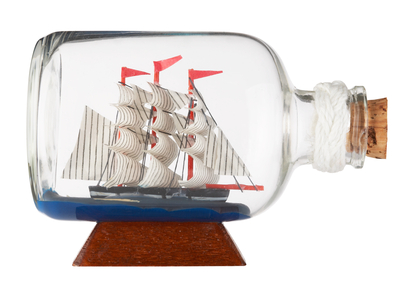
bottle with sailing ship insideAs a fiction author I love to weave  unique cultural gems into the plot. Most of the time I draw on my own world travels and experiences living in Mexico and Central America.

In these Friday Fiesta posts I highlight cultural stories worth celebrating. The unique, the odd, the thought-provoking. Enjoy and share to make the world a little smaller today.

Navigating the Ship of State in Guatemala

With an intro that declares “A potential “failed state” is clawing its way back to something like normality,” the online version of The Economist magazine recently took a look at Guatemala. Last week, after being in office for a year, President Otto Pérez Molina pointed to improvements in security, public health and fiscal reform. The murder rate has gone down substantially, more criminals are getting caught and punished—including corrupt police—and “the death rate among those with acute malnutrition has fallen by half.” The president’s job can’t be easy in Guatemala which had a 36-year civil war; half of children under five suffer from malnutrition and drug cartels help keep it on the list of the top 20 most violent places in the world. But even slight progress is better than no progress at all.

#FollowaMuseum

With the teaser “A nation stays alive when its culture stays alive,” the folks behind the culturethemes.blogspot.de blog work to promote museum exhibits and other big cultural events by asking folks to join Twitter hashtag tweet fests related to those events. The next one is 1 February. Tweet a great museum experience, with the museum’s handle, using hashtag #FollowaMuseum. You’ll get a culture fix and great ideas for your next outing.

Antarctica Rescue Goes “Forward”

Hard to imagine for many of us, but it is the Antarctic summer right now. This means nearly 24 hours of light, manageable temperatures, fewer wind and ice storms. Yep, it’s the South Pole tourist season, the height of international travel. But Antarctica and the seas around it are never danger free as the cruise ship Fram recently found out. Incidentally the word “fram” means “forwards” in Norwegian. The cruise liner is the namesake of Roald Amundsen’s much more famous ship Fram, now on display in Oslo in the museum I’ll be tweeting about next week! But I digress. The good news here is that when today’s Fram was caught in pack ice off the coast of Antarctica, ice-breaking vessel HMS Protector, on patrol in the region, was able to “crack through the 13-foot-thick ice that had encircled the cruise liner.” Neither ship was damaged and no one was hurt. Skol!

Mind Your Manners

Simply put, I love this website. Etiquettescholar.com gives you tips for manners everywhere. From table settings, to wine selection to tea etiquette, the website is a fund of information to help you enjoy smooth sailing anywhere (okay, maybe I’m taking the ship theme a bit too far.) Surf around the sight before your next international travel for some great tips.

Find Carmen’s books on amazon.com

Lost in Mexico has nothing to do with translation

Lost in Mexico has nothing to do with translation

In CLIFF DIVER, the first full-length book in my new mystery series, Acapulco police detective Emilia Cruz keeps a log of women who have gone missing. For her they are las perdidas, the lost ones, and sometimes it seems as if she’s the only who still cares.

I’d like to say that I made this up, that hey–the book is fiction, that there are no women missing in Mexico or anywhere else. But we’ve seen the news from Mexico over the past few years and know that the battles for money and power between rival drug cartels and between cartel interests and the rule of law have taken a heavy toll.

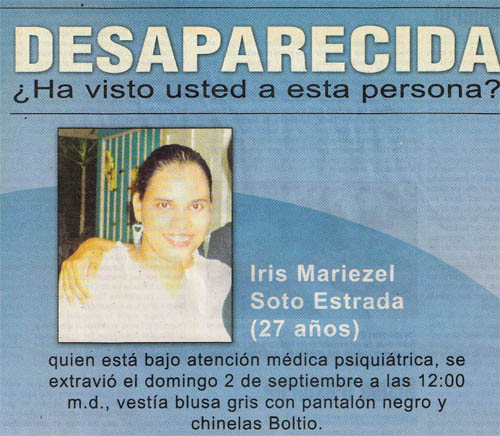
The conflict bleeds south through Central America and beyond; las perdidas aren’t confined to Mexico. Where I live in Central America, notices like the one above often appear in the newspapers. DISAPPEARED the headline cries. The ads are placed by the families and the size of the ad is usually an indicator of the family’s wealth. (Read my post about violence against women in Nicaragua here.)

How Many Are Missing

In Mexico, leaked government documents from late 2012 put the overall number of missing adults and children as 25,000 over the past five years. In the city of Cuidad Juárez alone, the number of “disappeared” women is hard to calculate. Most know a family with a missing female member. This riveting account from the New Statesman of what is happening to women there is well worth a read.

The Cost of Closure

Trying to find out what happened to your disappeared wife, daughter or mother in Mexico can be fruitless and expensive, according to this report from the Inter Press News Service. One source puts the cost at $23,000. FYI, the average annual salary in Mexico is just over $11,000, according to the OECD.

The dead are easier to count

According to The National Citizen Observatory on Femicides (OCNF) from January 2010 to June 2011, 1,235 women were killed in Mexico. Between 2005 and 2011, in the state of Mexico, adjacent to the capital city and notorious for violence against women, the OCNF recorded 922 victims of femicide. In the state of Chihuahua, home to Ciudad Juárez, in 2010 alone there were 600 cases of femicide.

missing women in Mexico

photo courtesy of BBC News bbc.co.uk

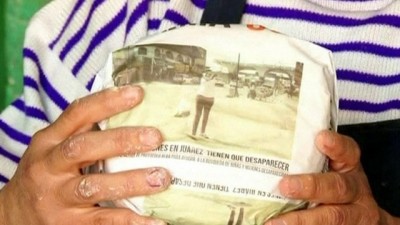
So we’ll continue to see advertisements for the disappeared. Some places will be creative in the search for loved ones and justice, such as Chihuahua’s campaign to place notices for missing persons on tortilla wrappers the way faces and information are carried on milk cartons in the United States.  This photo accompanied this story by BBC News late last year.

I wish I’d made up Acapulco police detective Emilia Cruz’s las perdidas. I really do. But maybe fiction can generate some attention to this wrenching problem. Mexico is a country rich in resources, culture, and tradition. No one should be “lost” there.

You may also like

Friday Fiesta: The Real Big Bird, Famous Birthdays, and Beer for Fido

Coming 30 January! CLIFF DIVER: An Emilia Cruz Noveldog in birthday hatAs a fiction and mystery author I love to weave  unique cultural gems into the plot. Most of the time I draw on my own world travels and experiences living in Mexico and Central America.

In these Friday Fiesta posts I highlight cultural stories worth celebrating. The unique, the odd, the thought-provoking. Join the movement and share your own good news stories on Twitter with hashtag #FridayFiesta.

Red Robin

The 1to1media.com website carried this super story about the Red Robin restaurant chain’s official policy of random act of kindness. Red Robin’s signature “Ymmmmm” also means that management and wait staff are empowered to cut customers’ bills, offer on-the-spot specials for customer events and other actions that elicit customer testimonials. We’re not talking just a few comments a sidebar. There are so many comments on the Red Robin website that it is a whole section. Now go get a burger.

Sistine Chapel aged 500 and colder

About three years I was lucky enough to tour the Vatican. I walked through the Sistine Chapel with my head canted back in awe and the rest of me roasting in a herd of tour groups. This amazing space celebrated its 500th anniversary last October and several websites like the Cultural Travel Guide celebrated the occasion with a story or retrospective. But keeping this 500-year-old wonder in good shape is a herculean act of historic preservation: dust, dander and other “bodily debris” from the thousands of tourists who pass through every day dirty it up. The UK’s Guardian quoted the director of the Vatican museums, Antonio Paolucci as saying that the Vatican will install a special carpet and air handling systems to ensure that “visitors who traipse sweat, dust, skin flakes and hair into the 16th-century chapel will be ‘dusted, cleaned and chilled.’” Maybe next time I’ll bring a sweater. One that doesn’t shed, of course.

A Tubular Birthday

London’s subway system, the Tube, is 150 years old this year. Guardian reporter Stephen Moss celebrated with a 52-mile ride on the Central line, including the 6 miles used before 1994. His commentary is consummately British and clever (From Epping I go just one stop – to Theydon Bois. I’ve never been to Theydon Bois, but have always been captivated by the name, which suggests a Victorian actor-manager or a well-meaning but talentless amateur captain of the England cricket team c 1910) and the journey, as well as key moments in Tube history, comes to life in his words. He does mention the price of a go-anywhere ticket, which made me gulp, but it is a ride on a piece of history.

Beer in the Doghouse

According to paste.com, Boneyard Brewery in Bend, Oregon, has created an alcohol-free beer for dogs made of vegetable broth, water and spent grain from the brewery. Paste.com says the beer, which is sold in 16 ounce bottles, can be enjoyed by Fido as a treat by itself or mixed with dry food for the ultimate dinner. Let the party start!

Carmen’s books on amazon.com

The Friday Fiesta: An Outdoor Seat, Music, Chocolate, and a Story

As a fiction author I love to weave  unique cultural gems into the plot. Most of the time I draw on my own world travels and experiences living in Mexico and Central America.

In these Friday Fiesta posts I highlight cultural stories worth celebrating. The unique, the odd, the thought-provoking. Enjoy and share to make the world a little smaller today.

Have a Seat

The website theverybestop10.com brings us a montage of park benches around the world that is surprisingly startling and thought-provoking and nearly had me running for my passport. From a bench that looks as if it is part of a giant slingshot by German artist Cornelia Konrads to book-shaped benches in Istanbul and a shark attack bench in Bangkok, these photos and the imagination behind them are a guaranteed smile. Check it out—there might be a bench near you.

The Landfillharmonic

There are a few YouTube videos on the small orchestra created in Cateura, Paraguay, using instruments made from trash from a local landfill. I recommend a quick view of this 3 minute short. The stringed instruments sport odd shapes and labels from the boxes, cans, and other containers cannibalized to make them but the music—and obvious dedication of the music teacher–is worth celebrating. You can check out this Facebook page for more about the orchestra and the documentary about it from an often overlooked part of the world.

Saving Chocolate

The cultureist.com online magazine—one of my favorite feel-good online locations—carried this interesting story about cocoa farmers in the impoverished Democratic Republic of the Congo. Candy maker Theo is producing two new organic, fair trade certified chocolate bars: Pili Pili Chili, “an intensely warming blend of cocoa, vanilla, and spicy peppers; and Vanilla Nib, a scrumptious mix of cocoa, creamy vanilla, and crunchy cocoa nibs.” The website reports that Theo says the “fast-growing, high-yield crop requires minimal re-planting, prevents deforestation, commands solid global prices, and is a major source of income.” Theo chocolate is sold online and at Whole Foods Market stores.

Story Sees the Light of Day

“The Tallow Candle,” a handwritten early story by Danish storyteller Hans Christian Anderson—author of “The Little Mermaid” and other famous tales–was recently unearthed in a box of miscellany by local historian Esben Brage in the National Archive in Odense, Andersen’s home town. Published in English by Danish media outlet politiken.dk after validation by experts including Ejnar Stig Askgaard of the Odense City Museum, Bruno Svindborg of the Royal Library and Professor Johan de Myliu, you can read it here. As the UK’s guardian.co.uk reported, “The story tells of a little candle, dirtied by life and misunderstood, which eventually finds happiness after a tinder box sees the good at its heart and lights it.” Given the news lately, this discovery is pretty timely. We all need a little more light in our lives.

Find Carmen’s books on amazon.com today

Walking the Mouth of Hell

Walking the Mouth of Hell

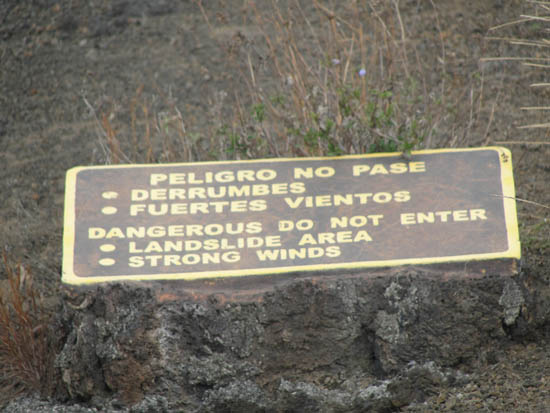
warning signI ended up with the yellow hard hat but what I really needed were safety goggles. My eyes watered from the cinders in the air. Heat rose from the black porous rocks that lined the uphill path and within minutes my jeans were damp with sweat. The smells of sulphur, rotten egg, brimstone, eddied in the strong wind.

We were climbing the marked paths around the multiple calderas of the still-active Masaya Volcano, 23 kilometers from Managua. The area is a well-preserved Nicaraguan national park–the country’s first–that includes Volcán Nindirí, which last erupted in 1670, and Volcán Masaya, which blew in 1772. The relatively new Santiago Crater was formed between the other two in 1852. Moon Guides has more about the volcano here.

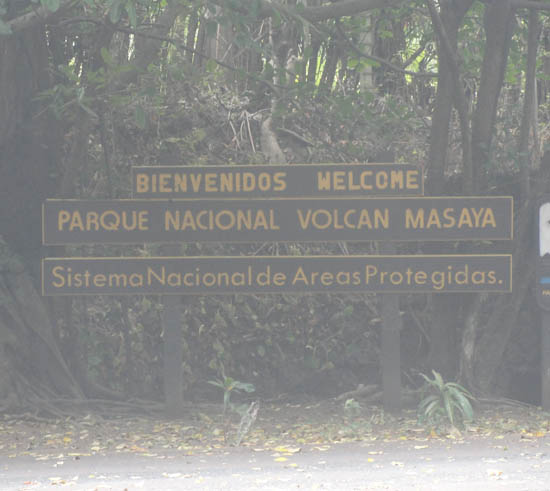
park entrance Masaya

Masaya is a well laid out national park

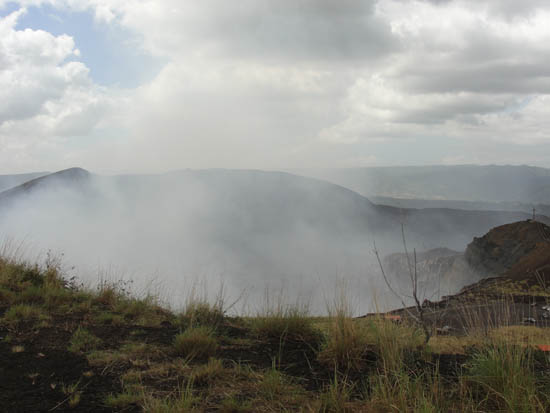
Masaya crater

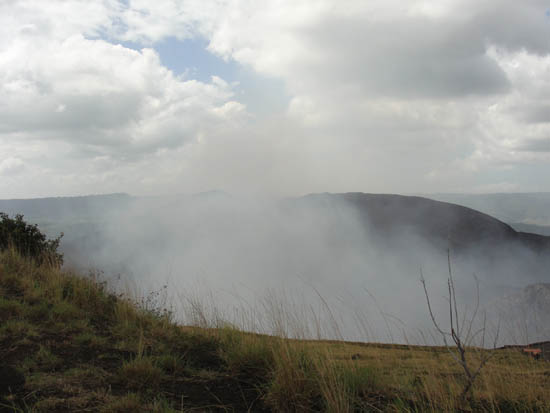
Steam billows from the Santiago crater, which experienced a partial eruption in April 2012

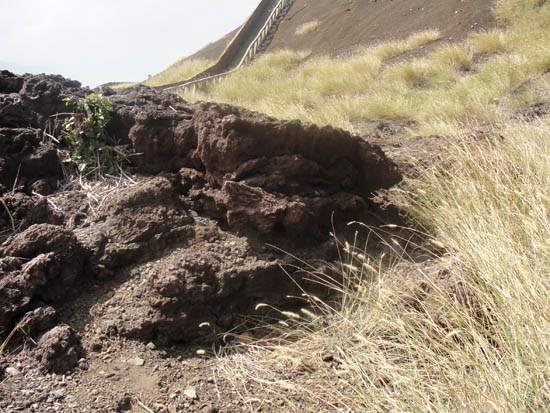
At the top of the first rise, we turned and tried to catch our breaths, heat wafting up from the path that wasn’t so much of a path as it was a long series of steps cut into the sides of the craters. The visitor’s center only a few kilometers from the park entrance had offered an informative series of rooms about geology, tectonic plates, Central America’s volcanoes and other scary things cloaked in science, where we’d learned that the Masaya volcano occasionally belched out the type of magma that hardened into lava bombs upon exit. The steps we climbed were bound by lumber and these big lava chunks.

rocks

Bubbly black lava rock was everywhere

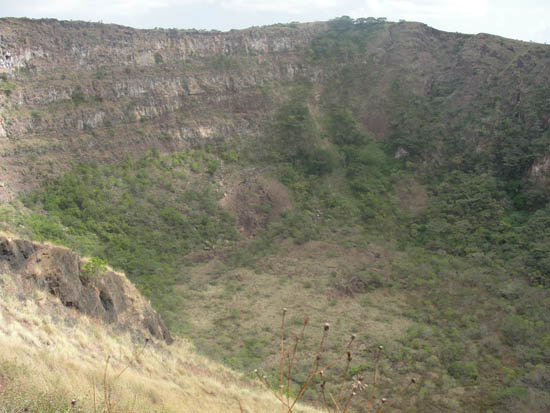
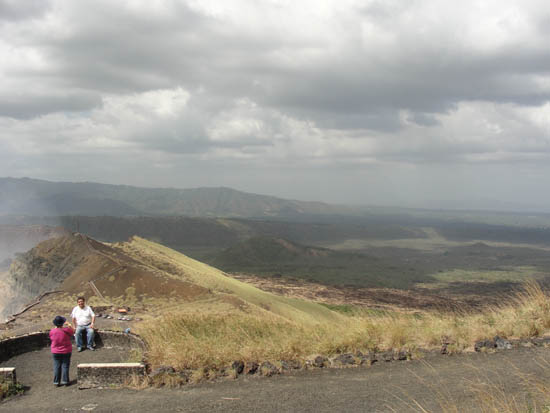
We found the relatively small San Francisco crater at the top of the path. San Francisco was long dormant and the big bowl in the ground was now covered in grass and scrubby shrubs, with the occasional yellow flower poking through. As I looked over the stunning landscape with the crater at my back, the wind threatened to whip the camera out of my hand.

crater

The San Francisco crater looks like a green bowl

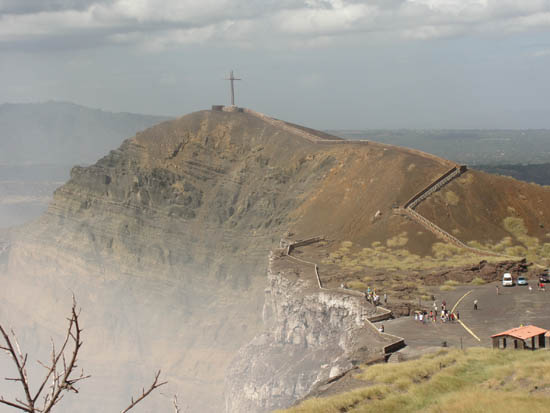
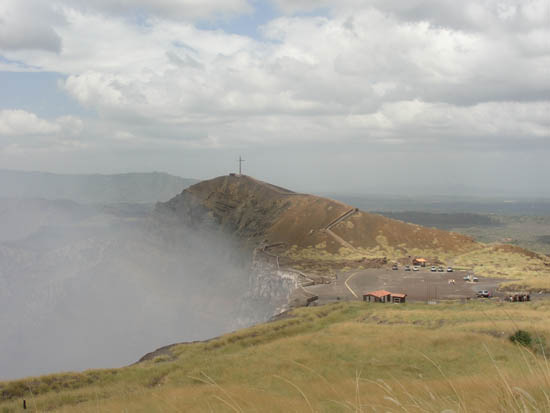
Nearly a mile away, we could see the smoking Santiago caldera. Above it was the cross placed there in 1529 by Father Francisco Bobadilla to exorcise the demons he believed lived within. The Spanish explorer Gonzalo Fernandez de Oviedo called the smoking volcano the “mouth of hell.” He had himself and another man, Friar Blas del Castillo, lowered into the caldera thinking to find gold there. He didn’t find gold but probably spent the next two days blowing ash out of his nose and wondering why his ear wax had turned black.

cross above volcano

The cross high above the volcano dates from 1529. The walkway to it is closed due to landslides.

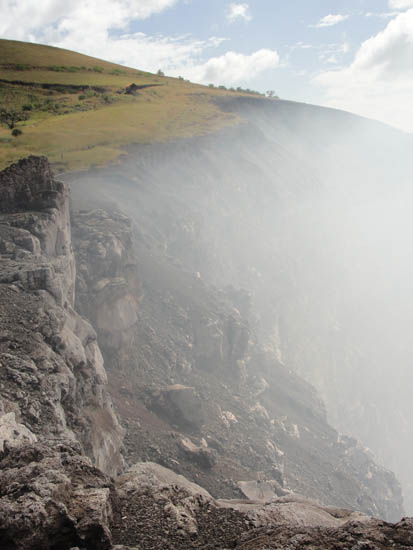
Mother Earth has a sense of humor, I thought to myself as I watched steam billow out of the Santiago crater. It was a unique sight. Powerful and a little scary. We watched the steam drift, getting thicker and thicker, until it obscured the far side of the crater’s lip.

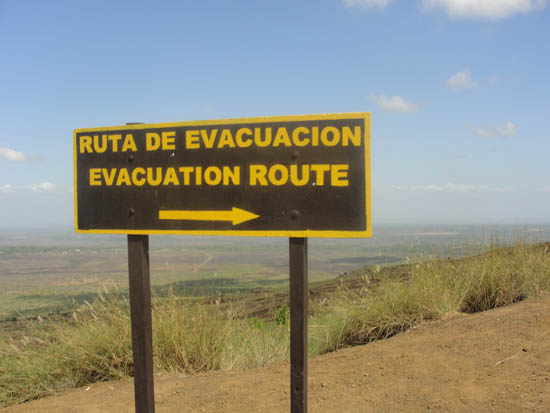
When we’d first driven up to the main viewing area, along a curving road that led up from the visitor center and the guard who handed out the hard hats, we’d been able to see maybe a third of the edge but now most was hidden behind a white cloud. All parking was facing out, in case an evacuation was in order. The wall built at a low point in the crater’s lip barely came to our knees but any rush of vertigo was lost in the stunning view.

sign

In case the lava bombs start falling and we have to know which way to run

We started back down, our shoes crunching on the black lava gravel. We were heated by the rocks but cooled by the wind. I started thinking about some of the other odd places I’d been and the risks I’d taken and the choices I’d made.

drop off edge

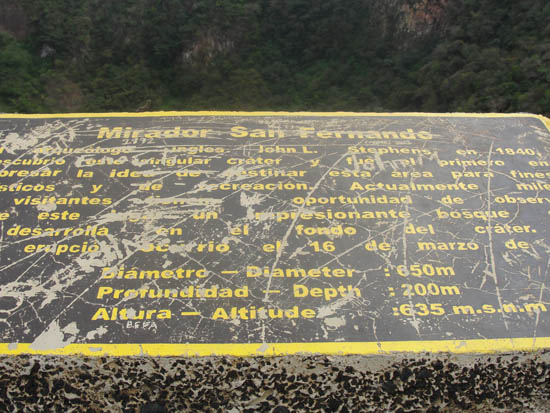
The Santiago crater is 1640 feet wide and 656 feet deep. I didn’t measure it.

volcano plain

Looking out over the plain at the craters left by the inactive volcanoes

signs

Older signs are scratched and damaged by eruptions

Masaya volcano

An incredible, majestic view

An active volcano is an unexpected thing, a sign that the solid earth is alive and moving to its own inner music. We can’t control it, which means there are risks along the lava path. But when you reach the top, inspiration and power are there for the sharing.

You may also like

A Nicaragua Christmas: The Treasures of Alter Eco

A Nicaragua Christmas: The Treasures of Alter Eco

Advertising in Managua, Nicaragua, can be hit-or-miss so I wasn’t quite sure what I’d find when I walked into Alter Eco, which bills itself as an alianza hecho a mano. This “alliance” is actually a cluster of artist shops and studios near the big art and antiques store Mama Delfina.

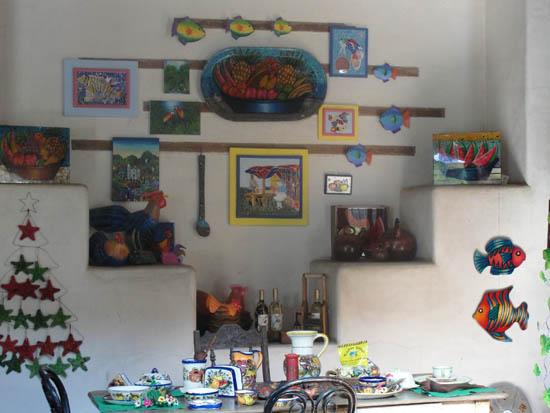
The displays and inventory would be at home in New York or London or Mexico City. Here are some of the treasures I discovered.

cotton clothing

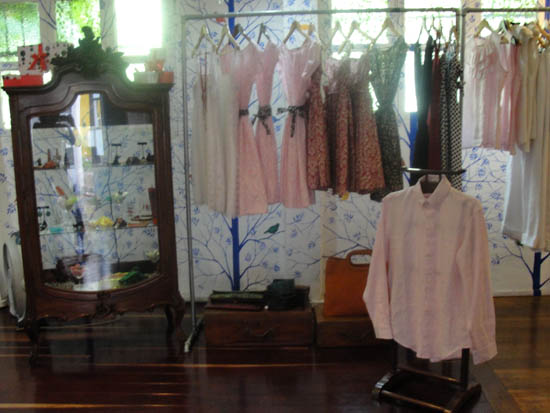
This charming clothing and accessories boutique has a Laura-Ashley-meets-Chanel vibe. Simple cotton and linen pieces kept to a pink, rust, and gray palette.


boutique

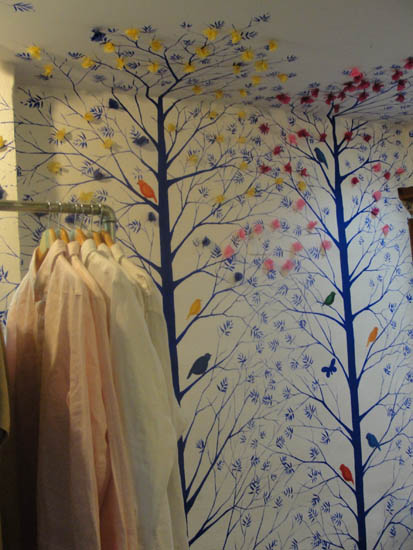
Visitors to the boutique are immediately drawn in by the charming wall decor featuring trees, birds and 3-D blossoms


boutique ceiling

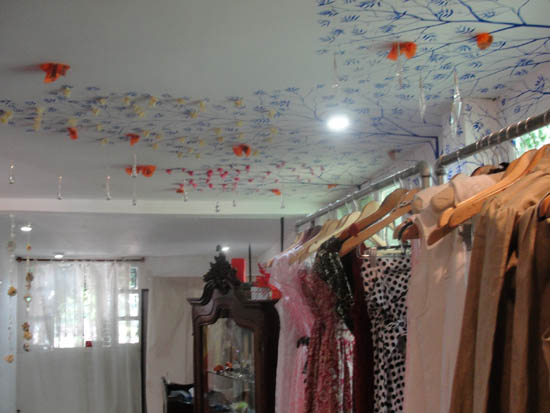
Silver “raindrops” fall from the tree branches and blossoms on the ceiling


jewelry

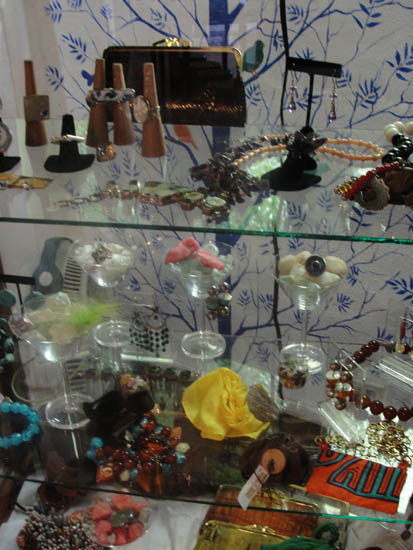
Accessories included locally-sourced jewelry and lizard clutches and belts


talavera

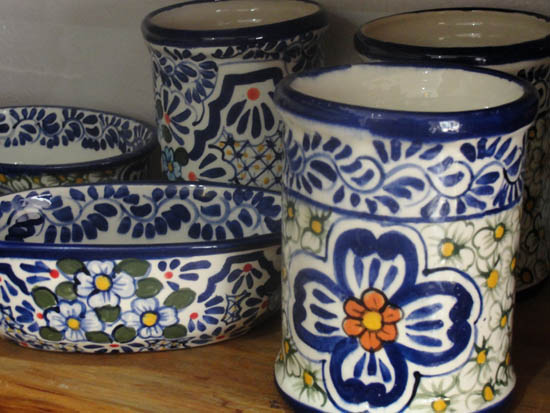
The ceramics studio had a beautiful selection of Mexican talavera


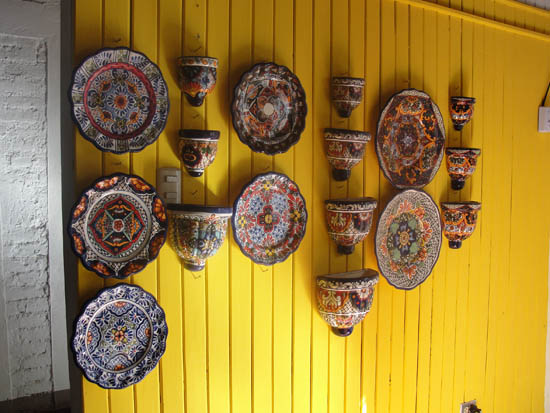
Talavera pottery pops against a yellow wall at Alter Eco


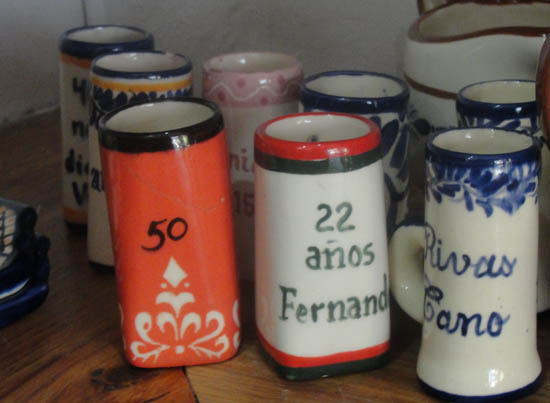
The place to go for customized tequila shot glasses!


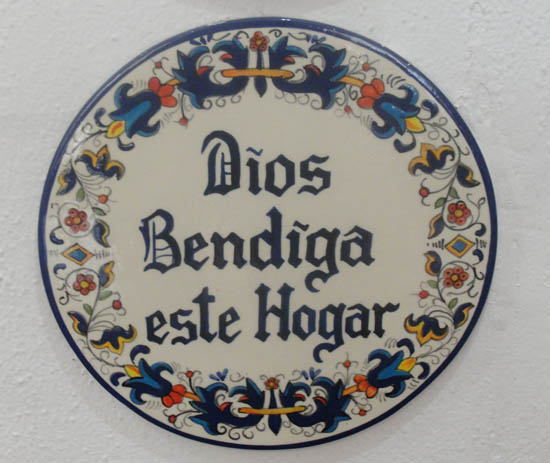
Talavera plaque reading “God Bless This Home.” My wish for you this holiday season.

A Nicaragua Christmas: Shopping at Mama Delfina’s

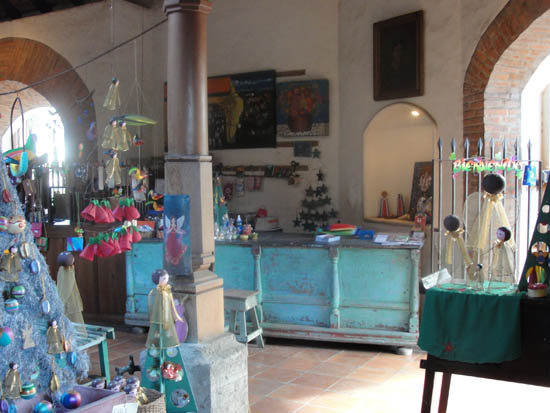
Managua, Nicaragua, is full of surprises including the beautiful art and antique store, Mama Delfina’s.  Housed in a large white Spanish colonial building with an open courtyard and beautiful old brickwork, the place is a treasure trove of handmade holiday gifts and decorations, carefully curated to offer a collection of best locally-produced items.

While the original Delfina, whose picture is above the cash register, looked on with stiff-necked amusement, the staff graciously let me roam around and take pictures. I hope you enjoy the experience as much as I did!

Mama Delfina entrance

An old picture of Delfina and a painting of the store hang above the antique blue counter


artwork at Mama Delfina

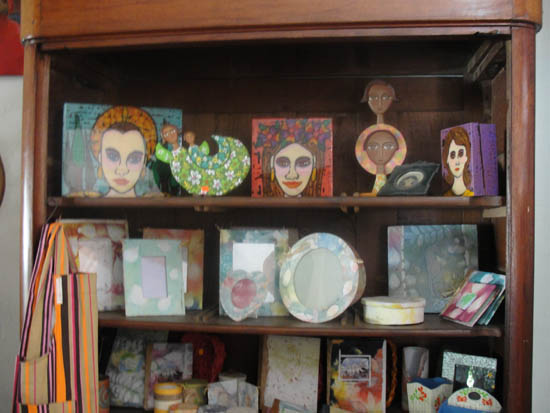
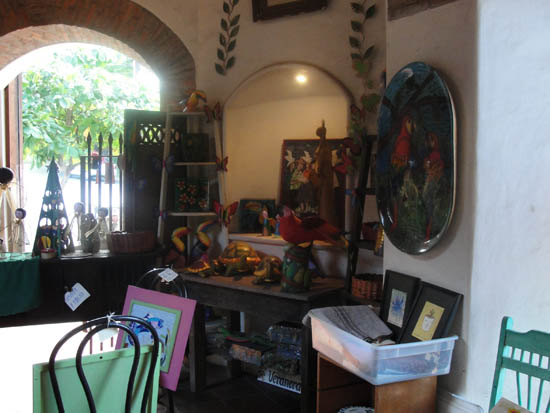
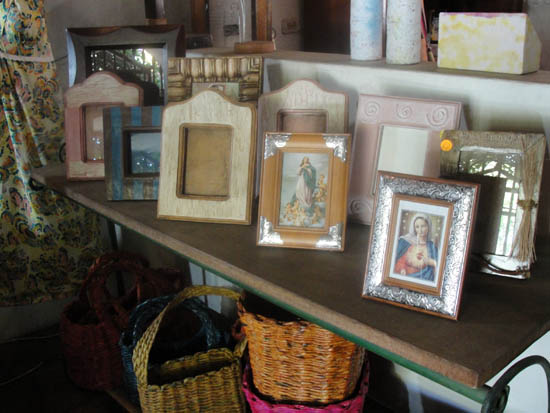
The store features beautiful displays of painted boxes, frames, wooden angels and handmade paper goods


Silver frames

Some of the frames are of intricately punched metal, a technique that in Mexico is called repujado


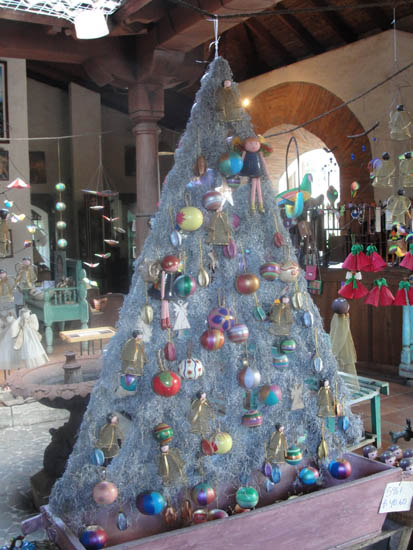
Christmas ornaments

All the Christmas ornaments at Mama Delfina’s are one-of-a-kind


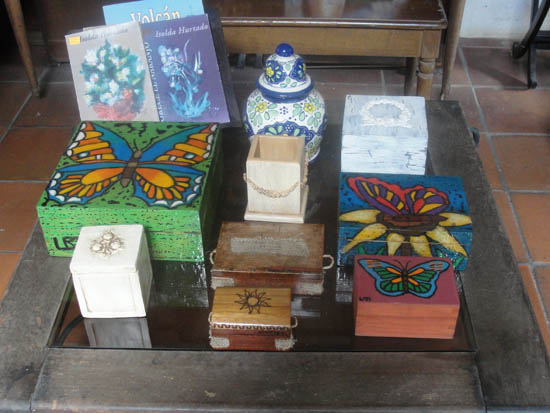
Boxes

Each painted box was a mini-masterpiece of abstract art. Loved the wonderful tablescapes throughout the store.


desk

The store is arranged as a series of vignettes showcasing art and antiques.


textile bags on display

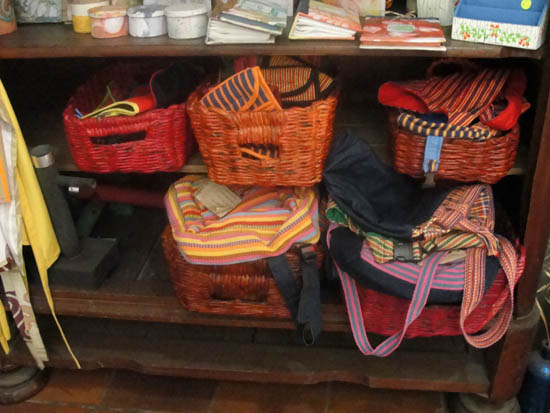
The store carries a line of bags made from a loomed woven fabric that was prohibited during the Samoza regime but is now being reproduced in Nicaragua


archways of art

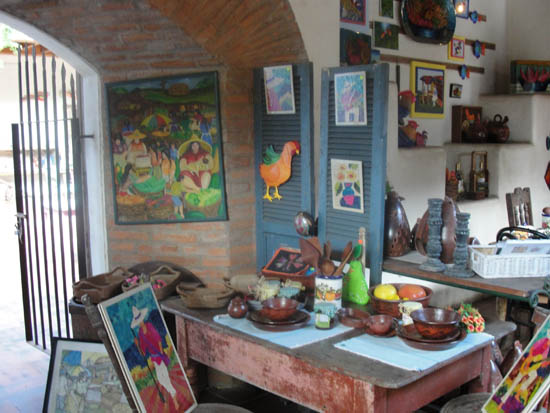
A beautiful vignette of art, holiday items, and antiques


art on wall

The store chooses and displays art with a practiced eye

The Mary/Mujer Paradox

Madonna statueDecember is a big month for Mary, the mother of Jesus. On 8 December Catholics celebrate the Immaculate Conception, the day She became pregnant with the son of God without benefit of sex. On 12 December there is the feast day of the Virgin of Guadalupe to commemorate the day She appeared to the humble San Juan Diego in Mexico. And of course on 25 December we celebrate the day She gave birth in Bethlehem to Her son Jesus.

The feast day of the Immaculate Conception of Mary is a major event in Nicaragua, with celebrations dating to colonial times. My neighborhood, like so many others, enjoyed about 40 hours of intermittent fireworks (which reduced the dog to jelly), late-night festivites the evening before and a Mardi Gras-like celebration at the church up the road on the actual feast day.

The build-up to the weekend was as big a deal as for Thanksgiving in the US. For weeks the newspapers reported preparations across the country. Major stores ran related ads. Billboards and banners strung across telephone poles repeated words like joy, purity, conception, virgin, sainted.

The news reports were detailed—guardians of the tradition were interviewed, one chuch had a special “washing” of the silver before the big day, in many parishes the faithful carried the church’s statue of Mary in local pilgrimages, others planned concerts or novenas, the capital’s cathedral would feature a statue of la Santísima Virgen de la Purísima that is three meters tall and weighs two tons. The faithful call known as La Gritería was everywhere: What causes so much joy? The conception of Mary!

I grew up with Catholic ritual and love the traditions and symbolism. But this weekend, as the fireworks boomed, I found it hard to reconcile a fixation on feminine purity with the high rates of violence against women in Nicaragua.

And along the same lines, I can’t help but link violence rates with the societal attitude that brings us the sex position of the week in the newspaper. Once a week, there’s a “tasteful” drawing of a couple doing it, with tips for getting it right.

Femicide rates in Nicaragua have exploded in the past ten years. Univision reported recently that there were 29 cases of femicide in 2000 and 89 in 2010. While this may be less than on a bad week in Chicago, this is a significant trend for the relatively small Nicaraguan population.

Newspaper La Prensa reported in August that 48 women were murdered in Nicaragua during the first half of 2012, including two under 12, while some 96,000 women are in a “vulnerable state.” Of the 48 murdered, eight were raped before getting killed and 14 were known to the National Police to be victims of abuse, according to a report by the non-governmental organization Red de Mujeres contra la Violencia. The organization also noted that 78% of violence against women occurs in their homes and females between 18 and 45 years account for 61.25% of all assault victims.

I’m a little worried about what will be in the newspaper in the coming week. Univision reported that the special prosecutor for Women in Nicaragua, Deborah Gradinson, said that gender violence is multiplied by three when there are major celebrations.

So Mary’s on a pedestal as the woman who never had sex, real women are available to be kicked around, and new ideas for the sex beforehand are right here in the paper.

What causes so much joy? The conception of Mary!

Mary, Mother of God, pray for us.

The Friday Fiesta: Safari, Snow, Scotland and Surprising Films

world holiday ornamentAs a fiction author I love to weave  unique cultural gems into the plot. Most of the time I draw on my own world travels and experiences living in Mexico and Central America.

In these Friday Fiesta posts I highlight cultural stories worth celebrating. The unique, the odd, the thought-provoking. Enjoy and share to make the world a little smaller today.

Join the Virtual Safari

National Geographic’s Andrew Evans is on the move again, this time on safari in Tanzania. He is documenting his trip with a series of blog posts, photographs and short videos, as well as tweeting his way through some tense moments with skittish wildlife. Evans is a great communicator, managing to keep us on the edge as he tweets his adventures. His longer blog posts provide more thought-provoking reports on conservation and the beauties of Africa. Follow him @WheresAndrew.

Let it snow

Images of the winter wonderland that is Zurich, Switzerland were featured on Anisha Shah’s website this week. The photos are beautiful, showing gentle blankets of snow tucked around iconic European motifs. The result is a Christmas feast for the eyes, a gentle, dreamy fairytale digital experience. Everybody who is looking forward to a snow-less holiday season, like me here in the tropics, should spend a moment savoring these images. I especially loved the swan amid the snowflakes.

Glasgow transformed

My perceptions of Glasgow, Scotland, have been shaped a little too firmly by Ian Rankin’s novels, which are set in the seemingly much-preferred Edinburgh, so I was intrigued by artist Claire Biddles’ article in the online edition of UK’s Guardian talking about the transformation of the city into a “culture city.” According to Biddles, “The role that artist-run spaces have had in Glasgow’s reinvention as a creative city cannot be underestimated, and as long as the artistic community continues to develop, this image will be sustained – attracting artists and art lovers alike to the city.” The article describes several of the art spaces in Glasgow, painting a picture (pun intended) of a vibrant and effective effort to enrich the city “culturally and economically.” Tourists and travelers take note; there’s more to Glasgow than ever before.

Films to Inspire

Roman Coppola, son of legendary director Francis Ford Coppola, teamed with W Hotels to offer a film competition: screenwriters had to submit screenplays with two ingredients: location is a W Hotel and there’s an Intel Ultrabook somewhere in it. The winners produced four short films which were recently featured on the Gadling website. The films take place at W Hotels in Doha, Qatar; Mexico City, Mexico; Washington, DC; and the Maldives. The website said, “The results are quirky, touching, and sometimes eerie, but most of all great ways to inspire travel and help emerging talent get their feet off the ground.” I agree. With the help of sponsors like W Hotels and Intel, this is a great way to showcase locations, open doors to a new culture, and give wanna-be filmmakers a chance to do what they love!

5 Life Lessons from a Month of Writing Dangerously

5 Life Lessons from a Month of Writing Dangerously

NaNoWriMo can be described as a cult phenomenon, a virtual writers gathering, a very strange hobby or God’s gift to global coffee sales. As I’ve mentioned elsewhere in this blog, the goal is to write a 50,000-word novel during the month of November. It’s a tough thing to do—not tough as in survive cancer or send a rocket into space sorts of tough—but it truly tests your self-discipline, imagination, and relationships with others.

If you do it right, NaNoWriMo becomes a month-long learning experience. Here are a few universal lessons I took away from it this year:

 A goal is different from a plan

Writing 50,000 words is a goal. The plan to get that done defines the steps to take to achieve the goal. The more detailed the plan, the better the chances of achieving the goal. In this case, outline + schedule = plan. In my case, both the outline and the schedule changed but the initial planning helped me stay on track.

Use the Deadline, Grasshopper

A deadline is an overlooked luxury. It defines the project and allows you to work backwards from the hard line. This is a variation on Covey’s excellent axiom: Begin With the End in Mind.

You Can Have it all, not just all at the same time

Maureen O’Sullivan (Jane to Johnny Weismuller’s Tarzan) said this in response to why she quit acting to have a family. By taking on a big project like NaNoWriMo, something else had to come off my plate. We stared at splotchy yellow dining room walls the whole month; your truly finished the paint job on 3 December.

Learn to Prioritize or Learn to Fail

My mother always said all you have to do is want it. Two things are implicit in her words: that her kids would be able to A. prioritize and B. not slack off. If we want something that bad, the actions to achieve it will consistently and consciously be at the top of the daily to-do list. I wrote about 1700 words each day, with a couple of spurts so I could skip a day here and there. A writing buddy friend who had to juggle exams in November wrote in bigger and fewer spurts but did nothing else those days.

Rewards R Good

A reward was in order because I’d set out a tough thing for myself and got it done. Yay me. When challenges are quiet and don’t get a lot of external attention, it doesn’t mean they aren’t worthy, they’re just quiet. A reward is still in order. It’ll help muster enthusiasm for the next challenge. (I bought a fish-shaped talavera jug. Don’t judge, it is waaay cool.)

So, yes, I “won” my NaNoWriMo challenge this year with a 50,303-word draft manuscript tentatively entitled SUN GOD. Over the next year, I’ll add another 20,000 words and rewrite a bunch of it and eventually, maybe, just maybe, it will become the 3rd EMILIA CRUZ mystery novel. It was great to spend the month in Acapulco with Emilia and Kurt . . . but let me tell you, it’s hot down there . . . 

2016 Update

SUN GOD got pushed to the side. DIABLO NIGHTS (Detective Emilia Cruz Book 3) and KING PESO (Detective Emilia Cruz Book 4) needed to be told first. SUN GOD was renamed PACIFIC REAPER and will be the 5th book in the Emilia Cruz series, slated for release in February 2017.

You may also like

NaNoWriMo

Crafting a Christmas at the Mercado

This is the year my Christmas won’t be Made in China. Instead of the usual commercial shiny things we all know and love, I’m aiming for a simpler reminder of what the holiday is all about. Decorations, cards, and gifts will reflect skill, art, and natural materials instead of glossy plastic and machined perfection.  My sources will be local craftsman, a few boutique stores, and several charities.

A stroll through the mercado de artesanias in Masaya, Nicaragua last weekend was the starting point.

typical market scene

Just a typical aisle in the market which is located in an old colonial building with plenty of light and a restaurant on one side.


woven textiles

Most of the textiles in the mercado are from Guatemala. We saw scarves, table runners, and placemats but only a few larger pieces.


The terracotta pots on top look like smiling faces. Or maybe the Kool-Aid jug guy.
I had a sizzling pollo a la plancha after a day of hard shopping and it was delicious. Washed it down with a local beer and was ready to spend a little more!
Pottery plate

This beautiful plate is typical of the colors and motifs found in Nicaraguan pottery.

If you are having Christmas in Mexico this year, check out my post on favorite markets in Mexico City and have a wonderful time!

Pin It on Pinterest