In Memorium: The Unsung Influence of Mystery Author Leighton Gage

Fellow international mystery author Leighton Gage, creator of the Inspector Silva mystery series set in Brazil, passed away last week at his home in Florida. I never met him but he influenced me as both a writer and a reader.

Late last year, as I prepared to publish the first Emilia Cruz novel set in Mexico, the words of dismissal I’d received about trying to publish books for a U.S. audience in which all of the characters are Mexican still stung.  So it was a comfort to discover a Goodreads group about mysteries set in various locales around the world and read a post about Leighton Gage’s Brazil-based Inspector Silva books.

It was the first mystery series I’d heard of set in Central or South America. Emilia Cruz had footsteps in which to follow!

The Inspector Silva books are relentlessly authentic. I’ve been to São Paolo, where the fictional Silva lives, and can truly say that Gage nailed the environment. Disconcertedly so, in many ways. The books don’t shrink away from the brutality of life in the favelas, the choking traffic, endemic corruption, or express kidnappings and other criminal cruelty.

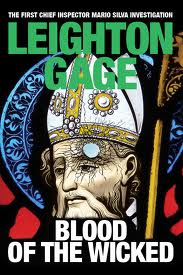
book coverInspector Silva is the product of his environment, as are his subordinates. The plots are driven by circumstances that can be uniquely Brazilian, such as the land rights issue that drove the action in his first book, Blood of the Wicked. Read my review here.

I was pursuing the same path, taking readers into the heart of a culture, with characters who live and breathe the reality of that place, and deal with circumstances that are shaped by that environment. Along with Jo Nesbo in Norway (the Harry Hole series), Ian Rankin in Scotland (the DI Rebus series), and Donna Leon in Venice, Italy (the Guido Brunetti series), Leighton Gage became my role model as an international mystery series author who excels at authenticity.

So it was a huge personal milestone when Leighton Gage followed me on Twitter! We connected as well on Facebook and Goodreads. We never dialogued on any of those platforms but it was enough for me to be recognized by someone who not only enjoyed success in our field but had repudiated the bad advice I’d been given about trying to publish books with all Latino characters. I’m sorry I never got to tell him that. I can only offer a belated thank you to Leighton Gage for both his books and audacity. 

You may also like

Leighton Gage

Illustrating the Release of HAT DANCE with Drama and Dialogue

Illustrating the Release of HAT DANCE with Drama and Dialogue

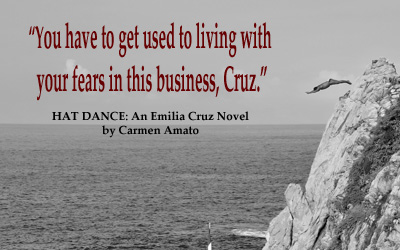
Great mystery novels need drama and dialogue. HAT DANCE, the latest Emilia Cruz novel, delivers both but sometimes words aren’t enough. Sometimes it helps to have images as well.

Here is a bit about the book, which is being released for Kindle today and in paperback later this week, with images that give a taste of what this mystery series is all about.

The plot

Emilia barely escapes an arson attack that appears to be an effort to assassinate Acapulco’s popular mayor. Assigned to investigate, Emilia cannot shake off her own fears of the fire and her narrow escape from it. But even as she tries to focus on the arson investigation, Emilia is bound by a promise to look into the disappearance of a girl from Emilia’s own neighborhood. That simple promise will lead to some nasty family secrets and a jailed hooker who knows more than she is saying.

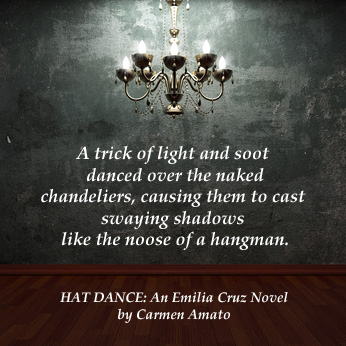
old concrete wall and chandelier

As the arson investigation veers off-course and Emilia lands on the wrong side of a dirty Vice cop, she’ll start making deals for access and information. But everybody knows that an honest cop can’t afford to deal with the devil . . .

Read Chapter 1 here

The cast

Many characters that readers met in CLIFF DIVER are back:

  • Emilia Cruz Encinos: the first and only female detective on the Acapulco police force
  • Carlota Montoya Perez: Acapulco’s ambitious and scheming mayor
  • Victor Obregon: The head of the police union for the state of Guerrero is both powerful and dangerous
  • Kurt Rucker: A norteamericano hotel manager who wants more than Emilia can give
  • Franco Silvio: The senior detective doesn’t want women in the squadroom, making him Emilia’s most dangerous enemy
  • Chief Salazar: Acapulco’s chief of police walks a fine line between political stooge and serious cop

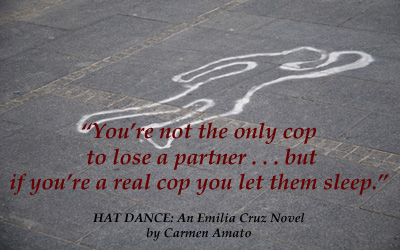
sleep_quotePlus some new faces:

  • Mercedes Sandoval: A dance teacher will become a much-needed new friend
  • Lt. Nelson Rufino: The new chief of detectives has secrets he’s not willing to share

Check out the Emilia Cruz dreamcast here.

The setting

As always, the city of Acapulco inspires drama and dialogue all by itself. There is the Acapulco that tourists know–the sweep of the most beautiful bay in the world, luxury hotels and condos, fabulous restaurants and night life. But there is also the Acapulco that is a prize to be fought over by drug cartels, a place where life is cheap and poverty is as pervasive as the salt spray coming off the ocean.

The two faces of Acapulco will claw at Emilia and force her to live between them. No crime is ever simple, no investigation is ever easy.

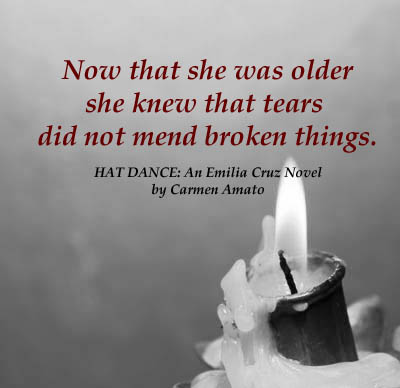
Candle

You may also like

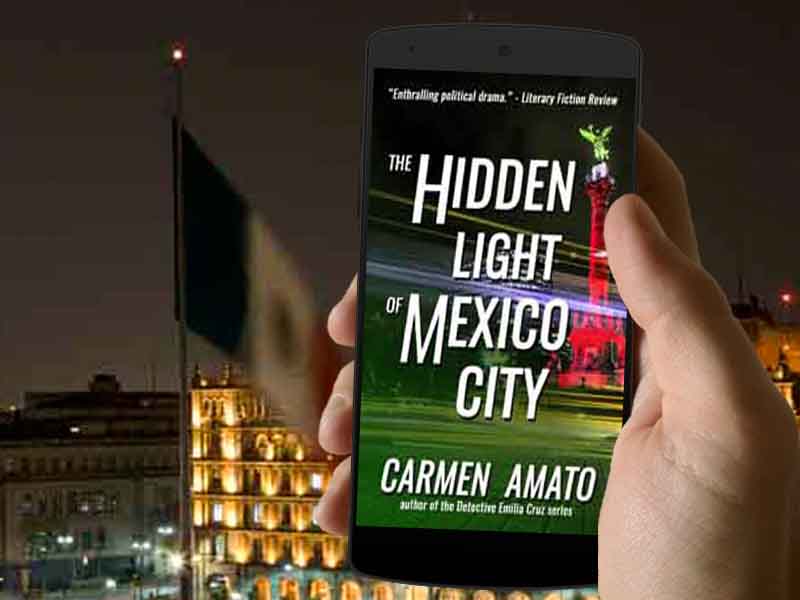
Book cover design: Updating political thriller THE HIDDEN LIGHT OF MEXICO CITY

Book cover design: Updating political thriller THE HIDDEN LIGHT OF MEXICO CITY

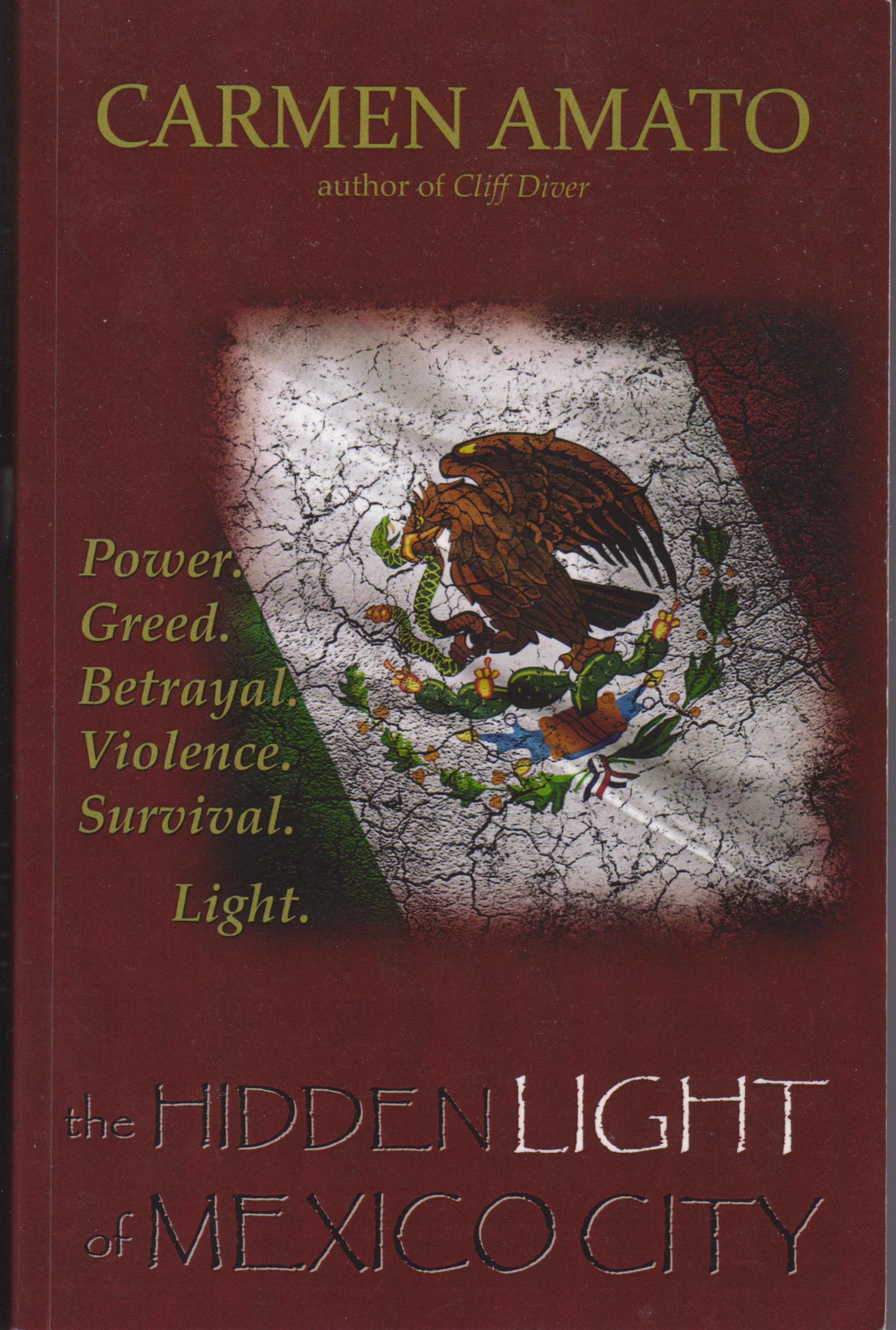
This book cover design story starts about seven years ago when I was eating dinner with Sherry, the genius of all things PR, in a swanky Italian restaurant.  Red wine, tortellini, and a laptop with a gallery of 4 proposed cover designs for THE HIDDEN LIGHT OF MEXICO CITY.  The publisher was waiting for my ideas and we were discussing each design.

The waiter stopped by.  A potential book buyer!  We showed him the mock covers, slowly scrolling through the presentation, and he zeroed in on a dark red cover with a grunge flag of Mexico.  It was Sherry’s favorite, too, and so I sent it off to the publisher as a concept to consider.

Six months later, the publisher had made a mess of the cover–and several other key elements–and we parted ways. It took another 6 months for the book to finally be published on 5 May 2012. 

Related: The Lost Chapter of THE HIDDEN LIGHT OF MEXICO CITY

Since that fateful dinner at the Italian place–which has since closed, alas, THE HIDDEN LIGHT OF MEXICO CITY has had several facelifts in the quest to find its audience. Here is the story of that book cover design quest!

1. Unused publisher version October 2011
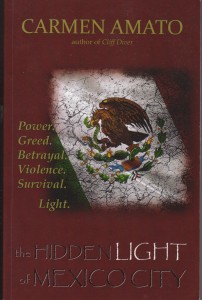
cover designThe title is barely readable. The flag isn’t centered. The writing on the left is a weird green.  The back looked even worse, reducing a photo of Mexico’s Zocalo to a dark blob.


2. Submitted to friends on Facebook for a vote
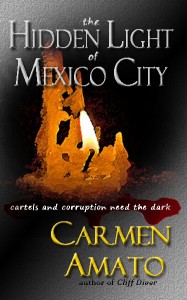
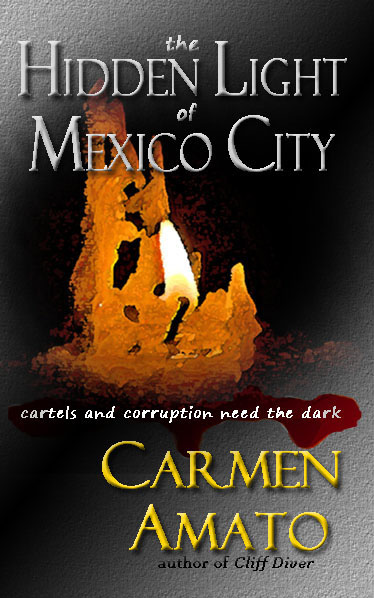
cover designThe candle concept was intended to bring together the idea of the light in the dark as well as votive candles and the Catholic Church, which is a major element of the book.

But some of the responses were “might be a vampire book” and “from a frequent traveler standpoint, I may pass on first glance on the candle – thinking it may be a love story.”

So this cover didn’t let readers know the book was a contemporary thriller.


3. The “Dirty Money” concept
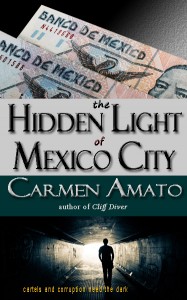
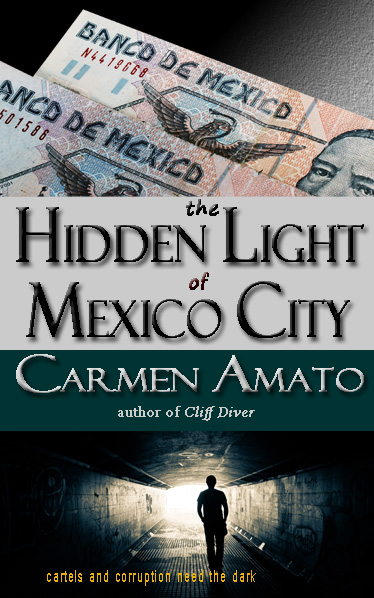
cover designPutting the pesos on the cover was a breakthrough in the concept of the design; money laundering is what leads Eddo Cortez Castillo to uncover the political doublecross.

This cover got positive comments: “I like this one but then again I liked the flame too.”

But it also garnered comments such as “light is too bright” and “where’s the girl?”


4. The debut cover (2012)
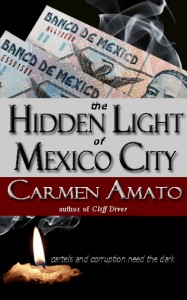
cover designThis design got some great Facebook comments and was published with the book on 5 May 2012:

“I like the red.  I like the way your name pops.  I also like the candle at the bottom.”

“I like the position of the tag line.”

“That sounds like a commitment to me!!!!  I am looking forward to seeing your latest book on the shelf!”

“THIS IS IT! I’m jumping up and down.”


5. The anniversary cover (2013)
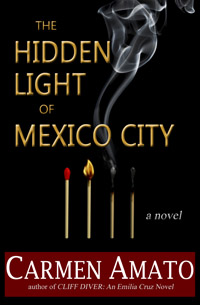
cover designAfter a year there were several reasons to update the cover:

The original cover with the pesos led many to think it was a non-fiction book

The candle seemed to just float at the bottom

The tagline was too small to be read on the book’s amazon book page.

A new design was needed that gave the book a stronger thriller vibe, was cleaner and less cluttered, and could be an eye-catching thumbnail. It also needed to stay consistent with my other books in terms of how my name was presented.

The single graphic did it all. As one friend said, this cover “sparked” her interest the most!


6. The romantic thriller cover (2016)
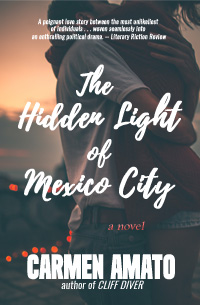
The hidden Light of Mexico CitySales weren’t what the book deserved, so back to the branding and design drawing board. New tactic: emphasize the relationship at the core of the story.

The new cover put the Cinderella story angle front and center. Lovely, evocative, but somehow there was still a disconnect between the story the cover told, the story the sales description told, and the book itself, with themes of corruption, money laundering, and social inequality. 

But I simply love the photo. He’s holding her so tight.

Related: Check out the dreamcast!


7. The political thriller cover (2018)
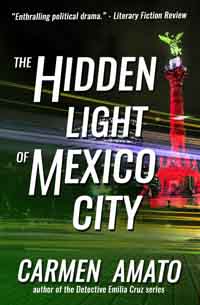
cover designA MAJOR shift in presentation and branding, accompanied by a bold counterdrug message sales page in 2019. The second chapter, introducing protagonist Eduardo Cortez Castillo jumped the line to be the first chapter so that anyone reading the “What’s Inside” on Amazon immediately gets the point of the book.

The red and sense of movement are more eye-catching than the previous covers and easier to read as a thumbnail. Once the cover and the new sales copy debuted, sales perked up.  

Let’s hope this is the last cover! Check out the new sales copy below.

Related: Read Chapters 1 & 2


A ruthless druglord is on the brink of buying Mexico’s presidency.

Only one man stands in his way.

In this stunning thriller from a former U.S. intelligence officer, secrets fuel the drug war raging along the US-Mexican border. On the eve of Mexico’s presidential elections, government attorney Eduardo Cortez Castillo discovers collusion between the country’s powerful Minister of Public Security and the drug cartel leader known as El Toro.

Coded messages . . . a secret website . . . clever money laundering.

“Enthralling political drama . . . Politics and corruption, and a man and woman from opposite ends of the social spectrum who fall in love.” — Literary Fiction Review

Marked for death by cartel assassins, Eduardo follows the money trail deep into drug smuggling territory. There he’ll find that violence buys loyalty, votes are for sale, and the odds are against survival.

Back in Mexico City, a woman whose name means Light of Mary waits for him.

The cartel is looking for her, too.

Grab your copy of today’s most relevant and unexpected thriller!

Critically acclaimed author Carmen Amato uses the counterdrug expertise gained during a 30-year career with the Central Intelligence Agency to weave together a story that rings with authenticity. Amato is a recipient of both the National Intelligence Award and the Career Intelligence Medal.

Not since The Manchurian Candidate has a political thriller book kept readers so riveted to characters who leap off the page. From Mexico’s class system, to the country’s spiraling drug violence, to the harsh realities of the US-Mexican border, get ready for a heart-stopping ride through the darkness of today’s war on drugs.

“Within minutes of reading the opening pages of this story, the reader is completely taken away and wrapped completely in the heart of Mexico City and its culture. The cornucopia of characters and their sub-stories are painted beautifully with layers of depth. Experiences are real and vividly shared . . . The peek into the classes and drug world are both captivating and thrilling.” – InD’Tale Magazine


You may also like

cover design

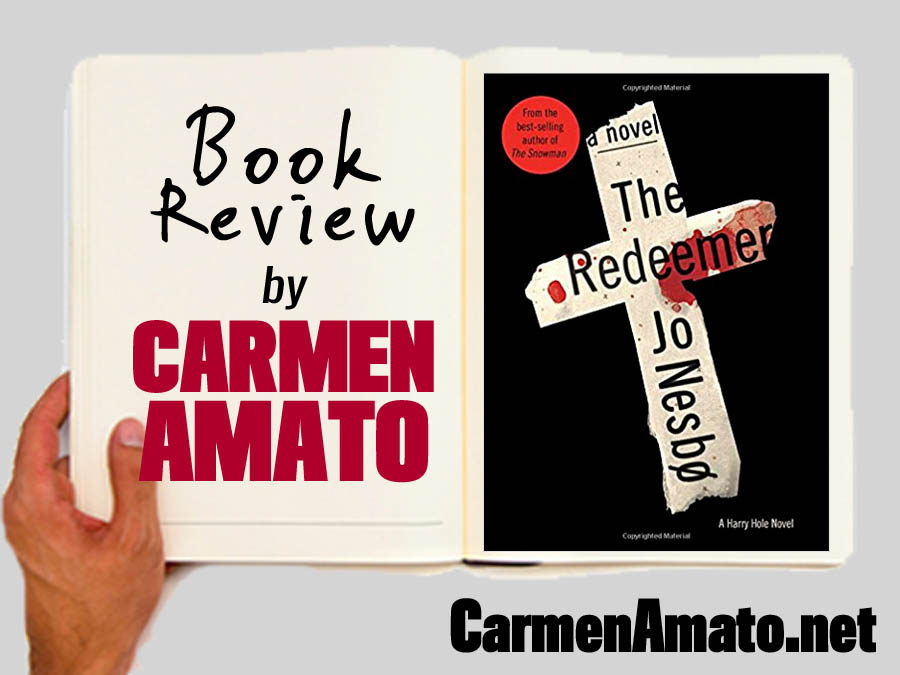
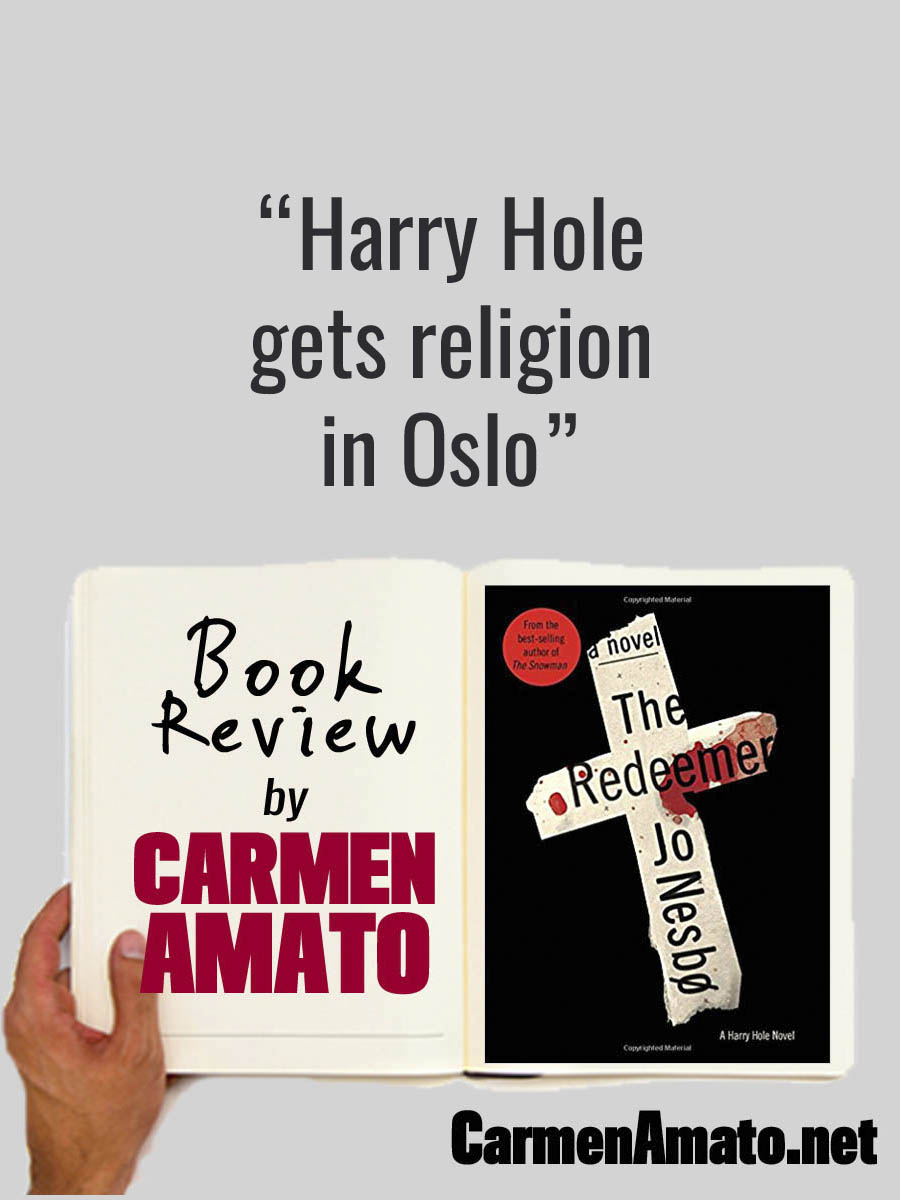
Book Review: The Redeemer by Jo Nesbo

Book Review: The Redeemer by Jo Nesbo

THE REDEEMER by Jo Nesbo is the midpoint novel in the Harry Hole series set in Norway, picking up where the last left off and priming the reader for another just as fast as Nesbo can write it. I’ve been reading them out of sequence and this one both filled in some blanks and created more questions. Specifically, when is Harry going to stop his $^&#@!! self-destructive habits and get his act together. But we all know the answer to that one, don’t we . . .

Related: Book Review: The Bat by Jo Nesbo

The story centers around a contract killer who accidentally kills the wrong member of the Salvation Army, which apparently has a big footprint in Oslo, then must stick around to find the right person and complete his assignment. Harry will find the vulnerable daughter of the head of the Salvation Army in Norway for both a possible romantic dalliance and source of information. Secretive Martine will be torn between her attraction to Harry—free at the moment from his on-again-off-again relationship with Rakel—and her duties to the Army.

Harry will approach things as he usually does, in his jeans, Doc Martens, and rock band tees. He’ll flout his new boss’s authority, start drinking again as he tracks the killer’s roots to the war in Bosnia, and use who he can along the way.

The writing is superb, Harry is a character you hate to love, and as always, Nesbo puts us right on the street in Oslo, a city I adore.

Related: Visiting Norway, Mystery Author Style

But I’ll admit to two teeney but annoying flaws:

1. The words ‘redemption’ or ‘redeemer’ were overused. Everybody gets labeled with some variation of the word. One reference in a subtle but significant way would have been enough.

2. At the end, Harry’s former boss has a big reveal but by that time it felt unnecessary. The book didn’t need the extra stuff and the core plot was complicated enough not to warrant this distraction from the central storyline.

But overall, THE REDEEMER by Jo Nesbo was masterful international mystery and I’m ready for the next Harry Hole novel.

Jo Nesbo

A Book Savor Chat with Marketing Expert Bobby McDaniel

The weekly Book Savor series grew out of my passion for good books, good friends, and great discussions about what we are reading.

 This week marketing expert Bobby McDaniel shares the books he savors:

1.Carmen Amato: What was the first book you read that marked the transition from reading kids’ books to grown-up fare?
 
Bobby McDaniel:  I was always a voracious reader as a child, but the book that made the most impact for me was Ralph Ellison’s Invisible Man. As a young man grappling with my own sexuality and the religious/social implications that brought, this book paralleled my own journey. Not only did I find the themes of individuality and personal identity compelling, the writing itself captivated me. It was required reading in my AP class, and usually I read these books grudgingly. I read this one three times, plus read the Cliffs Notes and Monarch Notes. I really should dust that off and give it another read!
 
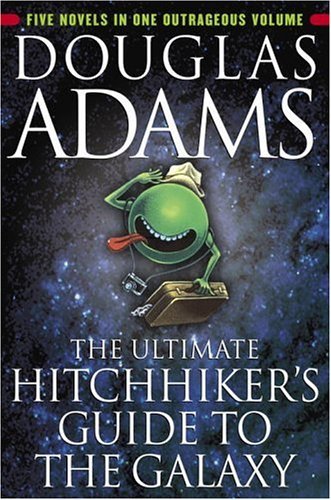
Hitchhiker's Guide to the Galaxy2. CA: You are shipwrecked with a crate labeled “Books.” What 3 books do you hope are in it?
 
BMcD: This may be cheating… but, I’m going to say 3 series. First would be Tolkein’s Lord of the Rings series. It’s a fantasy classic, plus his prose takes forever to read… perfect for the stranded castaway who doesn’t know when help will arrive. The second would be Douglas Adams’ Hitchikers Guide to the Galaxy (Ultimate edition). Why? You need to be able to laugh in crisis, and this sci-fi comedic series also provides practical guidance for staying alive in any part of the universe! Last, but not least, I would hope to have Michael J Sullivan’s Theft of Swords series. Full disclosure, I have known this author personally before his novels were published. That being said, this fantasy series is masterfully crafted and ,while lengthy, it reads quickly and easily. I love the world, the plot, and especially the characters.
 
3. CA: What book would you give as a housewarming gift and why?
 
BMcD:  I’m cheap, so I’d probably pick up those coupons they give away at the post office… I kid, I kid! Reading is such a personal experience, I find it hard to actually buy books for someone else. I’ve had so many books bought for me that sit and collect dust. So, I would either purchase a picture book of the area/state that they live or a gift card to Barnes & Noble. Lame, I know.
 
4. CA: You can invite any author, living or dead, to dinner at your home. What are you serving and what will the conversation be about?
 
BMcD: Douglas Adams. I’m a geek and I love to laugh, so I imagine hanging out with Douglas Adams would be an amazing experience. I would serve Pan Galactic Gargle Blasters, Gin & Tonics, and steak… preferably from a talking cow, but I guess any cow would do.
 
5. CA: Can you leave us with a quote, a place, or a concept from a book that inspired you?
 
BMcD: “I may be mad,” he thought, “but I prefer the shit of this world to whatever sweet ambrosia the next might offer.” – Alobar,Tom Robbins Jitterbug Perfume
 
Tell us about yourself in 3 sentences or less.
 
Bobby McDaniel is a narcissistic, juvenile lunatic with cyclothemic tendencies. He enjoys reading and writing sci-fi and fantasy when he’s not working on building his online marketing empire at Thumbprint Strategic Media.
More about this week’s guest: Bobby is the president of  Thumbprint Strategic Media, LLC, www.ThumbprintStrategic.com. He blogs occasionally at wildlyurban.com and is characteristically clever on Twitter. He and I routinely meet for work sessions at a favorite coffee shop. Over lattes and our laptop screens we talk books, social media, website design, and other critical life issues.

3 Compelling Lessons from The Lone Ranger

Were the critics right when they proclaimed The Lone Ranger a flop? I like to judge these things for myself so when the movie came to my local theater (as El Llanero Solitario with Spanish subtitles) my daughter and I went to decide.

Reminiscent of The Lone RangerRight off we noticed a few things. First, in the subtitles, Tonto’s name was changed to Toro, probably for good reason. Tonto means “silly” in Spanish while Toro means “bull.” If you were sharp you noticed the last thing The Lone Ranger says to Tonto as they are riding off into the sunset: “Do you know what your name means in Spanish?” (We were the only ones in the theater who laughed.)

Second, we liked several things about the movie: the banter between The Lone Ranger and Tonto, the banter between Tonto and the horse, the definition of Kemosabe as “wrong brother,” the two little boys who had pivotal secondary roles.

But as we walked out of the theater we both confessed to feeling uneasy. The movie, despite it’s big budget quality and obvious Disney imprimatur, just felt wrong.

Here are 3 lessons from how The Lone Ranger went awry.

 1. Decide your focus and stick with it. In this case, make The Princess Bride OR Bury My Heart at Wounded Knee OR 3:10 to Yuma. Don’t try to make them all at once.

The only vehicle that had success stuffing comedy, race relations, and war into one package was MASH and that show had over a decade in which to do it. Moreover, Frank Burns was the kook inside the tribe and the nutty insider is more fun than the sad castaway like Tonto.

I genuinely thought we had a Princess Bride-esque thing going—reinforced by the storytelling bit reminiscent of Peter Falk reading to a sniffly Fred Savage–until the horrible bad guy eats the heart of his live victim and I knew there would be no storming the castle tonight.

2.  Don’t start what you can’t finish. One of the things that made The Lone Ranger such a long movie was the array of unresolved subplots and logic chains left dangling. Why is the bad guy a cannibal? Why does The Lone Ranger’s brother have such an unhappy marriage?

And the most annoying subplot of all concerns Red, madam of the local brothel. She had been a ballet dancer and one of the bad guys is responsible for her having lost a leg? Why? How? Beyond all that, why doesn’t Tonto ever get to be happy? Why isn’t the live crow with him in the end? What the heck was that scene of an old Tonto stumbling in the desert during the credits supposed to mean?

It would have been better to have fewer odd bits in the movie and be able to tie them all up neatly.

3. Make your finale understandable. I loved the big climax, the swelling William Tell Overture, the white horse on the roof, the excitement of the two racing trains. But by the time the second train car decoupled both my daughter and I had lost track (pun intended) of who was on which train, where each train was headed, and if The Lone Ranger and Tonto were working together or separately.

It ended well, but was simply too confusing.

Sooooo, are the lessons from The Lone Ranger just for moviemakers?

No. These lessons are universal for any creative endeavor, whether it is finishing a report, throwing a birthday party, writing a book, or designing a fashion show.

Did you see The Lone Ranger? What lessons did you take away from it?

A Book Savor Chat with Crime Fiction Author Jason Beech

The weekly Book Savor series grew out of my passion for good books, good friends, and great discussions about what we are reading.

And what is the best way to get those great book discussions going? With some thought-provoking questions of course!

 This week crime fiction author Jason Beech shares the books he savors:

1.Carmen Amato: What was the first book you read that marked the transition from reading kids’ books to grown-up fare?

Jason Beech: Mythago Wood by Robert Holdstock. I never read much as a boy, but I was once in WH Smith’s in Sheffield, England, and my dad told me to buy a book.

The cover got me first, then the blurb sounded odd and unusual. I’m not sure what that says. But it blew me away when I read it. It’s a story haunted by the main character Steven’s past, whose parents have died, his mother tragically. Returning from the Second World War he spends minimal time with his brother Christian in the family home before he disappears into Ryhope Wood. Their home stands at the edge of this wood and it is occupied by beings conjured by myth and peoples’ ever-changing perception of mythology. So there are bastardised versions of Robin Hood, some early Anglo-Saxons, roaming the woods, occasionally bursting from them into their garden.

The wood has paranormal barriers stopping just anybody getting in, but the characters can reach its core through persistence.

It sounds a little daft, but the characters are rich and yearning for something that seems out of reach, and the themes are epic. For example, Steven’s brother Christian has taken on his father’s obsession about the woods, into which he disappears searching for someone to give him peace. Steven’s friend Harry saw something similar when shot down over France, and is keen to get into this one because he sees his own salvation there.

Steven himself is trying to figure out his feelings for his father, (which is played out brilliantly with the Urscumug chasing Steven and Harry – you have to read it), his mother, and the hate he holds for his brother.

It’s about mythology and how it becomes distorted, as well as how history (including personal) always affects the present.

After reading it, I thought I was into fantasy, but I’ve really disliked everything else in the genre because of wooden characters with silly dialogue.

It struck a chord. I’ve read nothing else like it.

2. CA: You are shipwrecked with a crate labeled “Books.” What 3 books do you hope are in it?

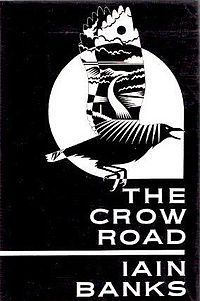
JB: Mythago Wood by Robert Holdstock, American Tabloid by James Ellroy (possibly the scariest book I’ve ever read, including any horror), and The Crow Road by Iain Banks.

The Crow Road3. CA: What book would you give as a housewarming gift and why?

JB: The Crow Road by Iain Banks, because the book is about family and what happens when you neglect it. It’s sour, political, has epic swearing, a grandmother’s heart exploding during her funeral, and has you examining your family history and how you must continue to create new memories.

4. CA: You can invite any author, living or dead, to dinner at your home. What are you serving and what will the conversation be about?

JB: Charles Dickens. I’d serve him my mother’s Sunday dinner of roast lamb, new potatoes, green beans, stuffing, spring (I think) cabbage, Yorkshire puddings, and mint sauce, smothered in gravy (onion).

Then I’d ask him if he could have cut a few hundred pages from most of his novels, and ask if Britain has moved on much from Victorian times in social terms.

5. CA: Can you leave us with a quote, a place, or a concept from a book that inspired you?

JB: “8.45 a.m. My mother is in the hospital grounds smoking a cigarette. She is looking old and haggard. All the debauchery is catching up with her.” From The Secret Diary of Adrian Mole, Aged 13 3/4

I need to take note.

Tell us about yourself in 3 sentences or less.

I’m an Englishman in the US writing crime fiction and words with extra letters, and coaching the beautiful game to American youngsters.

I have one novel out, Over the Shoulder, and a short story collection, Bullets, Teeth & Fists, coming out in mid-August.

http://jdbeech.wordpress.com/ Blog page

www.facebook.com/MessyBusiness Facebook page

 @beech_jason

More about this week’s guest: Jason Beech is the author of crime drama OVER THE SHOULDER which I read in one weekend. I keep expecting to hear that Hollywood has called him, ready for the next great Goodfellas-type movie. Read my review of the book here.

A Book Savor Chat with DifferentOutcomes.net’s Jason Sullivan

The Book Savor series is new to this blog and grew out of my passion for good books, good friends, and great discussions about what we are reading.

And what is the best way to get those great book discussions going? With some thought-provoking questions of course!

This week suspense writer Jason Sullivan shares the books he savors.

1.Carmen Amato: What was the first book you read that marked the transition from reading kids’ books to grown-up fare?

Jason Sullivan: Reading the Foundation Series by Isaac Asimov was a huge moment for me as a kid. I was thoroughly enthralled by the magnificent world-building of Asimov and his vision of a galaxy-wide civilization in peril. I found his focus on the interpersonal as the basis for great societies very compelling. In the Foundation Series, Asimov convinced me that psychological drama is far more exciting than spaceships having laser battles.

2. CA: You are shipwrecked with a crate labeled “Books.” What 3 books do you hope are in it?

Hegel Logic JS: I would probably want Hegel’s Logic, because if I were to be alone for hours, days, months and years, I might have enough time to finally figure it out, or at least go mad trying. Journey to Ixtlan by Carlos Castaneda, as I could perhaps use the mystical journey described within as a sort of spiritual workbook for my explorations. Finally, a gem by Richard Brautigan, entitled, So the Wind Won’t Blow It All Away. This is a tragic, humorous, beautiful and haunting book. I could read it many, many times.

 3. CA: What book would you give as a housewarming gift and why?

 JS: With Napoleon in Russia: Faber Du Faur. I recently came across this luxurious oversized book that includes beautiful and unposed paintings of Napoleon’s ill-fated invasion of Russia. You feel as though you are marching alongside Napoleon’s army, seeing what they saw and feeling it as well. Although a tragic event, these paintings have an unpretentious quality and are a window onto a moment in history. The book also reminds us of why it is sometimes better to stay at home and leave world conquering for another day.

 4. CA: You can invite any author, living or dead, to dinner at your home. What are you serving and what will the conversation be about?

 JS: Without a doubt, my choice would be Edgar Allan Poe. For dinner, we would have the Mid-Atlantic specialties of Silver Queen corn and extra-large Chesapeake Bay crab cakes. We would discuss Virginia and Maryland, an area we both know well. I would have secured a bottle of the finest cognac for after dinner. Once the first glasses of cognac were finished, we would sit by a roaring fire and begin to talk about everything imaginable. We would discuss Romanticism and poetry, delve into his seminal influence in Science Fiction and Mystery, and as the shadows begin to make ghastly figures upon the wall, he might share a word or two about the genre for which he is most famous – Horror. I would also want to hear his views on some of the major events that occurred after his death, such as the Civil War, the Industrial Revolution, the two world wars, technology and globalism. I would bring up a few things of particular interest to me. For instance, what are his views on the nature of time and affection, and what were the circumstances surrounding the writing of “A Dream Within A Dream”? He might mention what transpired during those last few days in Baltimore, but I would not ask about this. Finally, in the early hours of the morning, as the fire drew down, we would dare to speak of the eternal secrets … before falling asleep in our chairs to the glow of the last few dying embers.

 5. CA: Can you leave us with a quote, a place, or a concept from a book that inspired you?

 JS: From the Foundation Series by Isaac Asimov, the psychohistorian Hari Seldon said, “Violence is the last refuge of the incompetent.”

 Tell us about yourself in 3 sentences or less.

I like surrealist paintings. I have discovered that words piled like blocks on a sheet of paper (or on a computer screen) do not inspire; instead, I try to find them alive and animated within my experiences and environment. Finally, I am hopeful that the world will be a more peaceful place in the not too distant future.

More about this week’s guest: Besides knowing more about Edgar Allan Poe than the rest of us, Jason runs the review and flash fiction site DifferentOutcomes.net.

A Book Savor Chat with Fiction Author Flora Solomon

The Book Savor series is new to this blog and grew out of my passion for good books, good friends, and great discussions about what we are reading.

And what is the best way to get those great book discussions going? With some thought-provoking questions of course!

This week historical fiction author Flora Solomon shares the books she savors.

1.  Carmen Amato: What was the first book you read that marked the transition from reading kids’ books to grown-up fare?

HiroshimaBookFlora Solomon: When 12 years old and in the 7th grade, my science teacher recommended the class read Hiroshima by John Hersey. I took him up on it and borrowed his copy. The shocking book introduced me to the unknown and violent world I was on the cusp of entering.

2.  CA: You are shipwrecked with a crate labeled “Books.” What 3 books do you hope are in it?

FS:  Tops on my list would be the thick and detailed book, How to Survive a Shipwreck by I.M.A. Survivor. Then for comfort, oldies but goodies such as Rebecca by Daphne du Maurier, Gone with the Wind, by Margaret Mitchell, and Watership Down by Richard Adams.

3.  CA: What book would you give as a housewarming gift and why?

FS: My own book, of course, A Pledge of Silence, a World War II novel based on the nurses who served in the Philippines, were captured by the Japanese and held prisoners of war. Alternatively, if the residents were new to the area, I might take a book on regional gardening, local cuisine, or native wildlife.

4.  CA: You can invite any author, living or dead, to dinner at your home. What are you serving and what will the conversation be about?

FS: I have neither talent nor interest in cooking, so I would take Louise Steinman, author of The Souvenir, A Daughter Discovers Her Father’s War, to the best restaurant in town. After her father died, Louise found hundreds of his World War II love letters to her mother, and an inscribed Japanese flag hidden in an old trunk. She writes of two journeys—one of realization and healing, and the other a trip to Japan to return the flag to the fallen soldier’s family. Both journeys are beautiful and moving. Conversation between us would not be a problem.

5.  CA: Can you leave us with a quote, a place, or a concept from a book that inspired you?

FS: I have two college degrees, yet the nuances of grammar and the capriciousness of punctuation baffle me. Though it’s not an inspiration, I like this quote from Mark Twain:“Anyone who can only think of one way to spell a word obviously lacks imagination.”

Tell us about yourself in 3 sentences or less.

FS: My husband and I relocated from Michigan’s water, winter, wonderland to the beautiful North Carolina coast. Besides reading and writing, I enjoy visits from my children and grandchildren, a hard-won tennis match, and an occasional round of golf. My website: www.apledgeofsilence.com.

A Pledge of Silence book coverMore about this week’s guest: Flora is the author of WWII drama A PLEDGE OF SILENCE, the moving and authentic story of an Army nurse caught up in the Pacific war.


Cover of Cliff Diver

Get it today on amazon.com

A Book Savor Chat with Thriller Author Khaled Talib

The Book Savor series is new to this blog and grew out of my passion for good books, good friends, and great discussions about what we are reading.

And what is the best way to get those great book discussions going? With some thought-provoking questions of course!

This week Singapore-based thriller author Khaled Talib shares the books he savors.

1.Carmen Amato: What was the first book you read that marked the transition from reading kids’ books to grown-up fare?

Bourne IdentityKhaled Talib: Answer: Robert Ludlum’s The Bourne Identity. I was fascinated by the idea of someone losing his memory, and yet knows how to deploy survival skills when required to do so. For me, it was a new kind of thrill. A unique thriller that does away with the cliches.

2. CA: You are shipwrecked with a crate labeled “Books.” What 3 books do you hope are in it?

KT: The Quran for hope, Robert Fulgham’s All I Really Need To Know, I learned In Kindergarten for humor, and Nick Schade’s Building Strip-Planked Boats for getting out of the island. There’s an old Arab saying: Have faith in God, but tie your camel. Besides, the idea of staying too long on an island and ending up with my very own ‘Wilson’ scares me.

3. CA: What book would you give as a housewarming gift and why?

KT: The Great Book of Chocolate by David Lebovitz. It’s always politically incorrect to talk about chocolates, even if someone doesn’t like chocolates. Hopefully, it might entice the host to bring out some sinful delights for me on a plate.

4. CA: You can invite any author, living or dead, to dinner at your home. What are you serving and what will the conversation be about?

KT: Mary Shelley. I’ll be serving saffron-based beryani rice with mango chutney, salad, stuffed chicken and various accompaniments. This would be followed by custard cake for dessert with chocolate sauce and Turkish coffee. I’d like to probe her mind about the soul of man, and on the light side, we’ll talk about her travels and adventure. The conversation will be electrifying!

5. CA: Can you leave us with a quote, a place, or a concept from a book that inspired you?

KT: “People generally see what they look for, and hear what they listen for.” – Harper Lee, To Kill a Mockingbird.

This is so true. Many people in the world tend to see, but they do not observe. They hear, but they do not listen. I suppose that’s why magicians,  illusionists, and politicians are still in business.

Khaled TalibTell us about yourself in 3 sentences or less.

I was born and raised in Singapore. I am a former journalist with local and international experience.My debut novel, Smokescreen, a political thriller, is scheduled to be published early 2014. I never wake up grumpy in the morning.    

More about this week’s guest. Khaled Talib’s novel SMOKESCREEN is due out in January 2014. Connect with him on Twitter  @KhaledTalib.

Book Review: Inferno by Dan Brown

Book Review: Inferno by Dan Brown

I wasn’t the first to buy much-hyped thriller INFERNO by THE DA VINCI CODE author Dan Brown but I’m glad I eventually did. But you’ll be surprised why.

The Kindle verson of the book was pricey these days when great books can be had for $2.99. So I waited to read some reviews before deciding.

The reviews for INFERNO were a mixed lot. Some raved, others were lukewarm. And one was entitled “Meh.”

That bugged me. Whether the book is good or bad, Mr. Brown is a master art historian and he has the best support network that traditional publishing can buy. Tom Hanks stars in the movies. This superpower combo only earned a “meh” as a measure of reader satisfaction?

I had to judge for myself.

INFERNO is equal parts art history and thriller. As in Brown’s 3 previous books, Harvard professor Robert Langdon finds himself in an improbable situation (this time in Italy) that his vast knowledge of art and religious/historic symbols give him the unique ability to decode.  He picks up a female sidekick; this time it is an American doctor who saves his life but guards her own secrets. And as in the previous books, Brown gives us a dramatic global issue with a big moral punch and leaves us wondering if it could be true. The antagonist, a mad scientist (depending on your political views) is sight unseen through 99% of the book although his horrible creation is seen by various characters and is the item Langdon eventually realizes he must find.

In one point in the book, maybe because the clues weren’t exactly coming together, there is a tiny logic leap. There’s also a nagging wonder why the mad scientist set up this bizarre trail for someone to follow–never really got a good explanation of the motivation, but the book is so engrossing those points are forgivable. Excellent twist at the end.

Far from being a “meh,” the book has great moments of action, characters who are shape-shifters in how they are perceived by both the reader and Langdon, and big doses of art and history. Readers who forget that Langdon is a Harvard professor might get impatient with the descriptions of the Italian masters, the history of buildings in Florence, and the architecture in Istanbul, but I really enjoyed the background information.

The only real knock I have is that the pre-launch book hype led me to believe that Langdon would be pursuing clues rendered by the poem by Dante of the same name. Instead, Langdon follows clues provided by artwork and music inspired by the poem. There’s a subtle difference and although Langdon needs a copy of the poem at one point to decipher a clue, the book is more of an art hunt than an immersion into the poem itself. THE DA VINCI code seemed to have more meat on it when it came to the source material Langdon had to work with.

No spoilers here, but I will say that INFERNO’s ending leaves us wondering if the events could be true, not nowhere to the extent of the end of the DA VINCI CODE. But I wonder if in a few years we won’t hear some techies talk about just such possibilities.

One other thing. As I said, Dan Brown is a big name in publishing and I would have thought that his book production team would be the best that money can buy. But the Kindle version of the book was poorly formatted and included lots of junk at the beginning that the reader had to click through. Probably the biggest ebook launch of the year and the publisher hadn’t a clue how to properly format an ebook!? This is why traditional publishing is putting itself out of business.

Dan Brown

A Book Savor Chat With Mamiverse.com Editor Lorraine C. Ladish

The Book Savor series is new to this blog and grew out of my passion for good books, good friends, and great discussions about what we are reading.

And what is the best way to get those great book discussions going? With some thought-provoking questions of course!

This week Mamiverse.com Editor-in-Chief Lorraine C. Ladish shares the books she savors.

1.Carmen Amato: What was the first book you read that marked the transition from reading kids’ books to grown-up fare?

Lorraine C. Ladish: One of the “Tropics¨ by Henry Miller. I was still a kid, but I read everything that my father left lying around. I come from a family of readers and writers.

2. CA: You are shipwrecked with a crate labeled “Books.” What 3 books do you hope are in it?

LCL: A novel, a book on leadership and a collection of short stories. Something I haven’t already read.

 3. CA: What book would you give as a housewarming gift and why?

LCL: I wouldn´t give a book as a housewarming gift. A book is as personal as perfume.

4. CA: You can invite any author, living or dead, to dinner at your home. What are you serving and what will the conversation be about?

LCL: Stephen King, because he says it like it is. We´d have Spanish tapas and beer or wine. I´d ad lib. I´d love to hear how he cranks out the word.

Linchpin book cover 5. CA: Can you leave us with a quote, a place, or a concept from a book that inspired you?

LCL: Lately I read more non-fiction, and a title that stuck with me is: ¨Linchpin! Are You Indispensable?” by Seth Godin.

Tell us about yourself in 3 sentences or less.

LCL: Curious, inspired, determined, eager, passionate, relentless. Woman, mother, partner, daughter, friend.

More about this week’s guest: Lorraine C. Ladish is Editor-in-Chief of Mamiverse.com. The mother of two young girls, Lorraine is bilingual and bicultural. She has authored 15 books of non-fiction on the subject of women’s issues and empowerment and 2 novels. She has contributed to People en Español, Redbook, Babycenter, The Palm Beach Post, and BlogHer. She is based in Sarasota, FL with her blended family. www.lorrainecladish.com – Follow her on Twitter at @lorrainecladish

Pin It on Pinterest