Book Review: The Trespasser by Tana French

Book Review: The Trespasser by Tana French

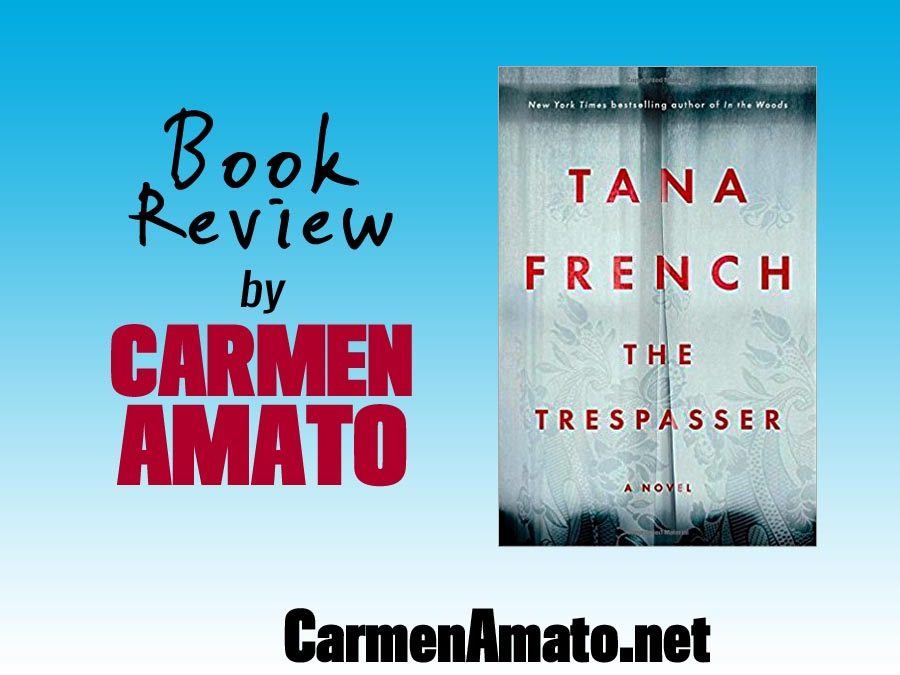
THE TRESPASSER by Tana French is the 6th novel in the chronicles of the fictional Dublin Murder Squad. Each is narrated by a different member of the squad, whose private life is somehow linked to—and tragically impacted by—the central crime. When in Dublin last year, I visited legendary bookstore Hodges Figgis and found a whole section devoted to Irish crime novels, in which French’s books held pride of place. THE TRESPASSER shows why.

Related: Book Review: In The Woods by Tana French

The narrator this time is Antoinette Conway, the sole female detective on the fabled Squad and I couldn’t help noticing the similarity to Detective Emilia Cruz in Acapulco. Both are tough, athletic, determined, and the target of their male colleagues. Neither have ever met their father. To round off the similarities, Conway is half Latino.

But unlike Emilia Cruz, Conway’s mood is sour and her temper is explosive. She’s fed up to here with garbage from fellow detectives. Her reports go missing, someone broke into her gym locker to pee on her stuff, and she and her partner Moran are permanently stuck on the graveyard shift.

Conway is ready to chuck it all for a lucrative bodyguard job when she and Moran are dispatched to investigate the murder of Aislinn Murray, an attractive secretary killed at home by a blow to the head.

A little scratching reveals that Aislinn was about to have dinner company. Guileless Rory Fallon owns a bookstore across town and has had a few dates with Aislinn. He claims that she never opened the door when he arrived but closed circuit cameras reveal he’d been stalking the victim for several weeks.

Enter the Murder Squad’s resident Mr. Cool, aka Detective Breslin. He’s got money, charm, flash suits, and a game show host smoothness that Conway sees as weapons he’ll use to discredit her and force her out of the Squad. Breslin is sure that poor Fallon is their killer, despite no witnesses or hard evidence. Thus begins a cat-and-mouse game of Conway and her partner trying to run down more angles, while he tries to circumvent their orders and nail Fallon. This makes for some great interrogation room dialogue. Every conversation reveals more competing agendas and French keeps the tension high.

In the background, Conway has her own Peeping Tom, Rory Fallon wasn’t the only one stalking Aislinn Murray, and there’s a subtle father-daughter relationship comparison happening. Aislinn Murray was obsessed with finding her long-lost father while Conway doesn’t even ask her father’s name when he finally turns up.

The plot is solid but the most engrossing thing about THE TRESPASSER is Conway’s deep point of view. It’s a mix of in-your-face Irish slang, slick cop jargon, and a harsh and headstrong irreverence for everything in her way. Conway is plowing through life with her fists up, looking for the fight; snarling and snapping and loaded with the local equivalent of Red Bull.

Get ‘em up, Rocky. THE TRESPASSER is a knockout.

You may also like

Tana French

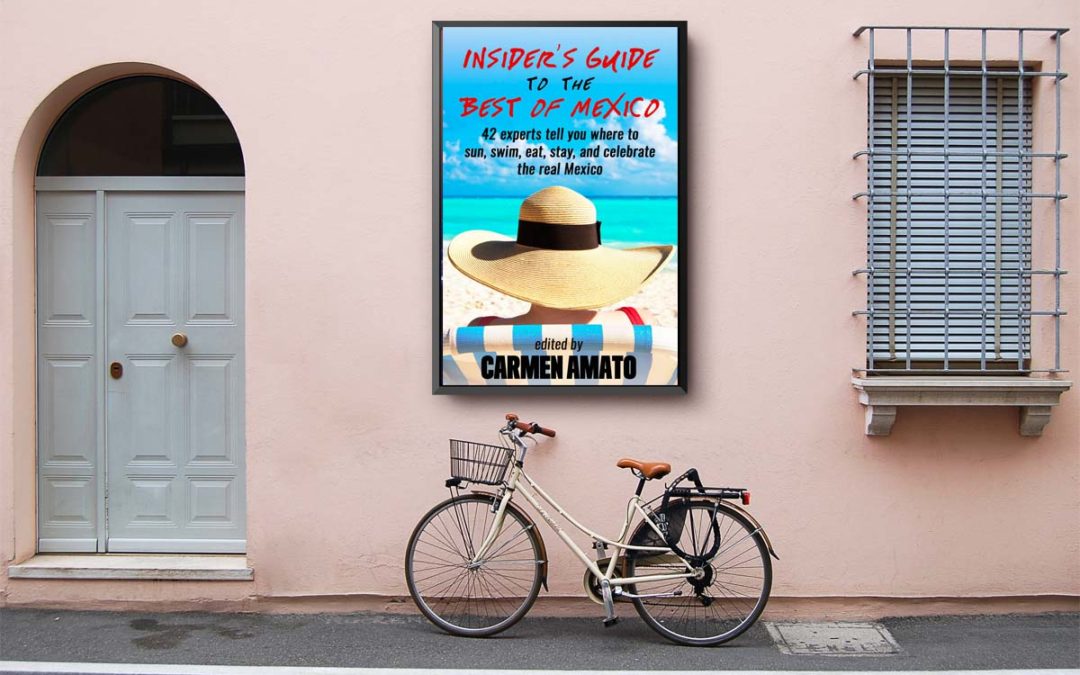
New Travel Book! The Insider’s Guide to the Best of Mexico

New Travel Book! The Insider’s Guide to the Best of Mexico

THE INSIDER'S GUIDE TO THE BEST OF MEXICO was released this week on Amazon, Nook, Scribid, Playster, Inkterra, and Kobo. It is already #1 on Amazon's Hot New Releases list for the Mexico Travel category!

It's a unique collection of stories, essays, and photographs that you won’t find anywhere else. I was delighted to edit the collection.

The book started life last year as a project of the Mexico Writers group on Facebook. Contributors could print and use it as they liked--hand out in shops, giveaways to readers, etc.

Contributions grew and so did our audience. It was time to publish!

In THE INSIDE'S GUIDE TO THE BEST OF MEXICO, 42 writers, artists, educators, travelers, business owners and others share their experiences. Art, Beaches, History, Literature, Special Places and Experiences are some of the categories. Most of those who contributed stories are expatriates who have found opportunity and inspiration in Mexico.

These insider stories are neither formal guidebook, social commentary, nor a substitute for unbiased news. They are an effort to share a landscape and lifestyle that have found a place in the hearts of so many.

My fiction often dwells in the dark places of Mexico. But like anywhere else, Mexico has both both sunlight and shadow. THE INSIDER'S GUIDE TO THE BEST OF MEXICO celebrates the light. Whether you are contemplating your next vacation, retirement, work-related move to Mexico, or are simply an armchair traveler, please enjoy these unique insider stories.

Contributors: Carmen Amato, Ellie Balderrama, Tony Burton, Ellie Cusack, Anne Damon. Joel R. Dennstedt, Kathryn Ferguson, Aileen Friedman, D. Grant Fitter, Kelly Hayes-Raitt , Karen Z. Hendin, Michael Hogan, David & Veronica James, Susan Penelope James, Jim Johnston, William B. Kaliher, Cynthia Katz, Jeanine Kitchel, Michael Landfair, Lindy Laing, Lawrie Lock, Lynda L. Lock, Mely Martinez, Dean & Shari Miller, Mikel Miller, Katie O’Grady, Guillermo Paxton, Kim Peto, Jennifer Silva Redmond, Robert Richter, Susannah Rigg, Fabiola Rodriguez, Dianne Hofner Saphiere, John Scherber, Kristine Scherber, Jinx Schwartz, David Steelman, Sara Sutter, Leigh Ann Thelmadatter, Joseph Toone, Sam Warren, and Kerry Watson.

You may also like

best of Mexico

Author to Author with Susan Spann

Author to Author with Susan Spann

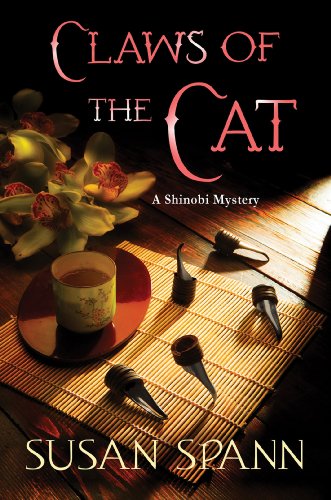
I’m thrilled to host Susan Spann, author of the Hiro Hattori mystery series. Even if you don't like sushi, you'll be riveted by this series featuring a ninja warrior in medieval Japan.

1  Carmen Amato: Susan, thanks so much for stopping by. I found your mystery series books via Twitter and was immediately struck by their uniqueness. Two terrific key characters: master ninja Hiro Hattori and Portuguese Jesuit Father Mateo investigate crime in 1560’s Japan. Tell us how you came to write the Hiro Hattori series.

Susan Spann: Thank you so much for inviting me, and I’m delighted that you enjoyed the books! I fell in love with Japanese history and culture after reading James Clavell’s Shogun back in the 1980s—enough to major in Asian Studies at Tufts University during my college years—but the idea for the Hiro Hattori novels didn’t come to me until many years later. While getting ready for work one morning in 2012, I had the random thought: “Most ninjas commit murders, but Hiro Hattori solves them,” and knew immediately that I had to tell that story.

2  CA: Hiro Hattori is a “master ninja” but certainly not a caricature. What was your inspiration and how did you craft him as a multi-dimensional character?

SS: Real ninjas—shinobi in Japanese—were masters of espionage as well as highly trained assassins. I’ve always felt the Hollywood portrayals (though entertaining) didn’t do them justice, and I wanted to make sure my ninja detective was closer to the real thing. I wanted Hiro to feel real—in his weaknesses as well as his strengths—and I did a lot of research to ensure I was portraying ninjas accurately while still creating a page-turning mystery adventure.

3  CA: Hiro Hattori’s sidekick is a Portuguese Jesuit priest. You have really departed from the norm here. Tell us how you came to match up these two unique characters.

SS: When creating the Hiro Hattori series, I needed a “cultural translator” to make the intriguing facets of Japanese culture and history more accessible to readers, most of whom wouldn’t know much about ninjas or samurai Japan. Since Jesuits came to Japan in the 16th century, which also happens to be the height of real ninja activity in Japan, pairing my ninja with a Jesuit priest seemed like a perfect solution.

Originally, I intended Father Mateo to serve as a “Watson” – more of a sidekick than a real partner in crime (solving). As it worked out, the characters felt differently, and I have to admit I’m glad. I love the dimension Hiro and Father Mateo’s relationship gives to the books.

Susan Spann

4  CA: You weave together historical myth and true history. Please share a surprising detail about your research process.

SS: People are often surprised to learn that I’m allergic to fish—which means I’ve had to find alternative ways of researching and describing many of the popular foods that appear in the novels, including Hiro’s favorite dish: udon (noodles) topped with onions and grilled fish. Fortunately, the allergy doesn’t stop me from enjoying my research trips to Japan—people are also often surprised to learn that a lot of Japanese cuisine does not involve fish at all!

5  CA: Medieval Japan has been the setting for some great movies aka The Last Samurai but what makes it a good setting for a mystery series? How do you use setting to create and build suspense?

SS:  Medieval Japan—what people sometimes think of as the “samurai era”—was a time of many contrasts. Samurai warriors often studied painting, literature, and flower arranging as well as martial activities like archery and swordsmanship. The juxtaposition of beauty and danger, as well as the intricate social rules and severe penalties for disobedience or dishonor, make it a fascinating place in which to set a mystery novel, because the characters often have far more to worry about than *just* who wanted the victim dead.

6  CA: You can invite any author, living or dead, to dinner at your home. What are you serving and what will the conversation be about?

SS: The list of authors I’d like to meet and talk with is so long…if I could choose only one, I think I’d like to meet Agatha Christie, and talk with her about plotting, twists, and where she got her fantastic ideas for her classic traditional mysteries. As far as the menu, I’d love to introduce her to shojin ryori—traditional Buddhist temple cuisine. It’s one of my favorite styles of cooking, and I’d love to hear her thoughts on that as well!

7  CA: Can you leave us with a quote, a place, or a concept from a book that inspired you?

SS: One of my all-time favorite novels is Michael Crichton’s JURASSIC PARK. I loved the film, but I read the book first (and several times since), and it remains a go-to when I need a familiar adventure. His worldbuilding, pacing, and dialogue are fantastic, and he manages to weave real-world wisdom into a page-turning thriller, with lines like “In the information society, nobody thinks. We expected to banish paper, but we actually banished thought.”

I hope that my novels never banish thought, and I aspire to someday write as well as he did.

Thank you so much for inviting me!

An attorney as well as a mystery author, Susan was the 2015 Rocky Mountain Fiction Writers' Writer of the Year and is a former president of the Northern California chapter of Mystery Writers of America, and a member of Sisters in Crime, the Historical Novel Society, and the Rocky Mountain Fiction Writers' Association. She is represented by Sandra Bond of Bond Literary Agency.

Find Susan online at her website (http://www.susanspann.com), on Facebook (http://www.facebook.com/SusanSpannBooks) and on Twitter (@SusanSpann), where she loves to share photos and stories from Japan.


You may also like

Susan Spann

It’s time to bring back The High Chaparral

It’s time to bring back The High Chaparral

I have a suggestion or two how to fix Hollywood's Latino diversity problem.

Well, maybe not fix. But at least make a good start.

The problem in perspective

In a recent commentary for CNN, Felix Sanchez, chairman and co-founder of the National Hispanic Foundation for the Arts, noted that Latinos are 18% of the US population, but 23% of the movie-going public. At the same time Latinos are the most under-cast demographic. Latinos in leading roles decreased precipitously over the last decade.

Last year, NPR reported on the findings of a study done by the University of Southern California which concluded there is an “epidemic of invisibility” and “an inclusion crisis.” According to the study, “across TV and film, the underrepresentation of non-white characters falls mostly on Hispanics. Among more than 10,000 characters whose race could be identified, proportions of white, black and Asian characters came close to U.S. population figures. But Hispanics were just 5.8 percent of characters.”

Whatever happened to “follow the money?”

I’m scratching my head over the economic angle. If such a large segment of the population is interested in cinematic entertainment and has proven itself willing to spend money on this entertainment, why doesn’t the entertainment better reflect that audience?

In an essay posted on whosay.com, award-winning actress Gina Rodriguez wrote “I am told time and time again ‘Latinos don’t watch Latino Movies. Latinos don't support each other’ and sadly that is true . . . The industry sees money, the excuse can't be racism . . . Let's start making noise with where it matters most, where we put our dollars. Go support these films, watch these shows.”

To follow the money, then, we should have more projects that appeal to multiple audience segments while featuring Latinos in realistic and relatable roles.

If done right, such projects would be ripe for distribtion across the Western Hemisphere in both English and Spanish, creating powerful economic entertainment brands and paving the way for greater Latino actor opportunities.

Moment of honesty

Yes, I’m thinking of the potential of a Emilia Cruz television series or movie. Tough Latina protagonist, Acapulco in all its grime and glory under a hot sun. Danger, betrayal, corruption. Tentative attempts to have a personal life with an American lover.

All the elements of a commercial blockbuster for audiences across the Western Hemisphere, able to make a real dent in Hollywood’s Latino diversity problem with realistic characters whose issues resonate across ethnic lines.

Next best thing

If a Detective Emilia Cruz series never happens, I offer an equally compelling solution.

Remake The High Chaparral.

I grew up in the Golden Age of Westerns. Gunsmoke. The Rifleman. Laredo. All great shows but for my family, the standouts were The Big Valley and The High Chaparral.

My older sisters and I played play-acted on Saturday mornings as we did chores, with both shows as the setting. My sisters swooned over Lee Majors as Heath in The Big Valley, the saga of the rich Barkley family, and never really recovered when he later became the Six Million Dollar Man. Both wanted to link up with him in our play-acting, although now and then one of them threw a sop to actor Peter Breck, cast as middle brother Nick Barkley, and claimed him. No one ever wanted to marry Jarrod Barkley, the bookish oldest brother on the show. He wore suits and worked in an office. Nick and Heath wore six-shooters and were always outside fixing fences.

As much as we all loved The Big Valley and Barkley matriarch Barbara Stanwyck, the show that most captured our attention was The High Chaparral. Although none of us could articulate it at the time, the show stood out for its well-crafted backstory and layered relationships between family members.

Before its time

In The High Chaparral (1967-71) widowed rancher John Cannon moves to Arizona after the Civil War to make a new start for himself and his teenaged son, Blue. John’s brother Buck, a professional wanderer, comes along for the ride.

John buys ranch land from a wily Mexican, Don Sebastian Montoya, who throws in his daughter to clinch the deal. Victoria is beautiful, headstrong, and getting long in the tooth. John and Victoria reluctantly marry and she moves out to the Cannon ranch. Along with Victoria, John realizes he’s also got her brother on his hands. Manolito is charming and handsome but flighty. Everybody now has to figure out how to live together amid frontier drama and a lot of cows.

The High Chaparral had all the right stuff:

  1. A rocky marriage that becomes a true romance,
  2. Awkward stepmother-stepson relationship, with Blue trying to come to grips with his father’s iron will and find his own path,
  3. Respectful multicultural elements, with authentic Latino characters instead of caricatures or stereotypes.
  4. Sibling rivalry: John Cannon owns the ranch, Buck owns his horse and saddle. Manolito doesn’t want to be tied down; Victoria wants him to grow up.
  5. The bromance between Buck and Manolito provided comic relief with peppery dialogue and plots that got them off the ranch and into trouble. Neither man was completely trustworthy.

Both my sisters were in love with Henry Darrow, who played Manolito.  Cameron Mitchell as Buck Cannon, however, sat out Saturday mornings in the corner with Jarrod Barkley.

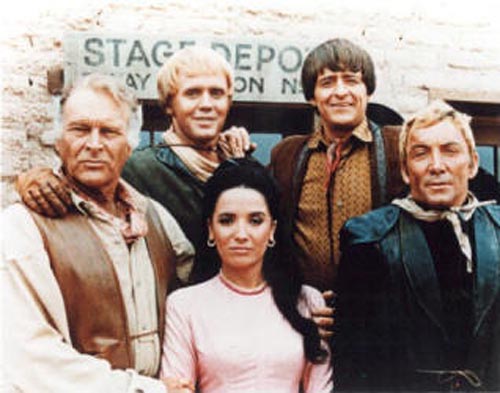
High Chaparral group photo

Photo courtesy thehighchaparral.com L-R Leif Erickson (John Cannon), Mark Slade (Blue Cannon), Linda Cristal (Victoria Cannon), Henry Darrow (Manolito Montoya), Cameron Mitchell (Buck Cannon)

Updating The High Chaparral

The High Chaparral broke ground but I’d update it a bit for today’s audience. Still a multi-cultural, multi-generational show, but with a few tweaks:

  • Close the age range between Victoria and John. Give her more of a backstory and reason of her own to marry John. Possibly make her a widow with a young child.
  • Both John and Buck are veterans of the Civil War. Emphasize this to reflect today’s veterans’ experience and what we know about PTSD.
  • Emphasize the dramatic landscape with overhead shots to emphasize the difficulty of scraping out a life in the old West and the tension it brings to interpersonal relationships.

Something for everybody

A new version of The High Chaparral would have something for everybody:

The Latino audience = true-to-life characters, no stereotypes or caricatures

Romantics = the evolution of John and Victoria’s love story

Bromantics = the Buck and Manolito show

Millenials = Blue as millennial character navigating stern father, plus “mentors” Buck and Manolito

Blue Bloods viewers = Multi-age cast, family values, overdue return of the Western

Blended family advocates = Sibling rivalries, Victoria as stepmother, John as stepfather, plus troublesome brothers and scheming father-in-law

Solving problems, one show at a time

There you have it. A Detective Emilia Cruz show and a remake of The High Chaparral. Two suggestions for solving Hollywood’s Latino diversity problem.

I’m now off to tackle world peace.

You may also like

Hollywood's Latino Diversity Problem

Playing Big as an Author

Playing Big as an Author

I was on Facebook recently (who among us can’t start a sentence that way?) and someone in a writers group asked what was our biggest concern. My answer was “Playing small.”

Does anybody else feel like this?

Although I’ve been a published author for 5 years, I can’t shake the notion that I’m playing small. My dream is to rank alongside authors like Jo Nesbo, Ian Rankin, and Louise Penny. Yet my day-to-day goals are pretty tame. I’m pushing the boulder up the mountain but with teeny steps, not long strides.

I’m not sure why. I mean, I do alot. Enough to sound convincing on Anne R. Allen's blog with a recent guest post entitled "What’s Your Author Strategy? 3 Mini-Strategies To Jumpstart Your Career."

Am I lazy? Have a hidden fear of rejection? Afraid of taking risks? Hello, Dr. Freud?

Related: 5 Lessons after 5 years as an Indie Author

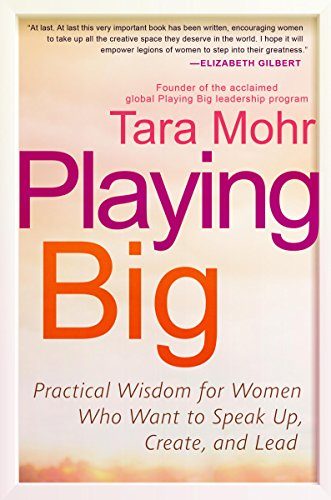
These thoughts have been plaguing me since that Facebook a-ha moment. So imagine my surprise when I found  PLAYING BIG by Tara Mohr. She’s a professional coach and her book is all about why women play small and how they can start playing big.

Her research and advice crosses all occupations and interests. While her target audience is female, I think her ideas are for everybody.

Playing big

The main themes in PLAYING BIG are about believing in yourself, shutting out negative self-criticism, forming action plans, and advancing a purposeful agenda. Mohr offers a ton of actionable ideas, peppered with case studies and her own experiences.

For example

One of her chapters is about “unhooking” from praise and criticism, a seesaw many new authors ride. Mohr writes “One of the most important mental shifts a woman can make to support her playing big is to stop thinking of criticism as a signal of a problem and to start thinking of criticism as part and parcel of doing important work.”

Mohr goes on to urge readers to check out reviews of favorite authors. Read all the praise, then all the criticism. “The polarization and diametrically opposed opinions . . . become almost humorous. Reading a handful of reviews, it becomes obvious that any substantive work draws a wide range of reactions.”

Playing bigger

I’m still mulling over PLAYING BIG and thinking what I can do to lengthen my stride. I’ve started a list.

First entry: Spend less time on Facebook.

But seriously. What does playing big mean to you?

You may also like

Playing big

Author to Author with Brian Stoddart

Author to Author with Brian Stoddart

I’m thrilled to host mystery author Brian Stoddart, creator of the Superintendent Le Fanu historical series set in India in the 1920’s. Think Sherlock Holmes meets The Jewel in the Crown, with a bit of my favorite thriller, too.

Brian is a New Zealand-based but globally engaged writer whose historical crime fiction is based in Madras, India of the 1920s. He trained as an historian, and worked as an academic in Australia, Malaysia, Canada and the Caribbean before becoming a university executive and later an international consultant on World Bank, Asian Development Bank and European Union projects in Cambodia, Laos, Jordan, and Syria. Follow him at www.brianstoddartwriter.com.

1.Carmen Amato: Brian, thanks so much for stopping by. I love historical mysteries that teach me something and your Superintendent Le Fanu series set in 1920’s India reminds me of the BBC’s Jewel in the Crown, with a touch of Shantaram by Gregory David Roberts thrown in for verve. Tell us how you came to write such a complex and fascinating series.

Brian Stoddart: My PhD research was on modern nationalist politics in South India, author Brian Stoddartand even as an academic I thought that those times and events had great dramatic qualities. That backdrop immediately allowed me to develop characters and events that were based in the historical record and, as we all know, truth is often more fascinating than fiction.

Some of the characters in the Le Fanu novels really did exist, and around them I can orbit fictional characters who also draw off people who were working at that time. The detailed historical knowledge allows me, then, to weave these stories in detail.

That said, I have had also to revisit Madras (now Chennai) as a writer rather than historian, because the city is as much a character as the people. Knowing the city well has allowed me to make the blend and set a place that is different, exotic but knowable. I am delighted that readers have felt that they learned something from the stories as well as being entertained by them.

2. CA: How do you create multi-dimensional fictional characters, including your lead character Christian Le Fanu? Where do you look for inspiration when creating characters?

BS: Those historical characters who lurk behind my fictional ones were all multi-dimensional and complex, often controversial, frequently combative and sometimes illogical. All those traits feed into Le Fanu and his colleagues as well as his opponents.

For example, I wrote a biography of an Anglo-Italian named Arthur Galletti who served in Madras and was the archetypal square peg in a round hole: anti-authority, hugely intelligent, socially awkward, pro-Indian and all the rest. Others were themselves writers who questioned the British regime. All of this feeds easily into creating characters who belong in the time. So that inspiration comes from the past and the historical record.

The other influence is from other writers and seeing how they create characters who live. Among my favourites are writers like Evelyn Waugh, Ian Rankin, Kate Atkinson, Parker Bilal, Fred Vargas – this is by no means exhaustive but will give you the idea. I also draw ideas and influence from television writers like Sally Wainwright, Anthony Horowitz, Neil Cross and others, because they create visuals that transfer well into print.

3. CA: Le Fanu has a personal relationship that was not allowed under British law in India at that time. How will this impact his decision-making as the series goes on?

BS: It was not so much “not allowed” to have a relationship between European and Anglo-Indian (mixed race) as severely damaging to a reputation and career, much the same if not even more so as a relationship between European and India. That is a trope for several novels, of course, perhaps beginning with E.M. Forster’s A Passage to India.
author Brian StoddartI use Le Fanu’s complicated relationship with Ro McPhedren almost as a lodestone to that complex matter of race relations in India at the time, and that shows up in how some other European characters relate (or do not relate) to Indians both professionally and personally.

By definition, the relationship will continue to bear on Le Fanu’s life as a whole, and be something of an allegory for the broader relationship patterns as independence nears for India. At the same time, the relationship allows me to explore the nuances of all this community-based activity in British India: Anglo-Indians who dominated the railway services, the missionaries who brought another corrective, the European business classes who had different outlooks again, and a range of others. India was all about relationships, in many respects, and Ro McPhedren helps focus that.

4. CA: What makes India a good setting for a mystery? How do you use setting to create and build suspense?

BS: As I say, Madras for me is really another character that influences the interactions between the characters. There are those Europeans who hate the place because they hate being in India and refuse to understand the locals. Le Fanu’s boss and bête noir Arthur Jepson is like that. As a result of WWI, Le Fanu now understands India and Indians better and is at home exploring it. That is why the Udipi food stand is in there – Le Fanu is the only European in the small eatery (which itself is drawn from reality and was the beginning of what has become a major restaurant chain). Habi, Le Fanu’s sidekick, provides the strongly necessary Muslim element in the story because Madras has always had a big Muslim presence.

In many ways, India is such a natural setting for these kinds of stories because of multiple cultural strands (the north differs from the south), cross-faith issues, caste, education, and all the rest. The historical context itself provides so many opportunities which is why the Le Fanu plots and storylines move across all these things and others like them – Madras in the 20s was replete with visitors blundering into systems and situations of which they were ignorant. That makes for great stories.

5. CA: You can invite any author, living or dead, to dinner at your home. What are you serving and what will the conversation be about?

BS: Oh wow! I will cheat and pick one dead, one alive. The latter first. Andrea Camilleri, the marvelous Sicilian creator of Commisario Montalbano. The books and the television series are captivating because they so “get” local nuance, story, history, relationships and networks. The menu would be all seafood drawing on the restaurant favourites and recipes that appear in the books. I am a huge fan – my wife and I have even been to Ragusa and that area of Sicily to immerse ourselves in the Montalbano story. The conversation would be about writing and storytelling based on local knowledge and insights, and how far fact can be stretched into fiction.

The writer from the past would be Robert Louis Stevenson who was one of the very first writers to impress me way back when, and who I talk about these days in my cruise lectures. When he went to Samoa he immersed himself in local politics and culture, and the stories from then reflect that. The food would be Polynesian, and the discussion would focus on the relationship between history and fiction. And the fact that he was a Scot is a bonus.

6. CA: How do you go about researching your books? How do you know when you have done enough to begin a project?
author Brian StoddartBS:  Really great question. The research for Le Fanu has, of course, been done over many years and is almost natural. I have a lot to draw on. Because of that, the idea of when is enough really does not arise. What I tend to research now are the details of places and historical figures.

I spend a lot of time on geography, for example, trying to get the streetscape right. That includes finding local tales and myths that might add to the plotline or the storyline. Those are things that historians sometimes overlook but are the things that writers rely on. When I am happy I have enough of that to pace the book, then I am happy to quit, until the next time.

7. CA: Can you leave us with a quote, a place, or a concept from a book that inspired you?

BS: I am really driven by the idea of what I call “crime and place”. That is, in all locations and settings the best storylines and plots are driven by local history, folklore, events, characters and conditions. So the concept of place in crime fictions is something I am always trailing after and I always get a great buzz and a sense of encouragement when I find examples that push the boundaries in the genre.

For that reason I find great encouragement in work by people like Barbara Nadel (Istanbul), Donna Leon (Venice, although I think she is having trouble aging Brunetti), Michael Connolly (a really complex character in Bosch set in the ultimate tangle of LA), Paul Thomas (Auckland, with a Maori cop), John Enright (Samoa) and others like that. The inspiration, then, is from the interplay between location, background and character. Hopefully, something of that emerges in the Le Fanu series.

Thank you!

You may also like

author Brian Stoddart

Open Letter to Readers About Sex

Open Letter to Readers About Sex

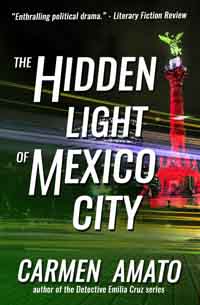
My first novel, THE HIDDEN LIGHT OF MEXICO CITY, contains two sex scenes. The first catches Luz de Maria and Eddo as they fall in love with an emotional depth new to both of them. The second is when they reunite after each separately survives violence at the hands of a Mexican drug cartel. The sex scenes illustrate the raw emotion of their relationship and both characters’ weaknesses, all of which are important plot elements.

sex scenes


The book is not a casual romance novel but a political and romantic thriller. Get it here: https://amzn.to/2CCL19H

As I wrote, I looked to some great thriller genre role models. Martin Cruz Smith’s ROSE, as well as several of his Arkady Renko novels, contains sex scenes that expose an unexpected physical relationship that is integral to the plot. In the Renko books, Arkady’s life is punctuated by doomed love affairs. In one of fiction’s most memorable sex scenes, he takes an unfaithful lover on the floor so forcefully that her head thumps rhythmically against the wood.

sex scenes

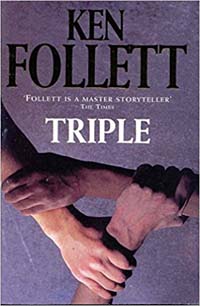
By the same token, the sex scenes in Ken Follett’s TRIPLE created a bond between characters and led to confessions about the main character’s secretive background and emotional turmoil.

sex scenes

Imitation being the sincerest form of flattery, I can honestly say I read TRIPLE many times and aimed to have HIDDEN LIGHT’s sex scenes advance the story in the same way. Given the Amazon reviews (4.8 out of 5 stars and proud of it), I think readers got the point.

Related: Read The Hidden Light of Mexico City, Chapters 1-2

That’s the reason to add a sex scene. To advance the plot, show emotional development, and dramatize a relationship with greater heft than a dinner date. It works best when the sex scene lives within a strong fictional framework and storyline.

When HIDDEN LIGHT was published, some family members were upset over those sex scenes. Asked if the scenes were the fault of a publisher out to woo readers. Added in later by someone else to spice up the book. Won’t buy it. Can’t read it. Certainly won’t review.

I was surprised at the level of controversy but not offended. Books with sex aren’t for everyone. My mystery and suspense novels are full of intense relationships, however, and there will be more sex scenes.

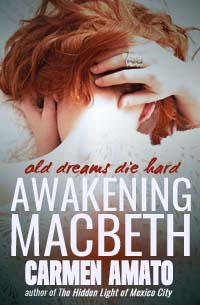
In my latest suspense novel, AWAKENING MACBETH, their physical relationship moves history professor Brodie Macbeth and Iraq War vet Joe Birnam along a trajectory of trust and loyalty that is pivotal to their very survival. Get it here: https://amzn.to/2Sp3CvB

sex scenes

In the Detective Emilia Cruz mystery series, sex is a bit more off-screen. But Emilia Cruz and hotel manager Kurt Rucker are both very dynamic people and the reader is aware of the sexual attraction between them.

Sex in fiction can be a controversial subject. Are you for or against?

You may also like

sex scenes

5 Lessons Learned in 5 Years as an Indie Author

5 Lessons Learned in 5 Years as an Indie Author

It is hard to believe but I’ve been a published independent author for 5 years. In May 2012, after a tearful breakup with a publisher, I released THE HIDDEN LIGHT OF MEXICO CITY via Amazon and Createspace. Once headed down the indie author road and loving the creative freedom that came with it, I kept going in that direction.

So far, I’ve published 5 Detective Emilia Cruz novels and a collection of short stories with the same character, plus two suspense novels.

lessons learnedAfter 8 books, I've accumulated a few lessons learned:

In charge of the railroad

As an independent author, I’m totally in control of every aspect of writing and publishing. Not only do I set my own production schedule and quality control, but there’s branding, marketing, and outreach to consider.

I’m the only one running the railroad; stoking the engine fire, laying down track, taking tickets, and serving drinks (that I mixed myself) in the club car.

I wanted all of that creative control when I started and I still do. I revel in the complex writing life I’ve created and the skills I’ve acquired along the way. I know my characters well and love the process of creating multi-layered mystery plots. Learning Photoshop and WordPress allowed me to create the branded website and social media platforms I envisioned.

Doesn’t mean everything is easy.

But owning it all is exciting. I'm an entrepreneur.

Volume sells

We all chug along at our own pace but in today’s environment, the more you write, the easier it is to gain traction and be discoverable.

Amazon’s Author Central pages showcase an author’s books all in one place. Ebooks can lead a reader from one book to the next with links in the text.

This means that 1) the more books you have, the more likely your backlist is to sell, and 2) books in a series sell better than one-offs.

The question I get most often is “How many Emilia Cruz novels will you write?”

As many as I can.

You can always choose to fight

Now and then, the train slows and a cinder gets in my eye.

I find myself staring dully at lists full of Important Things to Do and not doing any of it. Or looking at meh sales stats because Everybody’s Books Sell Better Than Mine. I wish I made enough to hire a big-deal PR firm. I wish the LA Times and the Washington Post book reviewers had me on speeddial.

But would I trade this railroad for one led by a different conductor with competing clients and a controlling interest in my schedule and plot ideas? Who swallows up X% of my income?

Uh, no.

The author blues are best fought with action.

Stoke the engine. Write something new or query a blog for a quest post. The feeling will pass.

Everybody wants your money

There are hundreds of marketing and promotion options for increasing a book’s discoverability.

Over the past 5 years, I have been swayed by the siren call of Generic Marketing. Sucked in by great copy promising to get my book in front of Important Book People, land more reviews, be the Book of the Day, or feature my book in a list touted by a Publishing Insider Publication. None of it paid off.

At least all were legit. Sadly, there are an incredible number of scams out there preying on indie authors.

Finally, I got it. I should be laser-focused on the specific audience for the genre of my books.

The Detective Emilia Cruz novels are a police procedural series. My audience likes intense plotlines, visual settings, and authors like Jo Nesbo, Ian Rankin, and Louise Penny. Now my Mystery Ahead newsletter caters to those interests, I target that audience in Facebook and BookBub ads, look for guest posts on mystery-themed blogs, and so on. Much more effective and better value for my money.

I’m not alone

Being in a community of writers makes a huge difference in terms of confidence and productivity. Of particular note, the Mexico Writers Facebook group has been a inspirational source of support, fun, and creativity.

A monthly local critique group has sharpened my prose and increased my coffee consumption. A weekly memoir group brings me into contact with people from all walks of life and makes me think outside the mystery writing box.

I’m grateful to all the writers willing to share their time and attention with me, but the readers are the stars along my personal walk of fame. Now and then, a reader reaches out to tell me they enjoy the Emilia Cruz series or that they cooked the recipe and how well it turned out (there’s a recipe from a scene at the end of every book). Many email me after reading the monthly Mystery Ahead newsletter. A number of readers emailed gasps about the end of PACIFIC REAPER.

I’m not the only one on the train. A few more board every day to talk, laugh, and share stories.

Meet you in the club car.

You may also like

lessons learned

Chatting with Nordic Noir Author Torquil MacLeod

Chatting with Nordic Noir Author Torquil MacLeod

I’m thrilled to chat with Torquil MacLeod, author of the Malmö mystery series featuring Detective Anita Sundström. Full of shocking twists and Swedish authenticity, the series is a great addition to your Nordic noir library.

Carmen Amato: Torquil, thanks so much for stopping by. I found your books by accident a few years ago. Meet Me in Malmö popped up in a search on Amazon for books by Jo Nesbo. My first reaction was “Dang, wished my books came up on that search list,” and then, “This looks interesting.” Tell us how you came to write the Malmö series.

Torquil MacLeod: Hello, Carmen. Nice to team up with a fellow crime writer across the Atlantic. Well, to answer your question, it goes back to my first trip to southern Sweden which was just before Christmas in 2000. We were visiting our elder son who had just moved there.

Torquil MacLAt the time, I was trying to break into scriptwriting and I thought the stark winter landscapes of Sweden would be an interesting location for crime stories – this was well before the Scandi-crime invasion had hit the UK. On that first trip we stayed with a blonde female detective who has now become one of our greatest friends. I came up with a couple of ideas, one of which, unsurprisingly, featured a blonde female detective.

Needless to say, the screenwriting career disappeared up a blind alley, so I decided to turn one of the scripts, Meet me in Malmö, into a book. One thing my many years in advertising taught me was never waste an idea! If it doesn’t work the first time, you can always revisit it. I’m glad I did.

CA: How do you create multi-dimensional fictional characters, including your lead character Anita Sundström? Where do you look for inspiration when creating characters?

TM: When writing the first book, though much of the story is seen from a British character’s point of view, I found I became increasingly interested in Anita Sundström’s character and her situation – someone who had to work within a team and was not the senior detective like Jo Nesbo’s Harry Hole or Henning Mankell’s Kurt Wallander. By being just an ordinary member of the squad it means that there is more scope for tension within the group. Over the years, she has developed into a more rounded character because she has faced ever-changing personal and professional situations. I think when you’re writing a series, like watching a TV box set, you linger longer with the main protagonists and have more time to let the characters grow. There’s less pressure than in a one-off story. And the more they grow, the more rounded they become both in the mind of the writer and, hopefully, the reader.

CA: Anita Sundström has not always had good judgement when it comes to her personal relationships. What criteria does she use to make decisions?

TM: To be fair, it’s not always Anita’s fault. Her philandering husband left her to bring up their son. Other choices have not been so good. Given her choices in the books, her main criterion seems to be a sense of humor. Having spent part of her childhood in Britain, she enjoys the self-deprecating humor. She’s attracted to men who don’t take themselves as seriously as some of her former Swedish boyfriends/lovers.

CA: Nordic noir is a very popular genre and Sweden has become a popular setting thanks to authors like Henning Mankell, Camilla Läckberg, and yourself. What makes Sweden a good setting for a mystery? How do you use setting to create and build suspense?

TM: The Sweden I know – the southern Skåne region – is a place of physical contrasts. In winter, the landscapes are harsh and barren; in the summer, incredibly lush and vibrant. Both give the writer scope to play with the conditions. In long winter nights people hide away. That in itself can play on people’s minds; be disturbing. But murder in a beautiful summer setting can be just as unsettling. It’s a season I often use to get away from the perception (certainly in Britain) that Sweden’s always bleak and snowbound. Another aspect of the country that helps the writer is that the Swedes generally keep themselves to themselves. That allows secrets to be buried deep.

CA: You can invite any author, living or dead, to dinner at your home. What are you serving and what will the conversation be about?

TM: I’d dig up Wilkie Collins. His 1868 Moonstone is considered the first full-length detective novel in the English language. I could ask him how he created Sergeant Cuff and many of the ground rules for detective fiction that virtually every detective writer has adhered to since. As he was also a good friend of Charles Dickens – coincidently, in 1857 they visited the Cumbrian village where I live– I could see if Wilkie could pass on any tips from the great writer. As for the food, my culinary skills are fairly limited, though I do a mean shepherd’s pie and a presentable chili (though, Carmen, I’m sure you would probably be horrified at my version of the latter). Poor old Wilkie would be left with a stark choice on the menu, so I’d try and distract him with a good bottle of something – though that might not work as he suffered from gout!

CA: How do you go about researching your books? How do you know when you have done enough to begin a project?

TM: I do two types of research. One is physically getting to know the locations I want to use. It’s fun to wander round the streets of Malmö and drive around Skäne. Swedish friends are also useful in suggesting places. I like to get the feel of a place, which makes it easier to describe. I can imagine the characters in the locations. It also means trips to places like Berlin and Malta as I like to get Anita out of Malmö from time to time. The other is that I try and find some interesting nugget of Swedish history that I can use in a book. This is where the internet comes in useful. However, as I’m not a great planner of my books – they tend to evolve as I go along – then some research takes place when the project is already under way.

CA: Can you leave us with a quote, a place, or a concept from a book that inspired you?

TM: In my case, the concept is a combination of a place and a person – Malmö and a real blonde female detective.

More about Torquil MacLeod: Torquil was born in Edinburgh, Scotland, and brought up in the north east of England. After brief spells as a teacher and a failed life insurance salesman, he worked as a copywriter in advertising agencies around the UK for more years than he cares to remember. The Malmö Mysteries have been inspired by his frequent visits to southern Sweden, where his eldest son and family live. Visit www.torquilmacleodbooks.com to find out more.

Check out the latest from Torquil MacLeod!

Torquil MacLeod

You may also like

Torquil MacLeod interview

What Happened to the Jesse Stone Mystery Series?

What Happened to the Jesse Stone Mystery Series?

When mystery author Robert B. Parker passed away, I mourned the end of the Spenser and Jesse Stone mystery series, as well as his Westerns featuring the enigmatic Virgil Cole. Sunny Randall, not so much, as I never quite connected with the female PI and her annoying ex-husband issues.

Like many others, I was of two minds when it was announced that Parker’s novel franchises would continue but be written by other authors. Excitement that more books with favorite characters would be forthcoming, doubt that others could capture the style that made Parker’s books so successful.

Related: Book Review: Cold Service by Robert B. Parker

Ace Atkins took up the Spenser series and really delivered, even as he introduced a new character (Sixkill) who helped expand Spenser’s world. The dialogue still drives the narrative, the pace is still swift, Spenser’s code is still in tact, and Susan and Hawk are still at his side. For the most part, the transfer of authorship has been seamless.

The Jesse Stone series was always a distant second to Spenser in my reading affections and I didn’t keep up as the series grew under new authorship. Parker wrote 9 novels about the ex-minor league shortstop who washed out of the Los Angles Police Department because of his drinking and lands on his feet as the chief of police in Paradise, Massachusetts. After Parker’s death, the franchise was handed off to Michael Brandman who wrote 3 novels, and then to Reed Farrell Coleman who has also written 3.

Has Jesse Stone’s road been as smooth as Spenser’s?

To decide for myself, I read two early Jesse Stone novels, TROUBLE IN PARADISE and STONE COLD, then the last two in the series, THE DEVIL WINS and DEBT TO PAY, both by Coleman.

Here’s my verdict:

The new books dive even more deeply into Jesse’s character. We spend more time inside Jesse’s head as he remains absorbed by his relationships with alcohol, his ex-wife Jenn, and his missed chance to be the world’s greatest shortstop. Jesse is flawed, and Coleman is making the most of it but still in Parker’s nuanced way. Jesse still talks to his picture of baseball great Ozzie Smith. Dix the therapist is back, too, both in Jesse’s thoughts and in scenes in which the two men discuss Jesse’s problems.

In early books Jesse has a number of female friends with benefits; in the later books he’s faithful to a new character named Diana, a former FBI agent now a security consultant in Boston. But there’s a precipice beckoning to Jesse in the form of the new Paradise medical examiner. Tamara is an attractive woman with her own drinking problem. I sense an undercurrent of doubt that Jesse can continue to resist this doubly fatal mix of woman and drink. If you are not tired of alcoholic main characters in mystery novels, then the tension is grand.

Related: Character Sketches, The Detective Emilia Cruz Mystery Series

For those who remember Spenser’s run-ins across several books with the Gray Man, Coleman has introduced a similarly continuing bad guy named Mr. Peepers. I’m not sure why Mr. Peepers has spent the last 20 years carrying out his twisted agenda of murder and torture, which would help the believability angle, but he’s a worthy opponent for Jesse.

Two things stand out as significant differences between early and later Jesse Stone novels. First, Coleman has departed from Parker’s staccato pace, except in some dialogue scenes where Jesse does the man-of-few-words act that has always been a character trademark. The pacing is slower and the paragraphs much longer. Indeed, in THE DEVIL WINS, the normally laconic Jesse delivers a 1.5 page paragraph explanation of how he caught the bad guy. Despite the chunky paragraphs, the prose is smooth, although a few awkwardly phrased sentences stand out. The villain’s voice is heard at pivotal moments, the same as when Parker was writing.

Second, there is the assumption that the reader knows the entire series’ backstory. For example, in THE DEVIL WINS, references were made to a person named Crow. This villain appeared in the early STONE COLD, but he and Jesse did not meet. But some 10 books later, it is obvious that both Jesse and Paradise cop Molly Crane have had a previous interaction with Crow. Alas, we don’t know the context or who Crow is. I’ll have to read more of the post-Parker books to find out.

Bottom line is that Jesse Stone is one of mystery fiction’s most complex, irritating, and heroic characters. Coleman has both captured and expanded this persona, while creating villain-based plots that manipulate Jesse’s flaws to good effect.

You may also like

Jesse Stone

New Release! PACIFIC REAPER, the New Detective Emilia Cruz Novel

New Release! PACIFIC REAPER, the New Detective Emilia Cruz Novel

New release!

Detective Emilia Cruz goes up against the cult of Santa Muerte, Mexico's forbidden saint of death in PACIFIC REAPER, the 5th novel in the series set in Acapulco.

Without giving anything away, early reviews say REAPER is the most powerful Emilia Cruz mystery yet. But you be the judge. Get REAPER on Amazon and please remember to leave a review.

In case you missed the run-up to REAPER, check out some background on the cult of Santa Muerte and read Chapter 1 for free:

When Detective Emilia Cruz Meets Santa Muerte

Background to PACIFIC REAPER

PACIFIC REAPER, Chapter 1

Thanks to great readers like you, PACIFIC REAPER debuted on Amazon's Hot New Releases list for the International Mystery and Crime category next to some of the genre's heaviest hitters. Matt Chase's stellar cover art held its own next to the likes of Jo Nesbo's THE THIRST.

New release
New release

You may also like

When Detective Emilia Cruz Meets Santa Muerte

When Detective Emilia Cruz Meets Santa Muerte

Every Detective Emilia Cruz novel uses unique aspects of Mexican culture to create crimes and situations that would not be possible anywhere else.

In PACIFIC REAPER, Emilia confronts the cult of Santa Muerte, the saint of death embraced by drug cartels. Someone is killing gang members and leaving altars to Santa Muerte next to the victims. Emilia doesn't believe in the power of the Skeleton Saint, as some call her, but when something bad happens to everyone who is important to Emilia, she jumps at the chance to go undercover as a worshipper.

Related post: Coming soon! PACIFIC REAPER

Who or what is Santa Muerte?

Condemned by the Catholic Church, the popularity of Santa Muerte continues to grow. She's the personification of death but wears many hats: angel of death, miracle worker, love doctor, supernatural healer, protector of believers.

In 2013, as US law enforcement saw more evidence of Santa Muerte associated with narco crimes in the US, the FBI published a 3 part report on Santa Muerte, with the warning that  "Law enforcement professionals who encounter Santa Muerte artifacts and related narcotics cult paraphernalia at crime scenes should not dismiss them hastily."

Read the whole report. Intended for law enforcement officials, it is a bit dry but fascinating reading nonetheless.

Santa Muerte gallery

The cult of Santa Muerte is rich in visual drama. The saint is usually depicted as a skeleton holding a sythe in one hand and a globe in the other and wearing a hooded robe akin to the West's Grim Reaper figure.

Santa Muerte

Photo credit FBI -- A white Santa Muerte statue surrounded by candles and liquor

Santa Muerte

Photo credit AP Photo/Guillermo Arias -- Santa Muerte charm found along with a weapons haul from a cartel-related crime scene

Colors have different meanings in the Santa Muerte universe. In PACIFIC REAPER, Emilia first encounters a black altar, which is intended for power against enemies. Later, undercover as a worshipper, she carries a yellow robed Santa Muerte statue to a ritual event. Emilia's cover is that she is there to ask for her mother to be healed.

Related post: Book Review: Devoted to Death

Business insider had a great gallery of Santa Muerte photos when it reported on Pope Francis's trip to Mexico.

Dr. R. Andrew Chesnut's website has a blog on the home page with the street view of Santa Muerte, including this post about a shrine in the state of Michoacan.

Santa Muerte

Photo credit: Reuters/Claudia Daut -- Tequila is poured over a white (for purity) Santa Muerte statue carried in a young girl's pink backpack.

Emilia's undercover adventure as a Santa Muerte worshipper is part evangelical happening, part criminal mastermind at work. The result is shocking, to say the least and a milestone for both reader and writer . . .

You may also like

Santa Muerte

Pin It on Pinterest