The real story behind 43 MISSING

The real story behind 43 MISSING

43 MISSING, the latest Detective Emilia Cruz novel, is fiction but is based on a true, unsolved crime.

A big, terrible, words-fail-me unsolved crime.

43 Missing

In September 2014, forty-three students from the Ayotzinapa Normal School disappeared while in Iguala, Guerrero attempting to commandeer buses to take them to a rally in Mexico City. Three years and dozens of arrests later, the details around the crime are still sketchy and the families of the missing still do not have closure.

Neither truth nor bodies have been found.

I was just beginning the Detective Emilia Cruz series in 2014 when the 43 students disappeared. As time went on and the aftermath became spotted with half-truths and confusion, I wondered if I should write about it. Fiction has been my way of bringing awareness to the scores of Mexicans missing amid the country’s drug violence, but this crime and the possible secrets behind it, were almost unthinkable.

If Detective Emilia Cruz took on this investigation, I had to bring honesty and compassion to the project while creating both a believable motive and a firm resolution.

Research

As I researched the book that would become 43 MISSING, Francisco Goldman’s reporting in The New Yorker provided crucial details. I met him in October 2017 and thanked him for the superb reporting. He in turn praised the work of John Gibler, whom Goldman quoted in one of his articles:

“Scores of uniformed municipal police and a handful of masked men dressed in black shot and killed six people, wounded more than twenty, and rounded up and detained forty-three students in a series of attacks carried out at multiple points and lasting more than three hours,” Gibler wrote to me in an e-mail. “At no point did state police, federal police, or the army intercede. The forty-three students taken into police custody are now ‘disappeared.’ ”

https://www.newyorker.com/news/news-desk/crisis-mexico-disappearance-forty-three

The motive for the assault on the students in the city of Iguala, not far from Acapulco, remains a mystery. One hypothesis reported by OpenDemocracy.net and other outlets which sparked my interest is that “the police were not after the students, but their bus . . . carrying shipment of drugs and/or money, which corrupt officers were trying to recover.”

https://www.opendemocracy.net/democraciaabierta/manuella-libardi/ayotzinapa-three-years-later-new-light-few-answers

The novel 43 MISSING tackles many of the real anomalies related to the case, including a discredited motive, how the 43 bodies were disposed of, and multiple identical confessions.

https://www.newyorker.com/news/news-desk/the-missing-forty-three-the-mexican-government-sabotages-its-own-independent-investigation

https://www.newyorker.com/news/news-desk/the-missing-forty-three-the-governments-case-collapses

"Damning"

The case quickly became a political hot potato and still is. In 2016, the Organization of American States was called in as a neutral party but its investigation withered. James Cavallaro, Stanford law professor and human rights expert who led the effort, had this to say in an interview with Americas Quarterly magazine:

Americas Quarterly: Mexico’s attorney general has called this “the most comprehensive criminal investigation in the history of law enforcement in Mexico.” What does that say about law enforcement in Mexico?

James Cavallaro: Unfortunately, given the results of the investigation, it’s quite a damning statement. It’s a damning statement because we don’t know what happened to the 43 students, we don’t know where they are, we don’t know who was responsible, we don’t know how they died. None of the most important questions have been answered. And if that’s what the most comprehensive investigation in the recent history of Mexico can produce, any rational observer should be extremely concerned about the state of criminal justice in Mexico.

http://www.americasquarterly.org/content/oas-human-rights-chief-galling-errors-obstruction-case-43-missing-mexican-students

As I write this at the end of 2017, most pundits say the families will never know what happened. While the mystery of the 43 missing is solved in fiction, I pray that it will some day be solved for real.

Click here to read Chapter 1 of 43 MISSING.

You may also like

43 missing

Desert Island Folllies

Desert Island Folllies

There used to be a British radio show called Desert Island Disks. Guest DJs shared the 3 albums they’d want to listen to if shipwrecked on a deserted island. If you’re familiar with the classic BBC comedy The Vicar of Dibley, you’ll recall the episode in which the village sets up a public service radio station for a week. Frank Pickle confuses Disks with Desks and renders the village comatose with boredom by talking about his 3 favorite desks for an entire evening of radio programing.

(You can watch the entire episode on YouTube!)

But back to the topic at hand. My first semester of college was marked by a Desert Island Disks phenomenon. My new roommate Brenda moved into our dorm room with 3 albums and a new stereo. Until Thanksgiving, when she replenished her supply, we listened exclusively to Alan Parsons Project’s Eye in the Sky, Ted Nugent’s Cat Scratch Fever, and REO Speedwagon’s You can Tune a Piano But You Can’t Tune a Fish, featuring timeless tunes like Time for Me to Fly and Roll With the Changes.

In contrast to Brenda’s love for rock, my musical tastes up to that time revolved around starring roles in high school musicals, my mother’s collection of Glenn Miller and 101 Strings, The Nutcracker Suite, piano lessons, and jazz trumpeter Chuck Mangione who was also from upstate New York.

In short, Ted and Alan, not to mention the flowing locks of the Speedwagon boys, were total revelations to me and I have many happy memories of that music. Brenda and I listened to one album every night with the lights out in anticipation of sleep, discussing the boys we’d encountered that day, especially a tall drink of water named Lefty Wilcox.

Related post: The Right Fork

But none of those 3 albums would make it onto my list of music to have on a deserted island. I’d need something to sing along to like Broadway musical soundtracks. Oklahoma, George M!, and A Funny Things Happened on the Way to the Forum. Maybe I’d finally learn all the words to Comedy Tonight, as I went about creating my own version of Gilligan’s Island.

Perhaps I’d find enough driftwood to build a desk.

P.S. An interviewer once asked me what music I listen to while writing. The answer is NONE. There's already so many voices in my head I don't need competition.

On that note (pun intended) the 6th Detective Emilia Cruz, 43 MISSING is in process! Subscribers to Mystery Ahead will find out the release date before anyone else so get on the first-to-know list now!

You may also like

Carmen Amato

Gripping Audible Mystery Series Flies You to Acapulco

Gripping Audible Mystery Series Flies You to Acapulco

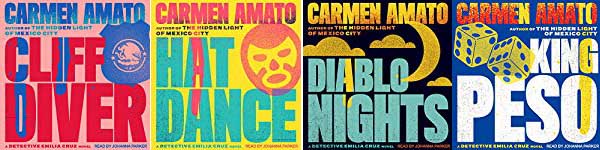
The first four books in the Detective Emilia Cruz series set in Acapulco are all available on Audible from Tantor Media!

The books are narrated by the fabulous Johanna Parker, who also voiced the Sookie Stackhouse series. Johanna has really nailed a singular "voice" for the Emilia Cruz series narration, with energy, heart and perfect Spanish pronunciations. I hope she earns a 2017 Audie Award!

Does she sound like Emilia? Sample CLIFF DIVER here.

Click here for Audible titles or search for "Carmen Amato" on the Audible app.

The audiobook cover art is by Matt Chase, creator of the print and ebook covers. What do you think?

You may also like

audible mystery series

On the Rocks with Thriller Author Tim Tigner

On the Rocks with Thriller Author Tim Tigner

This week I went behind the writing scenes with with thriller author Tim Tigner, who shared details about his Kyle Achilles series and some great protips for creating sensational thrillers. Driven by great reviews, his books are zooming up the thriller and adventure categories on Amazon.

Tim Tigner

Thriller author Tim Tigner

1 Carmen Amato: Tim thanks so much for stopping by. I ran across your books a few months ago and recognized a fellow author-adventurer! Tell us how your previous careers in intelligence and international business led you to become a thriller writer.

Tim Tigner: I rose quickly within the medical technology industry (International Managing Director at a blue chip at age 26) only to find that I didn’t enjoy the executive suite (loved the job, hated the politics.) So I asked myself what I’d do if I could do anything. I chose writing thrillers because reading them is my bliss.

I didn’t make the leap for another eight years though, not until a doctor in Brussels actually wrote “change your job” on his prescription pad for me. By then I was very familiar with the palace intrigue rampant in governments and corporations. I also knew the military from my time in the Army Special Forces. Convinced that I had the knowledge to plot page-turning thrillers, I took the plunge and lived off savings for the years required to learn how to write.

2  CA: How do you create multi-dimensional fictional characters, including your lead character Kyle Achilles? He is often in complex and dangerous circumstances. What criteria does he use to make decisions?

TT: Multidimensional characters bring their backgrounds, hopes, ambitions, skills and fears into situations. Of course I design the plots to expose those details while forcing the characters confront them and change, grow or adapt accordingly. To keep the pace up, I avoid including character detail that isn’t relevant to the plot, while inserting pertinent detail piecemeal rather than as a block of exposition.

As for Achilles, he has what I consider to be a typical Special Forces attitude. He’ll do what it takes to get the job done. Period. He’s Olympian tough and has trained himself to balance risk and manage fear by climbing cliffs without a rope. These qualities open up tactics not available to the average Joe, and he leverages them to his advantage. Like many in law enforcement, justice is Achilles’ main motivator. He hates seeing the strong cheat the weak, and he enjoys having the ability to stop it.

Related: Author to author with David Bruns

3  CA: Your espionage thrillers range around the world. How do you use setting to create and build suspense? Tell us about a favorite location that you used in a book.

TT:  People read fiction to escape, so I try to give them the trifecta of escaping to intriguing situations, with interesting people, in cool places. This tends to include both a city and a building in my novels. Usually the building is the wealthy protagonist’s home or office. For setting, I’ve used Monaco/Monte Carlo in a couple of my books because it’s such an exotic city, with so much wealth and beauty plus gambling, yachting, and racing. Who wouldn’t want to spend time there?

Years ago, a friend and I drove the Monaco Grand Prix route two days after the race was held in the city. We careened around streets literally wrapped in mattresses, under the famous pink castle and past the casino!

CA: You can invite any author, living or dead, to dinner at your home. What are you serving and what will the conversation be about?

TT: I like to think big, so I’d invite the author of the Bible (I know, I know. But I can’t think of a more fascinating conversation.) Second choice would be Plato because there would just be so much to talk about (I was a philosophy major.) If we stick to the living I’d go with Ken Follett because he’s the fiction writer I admire most and I’d just love to discuss his work with him.

With any of the above, what we’d eat wouldn’t be as important as where. Kinda gets back to your question about setting. I’d find someplace memorable. I turn 50 later this month, and I don’t know what I’ll be having for breakfast, but I know I’ll be having at the Vatican. (Shhh, my family doesn’t know we’re going yet.)

Tim Tigner

CA: What is your best protip? Tell us about a writing habit, technique, or philosophy that keeps your writing sharp.

TT: My best protip is to use lots of beta/proof readers. An army of eyes catches more than a couple of pros. Not just typos and inconsistencies, but “professional” errors. Docs catch medical stuff, lawyers legal, etc. Ask for volunteers from your fans (mailing list), so that you know they like your style and their tastes match your target audience.

More about Tim:

Tim Tigner writes fast-paced spy novels, international conspiracy thrillers. He draws heavily from his experiences in Soviet Counterintelligence with the US Army Special Forces, as an international business executive in the medical industry, and as a Silicon Valley startup CEO. Download one of his bestsellers for free at timtigner.com.


You may also like

Tim Tigner

Living With a Thief

Living With a Thief

"Comparison is the thief of joy." -- Teddy Roosevelt

I mentioned to someone recently that my goal for the Detective Emilia Cruz mystery series is to eventually be as well known as the Chief Inspector Gamache series by Louise Penny.

And got a not-so-subtle eye roll in response.

Thief in the night

Before I knew it, the comparison and the self-doubt train was rolling. I mentally cataloged all the reasons why Emilia Cruz was never going to rub bookshelf shoulders with Armand Gamache.

Related: The free Detective Emilia Cruz Starter Library

Yep, I sat there like I'd been hit by a sock full of wet sand and turned on the stupid comparison machine. My joy was gone, stolen by an involuntary expression of someone who'd never read any of my books.

Stopping the locomotive

But why shouldn't that be a worthy goal?

After all, the books enjoy the same mystery loving audience. Readers who imagine themselves at Olivier's Bistro sipping hot choolate will also enjoy a starry night in the Pasodoble Bar with a mojito.

Related: Why Acapulco is an unforgettable setting

Usually, I'm excited that I'm on the right track with the Detective Emilia Cruz series. I love the Gamache books and see that series, as well as the Harry Hole series by Jo Nesbo and the Arkady Renko series by Martin Cruz Smith, as my role models.

Role models are great.

But comparison is a waste of time.

The case of Agnes and Martha

James Clear recently wrote about a famous case of self doubt. Agnes de Mille, the dancer and choreographer, told mentor Martha Graham: “I confessed that I had a burning desire to be excellent, but no faith that I could be.” Martha's response was: "It is not your business to determine how good it is nor how valuable nor how it compares with other expressions."

Mr. Clear's article has a really valuable message: "It is not your place to compare it to others . . . Instead, your responsibility is to create. Your job is to share what you have to offer from where you are right now."

Where the joy is

For me, the joy has always been in the creative process. I love making up intricate plots peppered with my own experiences. I love wordsmithing and tracking down that elusive perfect word in the thesaurus. I love the process of dialogue, acting out both parts to the dog as Emilia and Silvio have another knock-down-drag-out argument. Dutch has no idea what's going on, but it's attention so all good.

Teddy was right. Comparison is the thief of joy.

The thief is always lurking around the corner, waiting to be invited in by a random eye roll or thoughtless remark.

But if the joy is in the creative process, the thief has nothing to steal.

You may also like

thief of joy

Sailing the Mystery Sea with Author Penn Wallace

Sailing the Mystery Sea with Author Penn Wallace

Pendleton C. Wallace writes two gripping mystery series, lives on a boat, and has had careers as diverse as restauranteur and cyber security expert. He took time out from his busy schedule to chat about the origins of his stories and what’s next for both series. Check out his website at pennwallace.com where he talks about life as an author and adventurer.

1  Carmen Amato: You write two great mystery series, each around a strong central character: hacker Ted Higuera and cop Catrina Flaherty. Ted and Cat weave in and out of each others’ series, which I find fairly unique, and both have compelling backstories. Tell us about how you developed these two multi-dimensional fictional characters.

Penn Wallace: My mother is a first-generation American. Her parents were refugees from the Mexican Revolution. My father is of Scottish heritage. I grew up with a foot in both worlds. In the Ted Higuera series, I modeled Ted after my Mexican half. I was a software engineer and cyber security analyst, like Ted. Ted’s best friend, Chris Hardwick, is modeled after my American side.

Catrina is a whole other story. I did some consulting work for her firm in the 1990’s. Of course, I changed her name for the series, but she was essentially the character I portray in the Catrina Flaherty Mysteries. She was the scariest woman I ever met, but she really did the things I write about and built her practice around saving abused women.

2  CA: Will you continue both series indefinitely? Do you find writing one more rewarding than the other?

PW: I’m in love with whichever character I’m writing about at the time. I plan to keep on writing both series, however, Cat and Ted and going their separate ways. SPOILER ALERT: At the end of The Chinatown Murders, Cat throws in the towel, quits the PI business and goes to visit a friend in Panama.

In the new Ted Higuera book, Ted takes control of Flaherty & Associates and continues on without Cat. The next Cat book will pick up her story in Panama and Ted won’t be in it.

I have another character I’d like to write a series about, but I just can’t get caught up with the Ted and Cat stories that are bubbling over in my mind.

Penn Wallace3  CA: Penn, we are both members of the Mexico Writers Facebook group as well as fellow mystery authors. Tell us about your connection to Mexico and how you’ve used that in your writing.

PW: As I mentioned, my mother’s family came from Mexico. We made several trips to Mexico when I was a kid. I grew up in the back end of a Mexican restaurant.

After I grew up, I owned two Mexican restaurants and made frequent trips to Mexico. Mexico is in my blood. It was a natural that my hero would be of Mexican heritage and The Old Country would be a subject of my writing.

4  CA: I’ve read many of your blog posts about life on the water. You are a true adventurer! How has sailing helped hone your mystery writing skills?

PW: Wow! I don’t even know how to begin answering this question. Let’s try this:

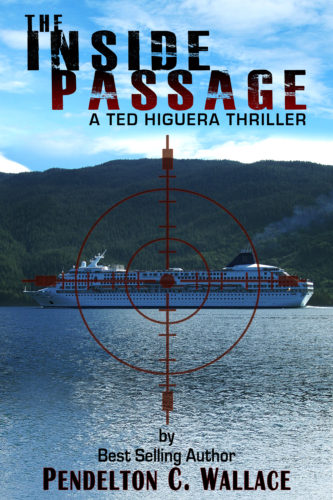
Sailing has taken me to a lot of exotic locations that are the venues for my books. The Inside Passage takes place mostly on a sailboat on Canada’s Inside Passage. I spent many a summer cruising those idyllic islands.

After I quit my day job and sailed to and lived in Mexico, it became natural that some of the places I visited became locations for my books.

Then there’s always the excitement of sailing. Things never seem to go as planned and life on a cruising sailboat is anything but routine. I’ve also had the opportunity to meet lots of people who made their way into my book. Maria and her family are modeled on friends that live in La Paz. (No, they are not really drug lords.)

As an author, I’ve learned that if you keep your eyes open, you’ll see fodder for your stories all around you.

5 CA: How do you go about researching your books? How do you know when you have done enough to begin a project?

PW: I was always told, “write what you know.” This doesn’t work for me. I’ve never been a drug lord or a female PI. I’ve never run a chain of bikini barista stands or stolen airplanes and gone on a nationwide crime spree.

I spend a lot of time researching. Fortunately for me, I can do most of my research on the Internet, no matter where in the world I am.

I usually spend from a couple of weeks to a couple of months researching before I begin outlining my story. Then, as I write, I’m constantly finding items that need further research to make the story believable.

I needed a gun that Hope could realistically carry. I found all sorts of information on the ‘net. Then there was the question of how she would conceal it. Research led me to a neat little bra holster. This kind of stuff comes up all the time as I write.

6 CA: You can invite any author, living or dead, to dinner at your home. What are you serving and what will the conversation be about?

PW:  May I invite two? First, I would invite Edgar Rice Burroughs. I grew up on his work. I love Tarzan and John Carter of Mars. I can imagine an evening, lying at anchor in some tropical cove lined with white sand beaches and palm trees, pumping him for information about life on Barsoom.

At the same time, I’d love to have Larry McMurtry sitting in the cockpit sipping a cool one with us. I adore the Lonesome Dove series. I want to know how Larry researches his series. In Dead Man’s Walk, he uses my great-great-great uncle, Big Foot Wallace, as a character. He has Big Foot killed in the book. This is not the way family lore tells the story. I’d love to know how he researched this.

7 CA: Can you leave us with a quote, a place, or a concept from a book that inspired you?

PW: Don Quixote de la Mancha. I read the book when I was a teenager and have spent the rest of my life tilting at windmills, trying to save the fair Dulcinea, and defeat the evil wizards and sorcerers, and establish the right in our world.

Thank you!

Penn Wallace

I loved THE INSIDE PASSAGE, the first Ted Higuera thriller. My review will appear first in the Mystery Ahead newsletter, which you can get here.  THE INSIDE PASSAGE is a 5 star thriller with all the ingredients I love: “everyman” hero, a  politically-charged villain, an unexpected setting, and a swift pace that tumbles us headlong from one dramatic moment to another. Find it on Amazon.

Pacific ReaperP.S. The first chapter of MURDER STRIKES TWICE, a Catrina Flaherty mystery, is included as a bonus in the Kindle edition of PACIFIC REAPER, the 5th Detective Emilia Cruz mystey. One good female sleuth deserves another!

You may also like

Penn Wallace

Book Review: 2 Tickets to Venice

Book Review: 2 Tickets to Venice

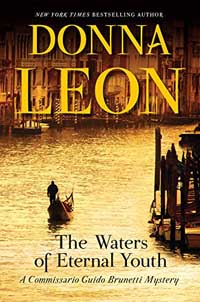
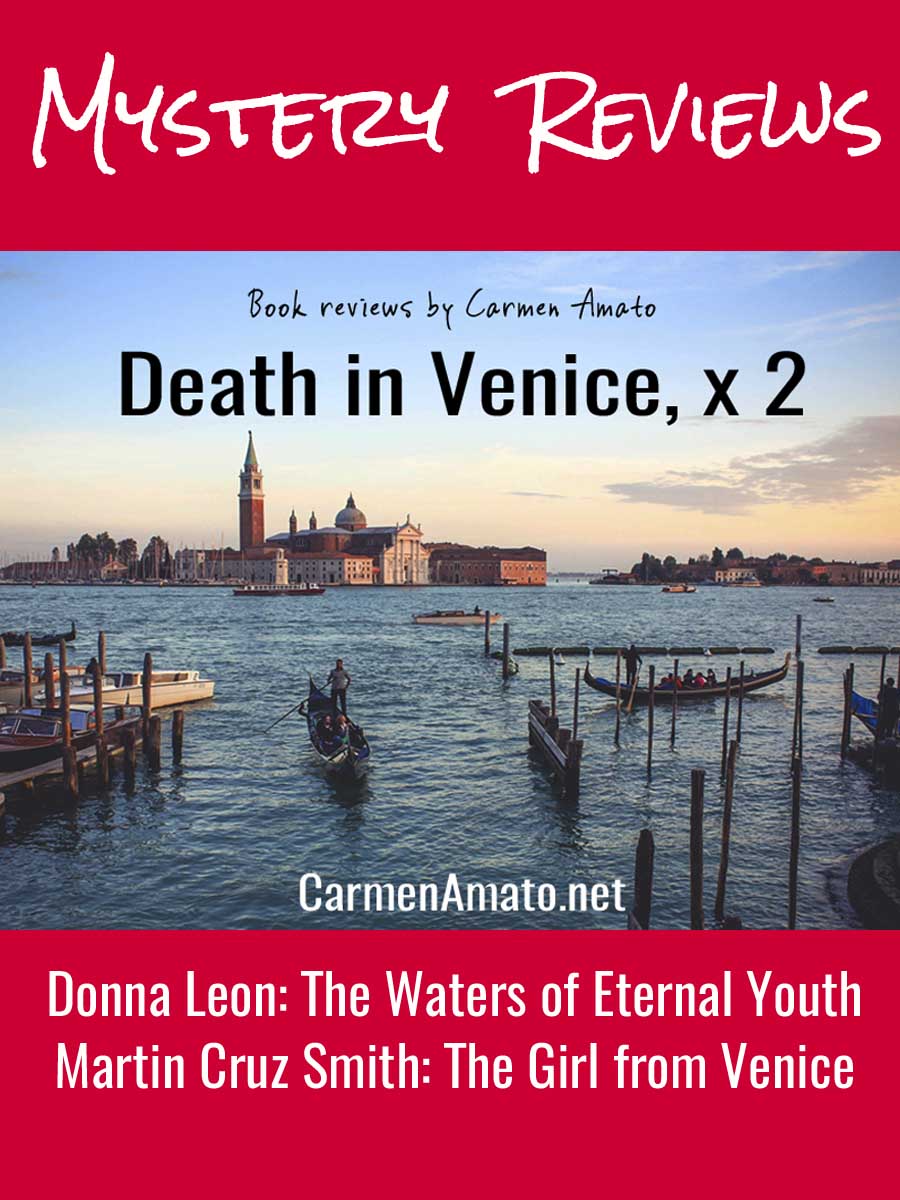
Venice is one of the most beautiful cities in the world. Architecture, canals, and history make it a prime setting for a mystery. Two favorite authors, Donna Leon and Martin Cruz Smith have new books set in Venice that take you on two very different journeys to La Serenissima.

book review

THE WATERS OF ETERNAL YOUTH by Donna Leon is as intricate, glorious, and absorbing as a trip to Venice can be. As Commissario Guido Brunetti, aided by fellow detective Claudia Griffoni—a relatively new character in this long-running series—and the stouthearted uniformed cop Vianello, you walk the riva on the side of the canals, you crowd with them into the vaporetto water taxis, and you share the unfamiliarity of riding in a car. But most of all, you are inside Brunetti’s questioning mind as he investigates an accident that occurred 15 years ago which left a young woman with the mind of a child. Her grandmother, an aging socialite who runs a foundation dedicated to preserving Venice’s sinking architecture, believes that her granddaughter did not fall into a canal by accident. With little to go on besides the woman’s intuition, Brunetti begins to poke into the past. In the process, he must enlist allies, manipulate his superior, and uncover a related murder. Much of the time he comes up empty-handed, but Leon leaves tiny clues like diamonds in a handful of sand. The writing is brilliant, the characters are fully-developed and endearingly familiar, while the meals never failed to make me reach for the nearest Italian cookbook.

Related: Book Review: The Golden Egg by Donna Leon

Unlike some of the other Brunetti mysteries, this one closes with all the loose threads woven into a cloth nice enough to be the pocket square in Brunetti’s suit jacket. Having read all the books in the series, THE WATERS OF ETERNAL YOUTH (a double entendre but I can’t say why) ranks in my personal Top 5.

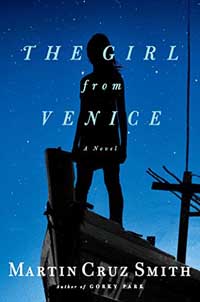
I consider Martin Cruz Smith to be a role model as well as a favorite writer. Author of the ground-breaking Arkady Renko series set in Russia, he is also the author of several romantic thrillers. After a several-year break, he’s got a new website, new book covers, and THE GIRL FROM VENICE is his new romantic thriller.

book reviewIt is the end of WWII. Venice is riven by suspicion and fear as Mussolini’s regime cracks apart. The action takes in the muddy lagoon and poor fishing communities that fringe the palazzos and piazzas of central Venice.

Cenzo Vianello is a barefoot fisherman barely scraping by and hoping to avoid the chaos of his collapsing country. The Germans continue to prop up Mussolini and Cenzo frequently runs into German patrols as he cruises shallow waters in his fishing boat. One night, he finds a dead woman floating in the lagoon.

But Guilia isn’t as dead as he thought. A strong swimmer, she faked her death to escape the Gestapo after her Jewish family’s hiding place was betrayed. Cenzo kills a German officer hunting for her, then hides the girl in his fishing shack on the outskirts of Venice.

Cenzo has enough problems without being arrested for murder or protecting a Jewish girl for whom the Germans are hunting. He was kicked out of the Italian Air Force when he refused to gas the populace in Ethiopia. His wife was stolen by his brother who is a famous actor and Mussolini insider. She died, leaving Cenzo and his brother with unfinished business.

Turning to a friend from his piloting days, Cenzo arranges for Guilia to be spirited out of Venice and sent to the partisans in the mountains. When the friend is killed, Cenzo goes looking for Guilia in an odyssey that sees him reunited with his brother and plunged into the strange court of Mussolini’s last days. While I was impatient for him to find Guilia, the book became an absolutely fascinating glimpse into this suspenseful snippet of WWII history, as seen through some superbly drawn characters: a would-be moviemaker, the wife of a Brazilian diplomat who is also an expert forger, and Cenzo’s matinee-idol brother who is also Mussolini’s radio spokesman.

Cenzo is a marvelous vehicle for this fishing trip through Italian history. He’s decent and unambitious; hardly fearless but willing to find his courage when he needs to. The attraction between him and Guilia, who is both younger and much better educated, develops slowly. You can see why it works—improbably—for each of them.

All of the pieces were in place for a big and stunning climax, but the ending wrapped without too much drama. There were also a few continuity errors; for example, Cenzo and Guilia have sex for the first time at least twice. But the prose is beautiful, the sense of history is remarkable, and THE GIRL FROM VENICE is worth a prime spot on your TBR list.

These books made me wonder if Venice is really sinking. Yes, it is. Read about the looming issue in this article from The Guardian.

You may also like

book review

What is Happening to Priests in Mexico?

What is Happening to Priests in Mexico?


Priests in Mexico appear to be wearing targets as well as their vestments.

Father Richard was the first

My pastor in Mexico City was an Oblate missionary, Father Ricard Junius, who was murdered in 2007. I wrote about his death in this blog post and his unsolved murder was the impetus for the Detective Emilia Cruz shot story, "The Angler," which is part of the #free Detective Emilia Cruz Starter Library.

Not to rehash Father Richard's passing again, but the events surrounding his death were very suspicious and the reporting of it contradictory. Some called it death by misadventure--he was tied up and porn magazines found in his room in the rectory--but as far as I know, his death was murder.

The Daily Beast reported in October 2016 on the killings of three priests. I was struck by a certain sentence in the report that applies to Father Richard as well: "As happens often in Mexico, local authorities sowed confusion about the circumstances of the murder." 80 percent of crimes against the clergy are never solved, according to InSightCrime.org.

Ten Years Later

Earlier this month, Father Luis Lopez Villa, aged 71, was killed in his church in the municipality of Reyes La Paz on the outskirts of Mexico City. Like Father Richard, he was tied up in his own room in the rectory. He was stabbed to death.

Last year was the most deadly year on record for the Catholic Church in Mexico, probably since the Cristero War of the 1920's. In fact, in 2016, Mexico was cited as the most dangerous country in the world for the clergy for the 8th time in a row!

Related: The Mexican martyr who inspired a mystery

Mexico's Centro Catolico Multimedia documented crimes against clergy over the past 4 years:

  • 520 robberies
  • 17 murders
  • 25 survived attacks
  • 2 disappearances
  • 2 kidnappings

Sympton of Rising Crime or Something Else?

I'm not sure what percentage of the Mexican population is Catholic clergy, but it stands to reason that as violent crime rises in Mexico, it increasingtly affects all segments of the population. But priests are also in a uniquely tight spot, as I saw in the case of Father Richard.

Priests hold visible and respected positions in their communities. They may espouse unpopular stances to defend their parishoners and promote human rights. In Father Richard's case, he spoke out against underage drinking at a specific neighborhood bar right before he was murdered and parisoners widely believed the timing was not a coincidence.

There's another troubling issue: narco alms, or narcolimosnas. This is basically cartel drug money funneled to build churches, schools, clinics and other assets for Mexican communities. These projects allow drug kingpins to build support where civil infrastructure is shaky. Remember, the poor never turned Robin Hood over to the Sheriff of Nottingham.

If priests don't cooperate or speak out against drug-related murders or help victims' famiies find justice, retribution can be fierce and deadly.

It's a no-win situation for Mexican priests. Either take the community asset built with the blood of cartel victims, or refuse and be marked for death.

Detective Emilia Cruz Investigates

In the Detective Emilia Cruz mystery series, Padre Ricardo (a tribute to Father Richard Junius) is Emilia's sounding board. In PACIFIC REAPER, she takes refuge in the church after a series of events destroy her entire personal history.

But if anything should ever happen to him, like the robbery and murder of the priest in THE HIDDEN LIGHT OF MEXICO CITY, another true event taken from my experiences in Mexico City, Emilia will be on hand to investigate.

You may also like

priests in Mexico

Book Review: Claws of the Cat by Susan Spann

Book Review: Claws of the Cat by Susan Spann

CLAWS OF THE CAT is one of those books you wish you’d written, but grudgingly know you’d never come up with the premise.

Related: Author to Author with Susan Spann

Author Susan Spann takes us to imperial Japan in 1565. The Jesuits, in the form of Portuguese priest Father Mateo, have a toehold in Kyoto, from which he has the approval of the regional shogun, or warlord, to conduct missionary work. A shinobi, a covert agent trained in stealth—read ninja—has been assigned to protect him.

Hiro Hattori, from the distant city of Iga, is the shinobi. Hiro’s point of view, and whispered backstory, guides us through this exciting journey. The cracks in feudal Japan are beginning to show, yet society is still delicately balanced with rules and norms.

A teahouse "entertainer" girl, Sayuri, who has converted to Christianity, is found with a dead client. Father Mateo comes to see what he can do for this member of his nascent flock. Although Sayuri was found with blood on her kimono, she insists she woke to find the client’s throat slashed and the room bloody. The dead man’s enraged son, a local policeman, is entitled by law to execute his father’s killer. He gives Father Mateo two days to prove the girl is not the killer and find the real one; if the priest cannot the son will kill both the girl and the priest.

Hiro is bound to by oath to protect the priest. In only 48 hours, he must find a brutal killer, a task made even more difficult by his lack of authority, the uncooperative attitude of the teahouse owner, and the societal conventions which rule conversations, even those about murder.

All of Hiro’s training and resources are put to use. He and Father Mateo, both engaging characters who have achieved understanding and friendship in the two years they have been thrown together, play off each other as they question those who might have something to do with the murder. Clues lead in all directions. Why did the teahouse owner secretly burns her ledgers? Why did the dead man’s daughter, a female samurai, inherit everything instead of her brother, as would be normal? Why did the dead man seek to become Sayuri’s “patron” at the teahouse, i.e. take her as his mistress, when his brother wanted to buy her contract from the teahouse and marry her? What did the dead man’s death have to do with a rice trader who visited the teahouse yet also sought to buy guns from a Portuguese trader?

The misleading clues mount up, yet Hiro leads us through the maze as only a ninja can. He knows that “a shinobi’s first and greatest defense is misdirection” and that it works both ways. Spann effortlessly brings us into Hiro’s world of both violence and grace where katana swords and ritual burial armor coexist with the intricate art of flower arranging. The details reflect rigorous research, down to the measure of a room based on the number of tatami mats and the cadence of the characters’ speech. You can almost smell the cherry blossoms.

The ending is terrific. Hiro is able to pick out the anomalies and solve the case. Justice is meted out, Japanese-style. Just enough of Hiro’s backstory is there, too, like breadcrumbs along the path, to entice the reader on to more of this absorbing, authentic, and superbly written series.

You may also like

Susan Spann

The Great Madonna Mistake

The Great Madonna Mistake

It took me five years to realize the mistake. The Madonna mistake.

In THE HIDDEN LIGHT OF MEXICO CITY, Luz de Maria is a maid in Mexico City who returns home to the small town of Soledad de Doblado after losing her job. There she sees a news report that leads her to believe the upper class man with whom she had a brief—but emotionally charged encounter—is dead. Blind with anger over the loss, she destroys the family’s shrine to the Virgin of Guadalupe. To make amends she paints a Madonna and Child for her family; an unintended self-portrait that becomes a small but pivotal plot element. (Sorry, no spoilers)

Related: The Hidden Light of Mexico City dreamcast and Chapters 1-2

Here’s the description of what she painted:

“Luz had sketched the third Madonna furiously one night after having the dream about Eddo again. The colors were cool grays and blues. El Greco colors, she thought and closed her eyes tiredly. That one was easy to name. La Virgen de las Lágrimas. Madonna of the Tears . . .

“In the painting, Mary wore a sheer rebozo shawl over straight dark hair. Her head was tilted to one side. Under the rebozo, Luz’s face gazed at the child in her arms, looking as if there was no happiness left in the world.”

As I wrote, in my mind’s eye I could see the painting.

The woman. The child. Her expression. Her cloak.

Everything except Mary’s halo.

When I realized that I’d never described the halo of Luz’s painting, I started looking at Madonna pictures. Mary's halo is variously depicted as a circle of stars, a bright light shining behind Her head, a gold crown, a simple gold circlet, etc, etc.

Madonna and Child

Madonna and Child portrait hanging in vestibule of Our Lady of Good Counsel, Vienna, VA

Virgin of Guadalupe

The famous Virgin of Guadalupe, the patron saint of Mexico, always shows Mary with a full body halo that resembles a gold shell.

My favorite Madonna hangs in my dining room. She is dressed as medieval Spanish royalty and wears a hat. Tiny gold flecks on it suggest a halo. The painting is from Peru but I bought it in Mexico.

Carmen Amato's Virgin from Peru

My Madonna from Peru, in Spanish dress

Although omitting mention of a halo might have been oversight, I’d like to think that in THE HIDDEN LIGHT OF MEXICO CITY, there is a reason why Luz’s Madonna does not have a halo.

It is a self-portrait of a woman who is simply very human.

Like all of us.


You may also like

Madonna

Chatting with Police Procedural Author Linda Berry

Chatting with Police Procedural Author Linda Berry

Linda Berry's PRETTY CORPSE was one of the best police procedural novels I'd read in a long time and I read alot! She has a number of other books in the works and I was thrilled that she had the time to chat.

1  Carmen Amato: Linda, thanks so much for stopping by. As you know, I write a police series and am always interested in the genre. I was excited to read your new police procedural PRETTY CORPSE. It was excellent! Tell us how you came to write such an authentic yet imaginative novel.

Linda Berry: Thank you so much for reading PRETTY CORPSE, Carmen. I’m thrilled that you enjoyed it. Coming from a seasoned mystery writer, that’s a high compliment.

To write authentically, I do extensive research. That doesn’t mean I let my fingers do the walking. For PRETTY CORPSE, I did dozens of ride-alongs with various female patrol officers in San Francisco. I chose the night shift when the city was rife with criminal activity, and I got to see these courageous women in action. Several of my characters were inspired by the female cops I came to know. Many of the side stories in PRETTY CORPSE are based on actual events relayed to me by police officers.

I lived in the bay area at the time, and happened to meet Officer Nancy Guillory. She had just won the medal of valor, the highest decoration for bravery exhibited by an officer. I asked if I could interview her for a police thriller I was developing. She enthusiastically consented, and that began our journey—real life feeding fiction.

2  CA: How do you create multi-dimensional fictional characters, including your lead character Lauren Starkley? Her life is very complicated, with a powerful backstory. Yet she’s a character we can all identify with.

LB:  As a life long artist, I’ve learned to be a keen observer. I watch people—their nuances, expessions, body language. I spent a lot of time observing female officers, and I interviewed them extensively. I saw beyond the uniform, to women who LOVED their jobs, and had completely different personas in their personal lives, where they took on the roles of wives and mothers.

Creating multi-dimensional characters comes with years of writing experience. I was a copywriter/art director for 25 years. I now use words as my medium to paint a scene, to give breath to characters. I read great books, of every genre, and I study technique. I take what I learn and put it to practice.

3  CA: You chose San Francisco as your setting and described it so well throughout the book that I could feel the drizzle soaking into my shoes! Why is that city a good setting for a mystery? How do you use setting to create and build suspense?

LB: The story is set in San Francisco because Officer Nancy Guillory worked there, and that’s where I did my ride-alongs. Also, I knew the city well, after living in the Bay area most of my life. It is a very atmospheric city—with the ocean, rolling hills, the mist, rain, and fog, the city smells and activity, and the rich diversity of architecture and people. Wonderful elements for an author to draw from.

4  CA: Your knowledge of police procedures shone through in PRETTY CORPSE. The villain’s motivation was very inventive, too. How did you research the novel?

LB: The captain of the station gave generously of his time. We discussed many of the scenes up front and he laid down procedures, codes, and officer conduct. He also set me up with many people who accommodated my needs, from the medical examiner to homicide detectives. As far as the villain, I was in a great critique group at the time, really seasoned and talented writers. I thank them for pushing me beyond my comfort zone to make the villain more ominous. I kept plugging away until I had well developed characters, and twists and turns that were really surprising. The first draft took about a year to construct.

5  CA: You can invite any author, living or dead, to dinner at your home. What are you serving and what will the conversation be about?

LB: Good question. Do I only get one dinner? One author? So many influenced my work, I couldn’t pick just one. I would invite Ann Perry, Louse Penny, Kathy Reichs, Craig Johnson, and John Grisham to dinner. I would serve mystery food—dim sum—Chinese dumplings, because they are delicious and what’s in them is a mystery until you try them.

6  CA: What can we expect next from you? Another police procedural?

LB:  Part Two of HIDDEN comes out in September, a mystery with a contemporary western setting. QUIET SCREAM will be out soon too. The protagonist is a female detective who has a big city homicide background. Suffering from cop burnout, she takes a job as sheriff of a small town where the crime is nominal. And then a serial killer moves into her district.

7  CA: Can you leave us with a quote, a place, or a concept from a book that inspired you?

LB: Here is my all time favorite author quote:

“Many people hear voices when no one is there. Some of them are called mad and are shut up in rooms where they stare at the walls all day. Others are called writers and they do pretty much the same thing.”

 ~Ray Bradbury

More about Linda Berry: The themes of Linda Berry’s novels are murder, suspense, and romance. Her latest, Pretty Corpse, follows a gutsy female police officer who hunts a rapist, only to find the tables turned, and she becomes the hunted. Layered into the story are complicated relationships with her daughter, her mother, her partner. For professional reasons, she struggles to resist her maddening attraction to her captain.  Visit www.lindaberry.net to find out more.

You may also like

police procedural

Book Review: A Madras Miasma by Brian Stoddart

Book Review: A Madras Miasma by Brian Stoddart

In A MADRAS MIASMA, New Zealand author Brian Stoddart takes us to India in 1920 with an extraordinary sense of place and time. India is on the brink of explosion and the murder mystery is another lit fuse on the powder keg.

Related: Author to Author with Brian Stoddart

British colonial authorities have created a culture unto themselves, with few ties back to the sceptered isle and unique social norms. Indian society is stratified and divided over continued loyalty to Britain. Discontent and political unrest simmers below the surface.

Enter Superintendent Christian Le Fanu, Indian Police Service in Madras (today’s Chennai), who stands on both sides of the deepening divide. He’s British, yet has no ties back to England where his soon-to-be-ex-wife has fled. A combat veteran of WWI, he now has an aversion to blood. A long-time resident of India, he’s part of the British ruling class but not in it. He doesn’t live in the British enclave part of town, his familiarity with Indian ways got booted him out of the golf club, he gives his Muslim Indian sergeant real responsibility, and he is secretly sleeping with his Anglo-Indian housekeeper. Roisin is smart and attractive but her mixed ethnicity makes her a pariah.

Le Fanu and Sergeant Habi investigate the murder of a young British woman whose body is dumped in a polluted canal. She’s identified as one of the “fishing fleet,” young women who come to India from Britain “fishing” for a husband. She and another woman made the rounds of parties where they met diplomats, military officers, and the upper crust of colonial society. The autopsy reveals that the woman had sex and took morphine before death.

The investigation proceeds as a series of interviews conducted with excruciating British politeness. In between, Le Fanu has to placate the higher-ups, including the impeccably drawn martinet Arthur Jepson, who habitually cracks his riding crop against his shoe. The secondary characters are historical figures, accounting for all the surnames starting with “W.”

Le Fanu’s murder investigation implicates senior British figures in Madras. At the same time, an Indian demonstration prompts British troops to fire into the crowd, killing many. The political fallout from the massacre shakes the entire British ruling structure in India, making Le Fanu’s own position precarious. He’s an appealing man in a sea of political operators, but his enemies know there are chinks in his armor and they are ready to exploit them.

MIASMA is a meticulously researched historical mystery. In many ways, it reminded me of Ken Follett’s THE KEY TO REBECCA set in WWII Egypt; the crowded, noisy and politically precarious setting, the rigidity and stuffiness of British colonial rule, a British officer who has sympathy toward the local population and rides a motorcycle.

No Nazi spies in 1920, of course. Stoddart stays authentic to the world he’s pulled us into, with villains whose moral codes have been replaced by a sense of abiding privilege.

You may also like

Brian Stoddart

Pin It on Pinterest