Detective Emilia Cruz Box Set Released for Kindle

26 May 2020

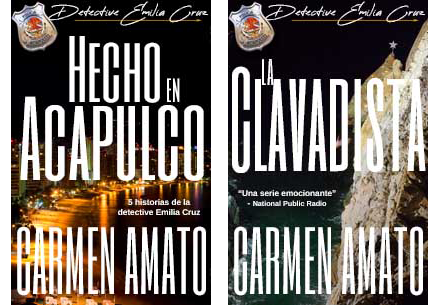
The first six books in the award-winning Detective Emilia Cruz police procedural series set in Acapulco are available as a box set for Kindle entitled DEATH IN ACAPULCO: Detective Emilia Cruz Books 1-6. This box set contains the complete first 6 novels: CLIFF DIVER, HAT DANCE, DIABLO NIGHTS, KING PESO, PACIFIC REAPER, and 43 MISSING, which was a finalist for the 2019 Silver Falchion Award for Best Procedural. The series is a two-time winner of the Poison Cup Award from CrimeMasters of America.

Find the box set on Amazon here: https://geni.us/EC-box1

In addition to the novels, the box set includes Bonus content: prequel story Acapulco Sugar, and Emilia’s Circle which contains a riddle for readers to solve.

Proclaimed “A thrilling series” by National Public Radio, Emilia Cruz is the first and only female detective on the Acapulco police force. The other detectives want to force her out and each lieutenant is worse than the one before. Meanwhile, Acapulco is the epicenter of the drug war. Mexican drug cartels battle for control and politicians are bought with blood money. Murder sets a new record every week. Add Emilia’s family secrets and her rocky relationship with hotel manager Kurt Rucker for heart-stopping tension.

For additional information, please contact Carmen Amato at carmen @ carmenamato.net.

Mystery Author Breaks Down THE 10X RULE at JaneFriedman.Com

Mystery Author Breaks Down THE 10X RULE at JaneFriedman.Com

May 21, 2020

Mystery author Carmen Amato breaks down the best-selling business book, THE 10X RULE by Grant Cardone, to show how it applies to a writing career.  Entitled “What Writers Have to Learn From the 10X Rule,” the article appeared as a guest post for Jane Friedman’s blog here: https://www.janefriedman.com/what-writers-have-to-learn-from-the-10x-rule/

10X Rule cover

Amato breaks down Cardone’s prescription for success and addresses where writers go wrong when it comes to goal setting and achievement, as well as how to build 10X goals for a successful writing career.

Blog host Jane Friedman has 20 years of experience in the publishing industry, with expertise in business strategy for authors and publishers. She’s the editor of The Hot Sheet, the essential industry newsletter for authors, and has previously worked for F+W Media and the Virginia Quarterly Review. In 2019, Jane was awarded Publishing Commentator of the Year by Digital Book World; her newsletter was awarded Media Outlet of the Year in 2020. Her expertise has been featured by sources such as NPR’s Morning Edition and All Things Considered, The Washington Post, the National Press Club, The Authors Guild, Nieman Journalism Lab, Publishers Weekly, GalleyCat, and PBS. (source: janefriendman.com)

NARCO NOIR, 8th in the Detective Emilia Cruz series

NARCO NOIR, 8th in the Detective Emilia Cruz series

16 May 2020

NARCO NOIR, the 8th installment in the Detective Emilia Cruz police procedural series set in Acapulco by Carmen Amato, is now available in ebook and paperback formats from Laurel & Croton.

A bitter past drives Acapulco’s first female police detective into a Hollywood film starring lies and murder when she goes undercover to catch a killer. As the camera rolls, Detective Emilia Cruz will face her toughest case yet.

Called, “A thrilling series” by National Public Radio, NARCO NOIR continues to pit Detective Emilia Cruz against troubling family drama as well as Acapulco’s spiraling cartel crime, but introduces a series twist that will put readers on the edge of their seats.

Cover art by Matt Chase.

Global link to Amazon editions: https://geni.us/narc

My Fijian romance and other Unforgettable Taxi Tales

My Fijian romance and other Unforgettable Taxi Tales

To get in the right mindset for NARCO NOIR, in which Detective Emilia Cruz goes undercover as a taxi driver to catch a killer, friends and I are sharing some outrageously memorable taxi rides.

Which of these are you happy to have missed?

Related: The True Story Behind NARCO NOIR

CARMEN’S POST-COUP FIJI TAXI ROMANCE

Carmen AmatoArriving in Fiji alone at 1:00 am after a 12-hour flight was unnerving but that’s the way the flights went so there I was, in the middle of the Pacific, with a heavy suitcase, an even heavier bag of scuba gear, and reservations for a hotel that was 20 miles away. I’d never been in Fiji before.

A nation of islands, Fiji was a former British colony. When the Brits found out that it was the ideal climate for sugar cane, Indian workers from the subcontinent were brought in the raise the crop. Sugar became Fiji’s main export, sweetening British candy and giving rise to local rum production as well. But land in Fiji–and accompanying political power–is reserved for native-born Fijians, disenfranchising the Indian population. The Indian population’s economic and political power grew with the population, until an Indian was elected prime minister. A coup by a native Fijian army officer was swift and bloodless. It returned the former native Fijian prime minister to an interim status but a second coup occurred when the army ringleader took power himself.

I arrived two weeks after the second coup, when the situation was still delicate.

I hauled my heavy bags outside the terminal and got directed into a taxi driven by a turbaned Indian gentleman. We headed off in the pitch-black Pacific night for Suva, the capital.

Half a mile down the road we encountered an army roadblock. A single Fijian soldier stood guard, wearing a military uniform shirt tucked into a traditional Fijian sulu, or kilt. He had an assault rifle, a flashlight, and a long wooden barrier.

Let me digress here and say that Fijian men are the most handsome men on earth. Apologies to my husband (whom I hadn’t yet met) but Fijian men are Pacific gods. All are about seven feet tall, muscular to the point of sculpture, and have wavy dark hair.

So back to the taxi. We stopped in front of the barrier.

The soldier, who stood about 6’8”, approached. The driver stared ahead, steering wheel locked in a death grip. He didn’t say a word but shook like he was caught in a high wind. Sweat poured down his face.

The situation seemed up to me. I rolled down my window, smiled shakily, and held out my American passport.

The soldier bent down to peer through the open window. Up close he was gorgeous; dark mustache, lose-yourself-in-them brown eyes, perfect teeth. “Hello,” he said, making it sound as if I was the woman he’d been waiting for all his life.

“Hello,” I replied, now confused as well as nervous.

He stepped away from the car and studied my passport in the beam of his flashlight. There were no streetlights, no other cars, the airport far behind, the empty road unspooling in front of us only to disappear into the darkness. The taxi driver continued to shake like soupy gelatin.

The soldier came back to the car and leaned down to look at me again through the window. He handed back the passport. “Goodbye,” he said, infusing his voice with Casablanca-like drama.

“Goodbye,” I said, matching his emotional tone.

He moved the barrier, the taxi driver gave a little sob, and we sped off, leaving Sargent Fiji by the side of the road.

Get NARCO NOIR on Amazon now >>> https://geni.us/narc


Khaled Talib’s English Lesson

Narco NoirWe were two, my cousin and I, sitting comfortably at the back of a taxi in Singapore, heading to Shenton Way, the business district. With a mild traffic and fair weather, we chatted away as the Chinese driver took us to our destination.

We didn’t suspect anything since the driver showed no signs of distress, and the ride was smooth. But as we neared our destination, his behaviour became erratic. In broken English, the driver blasted us for speaking proper English. My cousin and I stared at each other, mouth agape. What just happened?

In a jerky voice, the driver complained we didn’t have to rub it in that we spoke better English than him. We didn’t reply to the complex-ridden man and allowed him to ramble on. We assumed he had an unpleasant encounter earlier, possibly with another passenger, which may have hit a nerve.

At least we arrived at our destination in one piece, and obviously, someone badly needed a holiday.

Khaled Talib is the Singapore-based author of thrillers SMOKESCREEN, GUN KISS, and SPIRAL. Check out >>> The Big Thrill Interview with Khaled Talib


Jerry Last’s lesson in speaking the wrong language in the Netherlands

Narco NoirEarly in my scientific career I flew to Amsterdam in The Netherlands to present a paper at a major scientific meeting. This was going to be my first ever visit to Holland.

I took a taxi from the airport to my hotel downtown, a pretty long trip.  I gave the driver the address.  He nodded and off we went.  I asked if he could tell me what we were passing as we drove along.  He told me his English was too limited to do that, so we drove along in silence. I don’t speak Dutch.

I’d had a few classes in German in college and grad school, and the languages are pretty similar. I asked him in German if he could tell me the about what we were driving by. I knew some words, but I’m sure my accent was incredibly bad and my verbs were all in the present tenses, randomly sprinkled into my sentences.

My driver wasn’t happy.  He delivered a lecture in perfectly fluent English about his generation’s experiences in World War II requiring him to listen to more German than any respectable Dutch person would want to hear in a lifetime. He then explained to me how unwelcome my attempt to speak German to him was.

Like most people I’ve met in Holland he was basically a very friendly person, proud of his native country.  Once the floodgates of English speech had opened, he was downright chatty and a pretty good tour guide.

As we neared my hotel, he very sternly admonished me never again to experiment with speaking German to a Dutch person, all of whom, especially in the big cities, could be assumed to speak English as a second language.

Jerry Last is the author of the Roger and Suzanne mystery series. Check out ABRA CADAVER, from the series on Amazon: >>> https://amzn.to/3dg9zFU


Vee James on the art of racing in Naples

Vee James1995, Naples, Italy

My buddy and I had the most beautiful view, sitting out on our little Sorrento hotel balcony overlooking Naples Bay. Beyond the glittering city of Naples, Vesuvius loomed like the sleepy monster it is. The small disadvantage was that we had to take the short train ride around the bay to get to Naples proper and the one big item on our To Do list was to make it to the famous Naples Museum of Archeology. When the ruins of Pompeii and Herculaneum were discovered, Italy’s king financed tunneling operations in order to bring the rich spoils of the cities to him. Later, these treasures, retrieved for their monetary value but preserved for their historical significance, were ensconced in this brilliant museum.

We learned the museum sat high up on one of the many steep hills in Naples so, in order to save our already aching feet, we hailed a taxi. The swarthy driver nodded curtly. My broken Italian must have been good enough. My friend, a tall, lanky Texan, sat in front with the driver, and I, the more “compact” of us, sat in the rear. Just as we got the doors shut behind us, the taxi lurched from the curb, our driver answering the protesting horns with his own and dodging as many pedestrians as were dodging him.

No turn was taken at a responsible speed, no lane change was made without peril, no intersection crossed without the threat of oncoming traffic. Hurling up the narrow streets, we hung on tightly to the vinyl handles above our heads and hoped we would live to see the museum.

Just then, at the intersection in front of us, two motorcycles screeched to a halt, barring our taxi’s way. Each cycle had its rider and a passenger, both decked in the snappy blue uniform of the local police. The man on the back had a wooden hexagonal paddle, painted red with bright letters declaring something to the effect that cars should stop for them. Our driver waited just enough time before braking to scare both my friend and I and the policia, who gave him a stern frown and some choice words. A large police car flew through the intersection, accompanied by several more motorcycles, all with lights flashing and sirens wailing. The cycles nearest us sped off to join the others.

Our driver slammed down the gas pedal and we careened across the intersection in a wide, dangerous arc, falling in behind the police motorcade. With speeds reaching motorsport levels, we snaked up through the narrow canyons of buildings, deeper into the Naples neighborhoods.

The rider on the last police motorcycle saw us approaching and frantically began to wave his warning paddle. Our driver, with what can only be described as a demonic grin, rapidly closed the distance. The policeman went from red-faced anger to white-faced terror, waving his paddle like a flyswatter. Just as we got close enough to clip the man’s heels, our driver spun the wheel and took the next sharp left turn, leaving the motorcade behind.

A few minutes later, we exited the taxi on shaky legs, in front of our goal, the huge gray edifice of the museum. It was no surprise to see the taxi roar off down the hill, horn blaring and pedestrians scattering. We shook our heads as we climbed the stone steps.

“Crazy Napoli,” I murmured and looked up. The museum was closed.

Vee James is the humor fantasy author of the Neccabashar series and The Little Ship of Horrors. Find more about Vee James >>> https://veejames.com/


Jinx Schwartz on riding responsibly
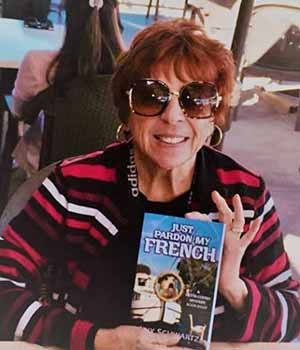
Jinx SchwartzSo, I got to a booksigning/bookfest in central Texas (the name of the town and fest shall remain untold in order to protect the guilty).

The smallish town had no Uber, and only one taxi service. I was at an RV park, and didn’t have a car, so I called for a ride.

Just for background, when I know when it is certain that I will have a couple. I do not drive…at least in towns with cops.

Like many Gringos in Mexico that rule goes down the tubes in places were there are: no pavement, no police, and no rules.

At any rate, I am slightly paranoid about driving anywhere in the US after imbibing, so I left my RV put, and walked to the gate to wait. And wait. And wait.

When I was about to give up, along comes a taxicab.

Since Uber is my ride of choice, I had forgotten what a crappy old taxi looked and smelled like.

My driver was very pleasant. Very. Downright chatty and jovial.

Five minutes into a ten minute ride, my driver lit up a joint, and called a friend. Did I mention he wasn’t wearing a seatbelt, was talking on the phone, taking sips from a suspicious-looking bottle and speeding?

As you can tell, I lived to tell the tale, but caught a ride back with a fellow writer.

Lesson learned? Never take a taxi when sober.

Jinx Schwartz is the author of the Hetta Coffey mystery series. Learn more about Jinx >>> https://www.bookbub.com/authors/jinx-schwartz


Reader Phillip Jones on camels, goats, and 6 hours he’ll never get back

From 1996-2000 I taught at the Royal Saudi Naval Academy. Living on a Saudi military base was austere to say the least, we lived in a BOQ, Bachelor Officer Quarters, served 3 meals daily in a mess hall, and expenses for living came to less than $10 monthly. Frequent vacations improved morale, 2 weeks at Hajj, 3 weeks at Ramadan, and usually 4-5 weeks during the summer.

The Saudi Navy frowned on late arrivals from vacations, pay was docked and it was always good to follow guidelines whenever possible. Vacations and plane flights were scheduled to return the evening before classes resumed, to eke every possible moment of pleasure out of the country.

I was returning from the United States and a colleague, Derek Whitefield, was on my same flight back to Riyadh, where we were to catch a smaller plane to fly from the capital to Dammam, next to our Navy Base. We landed in Riyadh, began to pass through security to grab our one hour flight to get back to base, unpack, and get some sleep before we resumed teaching, jetlagged for the next 7 days. Derek was ahead of me in the security line, and they found 5 or 6 bibles in his bags. One Bible was fine, for personal use, but the Saudis strictly prohibited proselytizing any religion but Islam. Since contraband Bibles were found, more security was called, and his bags were double and triple checked again and when I stepped up, my innocent bags were inspected minutely. By the time we got to the gate, plane doors were closed and we were denied boarding.

Dejected, we went to the Saudia Airline counter and checked on the next available flights. The next 3 flights out, both that evening and the next morning, were full and no bookings were possible. What to do? I suggested that we hire a taxi, split the cost, and make a 6 hour, 258 mile trip to get back to work on time. Derek agreed and we searched for a taxi driver willing to drive 6 hours to Dammam, then 6 hours back to Riyadh. We negotiated a price and loaded up in the winter darkness. I sat up front to monitor progress and Derek settled in the back and promptly went to sleep, not a care in the world. During the 6 hour drive through the Saudi desert, the driver kept his overhead light on and read Islamic prayers hanging from the rearview mirror. Since the driver’s attention was constantly distracted, I watched for stray camels, sheep and goats to warn the driver or take the wheel if necessary. We stopped only once or twice at roadblocks, and I would ask the soldier if he thought Saudi Navy instructors would smuggle opium. After peering at me with sleepy eyes, we would be waved on.

After 6 hours of leaning forward and peering into the darkness, we arrived safely on base. I woke Derek from his innocent slumber, and we headed to our rooms, class beginning in 3-4 hours. Derek never apologized for preventing my one hour flight or causing a harrowing 6 hour drive. A letter to Saudi Airlines brought me reimbursement for the entire taxi fare, which I did not share with Derek.

 

Narco Noir cover reveal

Don’t forget to grab Narco Noir on Amazon >>> https://geni.us/narc

In NARCO NOIR, Acapulco’s first female police detective drives into a Hollywood film starring lies and murder when she goes undercover to catch a killer. A bitter past, maddening clues, and her deepest fears all collide in the 8th book in the award-winning series.

As the camera rolls, Detective Emilia Cruz faces the ultimate decision.

“A thrilling series” — National Public Radio

You may also like

For Celine, With Love

For Celine, With Love

TRUE STORY

On 11 May 1968, when I was 8 years old, I made my First Communion at St. Paul’s Church in Rome NY. My first cousin Celine was next to me, wearing an identical outfit of starched white linen shift and a lace mantilla secured with a satin ribbon tied under the chin.

All the other girls wore “poofy” (Celine’s word) dresses with miniature bridal veils. We were both green with envy.

As heavy as iron, our homemade dresses had cotton lace sleeves so tight that neither of us could bend our elbows all the way. The mantilla kept sliding back on my head, causing the ribbon to cut off my air. Celine spent most of the ceremony pushing it back in place, basically keeping me from choking to death, at the cost of losing the circulation in her arm.

BFF FOR KEEPS

It wasn’t the first time we dressed alike. Born within a few months of each other (our mothers are sisters) we were each other’s first BFF in matching shorts and tops for years. My memories include the huge sandbox at the playground near our house, extended Italian family celebrations, and going to the movies for the first time. (We saw Oliver!)

I recall being very confused why she didn’t go to the same school for kindergarten. But weekends during our elementary years meant sleepovers. Celine was the oldest of 4 kids in a house that (unlike mine) allowed Saturday morning cartoons and Tiger Beat magazine. We loved HR Pufnstuf, the Monkees, making clothes for our Crissy and Tressy dolls, and swooning over British actor Jack Wilde and the stars of Alias Smith and Jones.

The summer after our First Communion, we took a batik class, along with her younger brother, at the local community center. My final project was a thing an 8-year old would make. Celine won a regional art award.

For reasons that escape me now, as neither of us had any proclivity toward medicine, we planned to become doctors and open a hospital called the Kelton Sisters Hospital. That funky name mashup still makes me smile.

She hated peas.

SCHOOL DAZE

We both attended the local Catholic high school in plaid skirts and white blouses. Celine was a swimmer, both racing and synchronized swimming with the grace and talent of a mermaid. Her high school jobs as camp counselor and lifeguard seemed very glamorous while I drudged in the local hospital’s kitchen.

College sent us in different directions again. Freshman weekend at her college was a surprising introduction to peppermint schnapps. She still holds the Morrisville College 1650-meter freestyle record. She and my mother drove to Virginia for my graduation from UVA but the best part was what happened at the Busch Gardens theme park afterwards. (Sorry, sworn to secrecy.)

Celine became a mechanical engineer and I became a CIA intelligence officer. Her career kept her in upstate NY while I was in Washington DC and overseas.

LOCKSTEP

But distance didn’t matter. The Kelton Sisters stayed in lockstep.

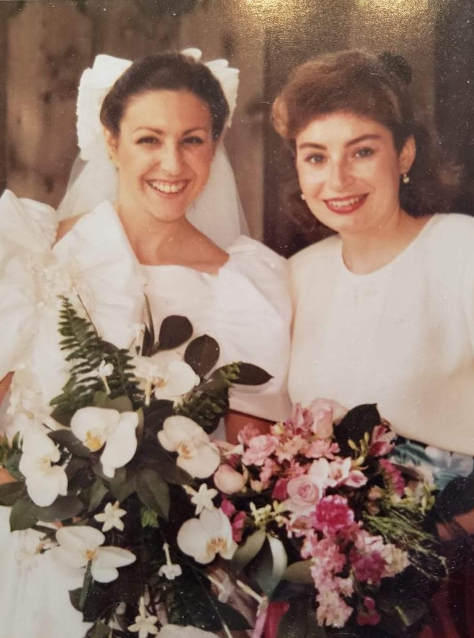
When I got married, Celine was my maid of honor. My attendants wore black taffeta skirts and white blouses. We honeymooned in Nova Scotia. When she got married the following year, I was her bridesmaid. Her attendants wore burgundy taffeta skirts and cream blouses. Celine and her husband honeymooned on Prince Edward Island.

Celine's wedding

With Celine at her wedding


Celine and I always had lots to talk about, no matter how much time elapsed between conversations. She didn’t have hidden agendas but was a happy, optimistic person juggling multiple roles: daughter, wife, mother, big sister, neighborhood coordinator, engineering professional. She was highly intelligent in a mathematical way I admired. Her mechanical abilities were considerable, from installing a garbage disposal to sewing her daughter’s fancy prom gowns. Celine loved birthday celebrations, making Christmas dinner, and her mother’s homemade baked ziti.

As a mom, her two talented and beautiful daughters were her pride and joy. Her husband Jim, an architect, was truly a life partner for more than 29 years. Jim went gray. Celine never got the chance.

HEART-NUMBING

She passed away on April 6, 2020 from leukemia, and we are all bereft. It wasn’t supposed to be like this. It seems like yesterday that I flew to NY so we could go to our high school reunion together–a fun girl’s night out. Last summer, Celine and Jim visited us and talked about retiring close by. They even toured a model home.

Since she passed, my writing deadlines have become insignificant. Mostly, I’ve found myself replaying our last few conversations.

Celine liked the choices she made in life. I never once heard her say she wanted things to be different. She was a remarkably happy person. Even in the hospital with leukemia destroying her blood’s ability to clot and family prevented from visiting due to coronavirus protocols, she joked and responded to my texts with humor.

So I console myself knowing that Celine lived the life she wanted to live. She had a complete life. She loved and was loved.

May we all be able to say that.

LOVE LIVES ON

By now, I expect that Celine will have inspected Heaven’s ductwork and told St. Peter that it is not up to code. After she fixes it, she’ll put new brake pads on his Pinto. (Celine had a red one. Drove around in the winter with cinder blocks in the back for traction. A story for another day.)

We are all posting photos of her, creating a family montage of love, grief, and acceptance. Although coronavirus keeps us physically apart for now, we still celebrate her life together.

Incidentally . . . Our daughters (her oldest, my youngest) were born within a few months of each other.

Both of them wore poofy dresses for their First Communion.


Celine

In my heart forever

You may also like

Mexico, Women, Femicide, Fiction

Mexico, Women, Femicide, Fiction

“Women and glass are always in danger.” – Mexican proverb

Imagine if Portland, Maine, or Greenville, South Carolina went missing, simply ebbing away like shadows in sunlight over the course of 14 years.

The official count of people missing in Mexico since 2006 is about 62,000, just under the population size of each of those cities.  https://www.foxnews.com/world/mexico-missing-people-mass-graves-drug-cartels

The real number of missing in Mexico is almost certainly double the official number. Real accounting is elusive and a political hot potato for Mexico City. More than 30,000 went missing in 2019 alone. More than 800 mass graves or “burial pits” have been found with thousands of unidentified bodies. https://remezcla.com/culture/mexico-missing-people-drug-war/

Missing Women

According to official statistics, women account for 25% of the total number of missing in Mexico. They are the nameless bodies discovered in mass graves in the state of Guerrero. They are the hundreds of women lost in Ciudad Juárez, across the Rio Grande from El Paso, Texas. Gone, as if they’d been plucked off the face of the earth by aliens.

They are the Lost Ones of my Detective Emilia Cruz police series. Prompted by her own losses, Emilia Cruz, the first female police detective in Acapulco, hunts for missing women. She keeps records in a binder she calls “Las Perdidas.

Can fiction help raise awareness? I think so. THE ARTIST/EL ARTISTA, a Detective Emilia Cruz novella won the 2019 Silver Falchion award for Short Story/Collection, the first bilingual work to do so. So many more people are now aware of what is happening because of this award.

The Artist

Related post: If you went missing, who would know?

Now let’s count femicides

The LA Times reported “In 2019, Mexico recorded 35,558 homicides, of which 3,825 were female victims. Officials classified 1,006 of those killings as femicides. Officials recently issued a statement signaling that femicides were up 137.5% since 2015.” https://www.latimes.com/world-nation/story/2020-03-06/mexico-femicide

Human Rights Watch, however, claims that “Many state and local authorities are unable or unwilling to recognize when gender played a factor in a murder, leading many femicides to be reported under the more widely recognized definition of homicide, which doesn’t identify gender as a motivating factor.”

In short, the number of women murdered because of gender is probably higher than 20% of all women killed.

mexico, women, femicide

Shoes have become the symbol of the missing in Mexico. Picture courtesy AFP/Getty Images as published by dailymail.co.uk.

Aren’t there laws against that sort of thing?

In 2012, Mexico added femicide to its penal code. In determining if the crime is femicide or murder, the law takes into account:

  • Emotional or close relationship between the victim and the suspect
  • Whether the victim was ever subject to threats, harassment or sexual violence
  • Did the victim suffer bodily harm or mutilation before or after being killed
  • If the victim’s body was put on display

Public servants found to delay or obstruct investigations into the killings are subject to three to eight years in prison.

See the full article: https://www.latimes.com/world-nation/story/2020-03-06/mexico-femicide

If found guilty of femicide, a killer could face up to 65 years in prison, after Mexico’s lower house of congress voted to up the penalty from 45 years. https://www.reuters.com/article/us-mexico-violence/mexican-lawmakers-toughen-penalties-for-femicide-abuse-of-minors-after-murders-idUSKBN20D0BZ

This is better than Nicaragua. When I lived there the penalty for femicide was as little as $15.00. I wrote about it here: The Mary/Mujer Paradox

Even 45 years is a big prison sentence. Why isn’t it working?

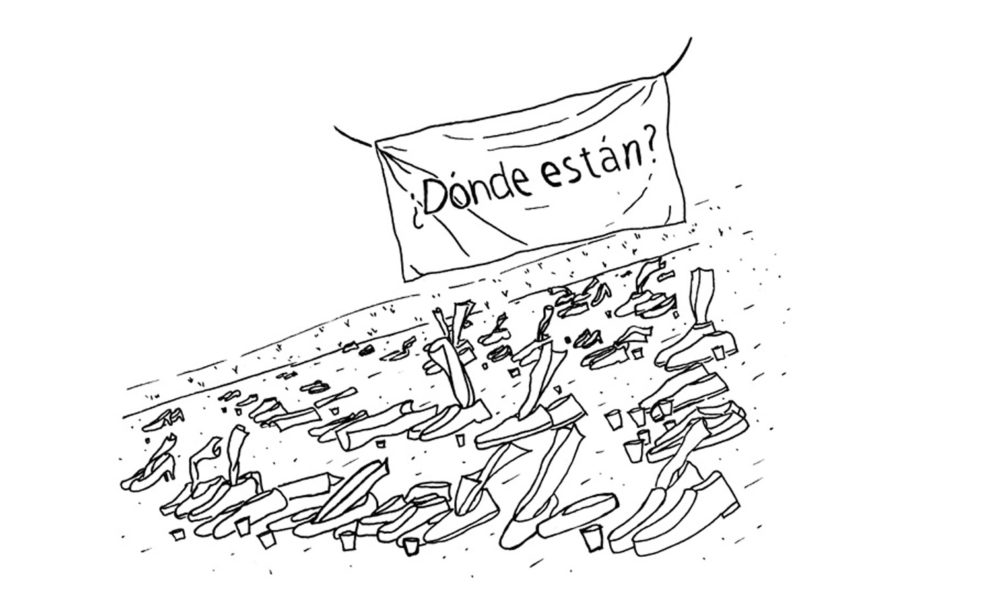
Illustration from The Artist

This illustration of shoes of the missing from THE ARTIST/EL ARTISTA asks “Where are they?”

Catch me if you can

Law enforcement in Mexico has a dismal record of catching criminals and putting them behind bars. Corruption is the major factor. There is so much drug money swimming through the system to pay people to look the other way–and the public is so afraid to assist corrupt cops–that few crimes are ever solved.

Corruption within law enforcement has led to entire police forces being disbanded and rebuilt. In fact, according to InSightCrime.org, “An average of 1,688 corruption cases were registered for every 1,000 active-duty police officers in Mexico in 2017, according to a survey conducted by the National Institute of Statistics and Geography (INEGI). That translates to 1.6 acts of corruption for every police officer.” https://www.insightcrime.org/news/brief/entire-police-forces-continue-arrested-mexico/

According to the UK’s Guardian news outlet, 10% of crimes against women are solved. https://www.theguardian.com/world/2020/mar/07/mexico-femicides-protest-women-strike

I think this is an optimistic figure, based on my experience as a CIA intelligence officer helping to fight the drug war. There are law enforcement officers in Mexico trying to “serve and protect” who were the inspiration for Detective Emilia Cruz, but pressure to “take and forget” is omnipresent.

The president, Andreas Lopez Obrador, hardly put an urgent spin on the matter in February when he complained that the femicide issue was distracting from his plans to raffle off the presidential airplane. P.S. In case you wanted to get in on that, the plane remains for sale.

She did not die in vain

The murder of Ingrid Escamilla in February was an unforgettable femicide that surely will become a rallying cry. After an argument, boyfriend Erick Francisco Robledo stabbed her to death, then attempted to cover up his crime by skinning her, removing her organs, and attempting to dispose of various body parts. But overcome with remorse, he confessed to his ex-wife.

Ingrid’s death was publicized by a tabloid newspaper, complete with pictures of her defiled body, with the headline “It was Cupid’s fault.” https://mexiconewsdaily.com/news/maximum-penalty-to-be-sought-for-boyfriend/

I believe that Ingrid Escamilla did not die in vain. Her murder and several others around the same time have helped light a fire that led to demonstrations in February and a “strike” on 9 March to protest violence and the apathy that enables it. https://www.americasquarterly.org/content/why-mexicos-women-are-going-strike-march-9

Detective Emilia Cruz will be there in spirit.

To support the strike and encourage awareness, THE ARTIST/EL ARTISTA will be free for Kindle 9-13 March: https://geni.us/the-artist-el-artista

mexico, women, femicide

You may also like

mexico, women, femicide

NARCO NOIR, 8th in the Detective Emilia Cruz series

Countdown to NARCO NOIR

NARCO NOIR, Detective Emilia Cruz Book 8 will be released on 16 April!

Emilia goes undercover as a taxi driver to catch a killer, but a dangerous detour takes her to a movie set and the choice that will change her life forever.

Cover reveal

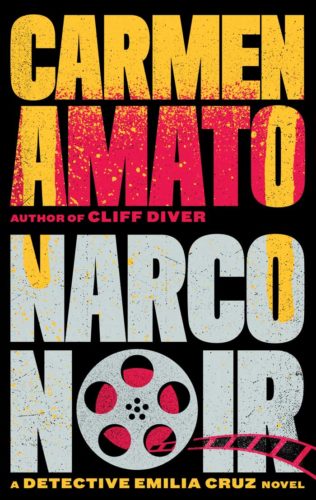
Once again, artist Matt Chase has created a bold and dramatic cover.

Narco Noir

A film reel stands in for the letter “O” in NOIR. The black background represents the darkness of the narco thriller genre. I love that the inside of the reel is blood red . . . for good reason.

Death of a taxi driver

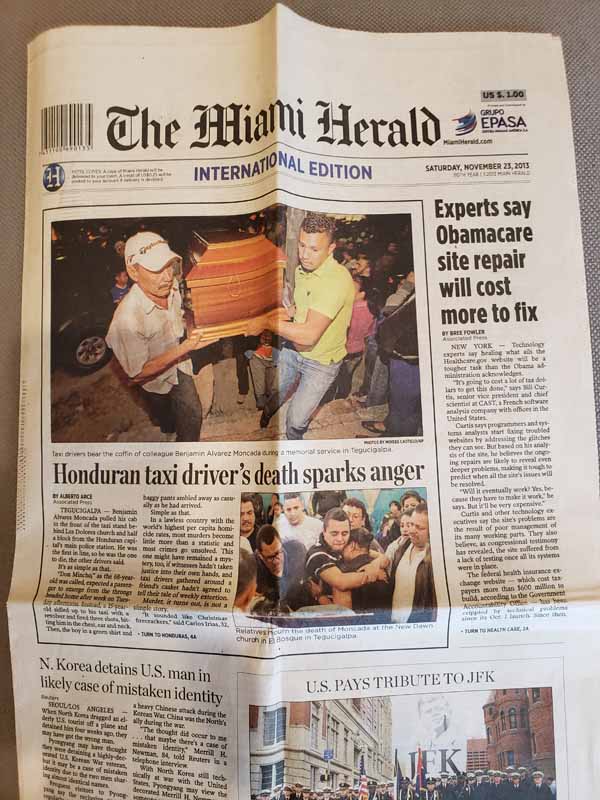
NARCO NOIR is based on the front page story of the 23 November 2013 international edition of The Miami Herald. Honduran taxi driver Benjamin Alvarez Moncada, affectionately known as “Don Mincho,” was murdered in the capital of Tegucigalpa.

Don Mincho was shot by a 15-year-old gang member as he sat in his taxi waiting for the after-Mass crowd. The killer fired 3 shots and then “ambled away as casually as he had arrived.”

The killer represented a gang extorting money from the taxi drivers. Each of the drivers paid about 25% of their weekly income to the gang. When the gang demanded a huge increase the drivers refused. The gang then delivered a message.

“[Don Mincho] pulled his taxi to the front of the taxi stand behind Los Dolores church . . . He was the first in line, so he was the first to die . . . They killed Don Mincho because he was first in line. It was nothing against him.”

Taxi driver murder in Honduras

I saved the newspaper in my tickler file. Seven years later, with the crime transplanted to Acapulco, Don Mincho’s story is retold in NARCO NOIR.

Thank you, Sean Penn

The movie-themed plot twist in NARCO NOIR was inspired by actor Sean Penn’s 2016 meeting with Joachim “El Chapo” Guzmán Loera, head of the Sinaloa cartel, as published in Rolling Stone magazine. El Chapo, now languishing in prison in the US, was Mexico’s most famous criminal fugitive at the time of his meeting with Penn. He’d already escaped from Mexican prison twice and “pioneered the use of tunnels to transport his products and to evade capture.” Penn was assisted in connecting with the fugitive El Chapo by Mexican actress Kate del Castillo, who famously played the title role in the La Reina del Sur television series. https://www.rollingstone.com/politics/politics-news/el-chapo-speaks-40784/

The article sparked online gossip that El Chapo wanted to make a biopic of his life, with Penn as the star.

Colombian druglord Pablo Escobar similarly wanted to have a movie made of his life, with a screenplay written by his on-again-off-again lover Virginia Vallejo, who wrote about their relationship in LOVING PABLO, HATING ESCOBAR.

A biopic about the fugitive head of a drug cartel?

That’s a plot element I couldn’t resist.

2 Plots, 1 Enemy

How does NARCO NOIR accommodate 2 very different plot lines?

The random murder of a taxi driver. A druglord who wants someone to make a movie of his life.

Well, it all starts on the day Emilia’s worst enemy gets into her taxi . . .

It was him.

He had short hair, not the dramatic curtain sweeping his shoulders that Emilia remembered. Instead of the loose cotton pants that left little to the imagination, with the tattoo of a black-robed Santa Muerte on display across his naked chest, he was still muscular under a finely tailored suit with a shirt open at the throat.

Emilia could barely breathe. He was playing the role of a prosperous businessman, no longer strutting across a makeshift stage in the middle of nowhere, no longer exhorting worshipers into a frenzy of prayer to Santa Muerte as his cohorts picked out women in the audience for his sex trafficking operation.

Need to Catch up?

43 MIssing

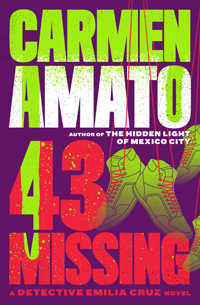
Meet a certain head of a drug cartel in 43 MISSING: Detective Emilia Cruz Book 6: https://geni.us/43-missing

Russian Mojito cover

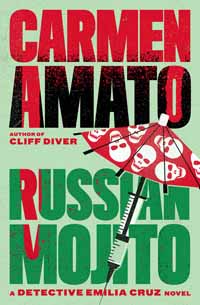
Is he obsessed with Emilia? Find out in RUSSIAN MOJITO: Detective Emilia Cruz Book 7: https://geni.us/russian-mojito

You may also like

Author to Author with Bruce Robert Coffin

Author to Author with Bruce Robert Coffin

I met fellow police procedural author Bruce Coffin at the 2019 Killer Nashville conference, where we both won Silver Falchion awards, and have become an avid fan of his John Byron series. His new book WITHIN PLAIN SIGHT comes out this week. Bruce took a minute to swing by and take us inside the series.

  1. Carmen Amato: Bruce, thanks so much for stopping by the blog. Your Detective John Byron mystery series, set in Portland, Maine, is drawn from your own experiences. Tell us a little about your background.

Bruce Robert Coffin: Many thanks for the invitation, Carmen! You are correct. In writing this series I rely on my past experiences as a police officer. I spent 28 years working for the Portland Police Department in Maine, retiring in 2012 as the detective sergeant in charge of the violent crime unit. Like most police officers, I spent the early years of my career in uniform patrolling a beat. Later, when I discovered my love of investigations, I transitioned to detective and finally detective sergeant. Although my novels are purely fictional, I draw heavily upon personal experience and the experiences of my fellow officers to bring realism to the page.

  1. CA: Your books are populated with a great cast of multi-dimensional characters. Where do you look for inspiration when creating characters?

BRC: Thanks so much. When creating the supporting cast of characters I sought to surround Byron with detectives who were as diverse and interesting as those with whom I once worked. Some of the characters, like Diane Joyner, Mike Nugent, and Melissa Stevens, were fleshed out using traits and quirks prevalent among my former coworkers. Others like Dustin Tran and and Davis Billingslea are largely products of my imagination.

No matter how thorough the detective, none function in a vacuum. Likewise, Byron must rely on the skills and tenacity of his fellow detectives to solve each mystery.

  1. CA: John Byron’s rocky personal life is a theme running through your books. If you were his wingman, how would you introduce him in a bar?

BRC: I wouldn’t! I’d tell any prospective love interest to run as quickly as possible. No, not really. Byron isn’t that bad, but he does have issues. In creating John I sought to paint a realistic picture of a homicide detective for the reader. One of the things I think most people are unaware of is just how much commitment is required to do the job properly. Murder investigations are all consuming, placing your spouse and children on the back burner, second to the needs of the case, is a necessity. The victim of every homicide, and by extension their surviving families, deserve the very best out of every detective working the case. Giving anything less means the detective probably isn’t the right person for the job. As you might imagine, most spouses and family members aren’t comfortable with such an arrangement. This inevitably alienates families and often leads to divorce.

Within Plain Sight

  1. CA: Portland, Maine, is not the first location that comes to mind when I think “mystery.” How do you use setting to create and build suspense?

BRC: Initially I considered creating a fictional town in which to set my series. But then I thought, why waste my thirty years of research into every nook and cranny of the port city? I think locale is every bit as important as the characters, and it should serve to support the stories being told. John Byron, who grew up on Munjoy Hill in Portland, is now responsible for solving the city’s worst crimes. Portland plays as large a role in these stories as Byron does.

  1. CA: You can invite any author, living or dead, to dinner at your home. What are you serving and what will the conversation be about?

BRC: There are so many authors with whom I’d love to chat, but if I can only pick one I’d pick James Lee Burke. James is one of my favorite mystery authors and, despite my extensive travel, I’ve yet to meet him. I can’t get enough of his Dave Robicheaux novels. And if I’m going to host Robicheaux’s creator then I guess I’ll be serving Cajun cuisine. What will we talk about? Writing, of course.

  1. CA: Can you leave us with a quote, a place, or a concept from a book that inspired you?

BRC: I’ll leave you with the epigraph I used on the third Byron novel, Beyond the Truth. In my opinion, this quote epitomizes the mystery novel:

Man is not what he thinks he is, he is what he hides. — André Malraux

Thank you!

More about Bruce: Bruce Robert Coffin is a retired detective sergeant turned bestselling novelist. He is the author of the award-winning Detective Byron mystery series from HarperCollins. His latest novel, Within Plain Sight, the fourth installment in the Byron series, is slated for a February 4, 2020 release. Visit www.brucerobertcoffin.com to learn more.

Bruce Robert Coffin

You may also like

Book review: Denise Mina’s Still Midnight

Book review: Denise Mina’s Still Midnight

STILL MIDNIGHT by Denise Mina is the first book in the Alex Morrow detective series set in Glasgow and it’s a stunner. It’s a superb mix of Ian Rankin’s seedy Scotland from the John Rebus novels, Tana French’s angry female protagonist from THE TRESPASSER, and powerful points of view from Peter May’s THE BLACKHOUSE set in the Hebrides.

Related post: Book Review: THE BLACKHOUSE

Alexandra Morrow is a senior police detective in Glasgow; good at her job and excellent at making enemies. She doesn’t want to go home; she only wants to work. She doesn’t care if no one likes her. She already doesn’t like them. Her roughshod attitude means that a colleague gets the plum assignment; she doesn’t much care about that, either.

Despite the attitude, we like Alex and know she’s a good detective. In fact, she and Acapulco detective Emilia Cruz could be soul sisters.

Alex investigates a home invasion. Two masked men confront a middle-class immigrant family, wound the youngest daughter, and kidnap the father, demanding a huge ransom from “Bob.” When talking to the police, family members variously say the kidnappers asked for Rob or Robbie. Turns out the younger son, who just graduated from university, once ran with a gang and his street name was Bob.

The name is just one of several subtle clues that twist and turn throughout the investigation and ultimately break open the case.

In addition to Morrow’s point of view, the criminals get their turn in the sun. They aren’t playing cat and mouse with the cops so much as following a shaky plan and adjusting on the fly when their personal dramas threaten to unravel everything. The leader is prone to drinking and making mistakes. His sidekick is smarter, with useful family ties.

A simple corner store owner in a low-to-middle class section of the city, the kidnapping victim’s voice adds drama. As he is manhandled by the kidnappers, he mentally relives his harrowing childhood escape from Idi Amin’s Uganda. His mother’s actions allowed them to escape but forever estrange mother and son.

What makes STILL MIDNIGHT so engrossing is that there is a reason for everything. No misfit dangles; even red herrings seamlessly fit into the story.

Glasgow’s gray roughness is on full display. Gangs, poverty, slang, discrimination. There’s no pretense. This is true Glasgow in the way that Rebus shoves Edinburgh at us.

Bottom line—STILL MIDNIGHT is extremely well constructed, alive with action and real dialogue. Even Alex Morrow’s anger has a reason and it’s a killer.

Highly recommended.

Get it on Amazon

You may also like

This is Day One

This is Day One

Day One is a digital marketing agency. “This is Day One” is written in neon letters on the wall of their New York City office. I love the double entendre. This is Day One is both a “we’re here” announcement and a creative mantra.

Day One implies a fresh start. A new horizon. No baggage. Clean slate. Opportunity. Beginnings.

Today is Day One.

2020 is Day One.

Priorities & Microgoals

In 2019, I focused on the theme of Simplify. I ignored the shiny-object-syndrome activities that in 2018 cost me far too much time and money. The result was an easier-to-navigate website, continued growth in newsletter subscribers, and publication of RUSSIAN MOJITO and FELIZ NAVIDAD FROM ACAPULCO.

Related post: Open Letter to 2019

With 2019’s framework in place, 2020 will be about priorities: wellness, creativity, family, and community. My writing productivity depends on the energy I get from all those priorities being in balance.

My approach uses microgoals. Small, easy-to-accomplish steps.

For example, when it comes to wellness, I never want to be one of those people who falls and can’t get up. Here’s what I’m doing about it:

Wellness > flexibility & strength > 60 squats a day

I’ve actually been doing 3 sets of 20 squats every day for about 6 weeks. 20 as the coffee perks, 20 during a break from standing at my desk, 20 as the dogs gobble their dinner, etc. I can already tell the difference.

Stretch goals

Microgoals are on the minimal end of the goal spectrum. Easy.

Stretch goals are on the max end. Hard.

A stretch goal is a challenge. A mountain to climb. The thing that requires multiple microgoals to accomplish.

Video is my 2020 stretch goal. YouTube is a great discoverability engine for creative types. Professional video content can be an effective way to reach mystery readers. But poor quality video can work against an author, too.

Related post: Things in the Mirror are Closer Than They Appear

I’d love to hire the Day One agency to make dynamite book trailers and social media videos. BUT  A) Undoubtedly  too expensive, and B) I want to learn new digital skills.

Is this Type A behavior? (“It has to look perfect! I need to do this myself!”) Probably.

But if I break it down into microgoals, video is less scary:

Creativity > Video book trailers > Buy Adobe Premiere
Creativity > Video book trailers > Watch all Adobe Premiere tutorials
Creativity > Video book trailers > Make test videos until satisfied with quality

Your turn

2020 is full of possibilities. 365 opportunities to get after it. 

Start with these questions:

  • Where do you want to be this time next year?
  • What tangible accomplishment is a priority?
  • What microgoals will form the first steps?

This is Day One.

day one

You may also like

Things in the Mirror are Closer than they Appear

Things in the Mirror are Closer than they Appear

It was a first and I’m still recovering.

I live in a fairly friendly town. So when there was a shoutout for women who work from home to meet for coffee, I went. About 20 gals showed up, none of whom I knew. As we were introducing ourselves, one of them said. “I’ve read your books. I had no idea you lived here.”

Well, you could have knocked me down with a feather, as the saying goes. Some time ago, she discovered the Detective Emilia Cruz books through a BookBub deal for a free book. Read the free book and bought two more.

It was a vote of much-needed confidence.

Far and near

I worried when we moved to the US heartland that I was far from my sources of inspiration. Would I lose touch with Mexico and the culture that so inspired me to write the Detective Emilia Cruz series and thriller THE HIDDEN LIGHT OF MEXICO CITY? I had been immersed in the colors, food, the language, the religious traditions that formed the calendar of life in Mexico City. I’m far from Acapulco, palm trees, and cliff divers.

But on the other hand, there’s no escaping drug cartel crime. Mexico’s homicide rates are going up in lockstep (see https://www.washingtonpost.com/world/the_americas/death-toll-put-at-20-for-mexico-cartel-attack-near-us-border/2019/12/01/edd68fd2-149c-11ea-80d6-d0ca7007273f_story.html) with the US death rate from drug use. (see https://www.drugabuse.gov/related-topics/trends-statistics/overdose-death-rates). In my own corner of the world, the opioid crisis is painfully in evidence.

Related: Welcome to the Opioid Crisis

The Mexican cartels are inside the US. The biggest jefe is known as El Mencho. He’s got a 10 million dollar price on his head. CBS news has a great video report on his organization’s presence: https://www.cbsnews.com/news/el-mencho-mexican-cartel-boss-behind-one-third-of-drugs-in-the-us-2019-09-26/, even mentioning that he was behind the shooting down of a Mexican government helicopter, which I referenced in 43 MISSING, Detective Emilia Cruz Book 6. (FYI: Free for Kindle Unlimited right now)

Rolling Stone warned us about El Mencho two years ago, calling him “Mexico’s next generation narco.” https://www.rollingstone.com/culture/culture-features/the-brutal-rise-of-el-mencho-196980/

Mirror, mirror

Facebook keeps me in touch with friends in Mexico but there are surprising sources of inspiration here at home.

Bittersweet

in the mirror

This vine called bittersweet wraps around trees here. A strangling parasite or a plant that sustains and supports the tree? It seems to me to be the essential question as I write the relationship between Emilia Cruz and her mother, the ever child-like Sophia.

Virgin

in the mirrorMy small Catholic church has a statue of the Virgin of Guadalupe in a niche to the left of the main altar. When I saw that, my Mexico memories felt tangible again. Not as far away as they were a moment ago.

Validation via work boot

in the mirror

We don’t hear Spanish spoken here very often, but my husband fell into conversation with two native speakers while buying work boots. The men were surprised to hear a tall gringo speak fluent Spanish.

Both were from the Mexican state of Guerrero. Near Acapulco, one added, assuming my husband wouldn’t know where that was.

My husband said that he was very familiar with Mexico. In fact, his wife wrote books about a female police detective in Acapulco.

He got some hard stares. “There are no female police detectives in Acapulco,” the other man said.

Some things never change.

You may also like

in the mirror

Sisters in Crime Webinar with Carmen Amato Goes Inside the CIA for Authors

Sisters in Crime Webinar with Carmen Amato Goes Inside the CIA for Authors

November 19, 2019

Mystery author and 30 year veteran of the Central Intelligence Agency, Carmen Amato walked mystery and thriller authors through the federal intelligence agency in a webinar for Sisters in Crime. Entitled “Inside the CIA for Mystery and Thriller Authors,” the webinar looked at the history of the agency, common misconceptions, intelligence terminology, and highlights of intelligence operations, followed by a question and answer period.

CIA seal

Amato shared a virtual walk-though of the CIA Headquarters building, using content published on the agency’s voluminous website and showed attendees how to best mine the site for the expertise and details so that their fiction rings true.

CIA website

Cia.gov


Carmen receiving CIM, 2016

Author with Career Intelligence Medal on the Great Seal, shortly before Christmas 2016


Founded by Sara Paretsky, Sisters in Crime is an organization that has 3,600 members in 48 countries worldwide, offering networking, advice and support to mystery authors. Members are authors, readers, publishers, agents, booksellers and librarians bound by their affection for the mystery genre and their support of women who write mysteries.For more see www.sistersincrime.org

Pin It on Pinterest