Land of the Unexpected

Land of the Unexpected

Once upon a time, I took a trip with a similarly adventurous-minded girlfriend to Papua New Guinea, which bills itself as "The Land of the Unexpected."  I doubt it has changed much since then; it is a wild, mountainous place where the wheel was never invented.

Civilization burst upon Papua New Guinea as World War II rocked the South Pacific. Geographically, it is part of the Solomon Islands chain (think Guadalcanal) and WWII turned the deep waters around it a graveyard for American and Japanese ships and planes.

In the capital of Port Moresby, we tasted crocodile in the hotel restaurant, did a little shopping for tortoise shell bracelets and a breastplate-sized kina shell to be worn as a necklace, and bought beer glasses at the South Pacific Lager brewery (I actually prefered the Fiji Bitters beer I'd had in that country, but that's another story.)

We also learned about the wartime Coastwatchers, the group of valiant locals that watched Japanese ships and planes and reported back to the Allies.

Into the Wild

From Port Moresby we headed to the Highlands in a puddle jumper plane and found ourselves in Goroka, a settlement carved out of the wilderness that occasionally shivers from volcanic aftershocks. It's home to the now sadly commercialized Goroka mudmen tribe and some of the strongest, most flavorful coffee in the world.

Goroka was victim to a terrifying social cycle. About 10pm every night drunken customers spilled out of the pool halls and bars and proceeded to rampage through the streets destroying whatever got in their way. Each morning everyone put the town back together again.

Overall, the country had a rape statistic of 1 in 4 women being the victim of sexual assault, a situation that was probably underreported. We were stuck in a motel which had long given up concerns about security. In all of the rooms that the manager offered, either the door or the window locked but never both.

We blocked the door with the dresser and stayed up nights watching a grainy cable station from Australia and listening to the commotion outside.  We were prepared to fight and fight hard if our room was invaded. Luckily, it never came to that.

Where a souvenir is all about you

Despite the nightly rampages, we got out and about and presently found ourselves with a translator at a local market.  There were wonderful wooden carvings for sale, fanciful animals and platters and bowls and puzzles. There were baskets coiled into shapes both practical and fantastic.

We were charmed.

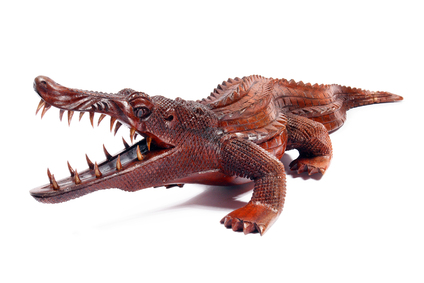
An array of wooden crocodiles and seahorses caught my eye. Pointing to the largest croc, I asked how much it was. The translator queried the woodworker, a grizzled older man chewing betel nut which had painted the inside of his mouth bright red. He wore shorts and a dark shirt with the sleeves cut off and his dusty bare feet were  the size and shape of a large dinner plate.  He replied to the translator who then turned to me. "He wants to know if you'll pay the first, second or third price."

"What?"

"You pay the first price, the highest, if you're a Big Man," the translator explained. A Big Man was someone of Importance in the tribe, a person who paid a price commensurate with the respect that was to be accorded them. The lesser second price was paid by those who either weren't quite a Big Man in terms of respect or didn't have a Big Man's means. The third price, the lowest amount of money, was paid by those who were of no account. 

Basically, it was a system of paying in accordance with how important you were rather than how valuable the item was.

Pay your own price

True confession . . . I paid the second price.

I wasn't in a Big Man category. But I didn't consider myself to be a nobody, either. A therapist might have a field day with this, but I walked away feeling like I'd acquitted myself well enough.

The crocodile I bought that day is still around, as is a tall seahorse and the kina shell I never turned into a necklace.

And oddly enough, I think that Highlands adventure taught me quite a bit about geo-politics and current events.

MY BACKSTORY— I learned a few things about danger, deception and resilience during a 30-year career with the CIA focusing on counterdrug efforts and technical collection. Now a mystery author, those lessons play out on the page, especially in the Detective Emilia Cruz mystery series set in Acapulco. Starting with Cliff Diver, the series is a back-to-back winner of the Poison Cup Award for Outstanding Series from CrimeMasters of America. I’ve also written historical and political thrillers, essays about the craft of crime fiction, and live with a very large white dog named Bear.

You may also like

land of the unexpected

At the End of the Line

At the End of the Line

Let's set the scene

Luz filled out a form to cash the check at a mahogany counter then went to the end of the line.

            It moved very slowly and grew very long. Luz had ample time to look around. The bank was an elegant place of glass and darkly veined marble where people had hushed conversations. The business being transacted was too venerable for a normal tone of voice.

            Luz was only about eight customers away from the teller windows when a man wearing a beautifully tailored dark suit walked into the bank. In the midst of the rough looking laborers, he stood out, tall and good looking.

            He consulted his jeweled Rolex and eased into the line directly in front of Luz. No one he passed reacted at all. The security guards on either side of the line appeared not to notice.

            Luz stared at the finely stitched wool in front of her. Maybe it was the boldness of knowing Eddo or the check that said she was a real artist or the fear that Marisol would punish her for taking such a long time, but she tapped him on the shoulder.  “Excuse me,” she said. “The end of the line is back there.”

            The soft murmur of banking conversations abruptly ceased.

            The man turned around. He was younger than Luz, maybe in his early twenties. He looked her up and down, taking in the gray uniform, old sweater, short socks, scuffed shoes, high cheekbones, and flat hair tucked behind her ears. Luz tried not to wilt.

           “What the fuck?” he said and sniffed as if she smelled bad. Then he turned around and walked ahead of the next three people in line. They all stepped to the side to let him pass.

end of the line

Write what you know

Unfortunately this fictional scene from The Hidden Light of Mexico City is based on a real event.  Like Luz, I was in a big bank in Mexico City.  As I stood in line and watched the well-dressed young man cut in, I actually gasped at his rudeness.

No one else reacted. The laborers, maids, and others whose work attire betrayed their social class just numbly accepted that he should be ahead of them and avoid their long wait. I spent the next few minutes alternately fuming at the lack of reaction and convincing myself that this wasn't my fight.

But the gasp had attracted attention. My check was invalidated by the teller.

My revenge was to capture what had happened in a novel.

I met alot of people like that rude young man in Mexico City.  They enjoyed the heritage of old money and were accustomed--and wedded to--to the priviledges of the ruling class and the subservience of those on the social scale far below.  The latter, in turn, appeared resigned to their status and to the economic limbo it implied.

Noticed

Happily, I'm not the only one who has noticed and stronger voices than mine are talking about inequality in Latin America and its impact on development.  The RAND website offers a great recap of a talk given last month by UN Assistant Secretary General and Regional Director for Latin America and the Caribbean at the UNDP Heraldo Muňoz based on the UNDP's recent report "Acting on the Future: Breaking the Intergenerational Cycle of Inequality."

According to Muñoz, “features of inequality have been an inheritance for hundreds of years. Inequality is very significant, very profound, very persistent, and very difficult to break. Inequality in income, education, and health pass from one generation to another.”

Although Latin America is not the world’s poorest region, it is the most unequal one, said Muñoz. It has 10 of the 15 most unequal countries in the world, when measured by household per-capita income. “Latin America is 65 percent more unequal than high-income countries, 36 percent more unequal than East Asia, and 18 percent more unequal than even the average for sub-Saharan Africa.”

The solutions aren't easy and they won't be fast.  But the dialogue has started.

You may also like

end of the line

Celebrate Greek Culture Now More Than Ever

Celebrate Greek Culture Now More Than Ever

Greece has overspent itself to the brink of destruction and angry citizens are showing their contempt for further austerity measures by firebombing downtown Athens.  Talk continues of defaults and the downfall of a country and the entire eurozone as well.

But even if the country's national institutions wobble, Greek culture will survive the current unpleasantness in Athens. Here are some reasons why:

1.  The Mediterranean Diet   The heart-healthy Greek menu emphasizes fish, olive oil, fresh fruits and vegetables and a splash of wine for good measure.  According to the Mayo Clinic "most if not all major scientific organizations encourage healthy adults to adapt a style of eating like that of the Mediterranean diet for prevention of major chronic diseases." Read the full article about the benefits of eating Greek here.

2.  Kiosks   There's a tiny outdoor convenience store every few blocks in Athens where you can buy snacks,  newspapers, bus tickets, an emergency bottle of olive oil, etc.  The kids can be sent down the street with a few euros to buy an ice cream bar and Dad can stop for a small bottle of whiskey to soothe a bad day at the office.  Friends can meet for a quick chat, read the headlines and get a sports drink when the heat roasts marble buildings to a sparkling white and all the fresh oranges and eggplants you bought at the neighborhood laiki open air market start getting heavy on the walk home.  Maybe now isn't the time to open that designer dress shop in Kolonaki but the kiosks will still be a central part of life this time next year, too.

3.  The lemonade at the base of the Acropolis   You came to see the famous Parthenon, step in Socrates's footsteps at the Pnyx, imagine the chariot races and salute Hadrian's arch.  But how did democracy thrive in this heat! The antidote is the amazingly crisp, fresh lemonade sold at the ordinary-looking concession stand at the base of the Acropolis. Buy one--at whatever today's cost--after your trek up to the Parthenon. And be careful on the way down. There aren't safety rails and Greece probably doesn't have the money to install them now.

4.  Storytellers  Writing and storytelling are quintessential aspects of Greek culture. This proud heritage is being carried on by the Aegean Arts Circle. Writer, sculptor and all-around Renaissance woman Amalia Melis runs the Circle which hosts an annual writer's workshop series on the island of Andros.  Workshops are led by notable authors who help both experienced and novice writers polish fiction manuscripts. This summer's workshop will be led by Pulitzer Prize winner Robert Olen Butler whose ". . . workshop will focus on the fundamentals of the creative process for any fiction writers, beginning or advanced, who aspire to create enduring literature."

5.  The Greek alphabet   Fraternities, sororities, astronomers, interior designers, and the electronics industry (Coming Soon! The beta version!) are among the notables who all embrace the timeless quality of the Greek alphabet.

6.  This. Is. Sparta.  Okay, okay. Yes, it's an internet meme and King Leonidas kept slipping in an accent that suggested he'd been thrown out of his fair share of pubs, but Hollywood loves Greek history. Think Troy.  Alexander the Great.  Beautiful scenery, low budget costumes and pre-written plots.  And then there is the fabulously genuine Nia Vardarlos who singlehandedly brought Greek traditions of family, food, and loud arguments to the silver screen.  And made us laugh.

7.  Ohi Day  There is a Greek resilience best illustrated by a unique holiday which celebrates the day in 1940 that Greek Prime Minister Metaxas refused to allow Axis forces to enter Greek territory and occupy certain unspecified "strategic locations." The ultimatum was delivered by the Italian ambassador on behalf of Germany and urban legend has it that Metaxas answered with just the word "ohi," or "no" in Greek. The Axis forces invaded shortly thereafter. Forced to the brink of starvation, Greece barely survived the rest of World War II and its chaotic political aftermath, best captured in My Brother Michael by Leon Uris.

So tonight, I'm celebrating with My Life In Ruins, and some feta and olives. I'll watch the news tomorrow.

You may also like

A Walk in Her Shoes

A Walk in Her Shoes

I recently was on a plane heading from Central America to the United States. I had the aisle seat. Next to me, in the middle seat, was a middle-aged woman who was obviously new to airline travel.  The flight attendant rapped out directions how to buckle the seatbelt and stow carryons and continued to the next row. The woman looked panicked and I helped her get situated. We introduced ourselves. She was Maria from Colombia, this was only the second flight she’d never been on, and she only spoke Spanish.

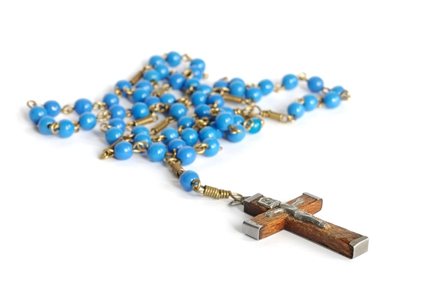
A smooth takeoff turned into one of the bumpiest flights I’d ever been on. Maria and I held onto our complimentary dinners and said reassuring things to each other. We noted that each wore a small cross.

As we approached the US, the flight attendant handed out immigration forms. Maria stared at it blankly. I asked if she had the address of where she was going in the United States. She took out a well-worn address book, pressed it into my hand and asked me to fill out her form.

Maria was starting a whole new life in Tennessee with her niece’s family. She asked me if the winters there were cold; she wasn’t sure she could live in a cold place.

When her form was completed I explained as best as I could the immigration process and how she’d need to collect her suitcase before going through customs and finding her connecting flight to Tennessee. She kept nodding but I’d never had to describe such a process in Spanish and couldn't seem to find the right words. But once in Houston I went into the line for US Citizens and pointed her toward the line for Visitors. Last seen, she was waiting patiently for her turn to show her passport to the uniformed official.

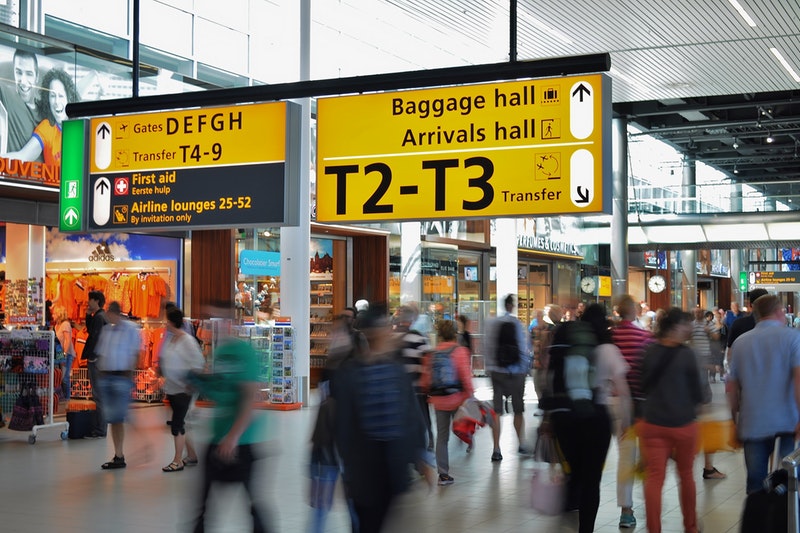
I wondered if I’d see her at the baggage carousel but the place was awash with people. The giant tote board showed nearly 40 arriving international flights. I’d just found the correct carousel for my flight when another woman, also about Maria’s age, addressed me in German.

I don’t speak German, just a few tourist bits from my travels like bier and weiner. But it was clear she didn’t understand how to get her luggage. The airport didn’t seem to have enough signs and few were in other languages besides English. And this was in the international arrivals area. I steered her back to the tote board and started reading off the city names. When I said Hamburg she nodded vigorously.

Baggage from the Hamburg flight was slated for carousel two. I held up two fingers and pointed the way. She saw the giant number hanging over the carousel and said “Thank you” in English. We laughed when I replied “Danke.” She gave me a hug and then went to get her bags.

I met up with her again in the Customs line. Through a series of gestures and a mix of languages I learned that her name was Marta and she was going to visit her daughter in Minnesota who was a teacher. When we parted at her gate I wished I knew how to say “good luck” in German.

As I waited for my own connecting flight, I mulled over my newfound role as a traveller’s aid society. A day in Maria and Marta’s shoes had been hard, full of incomprehensible directions and unfamiliar environments. I wondered how they would look back on their first experience of the big unruly culture of the US. They’d kept smiling and trying and hoping, because there was nothing else to be done, but underneath there had been fear of the unknown.

Every experience with a new culture is like that and putting on their shoes for a day was a good reminder. The world is smaller now than ever, and more connected, but it still takes courage to explore it.

Besos, Carmen

You may also like

walk in her shoes

Pin It on Pinterest