Reshaping the Acapulco Skyline

Reshaping the Acapulco Skyline

Acapulco has alot to offer: beautiful beaches, water sports, cliff divers, iconic skyscrapers, swimming with the dolphins. Get off the beaten path and you can add gun violence, murder, cops, and drug seizures. All that’s missing is a skycraper that looks like a corkscrew.

Ahem. Let me clarify.

In DIABLO NIGHTS, the third Emilia Cruz novel, Acapulco itself is as mch of a character as Emilia, her partner Franco Silvio, or her lover, Kurt Rucker. The action moves from Kurt’s hotel on Punta Diamante on the city’s far eastern edge, to the cruise ship docks near the old fort of Fuerte San Diego on the west side of the bay. Connecting those two sides of the horse-shaped bay is the wide boulevard named Costera Miguel Aleman. La Costera borders the ocean and is the major artery pumping cars, locals, and tourists around the waterfront.

DIABLO NIGHTS Reshaping the Acapulco skyline

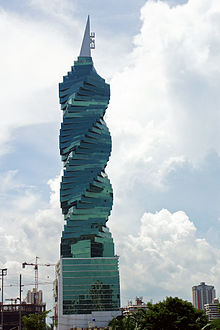
The F&F Tower, downtown Panama City, Panama

All of the picture postcard shots of Acapulco’s downtown area show this road and the tall white skyscrapers that soar along it. In DIABLO NIGHTS, there is one more skyscraper, the fictional Torre Metropolitano. It’s a work in progress and the construction is pivotal.

  “The site of the half-built Torre Metropolitano loomed ahead as the road curved into the eastern side of the bay. When finished, the tower would be another one of Acapulco’s iconic skyscrapers rising from azure ocean, defiant and modern against a backdrop of iron mountains. Its innovative spiral design had been hotly debated in the news last year. Some said it would become Acapulco’s most famous landmark, others argued that the design was inherently unstable. But a consortium of investors had pushed it through.

The building would be 25 stories when done and about half had been erected. Steel and glass cladding rose into the sky, topped by a mammoth yellow crane. The whole structure was partially hidden by temporary construction barriers of corrugated steel. A picture of the Building’s final state was repeated on the barriers, as if miniature Torre Metropolitanos were strolling down the street, interrupted by the royal palms along the avenue.” — DIABLO NIGHTS

Related post: Blame it on Panama

The Torre Metropolitano is modeled after the F&F Tower in Panama City, one of the coolest–and scariest–buildings I’ve ever seen. Why this particular building? Well, you’ll have to read DIABLO NIGHTS to find out!

The Kindle version is out now, with paperback release in August. Happy reading, but if you are afraid of heights, well, don’t say you weren’t warned.

You may also like

Acapulco skyline

DIABLO NIGHTS Cover Reveal and Kindle Release

DIABLO NIGHTS Cover Reveal and Kindle Release

The third installment of the Emilia Cruz mystery series, featuring the first and only female police detective in Acapulco, is out on Kindle!  The paperback version will be available in August.

And finally–the Cover Reveal! The final cover, shown here, is a slight variation of the winning cover which was one of four offered in a reader poll three weeks ago.

DIABLO NIGHTS is more of a psychological thriller than the previous two Emilia Cruz mysteries, CLIFF DIVER and HAT DANCE. Emilia’s is pulling threads and following leads and reacting to the news she gets at every turn. The emotional toll on her is high, but it leads to a new understanding of the resources available to her.

Here’s the Amazon description.

A religious relic lures Emilia Cruz, Acapulco’s first and only female police detective, into a labyrinth of drug cartel smuggling and revenge killings in DIABLO NIGHTS, the third novel in the explosive Emilia Cruz Mexico mystery series.

The relic, from Mexico’s Cristero War, also surfaces a long-hidden personal secret that Emilia cannot share with the man in her life, hotel manager Kurt Rucker.

The relic’s authenticity is in doubt, however, as Emilia and her partner, senior detective Franco Silvio, find a murder victim aboard a cruise ship. The victim’s pockets are lined with Ora Ciega, a rare heroin strain from Colombia that promises more drug war violence for Acapulco’s already bloody streets.

The Ora Ciega trail leads Emilia to a second body; that of Yolanda Lata, the mother of a girl for whom Emilia has been searching; as well as to a dead Customs official who had valuable information about the cruise ship murder. When stalkers shadow Emilia, the only conclusion is that she’s getting close to the Ora Ciega smugglers. Meanwhile, she’s assigned to train a rookie detective with friends in high places.

The destinies of Ora Ciega, the religious relic, the rookie, and the missing girl merge into a fateful trip into the hills above Mexico’s Costa Chica coast south of Acapulco. In a lonely place where vigilante groups have replaced civil authority and the crash of surf competes with gunshots, Emilia will face the biggest challenge of her police detective career. But it’s nothing compared to the shocking climax waiting for her back in Acapulco.

THANK YOU

I’ve gotten so many emails asking when the next Emilia Cruz novel was coming out adn can finally say “Here it is!” Thank you to all the readers who have enjoyed the series so far. I appreciate all the mail and the generous Amazon reviews, too!

2016 Update

Like the rest of the Detective Emilia Cruz series, DIABLO NIGHTS got a redo this year with a new cover and new description, which you can see here. The 4th novel in the series, KING PESO, was released in August and the television and film rights were sold. Emilia could be coming to a screen near you!

Again, thank you for reading and staying connected!

You may also like

cover reveal

The Lure of the Open Notebook

The Lure of the Open Notebook

open notebook

You may also like

Maybe it’s a sickness.

Yesterday, as I was cleaning out my den (also known as the writer’s cave, Mom’s office, and a total mess) I found a COMPLETELY VIRGIN hardcover spiral notebook from Agatha Ruiz de la Prada. The rush of excitement was intense.

Paper Snob

I love the notebooks from Agatha Ruiz de la Prada, a Spanish designer whose paper products I first found in Greece. The notebooks have bright colors and the pages have color coded edges. But the important thing is that both front and back are hard laminated cardboard, which makes it very easy to scribble notes.

But why was I so excited?

Because a blank Agatha is an open invitation to write another book.

notebook mystery series 001

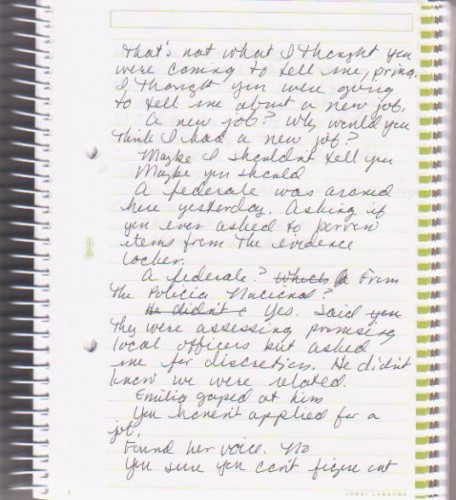
A scribbled scene from DIABLO NIGHTS between Emilia and her cousin Alvaro, since deleted from the final manuscript

The rush of ideas

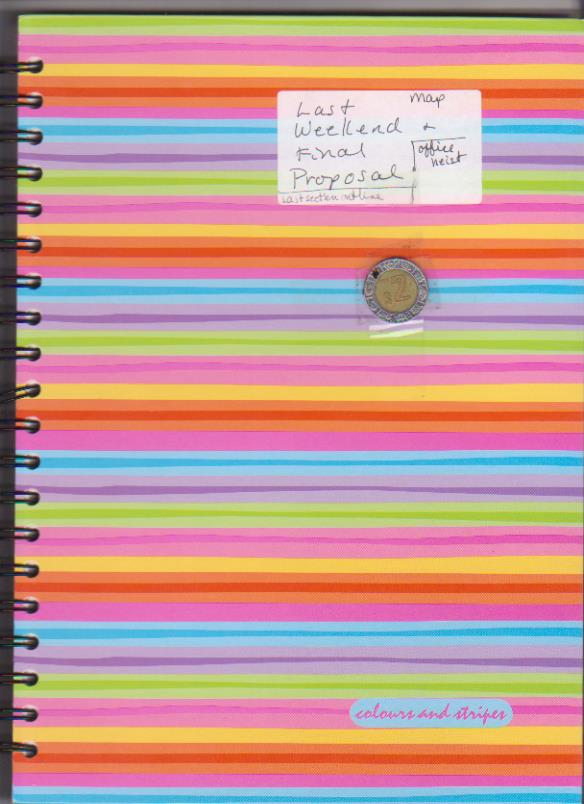
I write many scenes, as well as my outline, longhand. At least one notebook is dedicated to every book. When I wrote THE HIDDEN LIGHT OF MEXICO CITY I used a dozen before the manuscript was completed, labeling them and taping peso coins to the covers for good luck. Don’t ask me why.

So I stood there, in the den/office/cave/mess clutching my Agatha, knowing that I suddenly had the tool needed to start the next book, even before DIABLO NIGHTS, the 3rd Emilia Cruz novel set in Acapulco, was out the door. When I finished DIABLO NIGHTS several weeks ago, I felt wrung out. To some extent it had been hard going.

The latest Emilia Cruz mystery deals with some heavy issues–religion and martyrdom, drug smuggling, Mexico’s vigilante problem, and being honest to your significant other. Emilia contends with the first 3 but suffers from the last.

Notebook Carmen AmatoMy reaction caught me by surprise. It said “I’m ready.”

Yes, the next book will be the 4th Emilia Cruz mystery. Several scenarios are already circling around, each biting at my imagination like a shark.

First things first

A few things need to happen before that new notebook gets used, however. DIABLO NIGHTS, the 3rd Emilia Cruz mystery novel, will be hitting the shelves soon–my subscribers will be the first to know the exact release date, so sign up if you haven’t yet.

Second, I’d better clean the den. Gotta find a pen.

Book Review: Homicide Chart by V.S. Kemanis

The second Dana Hargrove legal thriller is a well paced, polished, and highly enjoyable read. I liked the first Dana Hargrove book, THURSDAY’S LIST, but Kemanis has hit her stride with HOMICIDE CHART.

Related post: Book Review: Thursday’s List by V.S. Kemanis

Dana is still with the New York District Attorney’s office, but time has moved forward by several years and she’s now married to Evan, a private sector attorney. They have a toddler, Travis. The couple lives in Manhattan and employs a Dutch au pair, Annecke. With two busy careers, the couple depends on the girl, but they don’t know the heavy secret she carries.

Neither does the reader at first and Kemanis meters out the suspense in compelling fashion. There are three major plot elements all going on at the same time—Dana’s criminal murder case involving a notorious street gang, Evan’s defamation case for a looney romance author, and Annecke’s increasingly disturbing behavior. Points of view move between characters as the action takes us from courtroom to boardroom to the nanny’s woes. Each time the narration switches, the reader is left hungry for more from that plot element, making for great reading all the way through.

Each of the three threads is absorbing in its own right, and incorporates a different legal issue. I wondered if they would converge in a climax, or if one would eventually take center stage. The pieces fall into place (no spoilers!) in a highly satisfying way and justice is served in each instance.

HOMICIDE CHART is highly recommended, especially if you like the legal thriller genre.

If You Went Missing, Who Would Know?

If You Went Missing, Who Would Know?

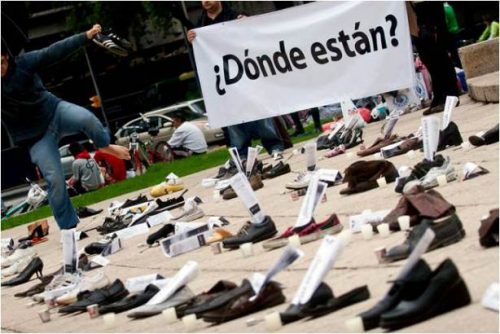
Donde estan? The question amid all the shoes in the picture is Where are they? This is the cry of those who search for and mourn the missing who are the casualties of Mexico’s drug war.

But calculating just how many are missing is a bureaucratic–and political–war of its own. The Emilia Cruz mystery series captures it in fiction. But it’s a fact.

missing in Mexico shoes of the lost

The numbers game

Many reports claim that as many as 80,000 people have gone missing over the last 10 years in Mexico, victims of drug cartel violence and corrupt officials. In 2012, CNN reported, in an article subtitled “Bodies for Billions” that just since 2007, 48,000 people had died dead and another 5,000 were missing, even while admitting that it was hard to be firm on the numbers as mass graves kept being found.

BBC reported in October 2012 that “According to figures released earlier this year by Mexico’s National Human Rights Commission, 16,000 bodies remain unidentified and a total of 24,000 people are missing.”

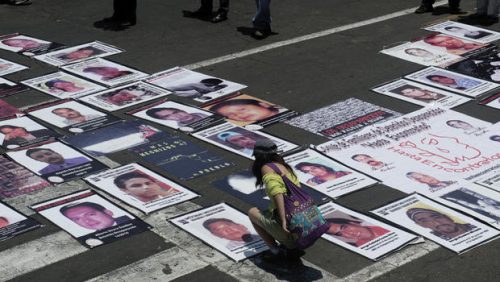
If you were missing: Posters of the missing. Picture courtesy of CBS news.

Posters of the missing. Picture courtesy of CBS news.

In early 2013, CBS news reported that shortly after President Pena Nieto moved into Los Pinos, a new list was created with data from local prosecutors across Mexico, including information about people reported missing for any reason during the previous administration. The new list proclaimed that slightly over 26,000 people were missing. The controversial list didn’t include information collected after November 2012.

Most recently, AP and ABC News reported that “Mexico has recalculated the number of people who have gone missing since the start of the country’s drug war in 2006, saying a total of 8,000 are unaccounted for.” Wow, what a big change. If the government spokesperson is to be believed, 14,700 of the missing from the previous administration have been found alive and about 750 have been confirmed dead. The big discrepancy between this year and last is that “people who had filed missing persons reports didn’t update them when their relative re-appeared.”

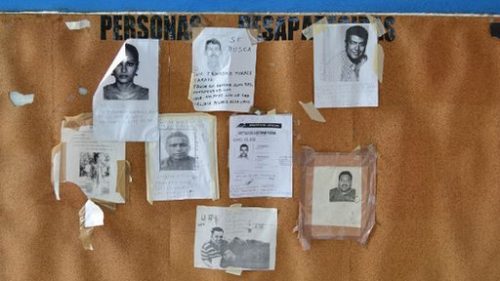
If you went missing: Pictures of missing outside a mortuary in Acapulco. Picture courtesy of BBC.

Pictures of missing outside a mortuary in Acapulco. Picture courtesy of BBC.

Las Perdidas

In the Emilia Cruz series, the issue of those missing in Mexico is kept alive in Emilia’s binder of women who have gone missing in the Acapulco area. It’s a small way of shedding light on the issue.

In the mystery series, Emilia’s log of the missing is a binder of information on the missing women she calls Las Perdidas. (The Lost Ones) There are more than 40 names in the binder and one name represents all of them: Lila Jimenez Lata. Lila is a teen who ran away from home. Her trail will alternate between hot and cold throughout the series as Emilia hunts for her.

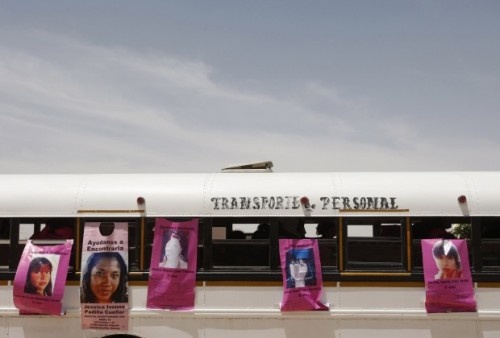
If you went missing: Pictures of the missing on the side of a bus. Picture courtesy of Reuters.

Pictures of the missing on the side of a bus. Picture courtesy of Reuters.

Who else is looking

Last year I wrote about a new agency created to look for the missing  by Mexico’s Attorney General.  The weight of the issue called for some action–in 40 percent of the disappearance cases tracked by Amnesty International, Mexican law enforcement officials failed to open a criminal inquiry, according to Amnesty International. 

But the private sector is bringing the most attention to the plight of the missing. Rallies, posters, press attention, websites–these are the tools available to grieving families. Will websites such as http://missingfrommexico.com/ help? With enough attention and participation, anything is possible.

If you went missing: tortilla wrapper

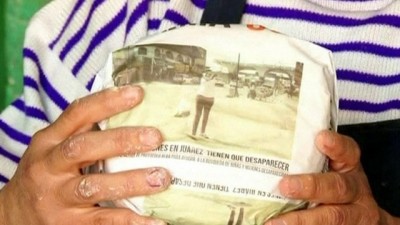
Tortilla wrapper featuring image of missing persons. Picture courtesy of BBC News bbc.co.uk

In other news

2019 Update: The first picture in this blog post inspired the story “The Artist” which has been released as the dual language English and Spanish volume THE ARTIST/EL ARTISTA, edited by Karen Leclair-Ayestas and available on Amazon.. 

if you went missing

You may also like

if you went missing

Writing for Water Update: Hooked a Minnow in May

Writing for Water Update: Hooked a Minnow in May

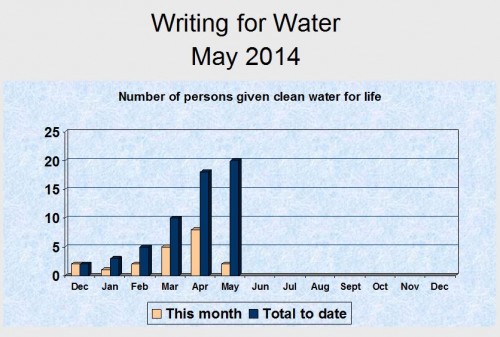
Throughout 2014, I’m donating $1 for every Kindle book I sell to Water.org. Every time someone buys one of my books, they help bring clean water to communities worldwide. Some terrific author friends have helped along the way. Every month I tally up how many more people have been given clean water for life by this effort.

April was a fantastic month for donations to Water.org, based on book sales. Jerry Last, author of the Roger and Suzanne mystery series helped and we really put a dent in the goal of helping 25 people get clean water in 2014.

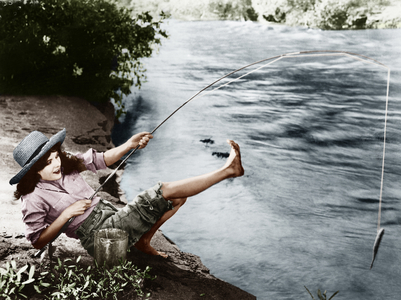
The minnow

But in May I was on my own, too busy trying to wrap up DIABLO NIGHTS, the next Emilia Cruz mystery and the Bookstores of the Future project, to promote existing books.

As a result, monthly Kindle sales weren’t extravagant, which translated into a less extravagant monthly donation to Water.org. Although I know I’ll meet the goal of 25 long before December, in all honesty, May was a big letdown.

Writing for water May update chartSend help

So I’ll say it up front–if you’re an author who thinks that clean water is critical and you want your books to have a global impact, come help. I’ll help promote your books in exchange for your contribution to Water.org. Read more here.

On the bright side, when the last joint fundraiser ended, the nice folks at Water.org sent me an email asking if I wanted the gift of a cool Water.org bottle. Of course I said yes.

In other news

Carmen Amato short story PDF version downloadThere are two Emilia Cruz stories currently available free at free-ebooks.net.

  • THE ANGLER is based on the 2007 unsolved murder of Fr. Richard Junius, my former pastor at Saint Patrick’s Catholic Church in Mexico City.
  • THE CLIFF is the original Emilia Cruz story, written for a critique group. CLIFF DIVER grew out of that short story.

Both have been downloaded over 120 times in less than 2 weeks. Find them both here: http://www.free-ebooks.net/search/Carmen+Amato

Many readers voted on a poll for their favorite cover for DIABLO NIGHTS. The big review of the Reader’s Choice cover will be on 26 June to email subscribers. If you aren’t on The List, you won’t be the first to know.

Fix that appalling situation by signing up below, getting your free copy of THE BEAST, and instantly being smarter and more entertaining. LOL. No, really.


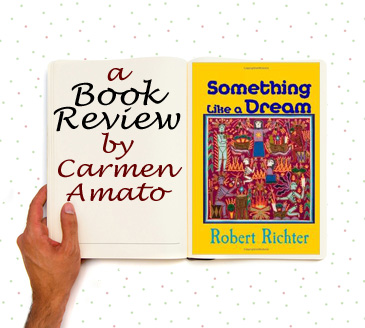
Book Review: Something like A Dream by Robert Richter

Book Review: Something like A Dream by Robert Richter

SOMETHING LIKE A DREAM by Robert Richter is an unusual novel that crosses genres between international mystery and politically oriented literary fiction.

It’s the 1980s in Puerto Vallarta, Mexico, but the shadow of the 60’s and 70’s still hovers over Cotton Waters, a liberal campus bomb-thrower from Colorado who fled to Mexico just one step ahead of US law enforcement. For the past 10 years he’s survived as a beach bum and “fixer” for unwary gringos visiting Mexico. He’s built a network of Mexican friends, ensuring a colorful cast of authentic characters from small kids who run errands, to a local herbal healer who lives in the jungle near Waters’s lonely beach cabin.

Waters is drawn into the struggle for the wealth of a Colorado-based foundation, whose director Bryant Springfield disappeared in Mexico on a quest to find a rare medicinal plant. Springfield’s wife hires Waters, based on his college reputation, to find her husband. Armed with two postcards with clues, Waters–whose nickname “Algo” is a riff on two words: the Spanish word for cotton, algodón, and algo, the Spanish word for something—Waters soon runs afoul of an array of enemies including Springfield’s father, a nosy reporter, corrupt federales, and a band of Huichol Indians who oppose outside influences. At the same time, Springfield’s wife and Waters are increasingly drawn to each other as they survive any number of efforts to keep them from finding the foundation director.

In the book, Puerto Vallarta is hardly the Love Boat stop from the beloved TV show, but is teeming with cheap beer, cantina hucksters, and layers of corruption. The plot is thick with double-crossing menace, allusions to liberal causes of the past (Tom Hayden, SDS, etc.) and smoky peyote-induced dreams and ceremonies. The story also moves beyond the beach, to the rural and dangerous Mexican hinterland, where Waters and friends take to burros to investigate secrets of the Huichol and rumors that Springfield is practicing the dark arts as a shaman.

The whole book is narrated by Waters, with a richly poetic and professorial “voice” somewhat at variance with the character’s persona. This voice, with its fulsome descriptions, heavy use of adjectives and adverbs, and dense phrasing, creates a pace that forces the reader to slow down and savor the imagery. The action scenes, however, would have benefited from fewer descriptive terms, more shorter sentences could have provided visual relief, and Waters’s peyote-fueled dreams were wrapped in page-long paragraphs that didn’t measurably advance the plot. The text contained many Spanish words and references to Mexican locations, which could be confusing to those without background knowledge.

These book review nits aside, Richter immerses the reader into the rarely seen wilds of Mexico. With less liberal baggage, Waters would be an interesting character to build a mystery series around. I’d be interested in seeing more from this author, if only to see what Mexican cultural issue he tackles next and if the prose lightens enough to gain traction with the mystery genre audience.


Be an Influencer

Write book reviews that matter with the 5 Sentence Book Review Cheatsheet

book review

Get the downloadable PDF Book Review Cheatsheet, complete with simple outline, instructions, and an example to follow.

Learn the basics of fast, influential reviews

Setting

Characters

Style

Rating

You’ll also be subscribed to the monthly Mystery Ahead newsletter, with author interviews, mystery reviews, and writing tips delivered fresh to your inbox every month.

book review

© 2017 Carmen Amato.

Hello

I’m author Carmen Amato. I write romantic thrillers and the Detective Emilia Cruz mystery series set in Acapulco. Expect risk, power, corruption. And relationships with heat.  More

Essentials

Shop for Books on Amazon

Subscribe to Mystery Ahead

Get the Detective Emilia Cruz Starter Library

Books

Blog

About

Contact


Bookstores of the Future: A Case Study of Retail Creativity

Bookstores of the Future: A Case Study of Retail Creativity

bookstores of the future

You may also like

Are bookstores facing a “survival of the fittest” era? If so, what can make a bookstore “fit?”

In the case study letter below, the key is creativity and willing to do something wholly different.

Last week I wrapped up my Bookstores of the Future project, in which I asked 800+ people to give me their thoughts on how bookstores could survive and prosper in the era of ebooks and ecommerce. Dick McLeester had responded to me as a store owner but I did not use his comment because I could not tell if his was an online or bricks-and-mortar store and the series was about the latter.

Bookseller as retail innovator

When I let him know, Dick responded with this insightful letter, which he agreed to let me post here. For anyone thinking of going into the book business, Dick’s views are a must-read. Dick doesn’t yet have a blog to share his experiences, but you can check out his website: www.changingworld.com to see how he combines online and pop-up sales, as well as the line of products he sells to augment book sales.

Carmen,

Thanks for writing. Your articles were interesting.

I realize that people call them “brick & mortar” stores to distinguish them from online booksellers, but I think there is a danger in that term, which is to define the Successful Bookseller of the Future just too narrowly.

In 1976, I launched a bookstore called Food For Thought Books with a total investment of $25.00. I was the founder and co-manager there for 10 years, before leaving to start my current business. (You can check, Food For Thought Books is in Amherst, Massachusetts, now a proud brick & mortar bookstore. But struggling to find their way to a  successful future. And probably because they are struggling to find their way, they would probably not be able to speak with much clarity to your questions.)

I was able to start Food For Thought with little capital because of a strong vision of the possibilities and because we were able to bring  books to people who were hungry for them. For the first two years we paid no rent or salary, and grew very fast. We became experts at  setting up instant bookstores at event, conferences, festivals and meetings. We did this in a way that very few booksellers today know how to do, because they start with a retail shop where they need to pay rent and get people to come there.

When I left Food For Thought to start VisionWorks, it was because I had a larger vision of what was needed for booksellers to be successful into the future. I realized that today, ideas and information are carried not just in books, but often on other vehicles, such as postcards, bumperstickers, calendars, magnets or buttons. In most bookstores these are seen as valuable sidelines or gift items, but someone who runs a shop usually cannot devote much energy to having a really good selection because it is such alot of  work to order from all these little companies, including overseas suppliers. So VisionWorks is set up as a wholesale distributor, making it easy for any retailer (bookseller or otherwise) to get a great selection from hundreds of suppliers by placing one order. For us, we sell way more cards, stickers and calendars than we do books.  But books are still really important to us, and we sell large quantities of some books.

How? We sell at select Conferences, where we bring the books to people who are looking for certain ideas & information. 4 events per  year. We get huge book sales in a short time. We sell more books retail at those events than we do in our brick & mortar store. More than we sell wholesale. More than we sell online. At these events,  it is primarily books that sell, and the cards, stickers and calendars are an important, high-margin sideline. But it is really the Cards, Stickers & Calendars that we sell wholesale to retailers across the country that keeps us in business, that makes it all work. And now we also publish postcards, so we have a hand in making sure our selection is really educational, informative and connected to the ideas in books we offer.

My point is that anyone who wants to have a successful bookstore into the future, needs to be flexible and creative. They need to look at whatever will work for them, and then work that angle, even if it looks very different than how a traditional bookstore has looked. If this means taking the books to the events where hungry minds gather, they need to get really good at that. If they think that cards and stickers are something that can really work for them, they need to really work it, to be the best. And if that means those things become  75% off their sales and books only 20%, then go with that. What used  to be thought of as a sideline, may become the main thing. But we  need to pay attention to that.

I think there will always be an important role for good booksellers, but right now they need to be creative, flexible and willing to take risks, to think differently. That’s my perspective. One day soon, I  think I need to get working on a blog and put some of this out that way. I am especially curious to see how others will respond, esp.  those who are running some of the more traditional bookshops, indie shops, brick & mortar.

Thanks for starting the conversations. Best, Dick “I am a bookseller, really” McLeester 

VisionWorks website:  www.changingworld.com

Thank you, Dick, for agreeing to share your views and showing us that book retailers who think outside the cover will succeed!

Read all of the Bookstores of the Future posts in the #noticed category

Book Review: The Dogs of Rome by Conor Fitzgerald

Book Review: The Dogs of Rome by Conor Fitzgerald

THE DOGS OF ROME is an unusual mystery, in that it has a narrow cast of characters, there’s no climax, and the main character is not involved in the ultimate denouement. Does it work? I’ll let you know. As soon as I decide.

The main character, Alec Blume, is an American who grew up in Seattle and moved to Rome with his art historian parents as a teen. When they were killed he stayed where he was. He still lives in the same apartment but has since become a detective. Most of his time is taken up by navigating Italian law enforcement’s machinations, wooing an American from the US Embassy, and talking turkey with local mobsters.

Related post: Book Review: The Golden Egg by Donna Leon

The book started strong, with a startling murder and the odd behavior of the killer as he roams his victim’s apartment. Despite an immediate rivalry between various law enforcement agencies in Rome over the murder jurisdiction, Blume zeros in on the victim’s connection to illegal dog fighting and identifies potential killers. Shortly thereafter, the point of view leaves  Alex and skips between characters, including the killer. Much of the book is a series of conversations probing motivations, Alec’s family background, and the murder’s connection to the mob. These conversations circle around, because they almost always involve the same 4-5 characters.

Related post: The Unsung Influence of Mystery Author Leighton Gage

Admittedly, these characters are well drawn, the author does a good job of imbuing each one with their own “voice,” and the plot was solid and interesting, but the emphasis on conversations was less than arresting (pun intended.) The construction kept the book from showing the main character’s muscle to good advantage. Plus, some of the conversations were repetitive. There were also a few continuity errors, including a early disconnect when the soon-to-be murder victim worries about his mistress being seen through a window and then in the next paragraph he observes that no one can see in the window because of the trees. Which is it? Italian words were used and helped to build mood and atmosphere but were not italicized. This caused confusion. For example, Alec’s love interest is the FBI legal attache at the US Embassy and is referred to as a “legale.” I didn’t know if that was supposed to be legale in Italian or an attempt at  legatt, which is the US diplomatic abbreviation of legal attache. Or maybe it’s a British-ism.

At the end, while the plot’s puzzle pieces all came together in a fulfilling way, Blume contributed virtually nothing to the outcome. This certainly runs counter to the usual mystery/police procedural formula and felt a bit like a cheat.

Would I read another in the Alec Blume series? Yes, mostly for the sights of Rome and interesting characters. But I would hope to see a few changes in style and construction.

Love reading reviews but worried that writing them is hard? Unleash your power as a reviewer with my simple cheatsheet for writing a Review that Matters.


dogs of rome

Bookstores of the Future: 5 Lessons About Survival of the Fittest

Bookstores of the Future: 5 Lessons About Survival of the Fittest

Will bookstores survive? Must they innovate in order to stay relevant and solvent in the era of ebooks and ecommerce?

Simply out of curiosity, I began posing this question to authors, book bloggers, publishers, and store owners.

This led to a series of articles on this blog, including 25 Influential Authors Weigh In, 12 Influential Bloggers Debate, and 13 Divergent Views from Publishing Insiders. The series included some memorable virtual encounters such as with veteran thriller writer Dale Brown, blogger and author extraordinaire C. M. Mayo, Lebanon-based publisher Carole Corm, and #LitChat host Carolyn Burns Bass.

The result is some personal conclusions, which likely run counter to traditional publishing’s preferences. I make no excuses; these conclusions are based only on my experience asking questions. I’m a mystery author and claim no expertise or management experience in the publishing field. Which might be a good thing. But I digress.

After 7 months and over 800 emails, here are my conclusions.


1. Bookstore owners can no longer stay in business simply because they love books

Surprisingly, bookstore owners were the least responsive out of all the groups I queried,  with whopping a 5% response rate. This compares to authors (60%) and book bloggers (72%). Those who did respond, however, had something smart to say:

Emily Stavrou, Schuler Books & Music,  Michigan, www.SchulerBooks.com Schuler Books & Music, Michigan-based, large-format, independent bookstore (established in 1982), has credited its continued success with the ability to evolve quickly as the market changes.  Over the years, Schuler has diversified the bookstores’ inventory to include unique gift merchandise, games and puzzles, home accessories, and more.  Schuler Books has developed a strong Used Books & Media section in each of the stores that continues to be successful.   Over the years, Schuler has added and expanded each location to include a full-service gourmet cafe, and has integrated Chapbook Press,  a publishing arm of the company,  with their recent purchase of the innovative Espresso Book Machine for print-on-demand book publishing. These are just a few ways Schuler Books has continued to remain a vibrant part of an ever-changing market. 

Not to be overlooked, technology has become an ally in innovation for Schuler Books. Utilizing social media to connect and collaborate with community groups & non-profit organizations locally has proven to be a wonderful way to bring business to the bookstore.  Schuler offers a conference room space for hosting monthly meetings, and brings in authors for events pertaining to the organization’s focus.  They also offer fundraising opportunities through many community service efforts.  These partnerships have had a positive effect on business in many ways.  The cafes see additional business through catering revenue; marketing efforts get a broad audience through the benefiting organization’s supporters, and the bookstore is able connect with their community in a meaningful way. 

Karin van Eck, The American Book Center, Amsterdam, Netherlands, http://www.abc.nl/index.php

ABC offers local authors a chance to print and publish and sell their book at ABC. The EBM, or like ABC’s owner Lynn Kaplanian Buller likes to call it: fab lab for books, is situated in both stores. ABC also offers local ( and self published) authors a chance to present their book at Meet My Book events or pitch their book (idea) to a professional publisher once a month. 

The Espresso Book Machine® (EBM), which Time Magazine named an “Invention of the Year,” provides a revolutionary direct-to-consumer distribution model for books. Put simply, the EBM is an automated book-making machine. The operator selects a title to print, and within a few minutes a book emerges: bound and trimmed with a full-color cover.

Pete Mulvihill, Green Apple Books, San Francisco, CA http://www.greenapplebooks.com/CBD-at-green-apple-books

Green Apple spearheaded the effort to create California Bookstore Day–a statewide celebration of books, authors, and indy bookstores. We took the lead, from convincing the Northern California Independent Booksellers Association to back the idea to getting publishers and authors on board, from launching an IndieGoGo campaign to get it off the ground to finding the perfect candidate to produce the event. Now, thirteen unique books and art pieces will be featured and sold at 93 indy bookstores in CA on one day only–May 3, 2014.

Ed Gillis, Ed’s Books & More, Sydney, Nova Scotia, https://www.facebook.com/edsbooksandmore

To stay competitive, I added more than books to the store. To succeed and remain relevant, I knew that I needed more than readers to enter the store; I needed to reach people who had other interests.

Besides a huge stock of books, we also carry DVDs, CDs, albums, jewelry, and collectables. Due to the variety, we have more opportunity to reach new customers; and once in the door, they discover a world of books.


2. The debate over print vs ebook is both emotional and distracting

Asking questions about how bookstores might look in the future, instead of leading to discussions about shared retail space, community partnerships, or clever promotions, in almost every case led to a debate about print vs ebooks. Although publishing insider Doris Heilmann of  SavvyBookWriters.com/blog and author Jane Rosenthal had some actionable ideas, many respondents were less ready to talk about practical solutions than were willing to discuss the impact of ebooks. This view was brought home to me again during a recent #LitChat session on Twitter sponsored by Carolyn Burns Bass’s Litchat.com website. While the moderator’s questions were designed to spark a debate on bookstore innovation, most of the chat was another print vs ebook discussion, with firm views on both sides.


3. The elephant in the room is quite comfortable, thank you

Bookstores are being squeezed on two sides, in my view. The first is from the chokehold on distribution by the traditional publishing industry. Major publishers control the distribution funnel with a limited number of select books, store displays, and may even dictate book placement.

The second squeeze is from the growing number of independent author or small press titles that aren’t in the distribution funnel, yet are increasingly popular with readers who find them through book blogs, Amazon, and other online outlets. Authors and small presses bemoan the fact that they cannot get their print books into bookstores, with a few exceptions for local connections. There is no systematic small press or indie author distribution network to stores. Plus, there is no return policy as with traditionally published books, given that most small publishers and independent authors operate on a just-in-time inventory basis.

Author Bob Mayer, who also has his own Cool Gus publishing imprint, commented that “The bottom line is that authors will totally support bookstores when that support is extended the other way.”

The traditional publishers’ return policy is often mentioned as the stopper. After selling the store a chunky quota of books, publishers accept returns of the unsold. As long as enough large stores survive for this model to continue to work, there is little incentive for publishers to shift or take on distribution of books they don’t publish.

Can this dynamic last much longer? Either bookstores will be able to innovate enough to stay ahead of the dual squeeze, or enough will fail to significantly erode the traditional distribution model. But here’s the catch–publishers can make up the difference in print returns with ebooks, leaving bookstores that rely on print in the cold.


4. The power of the backlist

I was most surprised to receive comments from established–no, let’s be frank, they are famous– authors acknowledging the power of ebooks. Dale Brown and Bernard Cornwell were among them, with Brown saying “It’s so easy and convenient to get a book these days, and with the Internet you don’t need to browse through a bookstore’s shelves to find a new release from a favorite author–Facebook, Twitter, a Web site, or the blogosphere will inform you.” 

Brown, Cornwell, and Mayer are all prolific authors with extensive backlists. They typify the authors who have the most to gain from ebooks, which are always for sale and never out of print. In contrast, bookstores generally don’t have the space to carry all the print titles by very prolific authors. The more titles an author has, it would seem, the less incentive to align with the traditional publishing distribution model.


5. The reality of books as part of the highly competitive entertainment industry

Most people associated with books and publishing regard books as something separate from other entertainment options such as music, television, or (gasp) online gaming. But for much of the book world, especially for fiction, that isn’t true. Many entertainment options are available to take up the consumer’s time and books are one of those choices. My own teenagers have shown me that.

Countering the entertainment option, many respondents said the bookstores of the future should be quiet places to browse, with a coffee bar. Basically, a library with a Starbucks attached. That model won’t pay the bills.

What will pay the bills, however, is using bookstore space to create a broader retail experience. Whether it is linking books with food and drink, or a service or an activity like hotel accommodations, an approach that generates more income streams will let bookstores survive. Are there still music stores? Yes, but they sell more than just CD’s or LPs or are part of a larger retail concept. Ernest Tubbs’ in Nashville might be the exception, but heck, they don’t call it Music City for nothing.

I wrote about a few innovating bookstore examples early in the series. Stores in Europe, for example, with the grand new Foyle’s in London, are taking the broad view and building around it.


Parting words

Overall, this series was harder than I thought it would be. It was hard to justify the resolute business-as-usual attitude of traditional publishers–and reading sneery literary agent Donald Maass’s recent comments about “freight class” authors–didn’t help. Neither did the near-deafening silence from store owners, whose lack of participation was underscored by some truly terrible store websites.

Yet I’m optimistic. Many print books don’t translate well to current ebook technology and are best served up in print. There is a dedicated cadre of print devotees who will spend the extra dollar for a print book and drive the extra distance to find the store. Stores that find the sweet spot between service, community, and creating a retail experience will survive and thrive.

I’ve been asked what would my perfect bookstore look like. I’d call it The Book Bar. The walls would be lined with books to browse, specialty drinks would be named after memorable titles and authors (the Detective Emilia Cruz Hot Pepper Mojito, for example), and it would be an awesome venue for author chats, book clubs, speed dating, and singles nights. Not all at once, of course.

You may also like

bookstores

Book Review: The Origin of Murder by Jerold Last

THE ORIGIN OF MURDER by Jerold last is the latest offering in the Roger and Suzanne mystery series. The book is two parts travelogue to one part murder mystery, all with a nod to famed researcher Charles Darwin. You got the title’s riff on ORIGIN OF SPECIES, right?

THE ORIGIN OF MURDER romps through the capital of Ecuador (did you know it was Quito?) as well as the Galapagos Islands and a run-down Mexican resort. The story, narrated by California private detective Roger Bowman, includes a wonderfully diverse and charming cast of characters: Roger’s brainy wife Suzanne, their gay ex-Seal nanny named Bruce, an Ecuadoran general, and a Paraguayan cop who moonlights as a Mossad spy. And those are just the good guys!

As in Last’s previous novel in the series, THE DEADLY DOG SHOW, the setting is the heart of the book. Both Quito’s charms and slums are described and the reader gets a healthy dose  of major historical locations. When the action moves to the Galapagos, the author spares no effort to put the reader right there, with exceptional descriptions of the islands’ unique bird life, terrain, and access by boat. The mystery is woven throughout but the magnificent setting is what really drives the narrative.

A favorite element of the book was the way each chapter begins with a relevant quote from Charles Darwin’s ORIGIN OF SPECIES, written while Darwin was cruising the Galapagos on the HMS Beagle in the early 1800’s. Last’s choice of quotes is perfect in every case, so that the action is presaged and the reader understands the clarity of Darwin’s observations as well.

THE ORIGIN OF MURDER is a great book for armchair travelers, anyone interested in Ecuador, and is a must-read before your next expedition to the Galapagos–either real or virtual!

Writing for Water: We Shot for the Moon in April

Writing for Water: We Shot for the Moon in April

We made a big leap for mankind in April toward the goal of giving 25 people access to safe and clean water for life through donations to Water.org. Led by a surge in sales of CLIFF DIVER, the first novel in my Emilia Cruz mystery series set in Acapulco, in April we donated nearly enough from our book sales sales to give 8 more people clean water!

This means that after only 4 months, the Writing for Water campaign has given 18 people clean water for life! 

April water graph

I’m amazed, in all honesty. I though that 25 would be a stretch and I’d be thrilled to even get close. But if things keep going as they are–and another few authors join me–maybe we can zoom right past 25 and break the sound barrier.

There is a sound barrier of sorts:

  • Noise surrounding books and authors: it’s hard to capture readers’ attention. Lots of books and lots of marketing going on. Just because $1 from the Kindle sale of my books goes to Water.org doesn’t make them any more discoverable or enticing to read if you don’t like mysteries. But having Writing for Water buddies promote each other helps.
  • Noise surrounding charitable organizations: I read somewhere that many of us have become inured to tragedy. We see too much on television and online. So we forget that our contributions, when spent wisely, really help individuals. I believe that Water.org spends my contributions wisely with the Water Credit program and working with local communities. Help enough individuals and it’s called global impact. 

Long before I even published my first book, I knew I wanted to use my books to make a difference. Now it is actually happening!

If you are an author and would like to help out any month in 2014, drop me a line at carmen@carmenamato.net.

Thanks to all our readers. You are the ones who are truly turning books into water. All the best, Carmen

P.S.  My partner in the Writing for Water team in April was Jerry Last, who has just come out with his latest Roger and Suzanne Bowman mystery, THE ORIGIN OF MURDER. The book takes place in Quito, Ecuador, the Galapagos Islands, and Mexico, and uses quotes from Charles Darwin’s the ORIGIN OF SPECIES to foreshadow the action in a very clever way. Think two parts travelogue to one part murder mystery, with a cast that includes a California private detective, a former Seal-turned-nanny, a Mossad spy, and an endangered animal species. Jerry is willing to offer a free review copies to Writing for Water fans in exchange for an Amazon review. If you’d like a copy, please fill out the form below:

[contact-form][contact-field label=’Name’ type=’name’ required=’1’/][contact-field label=’Email’ type=’email’ required=’1’/][contact-field label=’Indicate PDF or Kindle format’ type=’textarea’/][/contact-form]

Pin It on Pinterest