Celebrate Water Day 2014 with 5 Great Reads

Celebrate Water Day 2014 with 5 Great Reads

It’s the holiday you and I have probably never experienced. Tomorrow is Water Day.

Celebrating a Life Event

Brought to us by Water.org, Water Day celebrates the day someone gets access to safe water. It’s the day the well or water pump starts working close enough to home that no one risks life and limb to get to it. Getting access to safe water is an event people never forget. Water.org honors those life-changing events by celebrating Water Day 2014.

Writing for Water

In 2014, I’m donating a dollar from every Kindle book sold to water.org, because in this day and age, no one should have to live without access to clean water and decent sanitation. This month, authors Sharon Lee Johnson, Norm Hamilton, and Jerold last have joined the Writing for Water team with pledges to water.org. With their help, and other authors throughout the year, I hope to be able to provide 25 people with clean water for life this year.

If you’d like to celebrate Water Day and help us out at the same time, please buy one of the books listed here. You’ll be helping an author, plus helping support Water.org at the same time.

As an added incentive, many of our books are discounted this month. HAT DANCE, the second Emilia Cruz mystery is on sale this weekend. It’s a dance with the devil and Acapulco Detective Emilia Cruz can’t afford the music . . .

Reading about Water

Water is something most of us take for granted. Turn on the faucet, there it is. Go to the store and find shelves of bottles of designer water. But some folks are doing serious thinking about water and the future. Here are 5 books to put on your reading list:

1. SILENT SPRING by Rachel Carson

Originally published as a 3 part series in the New Yorker in 1962, the book was the first call to action for the environmental movement. A classic.

2. FROM THINE OWN WELL by Norm Hamilton

In this novel of a futuristic Canada, the country’s water supply has been destroyed by fracking–and greed. Scarily plausible.

3. MEET THE FRACKERS: The Outrageous Inside Story of the New Energy Revolution by Gregory Zuckerman

An award-winning Wall Street Journal reporter tells the story of the tycoons who have made a fortune through fracking–hydraulic drilling through extremely dense shale made controversial because of the link to contaminated water.

4. WINE TO WATER: How One Man Saved Himself While Trying to Save the World by Doc Hendley

The true story of how Hendley, a twentysomething bartender, found himself in Darfur, Sudan, countering the tribal warfare that used contaminated water as a weapon of mass destruction by drilling wells.

5. THE BIG THIRST: The Secret Life and Turbulent Future of Water by Charles Fishman

Fishman explains that we have more than enough water to avoid a water crisis but we have to change our approach to how we use–or save–our water. Inconvenient truths, but solutions, too.

Thanks for reading and taking a minute to think about the importance of access to safe and clean water. Happy Water Day.

All the best, Carmen

P.S. Come along on this writing journey with me and get a free short story. THE BEAST, the first Emilia Cruz story is free when you sign up for monthly updates including exclusive excerpts, book release news, and progress toward giving 25 people access to clean water for life. Your email will never be shared.

Padre Pro, the Catholic Martyr Who Inspired a Mystery

Padre Pro, the Catholic Martyr Who Inspired a Mystery

The long road that has become DIABLO NIGHTS, the 3th Emilia Cruz mystery novel, started nearly 4 years ago, in Rome, Italy. I’d had my tour of the Vatican and was now on the hunt for gifts and souvenirs. A large Catholic gift and bookstore looked promising.

Mex_bookHistoric Surprise

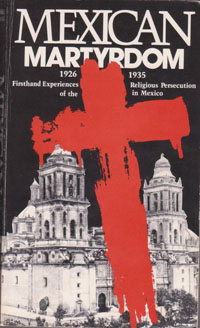
On the second floor I found a small paperback entitled MEXICAN MARTYRDOM by Wilfred Parsons, S.J. The author name’s name was buried in the text on the back cover which told of “true stories of the persecutions” and the “atrocities of those times” and the “heroic resistance of Mexican Catholics” in the 1920’s.

I was astounded. I’d lived in Mexico for 3 years, gone to church on a regular basis, even been president of the parish council. It was certainly a more devout country than the US, with no hint of anti-Catholicism. Perhaps I should have been aware about this period in history during a tour of Oaxaca, when the guide had referred to government seizure of the former convent were were touring, but I was too agog with the loveliness of Oaxaca to give it further thought. But in the late 1920’s the Mexican government of President Plutarco Calles tried to outlaw the Catholic Church, provoking what became known as the Cristero War.

Padre Pro

portrait of Cristero martyr Padre Pro

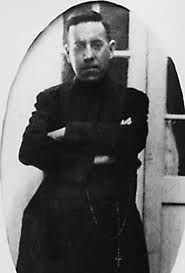
A rare photo of Padre Pro in a cassock in Mexico (vestments were against the law) from catholicglasses.com

From MEXICAN MARTYRDOM I learned the the story of Miguel Pro Juarez, S.J., a Jesuit priest executed for practicing his faith in 1927. Padre Pro, as he was called, was born in Mexico, ordained in Belgium, and returned to Mexico at the height of the crackdown on the Church. Wearing disguises, he walked, bicycled, and took taxis to dispense the sacraments and assist the poor–often by finding homes for unwanted babies and distributing food to those displaced by the government’s crackdown and mishandling of the economy. His legend grew large as the priest the army couldn’t catch but he was finally snared when he was accused of an plot to kill the head of the army (later president) and ratted out, along with 2 of his brothers. No one ever produced any evidence that the Pro brothers were involved in the plot.

Padre Pro and his brother Humberto were executed by firing squad. To make an example of him, the government took plenty of pictures during the event. But it backfired. Padre Pro blessed the head of the firing squad, forgave him, then flung out his arms, holding a cross in one hand and a rosary in the other, and shouted Viva Cristo Rey, just before the bullets struck. His words became the rallying cry for the Cristero War, which was captured in the movie “For Greater Glory.” Padre Pro was beatified by the Vatican in 1988 (first step on the road to sainthood).

Although the Emilia Cruz series is set in today’s Acapulco, I wanted to draw on Padre Pro’s life story for a novel. When things can get rough for Acapulco detective Emilia Cruz  in both CLIFF DIVER and HAT DANCE she turns to her parish priest Padre Ricardo for advice and solace. In DIABLO NIGHTS, she’ll find a relic supposedly from Padre Pro that gives her hope and the courage to keep moving forward. She needs her faith to survive Mexico’s drug war violence, but she also needs the relic as a means to ease her conscience, because  . . .

No spoilers today, but DIABLO NIGHTS is shaping up to be the most psychologically suspenseful Emilia Cruz mystery yet.

In Padre Pro’s Own Words

Padre Pro was a man of many talents. He played the guitar, sang, wrote stories and poetry, and was a great comedic actor (which enabled him to assume many disguises and improvise his way out of numerous close shaves with the Mexican authorities before he was finally caught.) A poem included in the biography BLESSED MIGUEL PRO by Ann Ball has a haunting stanza that I received permission to use as the opening quote in DIABLO NIGHTS:

The very breath of Hell floats in the air;

The cup of crime is filled by tyrant’s hand

“Return in Haste, O Lord” by Miguel Pro Juarez, S.J.

You may also like

padre pro

Friday Fiesta: Blog Hop, Striking Gold, and Recommended Stories

Friday Fiesta: Blog Hop, Striking Gold, and Recommended Stories

I’m reviving my Friday Fiesta posts, in which I share the most interesting things that crossed my writing desk over the last week. This week it’s a blog hop invitation from author Jerry Last, striking gold with a great new marketing resource, and two new author friends with stories about Mexico.

Blog Hop

What am I working on?

The next full length Emilia Cruz novel, DIABLO NIGHTS, is slated for a late June 2014 release. This one draws inspiration from Mexico’s Cristero War of the late 1920’s during which the government tried to squeeze out the Catholic Church. It’s a mystery-within-a-mystery and Emilia has an unexpected link to the conflict.

I’m also collaborating with several other writers, including Jane Rosenthal, author of PALACE OF THE BLUE BUTTERFLY, and Christopher Irvin, author of FEDERALES, on a multi-author blog. We’re thinking of calling it the Mexico Mystery Writer Cartel. What do you think?

How does my work differ from others of its genre?

As far as I know, there is no one writing a series set in Mexico with a Mexican protagonist in the same international mystery and police procedural genre as Jo Nesbo, Ian Rankin, or Henning Mankell. Readers of those authors describe the Emilia Cruz series as a fresh take on the mystery protagonist. The mood of the Emilia Cruz books is the same but the setting and cultural elements are very different.

Why do I write what I do?

We lived in Mexico at a time when the drug wars were really beginning to heat up. One Christmas a junkie stumbled into midnight Mass. Father Richard was leading us in the Prayer of the Faithful when a man staggered up the center aisle, his limbs jerking as he alternately murmured and shouted incomprehensible words. We all shrank back as he made his way towards the altar, an unexpected and volatile presence.

As the congregation looked on in growing panic, the man accosted Father Richard. The priest didn’t move or stop the prayer, just dug through his robes for a pocket. He pulled out a few pesos and pressed them into the man’s hand.

By that time several of the male congregants had come onto the altar as well and they gently propelled the drug-addled man back down the altar steps and through the church to the rear door.

Christmas mass continued and the addict remained nameless to the shaken congregation. But he stayed with all of us, evidence that Mexico’s own drug problem was growing as more and more drugs transited the country en route to the insatiable United States.

He reminded me of the drug war raging just outside our happy expatriate bubble. We were an American family in Mexico City, embracing a new culture, exploring a vibrant city, and meeting people who were to impact our lives for years to come. But we always knew that the bubble was fragile and as if to prove it, Mexico’s news grew worse in the new year: shootouts in major cities, multiple drug seizures, rising numbers of dead and missing, the murders of mayors, governors and journalists.

I’m continually surprised and saddened by how little people know about what is happening in Mexico. Only big arrests become mainstream news. Especially as the numbers of people missing in Mexico continue to climb, I’m hoping a mystery series can raise awareness of what’s going on in Mexico, with plot elements straight out of the headlines, an authentic dive into one of the most beautiful settings on earth, and a little salsa fresca from my own years living in Mexico and Central America.

How does my writing process work?

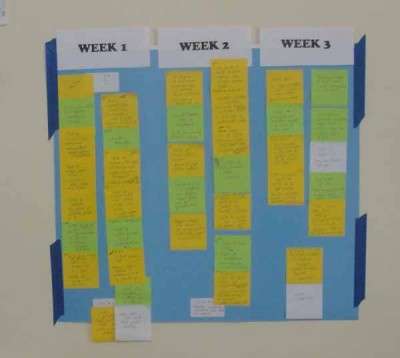
book outlineI’m rigorous about having an outline before writing, and my technique depends heavily on sticky notes. Often, because each novel has several storylines, I’ll use different colors to keep them straight and the action sprinkled evenly. I’ll arrange the stickies on a big posterboard that gets taped over my desk. About a third of the way through the outline will be overtaken by events and redone. Once the draft is finished, I edit and edit, both to add layers of detail and to polish the prose. In the picture, the weeks refer to the story timeline, not my writing schedule.

More Hopping

Be sure to check out Jerry Last’s hop. He’s the author of the Roger and Suzanne Mysteries, which also have an international flavor!

Striking Author Marketing Gold

I was very pleased to be a beta tester for Tim Grahl’s new Instant Bestseller online course. Tim is a marketing consultant and the author of YOUR FIRST 1000 COPIES, a fantastic resource. The video-based course lays out a comprehensive strategy for successfully getting your books to the right audience and Tim gives the hard facts and figures to back up his approach. The Instant Bestseller name is a bit of a misnomer, however, as the course is all about building a system for sustained success. To find out more check out his company website.

Two Stories to Check Out

My reading list this weekend comes from the clever minds of Susannah Rigg and Chris Irvin. Susannah, who runs the Mexico Retold website, hosted me a few weeks ago and in an exchange of notes told me about her short story. Well, it’s out now and if her engaging blog style is an indication, it should be a very enjoyable read:  http://www.amazon.com/Life-Green-White-Susannah-Rigg-ebook/dp/B00IWH4MAW/

Chris is the author of FEDERALES, which also has a Mexican cop protagonist. But the Mexican federal cops have about the worst reputation imaginable so I’m interested to see what he does with it:  http://www.amazon.com/Federales-One-Eye-Press-Singles-ebook/dp/B00IRQQZVM/

A reminder about Writing for Water

glasses of waterNorm Hamilton, Sharon Lee Johnson and Jerry Last are all part of the Writing for Water team this month, helping me by donating a portion of their book sales to Water.org. Please consider getting one of their featured books from this list to read this weekend. You will make clean water possible for someone for life.

You may also like

Mexico, Two Dogs, and An Unexpected Gift

Mexico, Two Dogs, and An Unexpected Gift

two dogs

You may also like

A few weeks ago, I cleaned out the room I use as an office and writing lair. Piles of paper got shifted from one side of the room to the other, new artwork went up (thank you, Command hooks) and some much-needed tax receipts got organized. And I found a CD with the cryptic label “Photos 2004 Mexico.”

I put it aside, too busy shifting piles, and only today stuck it in my laptop and clicked to see what I had.

A treasure trove

More specifically, two dozen photos of our dogs, both of whom have sadly passed away after enriching our lives, keeping us safe, and teaching us about unconditional love.

I never wanted a dog

We got both Rex and Rudi in Mexico, at the Mascota store in the Santa Fe mall. I’d never wanted a dog, but my husband and the kids were all for it so 4 July 2001 we went to the store and my husband asked for a recommendation for a family dog. The clerk suggested a bulldog, but by then we’d already spied the German Shepherd puppy sitting quietly in her glass cage, taking in everything and not making a sound. She was about 6 weeks old. $900 later and she was ours.

Rudi the wonder dog

Rudi at about 2 years old, wearing the ill-fated slip collar

Rudi grew fast into a sleek, powerful, and all-too-smart dog. She developed firm habits very quickly; she only pooped in a certain place, when she was annoyed with us she went under the stairs, she knew lots of tricks but was never swayed by treats or praise. If she wanted to show off at that moment she would; if not she gave you a pitying look and moved on with her agenda. She was tireless in her pursuit of cats, rabbits, and herding small children. She never barked.

People either stopped us on the street to ask if they could breed their dog with her or crossed to the other side to avoid her menacing look. It took some doing to get her to walk beside us; at one point she burst a slip collar near Chapultepec Park. Bits of steel sprayed everywhere and we ended up looping the leather leash around her harness-style before she mixed it up with the park’s legion of strays.

Rex the labrador retriever

Rex, Mr. All-American. That tennis ball had once been yellow, but was now dyed with dirt and slobber. Note the well kept grass LOL

Never the boyfriend

After a year of life with the dominatrix, we thought she might be lonely, and brought home Rex, a 4-month-old Labrador Retriever. Rudi hated Rex on sight and he didn’t help by being constantly happy, drooling in her food bowl, and sleeping with his head on her tail. Rudi perfected her I live with stupid people expression and bit his leg a few times a week as a reminder that she was the queen. Rex was good at eating dishtowels, stealing toys (Houdini Dog), and woke me up at 6:00 am every morning by bumping his chin–drool spraying in all directions–on my pillow next to my face. No alarm clock needed.

2 dogs

Once Rudi showed Rex how to open the front door and turn on the outside lights, she never did either trick again. Note the plastic bottle hanging from the tree. Rudi could jump for hours. Rex wasn’t so light on his feet.

Home security

Both dogs functioned as our home security system and we never had any problems with crime directed at the house. Rex had a bark like the end of days and it sounded like thunder when all 140 lbs of him got running fast, but Rudi was Silent Death, never barking, growling, or whimpering.

The exceptions to Rudi’s silence were: 1. getting on the leash before walk time, 2. a tetherball set we set up on the back patio that was extremely thrilling until she chomped the ball into submission. She was what the books call a “determined chewer.”

After Mexico, Rex went to live with my husband’s parents, where he finally got to be king. He passed away about two years ago at the age of 10.

Wonder Dog

Rudi stayed with us, traveling the world until last December when, suffering from advanced hip dysplasia and deafness, she said her final goodbye. She was 13, the first dog I ever loved, and I still look for her on the blanket we arranged on the carpet in the living room. For years she’d slept in our room but in the last 6 months she could no longer manage stairs. I hated leaving her there by herself every night.

I cherish the time we had with these two dogs, especially with Rudi who was by my side through so many transitions and was even the star of my first and only bit of flash fiction. It is amazing to think we walked together in 5 different countries.

It’s taken me 3 months to be able to write this and I’ll need another glass of wine when I hit “publish.” But some gifts, like the lost CD, are harder to open than others. Cherish those, for they make life a little sharper, a little sweeter.

Thank you for listening to my dog stories. I’d love to hear yours.

German Shepherd Rudi

Rudi, the Wonder Dog

Writing for Water: Meet the Team Writing Clean Water for Life

Writing for Water: Meet the Team Writing Clean Water for Life

 In 2014 I will donate $1 for each Kindle book sold to water.org, the charity co-founded by Matt Damon and Gary White to bring clean water and decent sanitation to communities worldwide. My little effort has expanded into the Writing for Water team of authors. The Water Diaries is a monthly series tracking our progress.

How last month went

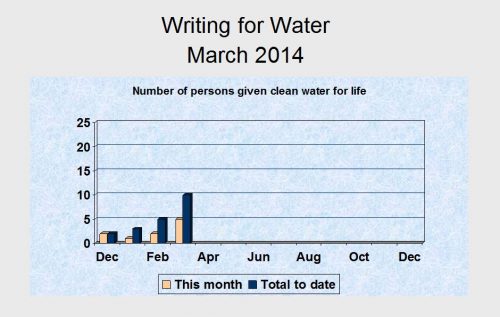
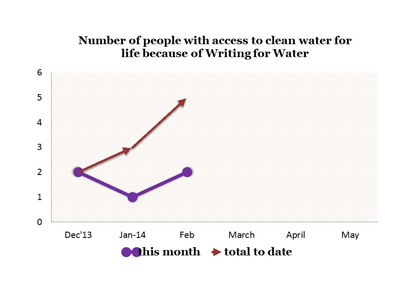
Writing for water monthlyStrong February book sales mean 2 more people get clean water for life! No doubt helped by the super folks behind The Fussy Librarian (Jeffrey) and The All Mystery Newsletter (Rebecca), book sales in February topped December 2013, which had been a very good month, and were more than double what they had been in January.

Coming Up

Another piece of good news came in the form of two new authors joining the Writing for Water team in March; Norm Hamilton and Jerry Last. To celebrate, I sent out a press release entitled “Independent Authors Team Up for Water.org” to introduce the March team, and got a very nice email from Rosemary Gudelj at the Water.org GHQ. Rosemary wrote “Just wanted to thank you all for joining the mission in this powerful way. I work directly for Gary White, our CEO and co-founder along with Matt Damon. We would love to hear how this progresses!”

As this is hardly the biggest fundraiser supporting Water.org at any given time (one of their partners is IKEA) I was tickled that she reached out. I sent her back a thank-you and a free .mobi of MADE IN ACAPULCO on the off chance she has a Kindle. (She does. Yay!)

Our Readers make the Difference

It’s the readership that makes all the difference, of course, and if it wasn’t for engaged readers like you, no one would be getting clean water from our efforts. I’m tentatively setting a goal of providing 25 people with clean water for life from the Writing for Water effort. Throwing in December 2013 sales, the magic number so far is 5.

If you have bought one of my books for your Kindle in the last 3 months, you have helped give 5 people in need access to clean water for life. If you love to read, check out one of the books from the other authors below and sign up for my monthly updates here (you’ll get a free Emilia Cruz mystery story for your very own) to join Rosemary in tracking our progress.

Your Help

Please tell your friends. Seriously. Take a minute and forward this blog post to a friend. Share it on Facebook. Retweet messages with the #WritingforWater and #Water=Life hashtags on Twitter.

We need every retweet, Facebook share, and email forwarding possible. The more folks who know of our effort, the more likely it is that we can get water to those in need.

And if you are an author who wants to make a difference, sign up here to join the team.

The Writing for Water team & featured books, March 2014

Sharon Lee Johnson

Arkansas-based author Sharon Lee Johnson writes fun, entertaining stories across genres from traditional romance to paranormal romances to YA zombie tales. The women in her stories are strong and determined women who discover their destiny in this life. So whether you want paranormal or a sweet romance, Sharon writes them all.

ZOMBIE ZOO

Norm Hamilton

Canadian author and photographer Norm Hamilton’s debut novel is a compelling story about a dystopian Canada created by unrestricted gas fracking and irresponsible mining techniques. The novel throws new light on today’s concerns about the future of our environment. Norm’s other book will help hone your digital photography skills.

FROM THINE OWN WELL

THE DIGITAL EYE

Jerold Last

This California author of The Roger and Suzanne Mysteries incorporates a clever cast of characters and exotic locations to keep his growing fan base guessing whodunnit. From Uruguay to Chile to California, the books provide local color and a menu of regional specialty foods to die for. Pun intended.

THE DEADLY DOG SHOW

http://www.amazon.com/dp/B00E25BM3I/

THE MATADOR MURDERS

THE AMBIVALENT CORPSE

http://www.amazon.com//dp/B0060ZFRQG/

THE SURREAL KILLER

FIVE QUICKIES FOR ROGER AND SUZANNE

Carmen Amato

Originally from New York, Carmen Amato’s experiences living in Mexico and Central America drive the authenticity and drama of her thriller and mystery novels. Her Emilia Cruz series pits the first and only female detective on the Acapulco police force against Mexico’s drug war and culture of machismo. See why Amazon Hall of Fame reviewer Grady Harp wrote: “For pure entertainment and a gripping story likely resulting in nail biting, read Carmen Amato’s addictive prose. She knows this territory like a jaguar!”

CLIFF DIVER

http://www.amazon.com/dp/B00B76XSUK/

HAT DANCE

http://www.amazon.com/dp/B00EO5DCT8/

MADE IN ACAPULCO

http://www.amazon.com/dp/B00GANWA9A/

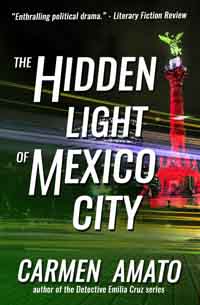
THE HIDDEN LIGHT OF MEXICO CITY

http://www.amazon.com/dp/B007S1LGUC/

El Chapo, Soft Power, and Dirty Faces

El Chapo, Soft Power, and Dirty Faces

When I heard that Joaquin “El Chapo” Guzmán, notorious head of the Sinaloa Cartel had been arrested, two things came to mind: Monocle, the British magazine about all things cultural, and a great old James Cagney movie.

Wait. This will make sense.

Soft Power Fiesta

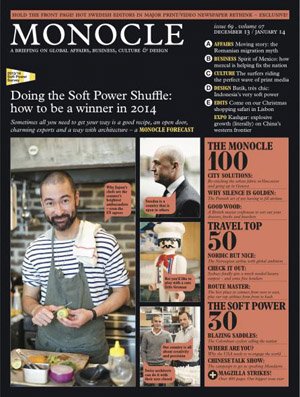
Monocle2Monocle, which describes itself as “a briefing on global affairs, business, culture and design,” is a glorious monthly catalog of worldwide innovation. Every year the magazine publishes its ”Soft Power Survey.” It’s a ranking of the top 30 countries able to exert influence through attraction rather than coercion.

Mexico made it to the list for the first time in 2013 when Monocle gushed about the influence of Mexican food. Mexico rose higher in the rankings to number 24 this year (December 13/January 14 edition) but the entry carried this caveat: “But we all know the problem—Mexico will have won when there are more news stories about its culture and less about drug crime.”

As I read the reporting about extradition possibilities and and who will take over the Sinaloa Cartel, maybe this time El Chapo will fade from view for good. Without the specter of El Chapo, Mexico’s soft power should continue to rise. And it’s about time.

James Cagney as Role Model

It’s a little late in El Chapo’s career to be recommending role models, but at this juncture I’d suggest the late great Hollywood actor James Cagney.

Wait. This will make sense.

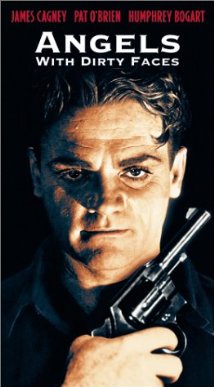
cagneyIn the 1938 gangster movie, “Angels With Dirty Faces,” James Cagney and Pat O’Brien are childhood friends who go separate ways. Cagney becomes a famous gangster who is looked up to by street kids. O’Brien becomes a priest who wants to set those kids on the right path. Crime doesn’t pay, Cagney is sentenced to the electric chair and the execution is to be broadcast on the radio. Knowing that the kids will be listening, O’Brien implores Cagney to “turn yellow” at the end so the kids will stop idolizing him. Cagney refuses, but at the very last puts on the act and goes out bawling like a baby. Of course, it has the desired effect on the kids clustered around the Philco and O’Brien knows Cagney did it for him.

Would it have an impact if El Chapo appeared to be a coward in captivity? Would it reduce his status as an idol for so many who seek the narco lifestyle?

Not that I think he’s going to do a Cagney any time soon. Cagney had class.

Grace Before Meals

So I’m taking a line through Pat O’Brien’s character (who played a priest in so many movies I thought he was one) and saying a little prayer that El Chapo fades from the scene and Mexican food propels the country upwards on the soft power charts.

You may also like

El Chapo

12 Influential Bloggers Debate the Future of Bookstores

12 Influential Bloggers Debate the Future of Bookstores

What will be the future of bookstores? Many brick-and-mortar bookstores, including the US-based Borders chain, have closed in recent years, unable to compete in the era of ebooks and ecommerce. Yet bookstores are talked about in terms of being an “oasis,” a magical place of discovery, the place where we all want to spend hours sipping coffee and browsing.

But not necessarily buying.

The big question

So how can bookstores innovate in order to stay relevant and solvent?

Over the past few months, I’ve asked this question of authors, book bloggers, store owners, and publishers. The result is a series of articles featuring responses from each group. The first article, with 25 author comments, including those from thriller author Dale Brown and Guy Kawasaki, author of ENCHANTMENT, was a real eye-opener and my most widely shared blog post (I’ve stopped counting). Read it here.

Book bloggers

Book bloggers occupy a unique position in the discussion, in that 20 years ago, there was no such thing as a book blogger. Theirs is a trade that has grown up with ebooks and ecommerce and is increasingly influential. Yet few would say that we no longer need bricks-and-mortar bookstores.

Many say, however, that we need different bookstores than the ones we have today. Read on to see how the debate shapes up. Note: comments organized in alphabetical order by blogger last name.

Rebecca Rego Barry, http://www.finebooksmagazine.com/fine_books_blog/

In thinking about your questions, I kept returning to a set of ideas I put forth back in March on our blog. The post was called “Ten Reasons a Pessimist Can be Optimistic About the Future of the Book.” It was based on a talk I gave at a university library earlier in the year. Several of these points remain relevant. For example, craftsmanship — in general and in book publishing specifically — has made a comeback. To me, that bodes well for the future of new books. Yes, some books can and should go straight to digital, but for the ones that don’t, publishers will have to put more thought into art, design, and packaging; making the book an experience separate from a text to be read. Publishers like Siglio and McSweeneys are doing this. So I would predict that the new bookstore of the future will be smaller, but the books will be better — well-designed, even hand-made, illustrated, and/or innovative.

I almost exclusively cover used, rare, and antiquarian books, and there I see two things. One is the need for solid relationships between buyers and sellers. The Internet very nearly killed off the smaller antiquarian shops (some of whom then became Internet-only dealers), and so book fairs and catalogue sales largely fill in that gap. In some cases, booksellers have closed (appointment-only)  shops. All of this makes it more time-consuming for collectors to find the best material–and yet, even with those obstacles, the trade is strong and the base is committed. Quirky shops like the Monkey’s Paw in Toronto, stocking odd & unusual books and ephemera of various prices is a neat concept, and I’d love to see more of that in the future. And Two, the big, get-lost-in-the-stacks shops like the Strand and Powell’s will still be with us in 25 years for the simple reasons that the books are usually cheap and the thrill of discovery provides something akin to a contact high for many readers. (email to author, 8 December 2013)

Richard Bilkey, http://fictionetal.wordpress.com/

. . . The reality is that booksellers cannot wait for anyone else to come to their rescue. Publishers will put their marketing resources where they believe it will have the biggest impact and the long term trend is unmistakably towards online. You can see the attraction for publishers to the efficiencies of online retail, with enhanced metadata feeds that ensure entire lists of books are displayed on virtual shelves around the world without the costs of sales reps and merchandisers or having to ship physical copies into thousands of stores with a 25% return rate.

Bookshops are not only fighting a battle for relevance with customers, they are fighting for relevance with publishers too. Publishers would love to see bookshops remain profitable and regain the ground they’ve lost in recent years to store closure and digital migration but the initiative and ideas are going to have to come from booksellers themselves. And what better place to start looking for ideas than from the online competition themselves?

1: Use Bundled eBooks to fulfill an order immediately even when the physical book is not in stock . . .

2: Bookshop Subscription Services . . .

3: Reward customer reviews and use them everywhere . . .

4: Don’t just give self-published authors a break – create an “Independent Author Platform” . . .

5: Be aggressive about sourcing new customers . . .

Many booksellers I have known are too passive or simply overwhelmed when it comes to marketing and promoting their business, especially beyond their immediate community. The days of letting customers find their own way into your door are long gone however and the traditional seasonal catalogue, ads in local newspapers and an irregular email newsletter simply won’t cut it. To survive bookshops need to be a highly visible, talked about and valued destination. Booksellers need to therefore get out of their own stores and be seen, start the conversations and tell everyone what’s so special about their shop. There are any number of ways you can do this—engage in local communities, start a writer’s festival, run competitions, drive social media campaigns—as long as you are loud and persistent. (Blog post, “Is the post-bookstore world inevitable? 5 ways bookshops can fight back,” 24 January 2013)

Nigel Burwood, jot101.com, anyamountofbooks.com

I feel certain that a bookstore, if it can survive now, has a good future. In fact the mantra now is ‘to survive is to succeed.’

There has been a brutal culling of bookstores since the advent of the web, even the decade before. Whole parts of cities and large towns which had areas of bookstores, ‘Book Alleys,’ Book Co-Operatives etc., are down to one or two shops or none at all.

What is happening now is that bookshops are becoming desirable again — oases in a desert of bland, celebrity-based culture, and philistinism. In a rant from the 1940s John Cowper Powys stated (or overstated!): A bookshop–especially a second-hand bookshop–is an arsenal of explosives, an armoury of revolutions, an opium den of reactions. And just because books are the repository of all the redemptions and damnations, all the sanities and insanities, of the divine anarchy of the soul, they are still, as they have always been, an object of suspicion to every kind of ruling authority.

In a second-hand bookshop are the horns of the altar where all the outlawed thoughts of humanity can take refuge! Here, like desperate bandits, hide all the reckless progeny of our wild, dark, self-lacerating hearts. A bookshop is a powder-magazine, a dynamite-shed, a drug store of poisons, a bar of intoxicants, a den of opiates, an island of sirens.

I see bookstores co-existing with the web and ebooks etc. Our shop stays afloat by walk-in customers but also by listing collectable books on web collectives + we publicise ourself through an SEO savvy website and social media. We have no problem with the web — it is also a haven of scholarship, research and knowledge. Excellent stock is highly available in most towns now and you have to learn what to stock and what to avoid. If you have the right books at the right price people will buy them.

A shop can do things the web can’t — physical browsing, human company, human assistance, no postage, instant gratification! We are in the very early days of the internet — it is like the railways in the mid 19th century — people saw them as ushering in a tasteless, unlettered world but in terms of books, for example, it allowed for their fast and easy dissemination. People get tired of screens and isolation. The real problem is a seismic cultural shift away from books, scholarship and reading. In 50 years time these things will probably undergo a renaissance but it will be a rocky ride and good bookstores will have to be endlessly resourceful — but they always were! (email to author, 2 December 2013)

C. Hope Clark, fundsforwriters.com

Bookstores are going to have to get novel and creative in their brand. The world harps on authors to develop a brand and a platform to be different amongst the fray. Bookstores could do the same. Nothing wrong with them specializing and getting crazy with it. Mysteries, cozies, romance, YA, suspense, scifi, fantasy, horror, literary, etc. Instead of a bookstore trying to be a jack-of-all-trades-and-master-of-none, why not specialize? The biggest B&N cannot hold a respectable cross-section of the books out there, thus driving people online. Unless the book is from a top five NY publisher, a reader can’t be assured it’ll be in a bookstore. These stores would hold events – not signings, but events. Something worth taking a date to. Music, appearances, shows.

Specializing would also be conducive to partnerships. Just like you can see scaled down versions of Pizza Hut, Subway, Dairy Queen, and Taco Bell in the same venue as other stores, sharing the same space and the same customers, bookstores need to partner with other entities. The obvious ones are theatres, museums, motels, coffee shops, restaurants, even libraries.

For instance, if the local theatre has a small bookstore, it would sell the books that the movies originated from as well as similar stories in the genre. If it’s a big theatre, then it would have a healthy supply of books. Why not capitalize on that spontaneous need to take that movie experience home in the form of the book?

Guess I’m saying that the stand-alone bookstore is a dinosaur. B&N’s days are numbered. But if I can go see a Jack Reacher movie, get excited about the story, then walk out of the theatre and use my ticket stub to get 25% off the price of a Jack Reacher novel, I’m going to do it. That concept can happen in so many other partner venues out there. And of course kiosks should be available to download ebooks, or order books that aren’t on hand. You have to learn how to tap that energy that’s been used for years by speakers selling books at the back of the room. Music’s done it for years as well. Heck, t-shirt vendors do it like crazy. Why not books?

I could go on and on. It’s just that a bookstore can no longer supply all of a reader’s needs. So it has to create a novel effect or develop a strong enough partnership with another vendor, to create an attraction. There has to be more to it than just buying a book, in other words. Because we can do that from any computer at home.

Oh, and it would be nice to see bookstores respect authors. In my travels, the author is too often overlooked by bookstore owners. Authors can make a difference to a bookstore – a fact very often overlooked by bookstores. (via website response form, 22 January 2014)

Diana Dilworth, Editor of http://galleycat.com

Community based book stores will thrive even in a world where Amazon is threatening same day book delivery via drone, but it will take a lot of work. Indie book stores that can cultivate community through well-curated reading lists are able to offer readers much more than any algorithm can. Hosting events such as author readings, book clubs and even art shows and live music will give people another reason to come into the store. They’ll have to sell coffee, food & cocktails to diversify their revenue stream.

While a good physical presence is key, being Internet savvy is also important. Indie book stores have got to get the word out and social media can be very helpful to do this. Twitter, Facebook, Instagram and YouTube, among other channels, can help these bookstores thrive.

I also think that indie bookstores that offer eBooks for sale are smart. People like buying books from their local bookstore, but they also like the convenience of being able to download a new book and read it on their device. Companies like Zola Books offer consumers the option to buy eBooks from their favorite local book seller. I think that book stores that take advantage of these kinds of technologies will be positioned to serve all readers. (email to author, 6 December 2013)

Susan Helene Gottfried,

How can bookstores innovate to stay competitive?: Bookstores need to become integral parts of our community. They need to host events — not merely author events — that give people — not merely readers — a reason to come through the door and linger. Repeatedly. They need to bring like-minded people together, and they need to simultaneously expand our horizons and let us connect with new faces and businesses. And they need to do it without charging for the services. Let a book club use your back room for free . . . but then offer a discount if everyone buys the book from you. Host storytime weekly, and find local businesses to sponsor the craft that goes with the story. Be the hub of community action and see what happens. (via website response form, 21 January 2014)

Donna Huber, http://www.girl-who-reads.com

How can bookstores innovate to stay competitive?: We are getting more contact with authors than ever before thanks to the digital age and social media. Because of this feeling of getting to know our favorite authors virtually, readers are even more excited to meet them in person. Bookstores can play a huge role in satisfying this need. My local indie bookstore, Avid Bookshop, hosts a ton of authors and I really think that is part of their success. Also being active in the community is big. Again, my local bookstore has been a part of a number of community events. They hosted a pre-World Book Night party for givers, offer a number of reading clubs for readers of all ages, and support the local library with events. To be competitive, bookstores need to offer an experience that goes beyond buying the book. (via website response form, 22 January 2014)

C.M. Mayo, http://madammayo.blogspot.com/

It’s a question I’m delighted to contemplate because, from the time I was a small child, bookstores have been a Mecca for me, and, as an author, when it comes to selling my books, an oasis of delightfulness– though sometimes, alas, a fata morgana, now that on-line booksellers such as amazon.com have swallowed up so much of their business. Indeed, as a book buyer, for convenience, selection, and price, I long ago went over to amazon.com and other online booksellers. And as an author I am now seeing more from Kindle sales than from my print books. (In fact, for my latest book, a niche topic, Metaphysical Odyssey into the Mexican Revolution: Francisco I. Madero and His Secret Book, I bypassed traditional publishers and bookstores altogether. I had thought it might be nice to place it with a university press. Then I did the math. Ha.)

That said, I am saddened by the way so many brick-and-mortar bookstores have turned themselves into glorified coffee and tchotchkes-made-in-China shops poorly staffed and oftentimes (not always, I hasten to add) by people who seem they might be more knowledgable about, say, pumping gas. As for the sort of hackwork most stock by their cash registers, Joe Queenan described them best: “by Punch for the edification of Judy.” In short, the typical bookstore bums me out– and the coffee isn’t that great, either. I have yet to sit down at a clean table in a Barnes & Noble café. Don’t get me started about the restrooms.

Well, I don’t think brick-and-mortar bookstores are going the way of the dodo, but if they are to survive, they will evolve, and dramatically, to offer a broader array of book-related goods and services. For example, a brick-and-mortar bookstore might offer:

Library services, such as those offered by New York City’s Society Library–not just books for loan, but a research desk, large well-lit tables, and small but comfortable and quiet private offices for writers / independent scholars (especially valuable where public library services are problematic);

  • More curated selections by more knowledgeable staff;
  • Artist books;
  • More–way more–books by local authors;
  • Rare books;
  • Collectible ephemera;
  • A place to bring in rare books and have them appraised (why not every third Thursday of the month?);
  • A place to order up a letterpress book of one’s own (why not bring in the local letterpress guy every second Wednesday of the month?);
  • A place to learn about book design and book cover design;
  • A place to take a marbled paper workshop or how to make pop-up books;
  • A place to take a weekend seminar on Tolstoy/learn French/history of Rome/Mesoamerica (books included);
  • Meeting room for writers groups / book clubs / movies / yoga;
  • A machine to print out one’s book (a few do have the machinery for this already, such as Politics & Prose with the Espresso Book Machine http://www.politics-prose.com/opus); and so on and so forth.

They will also dramatically improve their on-line shops to compete with the likes of amazon.com— not so much in terms of selection, but ease of use and prompt customer service. A few already have. Recently, I have been impressed by the rare books dealers using www.bibliopolis.com.

Entrepreneurs are entrepreneurial. And I’ll bet bucks to cabbages that there will be people writing and reading ’til Kingdom Come. So whatever “bookstores” morph into, it’s going to be interesting.

Time capsule: Here’s my 2009 blog about bookstores for Red Room. (email to author, 25 January 2014)

Vinny O’Hare, http://awesomegang.com

How can bookstores innovate to stay competitive?: My first reaction was to say that bookstores needed to add a cafe or something, but the last bookstore I was in was a Borders at Madison Square that had a cafe and it was the worst coffee ever. I remember thinking at the time that wasn’t what was going to keep a bookstore open.

I think if we had the answer there would be less bookstores closing every day. If I was to open a bookstore tomorrow I would make sure it had a good community feel and make myself known as giving back. The bookstore would also have to have something else to draw people in. Maybe free tutoring for kids. Maybe an area for live readings or music? It would also sell gift cards to Amazon and iTunes. (via website response form, 22 January 2014)

Joey Pinkney, http://joeypinkney.com

People used to buy from entities that they were comfortable with. As an extension of that, people used to buy from people. Nowadays, it’s standard practice for a “customer” to walk into a bookstore, find a book he/she wants to purchase and pull out their smartphone to purchase it online.

Bookstores stay in business by selling books, not displaying books. And they sell books by servicing the community. One surefire way to serve the community is by providing a venue for readers to physically meet authors for book signings and being a place for book clubs to have book discussions. Social media may enhance this, but it will never take the place of real social gatherings.

In order to connect the readers and the authors, bookstores will need a strong presence both online and off. And easy-to-navigate website will be a must (and would seem common sense), as well as accounts with popular social media outlets. “Frequent reader discounts” issued by way of printable coupons, QR codes or text-codes will help maintain the bookstore’s status with the reader. Online mailing lists and text alerts will also be an important aspect of being able to spread the word about upcoming events and book releases quickly and efficiently. Bookstores that are not able to take advantage of these online tools will not survive.

Going forward, bookstore staff will have to be extremely attentive to customers. The amount of knowledge and service that a bookstore can give will have to justify the cost of the books it sells since the Internet has made it very easy to find, purchase and download books. Amazon’s algorithms are pretty neat but can never compare to a person you can relate to who can tell you why they like or dislike certain books.

The bookstore of the future will need a way to satisfy the customer’s need for instant gratification. The Harvard Book Store in Cambridge, MA, is a perfect example. It has an “Espresso Book Machine” that can readily print 5,000 different titles and also has the capacity to print self-published titles. This printing press is a dual blessing. It lowers the amount of non-revenue generating inventory for the bookstore, and it gives the customer what he/she wants in a matter of minutes. Why wait on a book to be shipped to you in a few days when you can get it within hours, if not minutes, of purchase?

Bookstores will continue to be a “watering hole” for the literati of the area the bookstore serves. Book-browsers don’t get the staff or the rent paid.  In order to stay afloat, bookstores will have to be savvy in the ways of how technology and the Internet can even the playing field with the online places books can be purchased and/or downloaded. (email to author, 7 December 2013)

Prospero blog on arts and culture, economist.com

 . . . Bricks-and-mortar bookstores appear to be on borrowed time. So, what is the future of the bookstore?

This was the burning questions on everyone’s lips at a recent event at Foyles’s flagship bookshop on Charing Cross Road in London, where some of Britain’s leading literary agents, authors, marketing managers and booksellers gathered to discuss its fate ahead of the bookseller’s move from its current rambling premises to the former home of Central Saint Martin’s art school just up the road.

For a bookstore to remain successful, it must improve “the experience of buying books,” says Alex Lifschutz, an architect whose London-based practice is designing the new Foyles. He suggests an array of approaches: “small, quiet spaces cocooned with books; larger spaces where one can dwell and read; other larger but still intimate spaces where one can hear talks from authors about books, literature, science, travel and cookery.” The atmosphere is vital, he adds. Exteriors must buzz with activity, entrances must be full of eye-catching presentations and a bar and café is essential.

The trend for not only incorporating cafés in bookstores but also placing them on the top floor makes good sense. The new Foyles will have one, Mr Lifschutz explains, because this draws shoppers upwards floor-by-floor, which is bound to encourage people to linger longer and spend more. (Top-floor restaurants in department stores abide by similar principles.)

There are plenty of ways to delight the bookstore customer, but few are easily monetised. The consensus is that bookstores need to become cultural destinations where people are prepared to pay good money to hear a concert, see a film or attend a talk. The programming will have to be intelligent and the space comfortable . . .

To survive and thrive, bookstores should celebrate the book in all its forms: rare, second-hand, digital, self-printed and so on. Digital and hybrid readers should have the option of buying e-books in-store, and budding authors should have access to self-printing book machines. The latter have been slower to take off in Britain, but in America bookstores are finding them to be an important source of revenue. “The quality is now almost identical to that of a book printed by a major publishing house,” says Bradley Graham, owner of a leading independent bookstore in Washington, DC, called Politics & Prose. His shop leases an Espresso Book Machine and makes it available to customers.

The bookstore of the future will have to work hard. Service will be knowledgeable and personalised, the inventory expertly selected, spaces well-designed and the cultural events enticing. Whether book stores, especially small independents are up to the challenge, is not clear. The fate of these stores is a cliff-hanger. (Blog post, “A Real Cliffhanger,” 27 February 2013)

Mike Shatzkin, The Shatzkin Files at idealog.com

Their business [of Barnes & Noble], on which they must make money, is selling books. They are trying to diversify their merchandise selection a bit in their stores, but that’s a strategy that is both difficult to execute and has nowhere near the upside that Amazon, Google, and Apple have with their other businesses. This is an unfair fight where B&N is dependent on margins from their ebook (and book) sales while their competitors, if perhaps not totally content to break even on that business, aren’t materially affected if they do, or even if they lose a bit of money on that aspect of their business . . .

In other words, publishing — like book retailing — is likely to become a subsidiary function pursued in strategic support of larger goals. Unlike in retailing, this will not be consolidated among a few players, but as widely scattered as the subjects about which books are produced. But the core challenge for the legacy publishing establishment, that they will increasingly face competition that doesn’t need the profits from that activity as much as they do, will be the same. Book publishing as a stand-alone industry with most of its significant players earning all their profits within it is in the process of morphing into something quite different, starting with the retailers. (Blog post, “Book publishing may not remain a stand-alone industry and book retailing will demonstrate that first,” 29 January 2014)

Read the entire Bookstores of the Future series in the #noticed category

You may also like

book bloggers

The Water Diaries: My Chat With Matt Damon

The Water Diaries: My Chat With Matt Damon

“Every 21 seconds a child under the age of 5 dies because he or she doesn’t have access to clean water,” Matt Damon told me.

“I know,” I replied, simpering a bit and feeling like an advertisement for my mystery series. “That’s why a dollar from every Kindle book I sell in 2014 goes to water.org.”

Matt Damon didn’t say anything else, probably because I was reading his interview about water.org in the February 2014 edition of InStyle magazine, and he was in Hollywood having a beer with Ben Affleck by the pool. But still, I felt a connection.

I’d decided in May 2012 when I published my first book, THE HIDDEN LIGHT OF MEXICO CITY, that when I was able to tote up any book sales at all, I’d donate part of my earnings to water.org, the charity Matt Damon co-founded. I like water.org’s approach. They work with local communities and give microloans with a program called WaterCredit to communities so they can “meet specific drinking and sanitation needs.” This means they don’t pursue a one size fits all solution but support what is right for a community, based on that community’s situation. I surfed through their website and YouTube channel and knew that this was the right opportunity to give back.

Related post: How to Turn Books Into Water

Water is fundamental; without it there is no education, no forward progress, no ability to break away from poverty and disease.

January: how did we do?

January 2014 marked the first month of my effort. Here’s the link to the fundraiser. I was joined by authors Sharon Lee Johnson and Melissa Mayberry. We didn’t have any particular sales target but simply cross promoted each other on social media. I also set up a page on my website to explain what I was doing and another to invite other authors to join in.

Bottom line:  combined with my donation from December 2013 sales, we raised enough to supply three people with clean water for life. A slow start, in all honesty, but accompanied by some very positive developments and some lessons learned.

1. I overestimated the amount I’d raise. January saw my lowest Kindle sales in 6 months (post-holiday slump? too little advertising? IDK). In future I’m going to limit the amount of the monthly target goal; I’d rather overshoot than be depressed at a goal that doesn’t get met month after month. 

2. Fellow author Sharon Lee Johnson, who will showcase a different short story for water.org each month, has an amazing work ethic and deep well of optimism. When we traded notes at the end of January, instead of being bummed that we hadn’t raised more money, she was already looking ahead to the next step.  Her sense of purpose and will to succeed are contagious!

3. Having a project hashtag is cool. I created the hashtag #WritingforWater and will use it all year. People on Twitter have been awesome, retweeting my notices about supporting water.org every day. One day @Water gave me a RT, really making me feel like part of the family. 

4. Norm Hamilton, author of FROM THINE OWN WELL, a really absorbing novel set in a dystopian Canada where the country’s water supply has been destroyed by fracking, has pledged to join the Writing for Water Team in March. His book fits so well into the theme of clean water! Incidentally, if it ever becomes a movie, I’m voting for Harrison Ford, Michelle Pfeiffer, Taylor Lautner and Emma Stone to star. (Matt Damon has already starred in an anti-fracking movie, Promised Land, so I’m not going to nag him about this one.)

5. Jerry Last, author of the Roger and Suzanne Mystery Series, will join as well this spring. Jerry’s a live wire on social media, not to mention a fellow dog lover and mystery writer, and his participation will really help out.

Need Your Ideas

I know I could be letting more people know what we are doing, beyond Facebook, Twitter, Pinterest, etc. Not ever having done something like this before, I’m not sure how to go about letting folks know and getting more authors to join the #WritingforWater Team. If you have an idea or would like to help, please get in touch:  carmen@carmenamato.net.

It’s not all about selling books. As my buddy Matt said, “When you bring water to people in need, the response is always the same: elation and joy.”

I couldn’t agree more. How about you?

When the News Writes Mystery Novels for You

When the News Writes Mystery Novels for You

I can look at the problem in one of two ways: either the news gives me great ideas for my mystery novels or all the good stuff has already been written as fact, not fiction.

As the author of a mystery series set in Acapulco, I often run across plot ideas in the news coming out of Mexico and Central America. In fact I wrote about the news stories that inspired MADE IN ACAPULCO: The Emilia Cruz Stories in this blog post.

About every six weeks or so I find something noteworthy for the tickler file. But recently, the news has been full of stories just calling out to become Emilia Cruz mystery novels. Like the plight of missing women, which is a sub-theme of the series, these stories are rooted in serious issues affecting the lives of those caught in the crossfire of Mexico’s drug wars.

Using them in a mystery novel might be controversial but would also help to bring awareness to the toll that drug violence is having on the beauty and culture of Mexico.

The Vigilante Crisis

Violence exploded in Michoacán earlier this month as Mexican federal troops tried to disarm local vigilante groups claiming they were protecting their towns from the Knights Templar drug cartel. After days of violence, the government decided to negotiate with the vigilantes and step up its own efforts to corral the infamous Knights. On 27 January, according to InSightCrime.com, the well-organized vigilantes “signed a legalization agreement with federal and regional authorities” that “stipulates that the self-defense forces will be incorporated into Rural Defense Bodies and will work to assist municipal security forces.”

While this might seem to be a tidy ending to the violence, issues remain. Are the vigilantes linked to a cartel that is a rival of the Knights? Just how powerful are the vigilante groups—could they become the sort of paramilitary forces seen in years past in Colombia?

Could Emilia Cruz be pressed into negotiations with a fictional vigilante group in Guerrero?

Exorcise the Drug Cartels?

From the New York Daily News, comes this headline: “Exorcism rituals on the rise as way to battle evil of Mexican cartels.” With deaths from drug violence as many as 80,000 since 2006, Catholic priests in Mexico are performing exorcisms in order to rid cartel killers of the devil. The article recounts the experiences of priests who have performed the rites, saying “Exorcisms are particularly popular in outlying villages, where priests often celebrate weekly Mass to drive demons from tormented souls.”

Mexico is a strongly Catholic country and the Church is an element of the Emilia Cruz series. There is her friend Padre Ricardo—named in tribute to my murdered pastor in Mexico City Father Richard Junius– and the current WIP DIABLO NIGHTS dives into the history of the Cristero War in 1920’s Mexico.

The notion of exorcisms give me the creeps, frankly, but could undoubtedly be a riveting plot element.

Demolishing Santa Muerte Shrines

On skeletonsaint.com, Dr. Andrew Chesnutt and David Metcalfe wrote an article about how Leticia Salazar Vazquez, the mayor of Matamoros, ordered military action to demolish Santa Muerte shrines. Was it because the Catholic Church has condemned Santa Muerte worship or that the mayor belongs to the pro-Catholic conservative National Action Party, or was it to make a point against the cartels? Or maybe Salazar Vazquez opposed the shrines because she is of the Evangelical Protestant faith, one of the fastest growing political action groups in Mexico. Whatever the reason, the shrines have already been rebuilt.

The fourth Emilia Cruz novel does have a Santa Muerte theme, but maybe it’s time to create a bigger backstory for Carlota Montoya Perez, the fictional mayor of Acapulco?

And What About an all-Female Police Unit?

I’d seen similar stories about female police units, mostly in places like India where there are gender issues related to male policemen dealing with female victims and suspects. This article from the Latin American Herald Tribune  reported that “the state of Morelos has unveiled an all-female police investigative unit created to probe crimes against women. Morelos Gov. Graco Ramirez swore in and presented the 26 members of the unit, which is made up of women trained to investigate and solve crimes on the basis of forensic evidence . . .”

Yes, there is already an Emilia Cruz WIP plotline in which she is tapped to head up an all-female police unit. But it’s not just a unit to investigate crimes against women . . . 

Now over to readers. What would you like to see Emilia Cruz handle next?

You may also like

mystery novels

How Deep Are Your Reading Roots?

How Deep Are Your Reading Roots?

I blame my oldest sister, really. She was studious and serious and had a lot of books. She organized them tidily on bookcases in the basement where they joined books my uncle had left when he joined the Navy and headed for Vietnam. The shelves also had room for an ever-growing collection of hardbacked Readers Digest Condensed Editions and assorted odds and ends from friends and church jumble sales.

Those basement books became my reading roots; books that formed my reading tastes, taught me the power of words, and inspired me to take on a literary career. There’s usually fewer than seven degrees of separation between those roots and whatever I’m reading now.

reading rootsHEAVEN HELP US! by Herbert Tarr

A dog-eared paperback came to live in the basement donated by a friend. It was an unlikely book for a young Catholic girl to pick up, with a cover showing a man in a yarmulke. But the 1968 story of young Rabbi Gideon Levi and his Long Island temple congregation was and still is one of the most cleverly written books ever.  Tarr, a rabbi and former Air Force chaplain who wrote several other books, made the Jewish religious experience universal. He had an engaging, lighthearted style that I’ve never quite seen replicated. Sophie Kinsella comes closest albeit from a female perspective.

HEAVEN HELP US on amazon.com

reading roots

EXODUS by Leon Uris

Rabbi Levi’s congregation exclaimed so much over it I wondered if it was a real book and lo and behold it was. EXODUS was published in 1958 to major acclaim and turned into a movie starring Paul Newman and Sal Mineo (neither of whom looked anything like the character they played). It is the sweeping, engrossing story of Israel’s birth, moving from the early Zionist movement to Polish Jews escaping the Nazis, Ethiopian Jews emigrating after the war and the start of hostilities with neighboring Arab states. Although a novel, it was my first primer on Middle Eastern politics and shaped my political views for years.

All of Uris’s epic historical novels (MILA 18, QB VII, TRINITY) have the same breadth, strength, and excellent writing but EXODUS stands apart. It made me wonder if I could ever write anything so big. Still wondering.

EXODUS on amazon.com
reading rootsTHE LITTLE WORLD OF DON CAMILLO by Giovanni Guareschi

Don Camillo is a strapping fictional parish priest in Italy’s Po Valley, ministering to a small village congregation. His arch frenemy is Peppone, the Communist mayor of the town, who–as is to be expected of a Communist–says he does not believe in God. It is sometime after WWII and the two men fought together as partisans in the hills against the Nazis. The book is a series of softly humorous and philosophical stories in which Don Camillo and Peppone argue over conflicting beliefs (Peppone wants to baptize his son Lenin–oh the irony!), the welfare of the little village (both try to rig a soccer tournament between the church team and the People’s palace team), and the true meaning of friendship. Oh, and Christ on the cross in Don Camillo’s church talks to him/is his conscience.

I routinely re-read this book when feeling unsettled and always find both humor and solace.  Guareschi, a journalist from Milan who also illustrated the book, wrote other Don Camillo stories and several unrelated novels and stories which can often be found on amazon or abebooks. I was recently thrilled to find an excellent blog on the Don Camillo series. Enjoy!

THE LITTLE WORLD OF DON CAMILLO on amazon.com
reading rootsTHE CODE OF THE WOOSTERS by P.G.Wodehouse

My sister had a copy of THE MOUSE THAT ROARED by Leonard Wibberly. It was clever and inventive and I hoped there were others about the silly Duchy of Grand Fenwick. So I’m a high school freshman at the public library searching the Ws in Fiction and where WIB should be there was WOD. Wodehouse to be precise, which was almost as silly a name as Wibberly, and I was hooked.

Wodehouse’s books are all suspended in 1920’s England, where people pass time at big country houses getting wires crossed and trying to extricate themselves from nonsense. His language is a swift patter of hysterical dialogue, British slang, and light comedy. THE CODE OF THE WOOSTERS is my favorite, with a cast of characters who appear in many Wodehouse books. It is one of the Jeeves books narrated by Bertie Wooster, whose valet (“my man, don’t you know”) Jeeves is constantly extricating Bertie and friends from impossible romances and other ill-judged escapades. I have multiple copies of this book, including the one in the 20-lb set of all the Jeeves and Bertie books I bought at the oracle of British bookstores, Hatcherd’s in Piccadilly, and hauled home back in the days before there was a 50-lb weight limit on suitcases.

THE CODE OF THE WOOSTERS on amazon.com

reading rootsTHE KITCHEN MADONNA by Rumer Godden

This book is firmly rooted. It was in at least two of the Reader’s Digest Condensed Editions. Wikipedia lists it as a children’s story but it is a universal story of a dysfunctional family in London that changes for the better when the young son decides to make a homemade icon for their Ukrainian housekeeper, Marta. His effort takes him across London on a quest to do something for someone else for the first time in his life. Rumer Godden, who was raised in British India and wrote numerous books for adults and children, nine of which became movies, created one of her most uplifting stories. The book is sweet and thought-provoking and makes a unique gift.

THE KITCHEN MADONNA on amazon.com

reading rootsGONE WITH THE WIND by Margaret Mitchell

I can still see this book in my mind’s eye: the hardback cover is deep blue and the bottoms of the pages are wrinkled from having been inadvertently dunked in the water while I was reading and taking a bath at the same time. It topped my 5th grade reading list, back in the days when I knew what a “beau” was but had never heard the word pronounced.

The book got progressively more dog-eared through middle school as I read and re-read it. It wasn’t the Civil War theme or the love triangle between Ashley, Scarlett and Melanie. No, it was the way that Mitchell put me right into Scarlet’s head.

Do you remember the scene when Rhett deserts Scarlett as they flee Atlanta before Sherman’s army? There was a line something like this: “Her mind jumped around, trying to remember what Gerald had called balky mules and Mr. Lincoln.” But nothing came and Scarlett ends up just calling Rhett a cad. My quote may be imperfect, but it was the first novel I read that showed how to bring the reader deep inside a character’s point of view.

Gone With the Wind on amazon.com

The novel was better than the movie, too.

Fiddle dee dee, Carmen, how you do run on.

You may also like

reading roots

Can Bookstores Survive? 25 Influential Authors Tell All

Can Bookstores Survive? 25 Influential Authors Tell All

Can bookstores survive in the era of ebooks and ecommerce?

Dramatic changes in the publishing industry have impacted the way authors, even influential authors, get their books to readers. Traditional book publishing and retail models have been battered by the rise of online retailers. The ebook revolution has given us more books to choose from, so much so that books are easily lost in the virtual churn.

Many brick-and-mortar bookstores, including the US-based Borders chain, have closed in recent years, unable to compete or adjust. Will we see more closings in the years to come, or will bookstores innovate in order to stay relevant and solvent?

I reached out to fellow authors and was amazed at the variety of responses. Read on for some surprising views on the future of the bookstore. (Note: comments arranged in alphabetical order by author last name, so yes, I got to go first.)


Carmen Amato, author of THE HIDDEN LIGHT OF MEXICO CITY and the EMILIA CRUZ mystery series

http://carmenamato.net

The ebook format, driven by Amazon’s Kindle platform and subscription services like Oyster, will become the industry standard for books that are mostly text. As a result, bookstores will no longer derive a significant percentage of revenue from fiction. Bookstores that survive will increasingly focus on non-fiction books that don’t lend themselves to ebook formats, such as manga/comics, design (art, photography, shelter) books, cookbooks, science and technology volumes, etc, as well as vintage books for collectors.

Bookstores will also have to rethink their spaces because they simply won’t be able to afford the square footage. Successful ones will partner imaginatively with other retailers, such as art galleries, clothing boutiques, kitchen stores, and even gaming stores to sell wares in shared spaces arranged to provide an optimal sensory experience that is unavailable online. The key will be to curate the books on offer to match the partners’ products and target the same customer. Other partnerships could be with hotels or museums. Bookstores will use their spaces to host events and be part of a local community.

To make this happen, however, traditional book distribution has to change and become more flexible. Store owners have a universe of books to choose from, but as long as they are tied to an inflexible distribution system, they’ll be unable to offer books which could help keep them afloat.  Article author.

G.G. Atcheson, author of THE LEGACY: FATE

Bookstores will become small kiosks like the ones that sell print pictures on demand. Users will go to those places to order a print of their favorite book(s) in the format and size of their choice. They will also bring people together to talk about those books over a hot cup of coffee. Via website comment form, 5 November 2013.

Susan M. Boyer, author of the Liz Talbot Mystery Series including LOWCOUNTRY BOIL and LOWCOUNTRY BOMBSHELL

http://www.susanmboyerbooks.com

Independent bookstores [will] leverage strong customer relationships and serve as social hubs for book lovers, offering meeting space for book clubs, luncheons with author speakers, and other opportunities for readers to connect and spend time with friends who share an interest in books. I also believe the staff of these stores will continue to provide personal service, an area in which they’ve traditionally excelled. Online sales of autographed books are another avenue some stores are already pursuing.  Via website comment form, 11 November 2013.

Dale Brown, author of 21 action-adventure “techno-thriller” novels including FLIGHT OF THE OLD DOG, SILVER TOWER, DAY OF THE CHEETAH, HAMMERHEADS, and the DREAMLAND series.

http://www.dalebrown.info/index02.htm

I haven’t been in a bookstore to buy a book since I discovered Amazon Books in 1996.

I don’t think book sales will be much affected by whatever happens to brick-and-mortar bookstores because it’s so easy and convenient to get a book these days, and with the Internet you don’t need to browse through a bookstore’s shelves to find a new release from a favorite author–Facebook, Twitter, a Web site, or the blogosphere will inform you.

My Mom and my in-laws would certainly have disagreed with me and continued going to bookstores or Wal-Mart every couple weeks to see what’s new…until they got their Kindles. Now their e-readers are constant companions, getting a book is as simple as pressing a button, and all they want for Christmas is an Amazon gift card so they can buy more books to download!

I know and recently met many people at the La Jolla Writer’s Conference who simply love books and bookstores, and little neighborhood independent booksellers who cater to their customers with comfortable chairs, plenty of light, booksignings, e-mails about new releases and events, and maybe some coffee will always be favorites. Of course big bookstores can have this too, but driving to a crowded mall and getting lost in a multi-story maze is not my idea of fun.

In an age of digital everything, ultra-realistic video games, and 3-D movies, I think folks will still want to read, so us authors won’t be out of a job just yet. Besides, someone has to write the scripts and advertising copy for all those games and movies, right?  Email to author, 8 November 2013.

Diane Capri, author of the HUNT FOR JACK REACHER series, including DON’T KNOW JACK and GET BACK JACK

http://dianecapri.com

As you can imagine, the topic is one of intense interest and importance to writers and readers alike. Bookstores are magical places and keeping them alive and healthy is good for all of us.

It is challenging to operate a bookstore, particularly if the owners need to make a profit. Many bookstores are started as a labor of love. Sometimes, the owners are not focused on making money as much as creating a pleasurable experience for themselves and others.

In my view, successful bookstores of the future must not focus on price and delivery. These two features are rarely, if ever, going to favor the brick and mortar store over the online store.

Where physical bookstores can excel is in customer service, unique experiences, and specialized inventory not easily or readily obtainable to customers. Author appearances, signed first editions, reader/customer centric offerings and more will create customer loyalty. After all, customer loyalty is what keeps us coming back to our favorite stores everywhere, isn’t it?  Email to author, 15 November 2013.

Bernard Cornwell, author of the RICHARD SHARPE adventure series, THE STARBUCK CHRONICLES series, THE GRAIL QUEST series, and other historical action novels  

http://www.bernardcornwell.net/

My fear is that bookshops will go the way of music shops, which would mean the end of the big chains and the ‘hold on by your fingertips’ survival of a few specialist dealers. Already much of the book trade has moved into supermarkets, and I suspect that trend will continue, which is sad because the big supermarkets will only stock a limited range of titles – a very limited range. But we are inexorably headed into digital books and the pace will quicken, and that also puts into question the role of publishers, god bless them. How do you publicize books in the digital age? I don’t know. I’m just glad I started writing 35 years ago when bookshops were the main route to a reader’s consciousness.  My guess is that ‘social media’ will be the primary means of drawing attention to books which exist only in electronic form – and people who want physical copies will use ‘print-on-demand’.  Email to author, 20 November 2013.

L. H. Davis III, author of THE EMPORIUM, OUTPOST EARTH, ALIEN RENDEZVOUS

http://LHDavisWriter.com

Start with the B&N motif: WiFi, food, drink, and the aroma of real books. Add: Online booths, private coves, and stuff it all in an English pub, which holds beer and wine tastings on weekends and book promotions. Add: Video cove/wall for E-book advertisements and promotions. Via website comment form, 5 November 2013.

Kristin Elise, author of THE VESUVIUS ISOTOPE and the KATRINA STONE novels

http://www.kristenelisephd.com

Even traditional publishers now expect authors to heavily self-promote, and this grass-roots marketing is fast becoming the new industry driver. We see more and more examples of books becoming best-sellers without any real backing by a big publishing house. So, as authors become more savvy at selling their own work, I think that readers will increasingly get into the habit of going to a bookstore to request a book that they heard a lot about, rather than going into the bookstore just to browse and then buy what they see. This, in turn, could change the content of bookstores: Instead of every bookstore worldwide containing basically the same selection, I would imagine that different bookstores could adopt a “regional” flavor, filling up with the works of authors who are popular in that geographic area – local authors, books set in that location, or who otherwise call attention to the region. Wouldn’t that be fun? Via website comment form, 12 November 2013.

A. W. Exley, author of NEFERTITI’S HEART

http://www.awexley.com

I think they will become smaller but service a niche, perhaps as far as specializing in only a few genres. Readers are still social and e-book buying does not fulfill our sensory needs. I can see bookstores with arm chairs, coffee service and nooks to discuss what you are reading in a small intimate atmosphere. Via website comment form, 5 November 2013.

Tim Grahl, author of YOUR FIRST 1000 COPIES: The Step-by-Step Guide to Marketing Your Book

Business: outthinkgroup.com; Book: first1000copies.com

Bookstores of the future will be what record stores are now. While there will still be people that like to buy and read print books, they will be a collectors item more than the main way books are consumed. While I have a nostalgic connection to print books, my kids (and especially their kids) won’t.  Email to author, 5 December 2013

Norm Hamilton, author of FROM THINE OWN WELL

http://www.normhamilton.ca/writer

Brick and Mortar locations cannot compete through attempting to provide the same, dollar-based offering that drives the online retailers.

The bookstore of the future will, by its very nature, become a focal point and destination for like-minded individuals to gather, share cherished moments, and revel in the company of great books.

Warm, comfortable settings, in smaller, intimate locals with inviting chairs and couches for sitting and reading, will entice and attract the readers of the future as they search for the coziness and sanctuary that is to be found only between the covers of a great book. Via website comment form, 7 November 2013.

Guy Kawasaki, author of APE: Author, Publisher, Entrepreneur-How to Publish a Book; ENCHANTMENT: The Art of Changing Hearts, Minds, and Actions; and 10 other non-fiction books

http://www.guykawasaki.com

I really don’t know about the future of bookstores. The future of books, however, is going to be tablets and pads other than coffee-table books. It’s hard to imagine that people will go to stores to buy ebooks, but there’s more to a bookstore than just buying books—e.g., socializing, eating, and listening to authors. Email to author, 12 November 2013.

Joe Konrath, author of the JACK DANIELS series, the CODENAME: CHANDLER series, and other fast action thrillers

[I predict] the end of Barnes & Noble as we know it. In 2014, paper book sales will no longer be significant enough to sustain the nation’s largest bookstore chain. There may be bankruptcy and restructuring and the selling of assets (like the Nook), but ultimately it will result in many stores closing, and possibly the demise of the brand . . .

Indie bookstores will need to start selling self-pubbed books, or perish. Paper isn’t going away anytime soon. But there won’t be enough of a legacy supply that will keep the necessary number of diverse titles on shelves to make indie stores a worthwhile destination for shoppers. If indie bookstores deal directly with self-pubbed authors, and print their own copies to sell in their stores, they can build inventory and cut out the share normally taken by publishers.  “Konrath’s Publishing Predictions 2014,” jakonrath.blogspot.com, 28 December 2013.

Agustin D. Martinez, author of THE MARES OF LENIN PARK

https://www.facebook.com/TheMaresOfLeninPark

While technology has advanced, there is always something special about the feel of paper between my fingers and the sound of the pages rubbing together as they flip. The smell of an old yellowed tome makes me sneeze, but the sensory memories that come with that aroma remind me so much of my childhood. What will spur memories of a great book for our children when they grow to be as old as we are now? Does an iPad have a smell? Will the speaker emit a whoosh as the page on the screen turns?

The brick-and-mortar bookstore is a place to spend a few hours, a destination when the mood struck one to read something interesting and entertaining. It is full of items you never knew you wanted to read until you turned down a random aisle and found it beckoning you to open its cover and get lost in its pages. Without these, where will authors sign a first edition? Will author visits be conducted over Skype or podcasts only? Will print editions of books even exist in a 10 years? I think some sort of brick-and-mortar venue must still exist no matter where technology takes us, whether that be a corner independent bookstore where authors still come to read excerpts of their work, or coffee shops with free wi-fi where readers can sit and enjoy a warm beverage. I would hate for these to ever go away!  Email to author, 12 November 2013.

Elizabeth A. Martina, author of THE RAGMAN MURDERS

http://www.lanternariuspress.net

Brick and mortar stores will have fewer paper books and more kiosks where books will be featured in ebook format. The books will be able to be downloaded to the customers ereaders or computers at the store.  Via website comment form, 5 November 2013

Bob Mayer, author of the SHADOW WARRIORS series, the GREEN BERETS series, the AREA 51 series and numerous other action-adventure titles

http://writeitforward.wordpress.com/

Bookstores?  Like publishers, agents and others in the business, most failed to have a strategic business plan. Did they watch what happened to music stores starting in 2001 when digital tsunamied that industry?  No.

For the future?  Embrace genre authors. Frankly, the snobbish attitude I’ve encountered over the years from many indie stores leaves me unconcerned about their future as they were unconcerned about mine.  Can they change that attitude in time?  Will they order and rack POD books via Createspace from authors like me and others who’ve embraced the future?  Or will they whine that Amazon is their deadly enemy and continue that futile, and stupid, battle?  As Jeff Bezos said:  “Complaining is not a strategy.” The bottom line is that authors will totally support bookstores when that support is extended the other way.  Email to author, 4 December 2013.

Emily McDaid, author of TETHERBIRD

The bookstore of the future will offer both an online and a bricks and mortar presence, combining the ease of Amazon with the carefully curated selection of an independent bookstore. It will be a haven to go and read, and to select good quality books, either in physical copy or digitally, however the customer prefers to read. It will mimic the immersion of the reading experience– what makes reading truly magical– and wrap that into the browsing experience. Via website comment form, 7 November 2013.

Brian Meeks, author of the HENRY WOOD DETECTIVE series, A TOUCH TO DIE FOR, and other mystery titles

I like the idea you mentioned of ebook Kiosks combined with coffee house feel. I love paper books, but reading them has become more hassle than it’s worth. Most of what I read now, I read on my Kindle app on my phone. It’s always with me and is easy.

Still, if bookstores were a place to hang out, then I’d gladly make my ebook purchases through them.

From an author’s standpoint, I’d rather people bought Kindle versions, but it would be nice if they bought them through a kiosk at a bookshop. Via website comment form, 11 November 2013.

Sandra Nikolai, author of the Megan Scott/Michael Elliott Mystery series including FALSE IMPRESSIONS and FATAL WHISPERS

http://sandranikolai.com

The future bookstore will provide a well-lit space, comfortable chairs, a coffee bar, informed staff, and online shopping for e-books and physical books. Bookstores will partner with the community to promote local author events and other cultural events. Purchase incentives: individual and group discounts, periodic sales, and availability of other items like paper products and artwork.  Via website comment form, 11 November 2013.

 Ann Patchett, author of BEL CANTO, STATE OF WONDER, THIS IS THE STORY OF A HAPPY MARRIAGE, and other titles

 There’s this feeling that Amazon is killing the bookstore. And the eBook has gotten an enormous amount of press, to the point where people are saying, ‘So I guess it’s over.’ And it’s like, ‘No, it’s not.’ I’m standing up and saying no, the book is alive, the bookstore is alive.

I am speaking for bookstores all across the country. These people are my friends. These are the people who welcome me into their stores for readings, who take me home and cook me dinner and let me sleep in their guest rooms. These people have made me, made my career, made me what I am. So now I can say, ‘Go and support your local bookstore.’ What an enormous privilege that is for me.  Time Entertainment interview, 25 November 2011.

Dominae Primus, author of ABSOLUTELY DONE, SECOND CHANCES, and DAILY DOSES & VITAL VERSES

http://dominaeprimus.blogspot.com

The future bookstore will offer digital and print options whereby people have a choice of buying a digital copy if a print copy is unavailable and vice-versa. Some may opt for both. Every author and publisher regardless of independents or major brand names have equal access to the same pool of readers/buyers.  Via website comment form, 5 November 2013. 

Jane Rosenthal, author of PALACE OF THE BLUE BUTTERFLY

http://www.mexiconovels.com

Surveys show that only one third of people who purchase books from bookstores walk in with that intention. The bookstore of the future like art galleries and boutiques will have to provide products, services and experiences—readings, classes— that are unique, rare, and highly-curated, so that customers react with strong impulses to make purchases lest those objects, in this case books, be unavailable later.

Self-publishers could take advantage of this by offering the content of their novel cheaply on Amazon while offering signed, exquisitely produced books through niche bookstores.  Via website comment form, 11 November 2013.

Matthew Wayne Selznick, author of THE CHARTERS DUOLOGY: TWO NOVELS OF THE SOVEREIGN ERA, including BRAVE MEN RUN and PILGRIMAGE

 We have another chance to realize the dream of the Third Place with the bookstore of the future by placing the emphasis on building community around a love of books and other entertainment and information products. Until the industry abandons the returns cycle, the bookstore of the future can offset operating costs by taking advantage of just-in-time and on-demand technology like the Espresso Book Machine, as well as the buying and browsing habits of Generation Y (the largest book-buying demographic). Email to author, 6 November 2013.

Glenn Starkey, author of AMAZON MOON

http://GlennStarkey.net

Future bookstores will be a blend of traditional and indie published/ printed books with each having their own half of the store. I believe there will also be an e-book section as well with cover art and flap copy for readers to browse, and an ability to purchase the work in the store. Once book stores open themselves to signings by all authors, and develop a comfortable environment to relax in, readers will want to visit more.  Via website comment form, 11 November 2013.

Khaled Talib, author of the thrillers SMOKESCREEN and GUN KISS

http://www.amazon.com/Little-Book-Muses-Khaled-Talib-ebook/dp/B00DY7FAEM

It would be nice to retain the old time charm of a traditional bookstore in the digital world. After all, a bookstore isn’t just a place to sell reading materials. It is a swimming pool for the soul.  Via website comment form, 7 November 2013.

Find all the Bookstore of the Future series posts in the #noticed category

You may also like

influential authors

35 Ways to be the Worst Traveller in the World

35 Ways to be the Worst Traveller in the World

I travel internationally about every 4 months or so. This means I get to watch fellow travelers, many of whom unsuspectingly offer colorful characteristics and situations ripe for my next mystery novel.

Yes, I admit it. I travel with a notebook and all too frequently jot down crazy things I see other passengers do. Especially when entering a new country–and culture–few of us seem to anticipate what they will find upon arrival.

So if you want to travel internationally, here’s how to do it badly.

1.  Wear a strapless dress while trying to lift a heavy carry-on into the overhead bin. Laugh nervously while doing so.

2.  Don’t change your home currency into the local currency. Doesn’t everyone use dollars/pounds/euros?

3.  Walk into the restroom, ignoring the attendant and the sign that says the cost to use the facilities is 2 pesos/kroner/zlotys (toilet paper included.)

4.  Travel without tissues (see #3 above.)

5.  Don’t carry a pen on international flights. Instead, pester strangers for a writing implement so you can fill out your immigration form. Do so while they are filling out theirs.

6.  Wear flip-flops to walk through A. the butcher section of a mercado  B. a hiking trail  C. European cobblestone streets or  D. any formal restaurant.

7.  Speak loudly in a language the listener does not understand no matter what your volume.

8.  Tourist loudly through a house of worship while a religious service is in progress.

9.  Walk around with your purse open or unzipped or stuff hanging out of your pocket.

10.  Wear short-shorts in conservative countries where the locals don’t wear anything shorter than capri pants.

11.  Jump into a taxi without knowing the local norms—are there meters, are fares negotiated beforehand, which are the unlicensed taxis and are they safe? Also–you took a taxi there. How are you getting back?

12.  Don’t have any idea how to read a map. Be unable to figure out where you are in any given city.

13.  Talk back to the guard at the museum who reminds you that flash photography is not permitted.

14.  When at a tourist attraction, talk loudly to your companions when all are wearing headphones. Double negative points if headphones are attached to museums gizmos that describe the exhibits.

15.  Don’t check local weather before arriving. Who needs a coat in Helsinki in March?

16.  Don’t travel with Pepto Bismol.

17.  Ignore instructions to put airline seat in the upright position during takeoff or landing. This way, you can get to know the people ahead or in back of you when thrust forcefully against them during takeoff/landing. Oh hi!

18.  Get drunk during a flight and offer your drink to the possibly underage person next to you.

19.  Pack porn for a trip to the Middle East.

20.  Try to dance through the metal detector at the airport.

21.  The sausages in Austria were supposed to be great but there is just wurst on the menu. Seriously, wouldn’t you think they’d serve their best?

22.  Don’t set your watch and/or travel clock to the local time zone.

23.  Call room service and ask the hotel to provide American TV channels.

24.  Although you don’t understand the difference between football/fútbol/soccer/rugby/Aussie rules, talk a lot as if you do.

25.  While in China, ask people if they realize that ping-pong is not a sport.

26.  Eat partially cooked eggs. Add points by combining with #16, above.

27.  Drink tap water when everyone else is drinking bottled water. Again, see #16, above.

28.  Use a shopping bag or other open bag as a carry-on so you can share everything in it with the rest of the plane passengers during landing.

29.  Don’t use sunscreen. More negative points if you then get on an airplane where the air is really really dry . . .

30.  Damn. “Wet season” actually means rain.

31.  Spoiler alert:  Turkish coffee, Turkish delight, and Turkish toilets are not all equally nice.

32. Call the hotel concierge, TSA agent, or tour guide “dude.”

33.  Let your screaming children be the center of everyone’s attention in the hotel restaurant/breakfast buffet/line at Disneyworld attraction/butterbeer stand at Hogsmeade.

34.  What, they don’t speak Latin in Latin America?

35.  Try to score drugs in a foreign country. Dude, seriously.

But be a great traveler with ideas from these travel websites!

www.afar.com  the online portal for AFAR, the unique travel magazine

www.smartertravel.com a safe travel guide as well as a place to find deals and advice

You may also like

worst traveller

Pin It on Pinterest