
7 Life-changing books to read right now

7 Life-changing books to read right now

Fall is here. Our New Year’s resolutions petered out long ago and the holidays, with overspending and family drama, loom on the horizon.

In this season between what-might-have-been and what-will-overwhelm-us-soon, dive into one of these life-changing books. You’ll get a dose of creativity, a box of life tools, and a new mantra.

Let’s face it. We all need a new mantra.


Carmen's must-read books


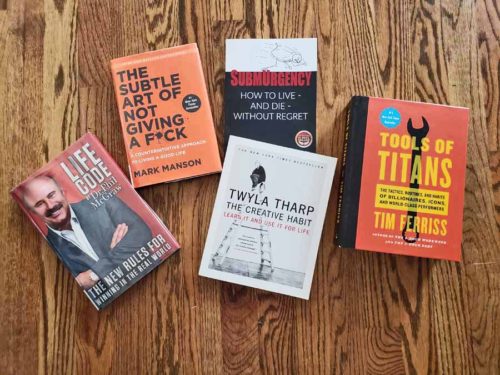
THE CREATIVE HABIT by Twyla Tharp

Twyla Tharp is one of America’s best known choreographers, lauded for her collaborations with Mikhail Baryshnikov, the Joffrey Ballet, and ballet theaters across the world. She offers up essays and exercises designed to sharpen and apply your creativity. Tharp uses dance to illustrate her points in an amazingly effective way. I plan to re-read this book at least yearly

 
Takeaway: Keep honing your expertise, don’t let it get stale. Keep scratching at a concept until it is ready for production. Any creative endeavor has to have a central “spine”—the thing that keeps it from being ad hoc bundle of ideas.


FAIL UNTIL YOU DON’T by Bobby Bones

If you are not a fan of country music you might not know that Bobby Bones—whose real name is Bobby Estell– is host of a hugely popular syndicated morning radio show in the US. From a difficult childhood in rural Arkansas, Bobby rose to become one of the most powerful people in radio broadcasting. The book is organized around his mantra of “Fight. Grind. Repeat.” He is definitely compulsive about many aspects of his life and driven by an unrelenting fear of poverty, but his perspective on achievement felt like a wake-up call.


Takeaway: Are you fighting for big goals? Are you grinding it out day to day? There’s no time to sulk over failure. There’s no need to waste time. Don’t stop. Just Fight. Grind. Repeat.


THE 10x RULE by Grant Cardone

Grant Cardone is a salesman and he coaches salesmen, but this book is for everybody. If Bobby Bones gives us the mantra, Cardone teaches about level of effort. Basically, the “fight” is probably going to take 10x the effort that you estimated. According to Cardone, most people don’t fail, they simply give up too soon. The book is occasionally pithy, but that’s okay; Cardone is in coach mode and there are a ton of ideas and worksheets. Also, there is a chapter entitled “There is No Shortage of Success” that is like a Super Bowl pep talk.


Takeaway: This is how you hustle, this is why you hustle, this is how you outhustle whatever you need to outhustle. Get a paperback and highlight the heck out of it.


SUBMERGENCY by Scott Kimbro

This slim volume by Scott Kimbro, a finance executive and network marketing professional, identifies three types of urgencies in our lives: the obvious, the optional, and the hidden. If you go through life only addressing the urgent, then you are basically living in reaction mode with someone else in the driver’s seat. Optional urgencies are opportunities we can choose to take or not, while submerged or hidden urgencies (hence the title) are the opportunities we should seek out in order to live and die without regret. Kimbro illustrates his message in a conversational manner with song lyrics, personal anecdotes, and meaningful quotes.


Takeaway: There is a very personal Christian dedication, but the book’s main message is universal. Wake up, smell the coffee, and seek out opportunities to live fully.


TOOLS OF TITANS by Tim Ferriss

Tim Ferriss has a hugely popular interview podcast. This 705-page book (get a hardcopy, please) offers the best bits from these interviews, grouping them into 3 categories–Healthy, Wealthy, and Wise. You can read the morning routine of Jocko Willink, former SEAL unit commander, then skip to director Robert Rodriguez’s thoughts on failure (“not durable”) and then learn what quote changed the life of professor Brené Brown. It is all absolutely fascinating stuff, punctuated with self-help tips like how to sleep better, soundtracks for success, and other golden nuggets culled from the minds of high achievers.


Takeaway: This is THE bible to grab whenever you need motivation or new ideas. The back of the book says  “Fitness, money, and wisdom—here are the tools.” Yep.


THE SUBTLE ART OF NOT GIVING A F*CK by Mark Manson

Manson, a NYC-based blogger, has written the ultimate guide to being a mature adult. His clarity of thought and expression allows him to delve deep without being either preachy or academic. The basic theme is that resilience, happiness, and freedom come from knowing what you value, while unhappiness and denial come from taking action based on what you really don’t. But that is just the starting point; this book is loaded with pivotal insights, using Manson’s own experiences, social science findings, and historical research. If you only read 7 non-fiction books this year, let this be one of them. Note–be prepared for lots of the f-word.


Takeaway: Social media and hyper-commercialism has led to unrealistic expectations of a trouble-free, entitled, and exceptional life. Real happiness comes from solving problems.


LIFE CODE by Dr. Phil McGraw

This book is last on the list for a reason. We’ve learned how to be habitually creative, fight and grind to achieve goals, hustle for success, grab opportunities, understand our values, and use the tools of high achievers. Now Dr. Phil gives us the key to identifying the people who stand in our way and are willing to trip us up AND what to do about it. This book really resonated with me because of an experience I had several years ago; I was far too slow to recognize such a person and the damage they were doing to me and the others around us.


Takeaway: Gutsy, honest, and probably the most helpful book when it comes to dealing with people on a day-to-day basis, especially when you are putting forth 10x effort. Be savvy and memorize the danger signs of destructive people.


What books are on YOUR life-changing list?

life changing books

Meet WHEELS UP thriller author Jeanine Kitchel

Meet WHEELS UP thriller author Jeanine Kitchel

 Do opposites attract? Meet Jeanine Kitchel, author of WHEELS UP

1) Carmen Amato: Jeanine, we first met as collaborators putting together THE INSIDER’S GUIDE TO THE BEST OF MEXICO and now find ourselves writing two halves of the same story set in Mexico. I write a mystery series from the point of a view of a female cop, while your (highly rated!!) novel WHEELS UP–A Novel of Drugs Cartels and Survival is the start to a new crime fiction series told from the point of view of a female crime boss.

I wonder what would happen if these two fiesty women ever met! Tell us about your background and the inspiration for WHEELS UP.

Jeanine: Hi Carmen, and thanks for the interview. It is amazing that our Latina protagonists are polar opposites. Emilia Cruz is fighting for justice in the Acapulco Police Department while Layla Navarro occupies the top spot in Mexico’s most powerful cartel because of her DNA.

I decided to write fiction, specifically about the cartels, after living in Mexico for 15 years. I fell in love with the Mexican Caribbean coast in the early 80s, long before Cancun became a household word. In 1989 right after  class 5 hurricane, my husband and I bought land and built a house in a fishing village, Puerto Morelos. We rented it out like an Airbnb until 1997 when we escaped our San Francisco jobs, moved south, and founded a bookstore. Wheels Up—A Novel of Drugs, Cartels andSurvival, was inspired as I read about the creeping dominance of the Mexican cartels in local newspapers. Some events in the novel are based on fact.

2) Carmen: Your main character, Layla, inherits the leadership of a drug cartel. How did you make this character relatable? What motivates her and how does she make decisions?

Jeanine: Layla is not only a flawed protagonist, but a woman—basically persona non grata—in macho Mexico, thrown into a position of unbelievable power. She’s smart and resilient, but lacks on the job experience. Her motivation is to prove, both to herself and the cartel world, that a woman can survive in the driver’s seat, though it may be a bumpy ride. Since her uncle never planned on Layla as heir apparent, she must learn on the fly. Her early decisions are emotional, but she’s a quick study and gains her footing as she goes.

3) Carmen: How did your writing style develop and what books or authors inspire you?

Jeanine: With a degree in journalism, I wrote for newspapers and adapted to a crisp style of writing. That changed when I was approached by a publisher in my bookstore who asked me to write first person account travel articles. After publishing a memoir and a book on the Maya calendar, I decided to write fiction. Now that was a learning curve!

Books I’ve been inspired by: One Hundred Years of Solitude by Marquez, Siddhartha by Hesse, and Fear and Loathing in Las Vegas by Thompson. Joyce Carol Oates, Jack London and Margaret Atwood among others have been an inspiration.

4) Carmen: You can invite any author, living or dead, to dinner at your home. What are you serving and what will the conversation be about?

Jeanine: I’d invite Jack London. I’d serve raw oysters on the half shell as a nod to his days as an oyster pirate in San Francisco Bay along with San Francisco sourdough and clam chowder. Alcohol would flow freely. We’d talk about his South Sea adventures on his boat The Snark, his Yukon Trail gold field adventures, riding the rails in his teens that led him to socialism and his stand against social injustice. We’d discuss his love of the land, his Northern California Beauty Ranch, his horses. And how it felt to be the most celebrated author in America after the Saturday Evening Post serialized The Call of the Wild in 1903.

5) Carmen: What is your best protip. Tell us about a writing habit, technique, or philosophy that keeps your writing sharp.

Jeanine: I get up early, write a few morning pages, and then pick up from where I left off the day before. It’s not a long writing session. That comes later. I think it’s important for a writer to discover what their best writing time is. Mine is between 2 and 6 pm, but only recently discovered I have fresh thoughts first thing, so try to maximize on that. Also, a favorite quote is: “The muse only shows up if you do.”

More about Jeanine: Jeanine Kitchel’s love of Mexico led her to a fishing village on the Mexican Caribbean coast where she built a house, opened a bookstore, and began writing about Mexico, the Maya and the Yucatan. Her debut novel, Wheels Up—A Novel of Drugs, Cartels and Survival, follows a travel memoir, Where the Sky is Born: Living in the Land of the Maya. Visit her website www.jeaninekitchel.com.

Jeanine kitchel

10 Lessons from Killer Nashville

10 Lessons from Killer Nashville

The Killer Nashville International Writer’s Conference was the first of its kind I’ve ever attended.  I didn’t know quite what to expect but tried to put my best foot forward:

  • Served on 3 panels (Writing Spies and Espionage, Settings, Witness Reliability),
  • Was a conference sponsor, which put my name on the back of the awards dinner program and a copy of “The Beast” short story in every conference tote, and
  • Wore my lucky red dress on the first day.

At the 4-day event I connected with terrific authors I only knew from Facebook and email, including Mike Faricy (the Dev Haskell series), Jim Nesbitt (the Ed Earl Burch series), Kathryn Lane (the Nikki Garcia series), and Mike Pettit (the Jack Marsh series, the Max Simms series, etc.). I made new friends too, including Dale T. Phillips (the Zack Taylor series), Ross Carley (the Wolf Ruger series), and Margaret Mizushima (the Timber Creek K-9 mysteries).

killer nashville

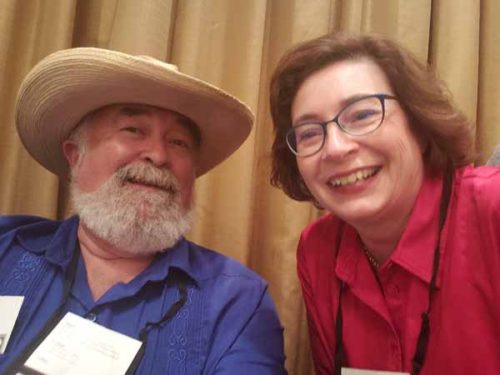
Me and globetrotter Mike Faricy, author of the inimitable Dev Haskell series. Check out the lucky red dress.

Related: Straight Shooting with mystery author Mike Faricy

killer nashville

Sharing a laugh with Ed Earl Burch creator, Jim Nesbitt.

Related: Hard-core hard-boiled with Jim Nesbitt

The presentations given by experts on DNA, toxicology, and drug smuggling were outstanding. I now have a long list of terms to Google, like “volatiles” and “fracture match.” Guest speakers Jeffrey Deaver, Otto Penzler, J.A. Konrath, and Anne Perry all impressed with their experience and insights.

Major takeaways from Killer Nashville:

1. Consistent, high quality production is the name of the game. The best known authors in the mystery genre have 30 or more books to their name  . . . and a fierce work ethic.

2. Even the best need to be resilient and take the long view. Jeffrey Deaver gave a great talk at Killer Nashville in which the word “escape” figured large. Stories struggling to escape the imagination. Writers struggling to escape the ordinary. Or in Deaver’s case, he wrote to escape being a nerd. Deaver read us entries from journals in which he recorded his epic fails on the way to publishing success. From no one showing up for book signings to technical glitches that destroyed pages, he showed that no author is immune. His bottom line? Be resilient in the face of disasters and persistent when it comes to writing what you love.

3. The divide between traditional publishing and independent publishing was the ghost at the banquet. For many attendees, traditional publishing still represents “validation.” The opportunity to sit down with an agent was the main reason they were there. Yet all four of the agents on the dedicated panel agreed that it takes 3-5 years for an author to get signed and published. The tortoise-like speed of that route would seem to be a serious handicap on the road to a big backlist. See 1, above.

4. Every traditionally published author has a loss-of-control horror story. Publishers putting the wrong title on a printed book. Publishing contracts that buy book rights for the life of the author plus 70 years. Publishers that pay 6% royalty. Publishers running a marketing campaign that targets the wrong audience. Publishers closing down their mystery imprint in the middle of a contracted-for series, leaving the author unable to publish elsewhere. And so on.

5. Discoverability is the golden ticket. Best selling indie author Christopher Greyson spends $100k annually on Amazon advertising. J.A. Konrath has written dozens of short stories to build discoverabiity in addition to his horror thrillers and the Jack Daniels series. Ironically, when legendary mystery editor and publisher Otto Penzler was asked how to get included in one of his popular anthologies, he answered, “Get famous.”

6. An author’s “platform,” or online presence and ability to influence others, is today’s must-have accessory. For those yearning to go the traditional route, it is one of the first things an agent looks at. A platform (read good website)  is critical for an indie author to build an email list (with a newsletter like Mystery Ahead!)

Carmen Amato's Mystery Ahead

Should this be the new Mystery Ahead newsletter header? Wearing a red raincoat in this photo. Not to be confused with red dress.

7. Anne Perry gets it. The bestselling author of 85 books gave the keynote on the last day of the conference. According to Anne, the role of a writer is to show lives we will not live. This really resonated with me, especially in terms of writing about Mexico’s disappearances in 43 MISSING. Incidentally, her publishing contract stipulates 3 books per year, 2 of which are around 100,000 pages, and the other is a novella. See 1, above.

Related: The real story behind 43 MISSING

8. Literary reviews are only useful to an author for one reason—the promotional quote. According to Deaver, there are very few credible literary reviewers any more. Reviewers rarely put your work into context. They generally don’t compare it to works within a genre or even the author’s own body of work. So take reviews with a grain of salt and ignore the sour ones.

9. Physical book tours are not worth the time. According to Deaver, hardly anybody shows up and you are better off using the time to write another book. That being said, Greyson has ordered (and paid for) 8000 copies of his independently published bestseller to send to bookstores and I’ll bet some signings go along. Secondary lesson: What you are willing to do re discoverabiity directly relates to how “discovered” you are . . .

10. When a friend reads your work . . . From Linda Sands, author of the Cargo series: Men friends will look for themselves in the worst aspects of male characters, but women friends look for themselves in the best aspects of female characters.

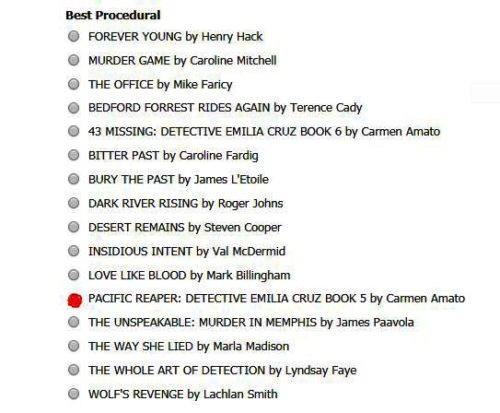
One last thing . . . 43 MISSING, the 6th Detective Emilia Cruz novel, was a finalist in the Best Procedural category for the Silver Falchion award from Killer Nashville. It was a big thrill to hear my name and title read out at the awards banquet. The winner was FOREVER YOUNG by Henry Hack.

killer nashville

Heading to Killer Nashville

Heading to Killer Nashville

I’m heading to the Killer Nashville mystery writer’s conference, where 43 MISSING, the 6th Detective Emilia Cruz novel, is a finalist for the Silver Falchion award for Best Procedural. The award has multiple categories and many of the finalists are very well known authors so I’m amazed to be in such august company.

You can see all the finalists for all Silver Falchion categories here: https://killernashville.com/awards/silver-falchion-award/

BTW, 43 MISSING is based on a true crime in rural Mexico, which nearly 4 years later is still unsolved. Does the word “Ayotzinapa” ring a bell?

43 MIssing

Related: The true story behind 43 MISSING

43 MISSING is also in contention for the conference’s Reader’s Choice award for Best Procedural, as is PACIFIC REAPER, Detective Emilia Cruz #5. I’ve been asking friends on Facebook to vote for PACIFIC REAPER. https://killernashville.com/awards/killer-nashville-readers-choice-award/

Killer Nashville

I’m armed with new business cards, too!  This is the first time I’ve gone to a writer’s conference in my (so-far) 6-year-old writing career and I’m probably a bit too excited. No matter the outcome, I’m amazed and honored to have had both books recognized this way.

Maybe I’m on the right track after all . . .

MORE INSIGHTS

Book review: RECKONING by Baron Birtcher

Book review: RECKONING by Baron Birtcher

New favorite series alert! Sheriff Ty Dawson solves murder and corruption cases in must-read police procedural RECKONING by Baron Birtcher. Dawson joins Walt Longmire and Cork O’Connor as lawmen whose investigations are driven by a personal code of honor and the...

read more
Book Review: GRIMM UP NORTH by David J. Gatward

Book Review: GRIMM UP NORTH by David J. Gatward

Now and then, you stumble across a series that is simply captivating and you have to inhale one book right after the other. The DCI Harry Grimm series set in the Yorkshire dales, is that kind of addictive series. GRIMM UP NORTH is the first and a terrific introduction...

read more

Subscribe

FYI: Carmenamato.net uses Amazon Affiliate links.

Department Q and The Keeper of Lost Causes

Department Q and The Keeper of Lost Causes

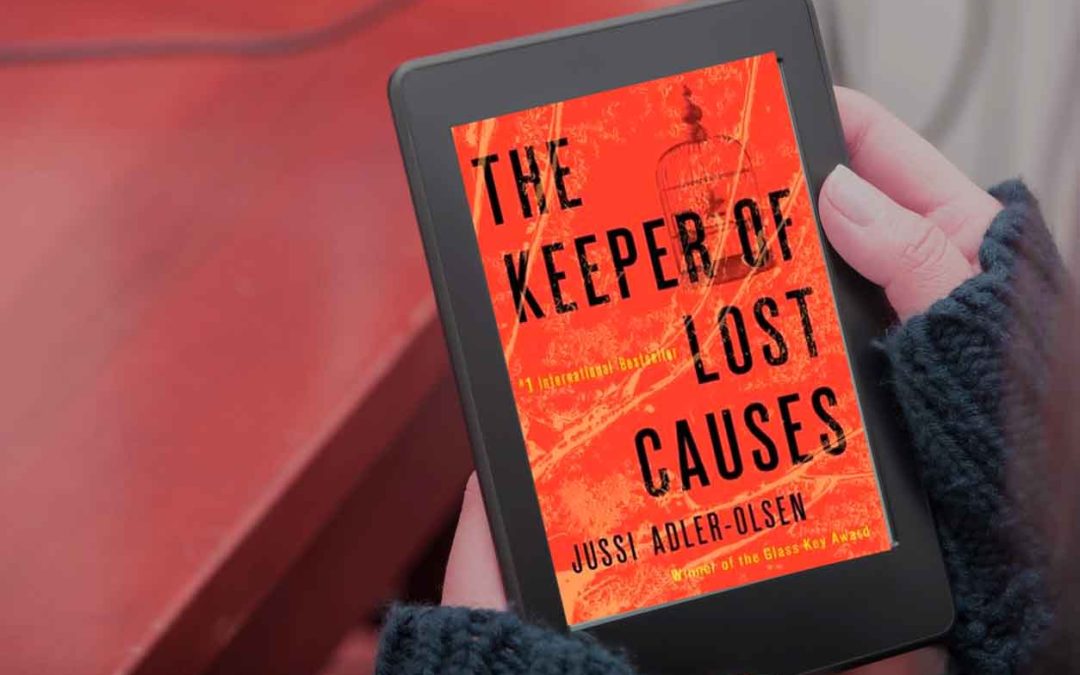
THE KEEPER OF LOST CAUSES, the first Department Q novel by Jussi Adler-Olsen, has toppled Jo Nesbo from the top of my Nordic Noir favorites list.

And I didn’t even know I wanted to go to Denmark.

Some series take a few books before all the pieces are properly in place but Department Q comes at us with all elements fully formed: everyman hero with a wry inner voice, an intriguing sidekick, and an investigative style that relies heavily on pulling threads, connecting dots, and spotting liars.

Detective Carl Mørck returns to work in the Copenhagen Police Department’s  homicide unit after being ambushed and shot while investigating a murder victim killed with a nail gun; a backstory that promises to spool out over the life of the series. One of Carl’s close colleagues died in the ambush and another was left a quadriplegic, who together with a silly ex-wife, hippie stepson, and the guy who rents part of Carl’s house, populates Carl’s appealing inner circle.

In short order, Carl is banished to the police station’s basement with a “promotion” to head up Department Q, a political stunt to sooth public concerns over cold cases. Carl plans to use his new lair to nap and play computer solitaire but real work is expected. Carl quickly realizes he’s a staff of one and corners his boss into giving him help. Enter Assad, a Syrian immigrant hired to mop floors.

Out of all the old files heaped on his desk, Carl picks the disappearance five years ago of an up-and-coming Danish politician, Merete Lynggard. The assumption is suicide, but the case was handled sloppily and there are still leads to run down. While hiding his own past, Assad proves to be uncannily observant and resilient, helping Carl piece together clues and get out of tight situations.

Carl’s point of view alternates with that of kidnapping victim Merete. Clues for Carl are deliberately out of sync with Merete’s experiences, creating a tempo that simply rocks throughout what is a fairly long book.

THE KEEPER OF LOST CAUSES is the start of an addictive series. Over the next few books, Carl’s tiny Department Q basement empire grows in fits and starts, his quadriplegic former colleague offers pivotal insights, and investigative techniques hinge on probing questions and seemingly innocuous details. Carl’s often humorous reflections are counterbalanced by the inner voices of both villains and victims. Assad remains an enigma.

Start with THE KEEPER OF LOST CAUSES and keep going. Department Q needs you.​​​​​​​

You may also like

Author Bernard Schaffer debuts new cop series

Author Bernard Schaffer debuts new cop series

Bernard Schaffer’s new book THE THIEF OF ALL LIGHT is the debut of a tension-filled new police procedural series. This interview first appeared in the Mystery Ahead newsletter, which you can subscribe to here.

1  Carmen Amato: Bernard, thanks so much for stopping by and congratulations. Your debut mystery, THE THIEF OF ALL LIGHT, just came out. A rookie and a jaded detective feature in this start to a tantalizing new police procedural series. Tell us how you came to create this “odd couple.”

Bernard SchafferBernard Schaffer: I published multiple books in multiple genres as an indie author from 2011 to 2016, and wanted to take a crack at the mainstream. My writing had reached a level where I felt ready to try something new, so I took all of my experiences as both author and criminal investigator, and put them into a book.

2  CA: Your main character, Carrie Santero, has a fascination for serial killers? What research did you do to make this convincing?

Schaffer: I’m a career police detective for a department in Bucks County, Pennsylvania. I’ve been studying criminals, up close and personal, my entire adult life.

3  CA: Fill in the blank for us, please, and tell us why: If readers like books by ________, they will also like the Santero and Rein series.

Schaffer: If readers like books by Thomas Harris, Lee Child, Lisa Scottoline, and anyone else who writes gripping thrillers, they will also like the Santero and Rein series.

4  CA: You can invite any author, living or dead, to dinner at your home. What are you serving and what will the conversation be about?

Schaffer: My stock answer would be Hemingway, because I have an imaginary Hemingway who sits off to the side whenever I’m writing and gives me hell, kind of like a boxing coach. But at this point, I probably don’t need to sit down with the real one. I’d say either Alan Moore or Carlos Ruiz Zafón. Both fascinate me and I feel that I could learn from either of them.

5  CA: What is your best protip? Tell us about a writing habit, technique, or philosophy that keeps your writing sharp.

Schaffer: A few things. Real authors finish. They don’t work on ten pages of a manuscript for years on end, carting them all over to every writing conference they can find, in hopes of someone finally giving them permission to write the whole thing. If you want to do this, you have to finish your book. That means multiple drafts and rewrites, too. There’s no sitting around in the publishing world. I graduated from the indie game, where you live and die by your ability to produce quality at a rapid pace. That’s served me well at this new level. There’s no time to be lazy or unmotivated when people are relying on you to get your work done, and get it done right.

The Thief of all LightThank you so much for having me, Carmen. THE THIEF OF ALL LIGHT cameout in hardcover and audio on 7/31/18 from Kensington Publishing, and I cannot wait to share it with everyone.


More about Bernard: Bernard Schaffer’s law enforcement philosophy book titled WAY OF THE WARRIOR is now taught in multiple police academies, Field Training Programs, and universities across the United States. His fiction collaboration with J.A. Konrath combined concepts and characters from Konrath’s Jack Daniels series with Schaffer’s novel SUPERBIA. Schaffer is the father of two children, still working as a police detective, and still writing. Read more at https://www.bernardschaffer.com/

Bernard Schaffer

You may also like

Book Review: FOOLS AND MORTALS by Bernard Cornwell

Book Review: FOOLS AND MORTALS by Bernard Cornwell

FOOLS AND MORTALS by Bernard Cornwell sets the standard for historical fiction with a touch of suspense and a healthy dose of Shakespeare.

But before I gush about how good the book is, let me say that Cornwell is one of my favorite authors. First, in 2014 when I wrote a blog series on bookstores vs ebooks, he took the time to answer my email. Second, he’s the author of the Richard Sharpe series. Apart from being some of the best historical fiction EVER, the Sharpe books were turned into a miniseries starring Sean Bean. We actually have the DVDs (still) and the board game.

The narrator of FOOLS AND MORTALS is Shakespeare, but not the one you’re thinking of. Richard Shakespeare is William’s younger brother, a crafty and likeable neer-do-well who wormed his way into Will’s acting troupe and steals when he can. He’s young and good looking. Typically cast as a woman, given that only men were allowed to be actors in Elizabethan time, he demands that Will cast him as a man and up his salary.

But Will has little time for the wild Richard. The Shakespeares and their royal patron are caught up in a bitter rivalry with another playhouse which similarly enjoys a royal patron. Good plays are the ammunition that fuel the war but they are few and far in between. There is no copyright protection, moreover; whoever has the manuscript puts on the play. Fresh material means big income and Will’s new play, written for a wedding the queen herself may attend, is A Midsummer Night’s Dream.

Until the handwritten manuscript is stolen.

Cornwell masterfully uses the political upheaval caused by Elizabeth’s ascension to the throne and resulting purge of Catholicism in England to drive suspense. Not only does he offer the minute details of Elizabethan England such as dress, habit, and food, but London has never been so noisy, so gritty, so perfectly captured.

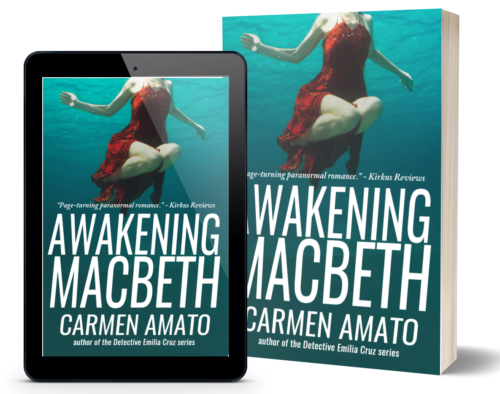
Maybe I’m partial to the book because A Midsummer Night’s Dream features in a nightmare sequence in my suspense novel AWAKENING MACBETH.

Also, I played Tatiana in a high school production of A Midsummer Night’s Dream. But that’s only one more reason to enjoy the historical suspense of FOOLS AND MORTALS.

You may also like

Book review: RED SPARROW by Jason Matthews

Book review: RED SPARROW by Jason Matthews

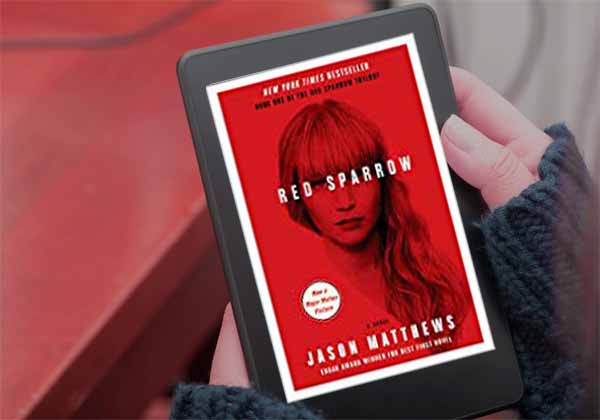
RED SPARROW by Jason Matthews is a gripping Cold War espionage thriller in the style of John le Carré’s thrillers. Except longer.

SPARROW starts with a heart-pounding and authentic scene of spy tradecraft in Moscow. Nathaniel “Nate” Nash is stalked by Russian security services as he meets with an important SVR agent—SVR being the successor to the Soviet KGB intelligence service—who hands him valuable intelligence files from the SVR vault. The agent isn’t identified and Nate hangs onto the goods, but his cover as an economic officer at the US Embassy in Moscow is tainted. He’s sent home, into CIA career limbo.

Next we meet Dominika Egorova and follow her road to becoming an SVR “sparrow,” an intelligence officer trained in the art of sexual seduction and recruitment. Her backstory is long and complicated as she goes from prima ballerina derailed by a rival to trained intelligence officer to “demotion” to sparrow. Her Uncle Vanya is a ruthless spymaster who manipulates Dominika and her career, holding family matters hostage so Dominika does his bidding.

Dominika is also rather unique in that she can see auras, so she knows when people are lying or have killed, etc.

Huh? Trust me, Matthews makes it work.

Given a second chance, Nate is assigned to the US Embassy in Finland. Dominika is sent there to get to know the American and find out who he met in Moscow.

Soon Nate and Dominika are stalking each other at a public swimming pool in Helsinki and the Great Game of spy versus spy begins. The reader is immersed in the uncertainty and duplicity.

Does Nate recruit Dominika or does she recruit him? Are either of them a double agent?

Do they really fall in love? Or are both using sex to advance their careers?

Former KGB puppetmaster and now Prime Minister Vladimir Putin (this is before he was president) floats in and out of the narrative, perfectly described as a “blond scorpion with languid blue eyes.” Before the era of Facebook and online hacking, Putin’s intelligence services are up close and personal with their targets. They hunker down in Lada cars watching Americans walk the streets of Moscow and conduct psychological war through human proxies like Dominika.

Like le Carré’s THE LITTLE DRUMMER GIRL, the theme throughout RED SPARROW is who is real and who is false. Who is using and who is being used. There is so much meaty backstory that we are tempted to dig for buried clues. But there are many layers before we get to Russian bedrock.

There is also a short recipe at the end of every chapter in RED SPARROW, tempting us with delights like “Sparrow School Tokmach Soup.” At first I wondered if this was a joke, or a misguided effort to make an espionage thriller appeal to foodies. But in truth, it is just another way that Matthews lures us into his seductive world of spy versus spy. (If you are wondering about Soviet eats, check out the fabulous memoir MASTERING THE ART OF SOVIET COOKING by renowned food critic Anya Von Bremzen.)

The new RED SPARROW movie starring Jennifer Lawrence has gotten mixed reviews. I haven’t seen it, but if Hollywood followed the book faithfully, a lot has been crammed into two hours. For those who want to spend more time in the world of cloak and dagger, RED SPARROW is the start of an absorbing trilogy, which includes PALACE OF TREASON and THE KREMLIN’S CANDIDATE.

You may also like

Dan Petrosini and the Detective Frank Luca series

Dan Petrosini and the Detective Frank Luca series

Dan Petrosini, mystery author and wine afficionado, was featured last month in the Mystery Ahead newsletter. His latest is THE SERENITY MURDER–just the name gives me the shivers. If you like police procedurals as much as I do, here’s a replay of our chat.

1  Carmen Amato: Dan, thanks so much for stopping by. Your police procedural series features Detective Frank Luca, (AM I THE KILLER, VANISHED, THE SERENITY MURDER) with action that travels between Florida and New Jersey. You describe them as “noir-heavy” detective stories. Tell us about the type of crime featured in the series.

Dan Petrosini: It’s great to be here. Luca, a homicide detective, pursues killers. Usually, he investigates one puzzling murder per story. However, Book 4, which is to be released in a couple of weeks, revolves around a serial killing.

2  CA: Luca has had a troubled life. How does that impact the plotlines of your books?

Dan Petrosini: Like all of us, Luca has personal issues; sickness, divorce, self-doubt, etc. At times they impact how he approaches a case and other times it’s a sub-plot. I’m a fan of realistic fiction. There are no super heroes or special powers in the real world and Luca lives in the real world.

Dan Petrosini3  CA: How did your writing style develop and what books and/or authors inspire you?

Dan Petrosini: When I began writing novels my writing at times was too dense.  I have worked hard at creating quick paced stories with realistic dialogue and the feedback is positive. I’ve accomplished that.

4  CA: You can invite any author, living or dead, to dinner at your home. What are you serving and what will the conversation be about?

Dan Petrosini: Whoa, just one? This is tough. Can’t we have a dinner party? My pick would surprise most people – Alexander Solzhenitsyn.  His portrayals and recounting of harsh Soviet means to silence dissent resonated with me.  Not one for goulash, we’d chat over fish and pasta washed it down with a river of wine.

5  CA: What is your best protip? Tell us about a writing habit, technique, or philosophy that keeps your writing sharp.

Dan Petrosini: I believe the most important component to writing successfully, is to do it regularly.  I write each and every day. My word count has grown and it has become easier. Not easy, but easier.

I realize many cannot find the time each day, which is fine. Find a time, one hour a week, one day a week, etc and stick to it. You will be surprised at how being disciplined will improve your craft and the words will pile up.

(Additionally, read like a mad man!)

More about Dan: Born in NYC, Dan Petrosini lives in SW Florida. Married with two adult daughters and a needy Maltese, Dan has written eight novels. Passionate about motivating others to pursue their dreams and creative sides, he plays saxophone in several bands and drinks too much wine.

Website www.danpetrosini.com

Amazon Author Page – https://www.amazon.com/default/e/B004LYEJ9E/

FB – https://www.facebook.com/DanPetrosiniAuthor/

Twitter – https://twitter.com/JAZZYWINE

You may also like

Dan Petrosini

Season of change, complete with koi pond

Season of change, complete with koi pond

It’s the season of change.

After years as professional nomads, we finally bought the Dream House. The move to a new state was a 60-day exercise in logistics and determination during which we sold Old House, bought Dream House, packed up, and drove caravan-style for 2 days.

The television and printer, as well as much of my pottery from Mexico and Nicaragua, were casualties of the moving company. Otherwise we survived the ordeal intact to find that Dream House came equipped with a koi pond.

koi pond

Nothing against koi, but I never wanted any. The  pond is a magnet for the dog and takes time and attention to maintain. Koi food costs $30 a bag.

My husband calls them “the freeloaders.”

BUT watching flickering flame-colored fish soothes nerves frazzled by the Great Task of Settling In. Now after 3 weeks, 90% of the boxes are unpacked and I know how to get to the grocery store.

As a result, the draft of RUSSIAN MOJITO: Detective Emilia Cruz Book 7 beckons. Big changes in my life will translate into big changes for the first female police detective in Acapulco, too.

But first . . .

Step 1

Find a dedicated writing space.

We decided to repurpose rooms. The family room off the kitchen has become the Banquet Hall. The dining room will be my new office. This means getting rid of the chandelier and the chair rail, not to mention the mud brown paint, to which the previous owners were much addicted. Brown is not a creative color, IMHO.

Step 2

Get organized.

While I want to devote 100% to Emilia and company, there are many demands on my time and getting this house together is a major one. Establishing a routine will help maximize my writing time, as will simple repeatable processes (for updating social media accounts, running Amazon ads, etc). This means gathering up all my old notes from webinars and articles about productivity and implementing advice that works for my schedule and situation.

It’s a game of increments, as a clever gentleman recently advised me. Small gains on multiple fronts are achieved by organization and perseverance and eventually add up to Big Things.

Now, now, now

Being Type A, naturally I want everything done yesterday. Wish me luck!

But as another wise person said, it’s all about the journey.

Time to feed the fish.

You may also like

season of change

Straight Shooting with Mystery Author Mike Faricy

Straight Shooting with Mystery Author Mike Faricy

I just finished THE OFFICE, the 17th entry in Mike Faricy’s addictive Dev Haskell series and immediately scooped up his Dev Haskell boxed set. The books are like Pringle’s chips–you can’t read just one. In this chat, which originally appeared in my Mystery Ahead newsletter, Mike shares the secret of his writing success.

1  Carmen Amato: Mike, thanks so much for stopping by. Your wonderful Dev Haskell series is a briskly-paced PI series with a main character whose inner voice channels Robert B. Parker’s Spenser. Tell us how Dev came to be and the type of cases he handles.

Mike Faricy: Thank you for having me, Carmen. It’s great to be here. Over the years I wrote maybe fifty or a hundred, no doubt award winning, first chapters. Then one day I had a unique thought, maybe finish one of these or stop wasting your time, so I wrote Russian Roulette, the first book in the Dev Haskell series.

I’m a voracious reader and when I land on an author I like, I inhale just about all of their work, Robert B. Parker, Elmore Leonard, Carl Hiaasen, Stuart MacBride, Ian Rankin along with a number of others. I had a ton of ideas bouncing around in my thick skull, and once I finished Russian Roulette I thought I can write another book with this character. Suddenly, I’ve had a series going and it just keeps coming.

One of the things that surprised me was I initially wrote Dev Haskell with a guy like me in mind as my reader. Almost immediately I started getting emails and messages from women telling me how much they enjoyed the books. One woman said she would love a wild, getaway weekend with Dev, but you wouldn’t tell your girlfriends about it for at least ten years, and then, when you did, one of them would say, “I did that, too.”

Dev ends up with all sorts of women who think; you know with a little work I could maybe fix this guy. Of course, by the end of the book they’re telling him to never, ever contact them again. I think there’s a couple of restraining orders out there on him. The most recent work in the Dev Haskell series is The Office.

The Office by Mike Faricy2  CA: Dev’s world is populated with a great cast of multi-dimensional secondary characters who both help and hinder Dev. Where do you look for inspiration when creating characters?

MF: I look no further than real life. In all actuality some of the crazier characters are based on people I know, things that they’ve done, good and bad. What’s the line? Truth is stranger than fiction. I’ve found that to be pretty accurate. In a lot of my reading, things get so unbelievable. Some special forces guy jumps out of a plane using his raincoat as a parachute and lands on the roof of the White House to save the president.

Dev is involved more or less in day to day sorts of situations. He’s not saving the world from terrorists or stopping an international banking scandal. All my books are based on the sorts of people we all know. Maybe that slightly different kid you knew in grade school, you haven’t see in thirty years and you wonder what ever happened to them. You also don’t want to get too close, but you’re still curious. Often there is a history of bad decisions, or they were just plain lucky, but believe they’re suddenly smarter than the rest of us.

Plus, no matter what’s going on in your world, you read Dev and well, you figure, you don’t look so bad after all.

3  CA: Dev seems to date a different woman in every book! If you were his wingman, how would you introduce him in a bar?

MF: Carefully. He would be the perfect gentleman, or try to be, but in the end things always go the wrong way. He’s basically a nice guy. He’d help with a project, maybe paint a room, be kind to a child, bring you flowers or chocolate, maybe take you out to dinner where some crazy thing would no doubt happen, but in the end, he’s Dev Haskell. It’s just not going to work.

He has a ‘friend with benefits’ relationship with Heidi Bauer, but she regularly can’t see him because she’s with another guy or she’s still mad at him for whatever stupid thing he recently did. After a while women seem to wisely decide that, you know, this just isn’t working for me and they move on.

I had a scene where Dev’s cooking breakfast for a woman who spent the night after a romantic dinner and the toaster suddenly starts smoking. Turns out a mouse had been in the toaster and at that point, she’s getting dressed and hurrying out to her car never to set foot in his place again. That pretty much sums it up. That also really happened to a pal of mine, the mouse in the toaster, but that’s another story.

4  CA: How do you use setting to create and build suspense?

MF: Setting is really important, but I’ve always taken the advice of Elmore Leonard which basically said, keep it short. A line or two, not paragraphs, and don’t dwell on the weather. If you describe a smell and a weeks worth of advertising circulars and past due bills on the coffee table that sets the scene. Or, if it’s a tense situation and the individual can hear their heart pounding, it’s late at night and the stair creaks, that conveys quite a bit. I use the KISS adage, Keep It Simple Stupid.

5  CA: You can invite any author, living or dead, to dinner at your home. What are you serving and what will the conversation be about?

Mike FaricyMF: Elmore Leonard is the guest and I’d probably be serving a crock pot meal with ciabatta bread and plenty of wine. Something like white chicken chili or a stew, only because I wouldn’t want to be distracted in the kitchen. We’d have hors d’oeuvres, beverages and a wine with dinner. And a dessert, I love desserts along with a small plate of nice chocolates.

We’d talk about plot, characters, general information and also our failures. A highly successful author once told me that we all have a work that we keep under the bed. Something we slaved over and at the end, it just didn’t work. It’s always inspiring to learn how much everyone stumbles, and falls. Then, the successful people get up, dust themselves off and keep moving forward.

6  CA: Can you leave us with a quote, a place, or a concept from a book that inspired you?

MF: Here’s a quote that fits me perfectly. “Well, you give me too much credit for foresight and planning. I haven’t got a clue what the hell I’m doing.”  Robert B. Parker

Thank you so much for the opportunity, wishing you and everyone out there, all the very best.

Thank you!

More about Mike: Mike Faricy lives in St. Paul, Minnesota and Dublin, Ireland. He writes crime fiction, the Dev Haskell series and the Hotshots series are written under his name, the Corridor Man series under the pen name Nick James, and the Jack Dillon series under the pen name Patrick Emmett. His latest work of genius is the first in the Hotshots series, Reduced Ransom!.

Email: mikefaricyauthor@gmail.com  Website: http://www.mikefaricybooks.com

You may also like

Mike Faricy

Itzel’s story, or how she came to be in a thriller

Itzel’s story, or how she came to be in a thriller

Many of the pivotal moments in my life have happened over a good meal.

One time, however, the meal wasn’t even cooked.

There was a thriving expatriate community in Mexico City when we lived there. Soon after arriving, I met Delia from South Carolina. Her husband worked for a cell service company and they had two boys, both younger than my kids. Delia and Bob ended up renting a house near ours in the upscale Lomas de Chapultepec neighborhood. Delia and I both belonged to a small English-language writing group and the Newcomer’s Club.

Neither Delia nor I had ever hired domestic help when we lived in the United States but in Mexico it was somewhere between an obligation and a necessity. Domestic help was a big segment of the local economy. Salaries were low compared to the US. Houses were huge and pollution left a fine black ash on everything. Everyone had at least a maid and a gardener.

Related post: Swimming lessons, or how he got into a thriller

Expatriates had a lively underground network when it came to hiring. We heard which maids were looking for a post because their family had moved back to the US, who was lazy, who ran around, which placement services were reliable, and so on.

Delia hired a full time maid through a placement agency. Shortly thereafter, she invited us to a dinner party.

After drinks in the dining room, we four couples sat in the dining room set with Delia’s antique silver and crystal. Itzel, the new maid was very young and her navy blue uniform hung on her thin frame. She served the appetizer on individual plates and darted back into the kitchen through the swinging door. Later, she collected the empty plates and again disappeared into the kitchen.

We chatted while we waited for the main course.

And waited.

And waited.

Delia finally excused herself and went into the kitchen.

A minute later she asked me to come into the kitchen, too.

I found Itzel sobbing. Delia, whose Spanish was still at the beginner level, had no idea why there was no dinner.

The mystery was soon cleared up. Itzel had seasoned the fish as instructed, turned on the oven, and put in the pan.. But the fish didn’t cook. She fiddled with the scary knobs on the scary range, but 45 minutes later, the fish was still raw.

I’d seen this problem before. The young woman had put the fish into the storage drawer at the bottom of the range, not into the actual oven.

We quickly fried the fish in butter on the stove. Dinner was saved.

Later, I talked to Itzel. She was 16 and this was her first job as a muchacha planta, a live-in housemaid. It was also the first time she’d lived in a house with a stove, an oven, and a flush toilet. She was overwhelmed by the size of the house, all the different things she was expected to know, and the challenge of communicating with a family still learning Spanish.

But she was earning good money and got every other weekend off, when she went home to Veracruz.

Itzel unwittingly provided me with the outline of a character. Over the next few months, I colored in that outline until I had Luz de Maria, the woman who would anchor THE HIDDEN LIGHT OF MEXICO CITY.

female thriller character

Get THE HIDDEN LIGHT OF MEXICO CITY on Amazon

You may also like

female thriller character

Pin It on Pinterest