Book Review: Federales by Christopher Irvin

Book Review: Federales by Christopher Irvin

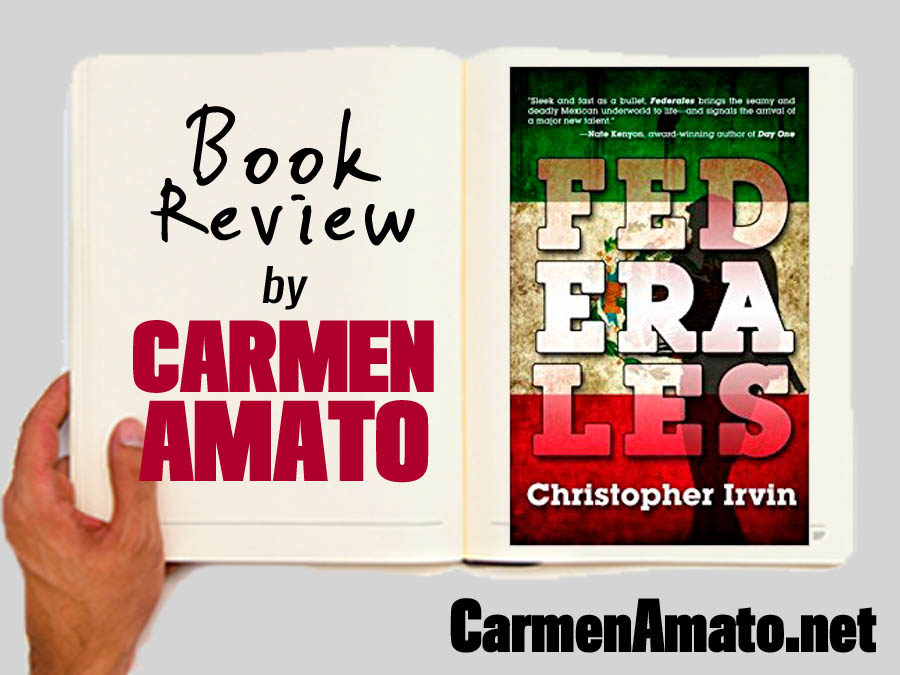
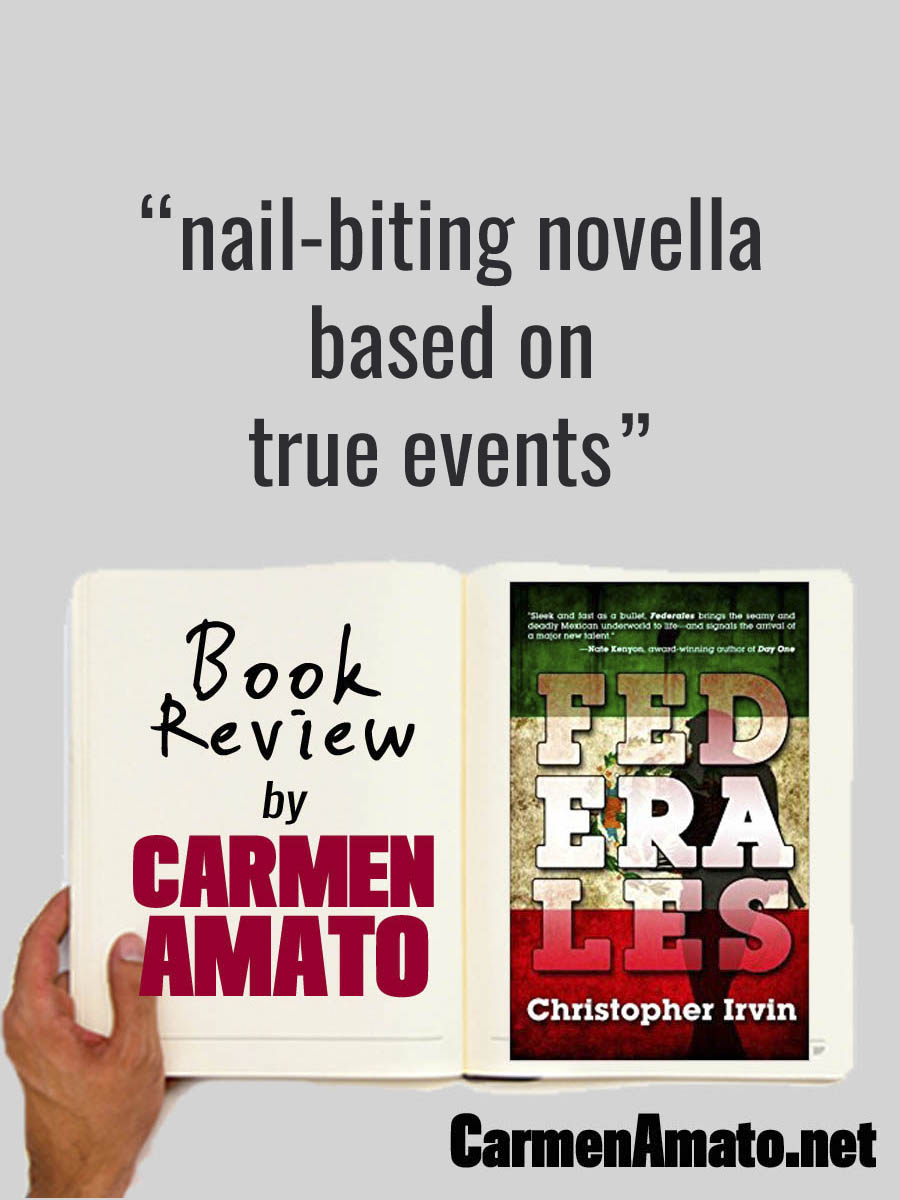
FEDERALES is a short novel by Christopher Irvin that packs a hefty punch, slugging the reader to the heart with a story about Mexican corruption, violence, but also redemption and hope. It falls into the same “narco noir” literary category as Guillermo Paxton’s CARTEL RISING and is as noteworthy. Although fiction, like CARTEL RISING, FEDERALES is based on real events in Mexico and reveals  harsh truths about law enforcement and the pervasive influence of the drug cartels with strong characters, well-honed descriptions, and atmospherics laden with authenticity.

Related post: Book Review: CARTEL RISING by Guillermo Paxton

In FEDERALES, Marcos is a Mexican cop at the national level, a federale. He’s a long-term survivor of the organization but when there’s a new boss–one with a well-deserved bad reputation–he knows his days with the organization are numbered. The message is delivered to him loud and clear that the new management is cleaning house in the form of a bullet left for him to discover. it’s a signal Marcos cannot afford to misinterpret. Marcos flees into boozy hiding, but a friend from his former life seeks him out with an offer to  protect a local female politician who has  been the victim of a near-fatal attack. She survived, but an electoral loss means that her official protection will soon be withdrawn.  Marcos sobers up and takes the job, but knows from the start that his chances of long term survival are slim at best.

Author Irvin paints a thoroughly riveting and believable picture of what it is like to be targeted in Mexico; the fear, the constraints, the paranoia and distrust.  His protectee, who has a young daughter, is determined to carry on her political agenda, which is nothing so radical as honest politics and security for the citizens she serves. Yet her outspoken efforts mean she is besieged by enemies on all sides; enemies who are fueled by drug money.  Marcos does not know whom he can trust, her supporters know that she is a marked woman, and those who will help are less than competent. Her message resonates with Marcos, and a connection builds that goes beyond politics yet stops short of a romantic relationship.

At the end of the book, I was sure I recognized the woman the author had in mind when he wrote FEDERALES, and I was right. In a moving afterword, Irvin writes about the death of Maria Santos Gorrostieta, who was kidnapped and murdered in November 2012.  Santos Gorrostieta, the former mayor of a small town in western mexico, had previously survived two assassination attempts as a result of her outspoken stance against drug cartel violence.  I had previously written a blog post about her, similarly aghast and angered by the toll Mexico’s drug war is taking on civil authorities and those who don’t want to see their country descend into corruption and chaos.

Related post: Be Angry and Pray Hard

FEDERALES is a tribute to Santos Gorrostieta, but it is first and foremost a riveting piece of crime fiction. I’m very glad to say that Christopher Irvin is a fellow member of the Mexico Mystery Writers Cartel and I’m looking forward not only to his blog posts but to more of his fiction.

Christopher Irvin

On the Occasion of My Second Anniversary as a Published Author

On the Occasion of My Second Anniversary as a Published Author

In addition to being a famous Mexican holiday, now celebrated around the world for reasons unrelated to the Mexican victory of Puebla over the French in 1962, Cinco de Mayo is also my anniversary of being a published author. My first book, THE HIDDEN LIGHT OF MEXICO CITY, officially came out on 5 May 2012.

Second Year Goals

Last year, when I reflected on the momentous occasion of my first anniversary, I was really amazed at how far I’d come in terms of books sales and skills acquired. I also set out some goals for my second year:

  • 5 books listed on amazon
  • Redesigned website with free download of Emilia Cruz mini-anthology
  • Re-release of HIDDEN LIGHT with new cover, lower price, and at least 1 promotion

It was a short list but all the goals were measurable and had a timeline attached to them. But the year ended up being much more than just those three goals.

Learning as I Go

As I headed into Year 2, I was uncertain about book marketing, this blog, the whole face-to-the-world thing. So I took time out from writing to take two online classes: Blog that Converts with Derek Halpern and Instant Bestseller with Tim Grahl.

Blog That Converts was supposed to help me redesign the website. It did that but also opened my eyes to the whole issue of how people respond to online messaging and what makes them connect to a blog/product. Blog That Converts is primarily directed at those who run an online business but I really got a lot out of it.  Derek Halpern’s socialtriggers.com website is full of ideas, not just in regard to the content, but also in regard to how Derek presents information and how the site is designed.

I was one of the beta testers for the Instant Bestseller course, which is based on Tim Grahl’s book, YOUR FIRST 1000 COPIES. The book is hands down the most intelligent discussion of how authors must connect with readers in the new publishing age in order to be successful. Tim has a lite course that is free on his website. I hope Tim expands both the course and his website with more resources and case studies; I plan to regard him as the oracle for the foreseeable future.

Website Redesign

Both the classes helped me give this website a major upgrade with catchthemes.com’s Catch Everest pro theme and a monthly author newsletter via the aWeber email service.

Subscribers get a copy of THE BEAST, the first Emilia Cruz story which was previously featured on The Huffington Post’s Fiction 50 showcase, plus a guide to writing book reviews, my list of top 10 international mystery series, and monthly updates with exclusive excerpts and book release news. Making a newsletter has been another learning curve and I’ve been helped by fellow Instant Bestseller students.

I’ve probably spent too much time this year on web design, Twitter profile design, and Facebook covers. But as a book may be judged by its cover, so is an author judged by the professionalism and quality first impressions. I get a lot of positive feedback on the look of this website, my Twitter background, etc. Presentation makes a difference.

Book List

This anniversary I have 4 books listed on Amazon, not the 5 I’d planned. The 5th book was to be a short memoir based on letters I’d written while a student in France many years ago. I put it on the back burner while taking the courses above and the manuscript stares at me balefully as I type.

HAT DANCE and MADE IN ACAPULCO were released, however. HAT DANCE, the second Emilia Cruz mystery, was on the Top Rated Top 10 for Amazon’s International Mystery category for several months, and might still be in the Top 100. I think CLIFF DIVER still is. (I’ve stopped obsessively checking things like that, which is a major accomplishment on its own.) MADE IN ACAPULCO is a collection of short stories and includes the first two chapters of THE HIDDEN LIGHT OF MEXICO CITY.

The black matches-and-smoke anniversary cover of HIDDEN LIGHT turned out great. Bold, eye-catching, yet clean. It might be my favorite cover yet. HIDDEN LIGHT sells more in paperback than any of the other books. Maybe it’s the cover or maybe political thriller readers buy more paperbacks than mystery readers who prefer Kindle?

glasses of waterWriting for Water

Long before the Emilia Cruz series hit Amazon’s algorithm I knew that if I made enough I would donate a portion of my proceeds to Water.org, the charity co-founded by Matt Damon to bring clean water to communities worldwide. So despite the fact that Emilia hasn’t knocked Jo Nesbo off the top of the mystery charts, I decided there was no time like the present.

I started in January 2014, donating $1 from every Kindle book I sold to Water.org. After a bit I wondered if some fellow authors might like to help and Sharon Lee Johnson, Norm Hamilton and Jerry Last all stepped up with donations and promotional support. As I felt the effort gaining traction, I put up the Writing for Water page and set a goal of giving 25 people clean water for life. And it is happening! @Water is retweeting our updates, I got a nice email from the home office, and our numbers are climbing!

Have you ever done something that turns out to be bigger than the sum of its parts? Seen real change because of just a small thing? That is what is happening because of all the wonderful readers and fellow authors who are sharing this journey with me. We are giving clean water and changing lives. It feels amazing.

Golden Friendships

More than anything else, be it steadily rising book sales, the growth of the Emilia Cruz series, or an improved website, this second year has been made memorable by some wonderful virtual friendships with fellow writers. Norm Hamilton, Sandra Nikolai, Khaled Talib, Andrew Chesnutt, and especially Jane Rosenthal and Jerry Last have shared time, attention, advice, and good cheer. David Bruns from the Instant Bestseller course has helped with website ideas and tips, while Sharon Lee Johnson has been an infectious cheerleader and work ethic champ. Every day, on Twitter and Goodreads, I meet a fellow author with whom it is a pleasure to trade war stories and cheer success.

I’m thrilled to be participating in a group blog with 4 talented writers: Jane Rosenthal, Christopher Irvin, Guillermo Paxton, and John Scherber. The Mexico Mystery Writers Cartel is just getting off the ground but will be a locus for mystery and Mexico fans alike.

The team at Latinas4LatinoLit.com really gave my visibility a boost last summer with a series of 10 blog posts. Likewise, the editor of Mamiverse.com, Lorraine C. Ladish was a guest on my blog and hosted my article on bilingual humor. More opportunities came my way for guest posts, reviews, syndicated posts, etc. 

Time Management

Done properly, social media is not so much of a distraction as great tools for connecting and researching. I use Twitter and Pinterest to find great web design resources, news about Mexico, etc. Facebook is for advice from fellow authors and some great free promotion. I had been using the free version of Buffer, which seems to have gotten the vapors, so HootSuite is likely in my future.

Keeping a blog updated is hard work and it is tempting to turn each post into a nonfiction article about something I find interesting.  My “Future of Bookstores” series has been a huge time investment but I’m not sure it has had any impact on book sales. DIABLO NIGHTS might have been out 2 months earlier, too.

Yet I had the opportunity to connect with some amazing folks I would have  never have encountered otherwise: thriller author Dale Brown, with whom I had a memorable online exchange; Bernard Cornwell, author of the legendary Richard Sharpe series: Guy Kawasaki, author of APE: Author Publisher, Entrepreneur, and C.M. Mayo, author of a number of literary gems set in Mexico.

Now that I have some experience behind me, however, in the coming year I will keep unrelated blog posts from stealing too much writing time. Maybe I’ll cleverly combine things with a series on time management for authors!

For Next Year

For my third year of being a published author, here are my goals:

  • Meet or surpass goal of providing 25 people with clean water for life via donations to Water.org based on book sales in 2014
  • 2 more books listed on Amazon (DIABLO NIGHTS, the third Emilia Cruz novel is slated for late June release)
  • Publication of at least 1 Emilia Cruz short story in an anthology or ezine
  • Book trailers for all the Emilia Cruz books
  • A core group of 500 readers I connect with monthly via the newsletter
  • 100 subscribers to the Mexico Mystery Writers Cartel

Watch this space to see how it all turns out. While you’re at it, let me know your goals for the coming 12 months!

All the best, Carmen

You may also like

published author

Book Review: By Its Cover by Donna Leon

BY ITS COVER is Donna Leon’s 23rd Commisario Brunetti mystery novel and it follows the series’ tradition of immersing the reader in today’s Venice. The mystery revolves around a crime rooted in Italy’s ancient classics yet the country’s modern problems of corruption and over-bureaucracy are key to the plot.

The director of a privately-funded library full of rare and antique classic volumes discovers that books have been pillaged–drawings have been sliced out, rare illuminations taken. When Brunetti investigates, it appears that some books are missing from the library’s inventory. The culprit appears to be an American professor who has been doing research there for several weeks. Alas, he has disappeared, his bona fides are revealed to be false, and the criminal appears to have gotten away with his crime.

Related post: Book Review: THE GOLDEN EGG by Donna Leon

Yet there are other leads for Brunetti to follow. The library owes much of its livelihood to an important patroness, affording Brunetti the opportunity to have a deep conversation about the value of books. The conversation doesn’t necessarily move the plot forward, but serves as a platform for an issue that Leon obviously feels deeply about.

BY ITS COVER refers to apparently real episodes of book looting and subsequent closure of libraries in Italy.  Literary and national treasures are being lost in this way, and through Brunetti’s conversations, we understand what a huge loss to humanity this is.

While BY ITS COVER isn’t the most gripping Brunetti mystery, it may be the one with the most important message. As Brunetti slowly gropes toward a resolution to the library thefts, the familiar cast of the series’ characters  both help and hinder. Vice Questore Patta plays his usual oversight role and his self-serving attitudes and political concerns remain as deliciously crass as always. Brunetti’s wife Paola and Patta’s secretary Elettra both assist in their own ways, while the faithful Inspector Vianello is still the able sounding board as Brunetti pieces together the elements of the case.

Related post: Book Review: THE BAT by Jo Nesbo

Many of the more recent Brunetti mysteries refer to Italy’s political corruption and this one sustains the trend.  Leon’s characters are uncomfortable speaking on the telephone, sure their conversations are being overheard. Nearly everyone has caustic remarks to be said about the inefficiency of government and the dishonesty of politicians. If you’ve read anything about the Berlusconi years, it isn’t surprising. The books only ring with greater authenticity for it.

Publishing Insiders Dispute the Future of Bookstores

Publishing Insiders Dispute the Future of Bookstores

publishing insiders

You may also like

Can publishing insiders predict the future of bookstores? What will stores look like in 10 years as they face competition from ebooks and ecommerce?

Over the past 6 months I’ve asked more than 800 people this question, including fellow authors, as well as book bloggers, marketers, and store owners. I’ve also followed the online debate fostered by many who have a large stake in the issue, notably those in the traditional publishing industry. 

The result of my curiosity has been a series of articles. The first article, with 25 author comments, including those from thriller author Dale Brown and Guy Kawasaki, author of ENCHANTMENT, was a real eye-opener and my most widely shared blog post (I’ve stopped counting).  Book bloggers presented more enlightening views, while the series has also explored book retailing innovation and potential partnerships.

This article, with widely divergent views from publishing insiders, raises the most questions out of all of the articles in the series so far. Many bash Amazon.com, without acknowledging that traditional publishing may be a “declining value proposition,” as economist Adam Gomolin ably put it.  Others believe that the indie bookstore, with a couple of baristas and roots in the community, offers the best hope for continued bricks-and-mortar stores even while acknowledging that owners must become more savvy retailers. The age of owning a successful bookstore just because you love books is over.

Questions I thought would be hot topics for the publishing industry really weren’t in evidence: 1. How to change book distribution to improve cost structures for bookstores, and 2. How to get the growing number of independently published titles into physical bookstores?  

Maybe the lack of big discussion is answer enough.

Note: comments listed in alphabetical order by commentator last name

Carolyn Burns Bass

founder and moderator of LitChat, a website devoted to reading and writing and #litchat Twitter discussions, email to author, 3 December 2013

www.carolynburnsbass.com and http://litchat.com

The writing is on the wall and the wall is electronic. As much as we love the smell of books, the turning of pages and beautifully designed typography, ebooks are the literary delivery devices of the future. Despite the convenience of ebooks, there remains, and will for a good many years, a devoted clientele for collector’s edition books and first editions. Publishers understand this and are even now responding with special designs such as wrap around covers for trade paperbacks, more deckle-edges and stunning interior designs. The bookstore of the future will feature these books, as well as kiosks such as the Expresso Book Machine for printing books on the spot. The bookstore of the future will have an agreement with publishers to get discount codes on ebooks their customers buy while logged into a bookstore’s wi-fi or from a local bookstore’s website. Successful bookstores of the future will cater to their patrons as a neighborhood deli serves its customers. They may not have every variety of salami, but they always have what their customers like best.

To survive against online book sales, bookstores can create alliances with other local businesses, such as a coffee/tea, juice or even a wine cart brought in during author visits. Bookstores of the future can be hubs of learning and culture, where people gather to buy books and talk about them. Of course, a bookstore is a logical place to host writing as well as reading groups, mini-TED-type talks, open mic readings by authors/poets, and other public discourse.

If this is not the bookstore of the future, then it’s my dream bookstore.

Carole Corm

publisher, Darya Press, 28 Jan 2014, email to author, www.daryapress.com

I don’t think I am the only person who misses their local bookshop. For the future, I am rather optimistic. I think bookshops could experience a renaissance.

Many people have remarked that the publishing industry is changing: beautiful, niche books continue to be published while the rest is delivered in the e-book format. In fact, there is already a market trend for well made books — whether cheap or high end. These volumes need a fitting space to be looked at – and bought.  In a way, the whole Internet adventure is going to help bookshop owners up their game, offering only the best books, in an improved setting and with the kind of service and perks the Internet cannot compete with.

Doris Heilmann

publisher and blogger, email to author 22 Jan 2014, http://SavvyBookWriters.com/blog, http://www.111Publishing.com

How can bookstores innovate to stay competitive? Just a couple of ideas that pop in mind : )

1. e-Book Order Feature
Since years I was wondering why bookstores did not offer their customers devices where they could order the e-book version if they liked what they found in print in the store. Or at least “bundle” print books with an e-book version. Amazon now tries to partner with bookstores (which might meet some resistance…) to offer exactly what I had envisioned.

2. Carrying Author-Published Books
Trade-published books do not automatically mean quality. There are so many wonderful books from independent authors out there – and it would be a smart move to offer them as well. Readers don’t care who publishes a book, they just want a good read.

3. Order Directly from Author-Publishers
This way, bookstores could circum-navigate the wholesalers and increase their profit quite a bit! As these connections are mostly with local authors, the bookstores could play the “local” aspect into their promotions to the communities around. Most people like to “know” the author who’s books they buy.

4. Offer Book-Layout, Cover-Image and Editing
Why not band together with professionals and offer authors these services to make sure the books’ content and layout gets a great start and is prepared for the Espresso Book Machine. Many authors would be happy to get technical help in the book production and publishing process.

5. Set up an Espresso Book Machine
Many authors (professional and hobbyists) struggle to create very small numbers of print books, e.g. for book signings, Goodreads Giveaways or as gifts. Bookstores would be the ideal place to offer this inventive book printing device. Motto: “Get your book printed while having your Java”, which brings me to the next suggestion:

6. COFFEE! Most chain stores, such as B&N or Chapters have a Starbucks in a designated area, but very few bookstores offer this pleasure. Independent bookstores need to give customers more reasons to come in!

7. More Space and PR for Author Readings
Supporting events such as readings and book signings should be a priority of bookstores – and organizing these professionally, including PR, should be a no-brainer. After all it is a promotion for the store as well.

8. Providing Space for Author Meetings
Charging a small fee (as libraries do) and renting meeting space for authors or even organize a writers conference could be profitable and at the same time a good PR for bookstores if they have the space.

Hugh Howey

author and self-publishing advocate,“Is Amazon Saving Indie Bookstores?” 18 April 2014, http://hughhowey.com

I posited this during my keynote speech at the inaugural PubSmart conference here in Charleston, SC. And nobody threw anything at me. A few people came up afterward and wondered if there might be some merit to the idea. My thinking is this: The true enemy of independent bookstores has been the large chains like Barnes & Noble, Borders, and Waldenbooks, not online shopping. There was even a movie about this. Since the rise of Amazon, we’ve seen some of these chains shutter and many of the B&N stores close. Meanwhile, independent bookstores are experiencing near double-digit growth for three years running.

Is it possible that Amazon more directly competes with the large chains, and the independent stores are rising to reclaim their role in reading communities? I think so. Shoppers looking for discounts, or who know exactly what they need ahead of time, are using mouse clicks rather than driving to the big chain.

It’s also possible that the “shop local” movement, which is partly a response to the rise of discounters like Amazon, vastly benefits independent bookshops more than large chains. I know this works for me. I pay full retail for hardbacks at a mom-and-pop place but balk at 20% discounts from chains. Are there more shoppers like me?

Major publishers lambast Amazon, because they think the large chains are their main hope for the survival of brick and mortar bookshops. Independent bookstores (like the one I used to work in) go right along with the stone-throwing, assuming what’s bad for B&N and Borders must be bad for them as well. And yeah, I saw people scanning UPC codes and taking pics of books to buy online later. I also saw our sales numbers improve every year, partly because of our reorganization of the shop and our focus on customer service, but more because of the shuttering of WaldenBooks.

Amazon is knocking out the big predators. The indie bookshops are filling up some of that space.

Andrew Leonard

staff writer, “The independent bookstore lives! Why Amazon’s conquest will never be complete,” 4 Apr 2014, salon.com 

Stop carving that gravestone. Brick-and-mortar bookstores aren’t dead, yet. On the contrary, independently owned bookstores are growing in number. According to the American Booksellers Association, since hitting a nadir in 2009, the number of indie bookstores in the U.S. has grown 19.3 percent, from 1,651 to 1,971. The current total is less than half the 1990s peak of around 4,000.  But it still serves as a rebuke to the conventional wisdom that equates Amazon’s relentless rise with the inevitable death of the physical bookstore.

What explains this renaissance? The collapse of Borders in 2011 is one big piece of the puzzle. (Removing a dominant carnivore from the savannah gives all the other animals a little more breathing room.) The end of the recession also contributed to a more nurturing economic environment.

But there’s more to the story. There is increasing evidence that the same digital transformation that has so dramatically reshaped the publishing industry, and driven millions of consumers online, also paradoxically rewards locally rooted authenticity. Our digital tools are steering us toward brick-and-mortar stores that promise a more satisfactory consumer experience than either chain stores or online emporiums can provide.

In a world increasingly influenced by our social media interactions, it’s turning out there may well be enough room for the little guy to survive — and perhaps even thrive.

 Michael Kozlowski

founder, GoodEReader.com, “The Future of the Traditional Bookstore in a Digital World,” 9 Sept 2013, goodereader.com

. . . Book discovery is central to bookstores and they invest significant time and money into aesthetics. Barnes and Noble, Indigo and WH Smith all have it down to a science on the art of product display and maximizing space to visually draw the eye. Your average best seller shelf is filled with vibrant colors and display stands hype up other notable authors or themes.

How will the modern bookstore change when by 2015 the amount of digital books sold will reach 50%? We have seen the collapse of Borders in the US, Whitcoulls in New Zealand and RedGroup in Australia. Thousands of small bookstores all over the world have also closed due to readers shifting to digital. How will bookstores transition from exclusively selling physical books to actively promoting eBooks?

The one worry many bookstores face is being a showroom for 3rd party eBook companies. This is evident in the relationship with bookstores that belong to the American Booksellers Association and sell books from Kobo. The indie bookstore makes very little commissions on each eBook and relies on selling physical books to stay in business. Barnes and Noble is the only one in the world with quite a large ecosystem of content and makes hefty digital returns.

Indigo, Chapters, WH Smith, Foyles and many other bookstores all sell tablets and e-readers in their stores. Over the course of the last few years, reading devices have been a boon to these stores and they are seeing modest returns. Indigo recently has been launching a series of Tech Zones, which significantly increases the size of their product display area. They now sell iPad, iPad Mini and an assorted array of new e-readers and tablets. When customers buy these devices, where do they go to buy books?

The bookstore of the future must develop their own eBook infrastructure in order to preserve their own identity and maximize profits. It is critically important that major chains develop their own digital bookstore and sell eBooks directly to their shoppers. It is simply not sustainable to encourage all of your patrons to buy the digital editions from Amazon or Apple There is always more money to be made by phasing out the middleman and reaching your audience directly . . .

In the end, bookstores need to develop their own bookstore and develop a series of apps for readers to use. These need to be loaded on any tablet or e-reader that their store carries. If the hardware vendor does not want to play ball, you ditch them. Bookstores sustain themselves from selling books, magazines and hardware. They need to unshackle themselves from a strict reliance on a 3rd party and bite the bullet and develop their own digital storefront.

Cat Lavoie

author and #ChickLitChat Twitter moderator, email to author, 22 Feb 2014, http://www.catlavoie.com/

Even though I’ve switched from reading paperbacks to (almost) exclusively reading ebooks, there’s nothing that compares to the joy of browsing in a bookstore. I think bookstores need to collaborate with indie authors and publishers in order to highlight local talent. Book signings and book club meetings could also be a good way to create buzz and introduce new authors to bookstore patrons. And readers who prefer their novels in digital form could download their copy directly from the store. In the end, I think that embracing the new technology and finding a way to bring authors and readers together is how bookstores will stay relevent for, hopefully, many years to come.

Judith Rosen

“The Check Is in the Mail: Patterson Sends Over $267,000 to Booksellers,” publishersweekly.com, 19 Feb 2014

Last September 2 in an interview in the Wall Street Journal followed by an appearance two weeks later onCBS This Morning, James Patterson announced his intention to give away $1 million to independent bookstores over the course of the next 12 months . . .

A little over five months later, Patterson has made good on his promise and mailed out the first installment of the funding this week, totaling more than $267,000, to 54 bookstores across the country plus the Northern California Independent Booksellers Association in support of California Bookstore Day . . .

In a phone conversation with PW earlier this week, Patterson stressed that this is only the first round . . . A doer by nature, Patterson describes himself as “the anti-Congress. We just do stuff.” For him, that “stuff” concerns not just the future of bookstores, libraries, and publishers, but of the next generation of readers. “The future of books in America is at risk,” he said. “Bookstore traffic is down. Kids aren’t reading as many books. I want to really shine a light and draw attention to the fact that this is a tricky time. The government will protect the automobile industry and the banking industry, but not books.”

Mike Shatzkin

founder of The Shatzkin Files, “The future of bookstores is the key to understanding the future of publishing,” idealog.com, 23 Jan 2014

It has been an unspoken article of faith that bookstores would not go the way of stores selling recorded music or renting and selling video, both of which are segments that have just about entirely disappeared. The physical book has uses and virtues that a CD, a vinyl record, a DVD, or a videotape don’t, not the least of which is that a physical book is its own “player”. But it also provides a qualitatively different reading experience, whereas the other “physical” formats don’t change the consumption mode at all. Of course, that only helps bookstores if the sales stay offline. People ordering books online are overwhelmingly likely to order them from Amazon. In other words, it is dangerous to use the book’s ability to endure as a proxy for the bookstores’ ability to sustain themselves. The two are not inextricably connected.

But the fate of almost all trade publishers is inextricably connected to the fate of bookstores. There are only two exceptions. Penguin Random House is one, because they are large enough to create bookstores on their own with just their books. The other is publishers who are vertical with audiences that open up the possibility of retail outlets other than bookstores. Children’s books and crafts books are obvious possibilities for that; there aren’t a ton of others.

The feeling I had at Digital Book World is that most people in the trade have either dismissed or are wilfully ignoring the possibility that there could be such serious further erosion of the trade over the next few years that it would threaten the core practices of the industry. With more than half the sales of many kinds of books — fiction in the trade area, of course, but also lots of specialized and professional and academic topics — already online, many seem to feel whatever “adjustment” is necessary has already been made . . .

All that is possible, and I have no data to refute the notion that we’ve reached some sort new era of bookstore stability, just a stubborn feeling in my gut that over the next few years it will turn out not to be true.

Oren Teicher

CEO of the American Booksellers Association, “A Year-End Letter From ABA CEO Oren Teicher” 12 Dec 2013, bookweb.org

. . . Nationally, the network of independent bookstores has seen and is continuing to see real, sustained growth. This vitality is the result of your hard work, innovation, and a commitment to selecting and showcasing titles that we passionately believe in and that we know will find readers in our communities.

A few years ago, I characterized this revitalization in conversations with our colleagues in the publishing community and in talks as a renaissance in indie bookselling. Today, that renaissance has become resurgence. When Publishers Weekly recently announced that it had selected me and the ABA Board as its person of the year, it was a wonderful acknowledgement of the collective achievement of all independent bookstores. As PW put it, “independent bookstores are once again seen as critical to the success of the book industry.”

. . . Believe me, I know you can’t pay your bills with press clips and that there will be many, many hectic hours before you make that last sale on December 24, but I hope that you can take a moment to appreciate that the public narrative about our industry has changed in a very critical way, as more consumers recognize the importance, vitality, and health of indie bookstores.

Kate Tilton

blogger and author assistant, 12 Feb 2014, via author website form, http://katetilton.com/

How can bookstores innovate to stay competitive?: Bookstores have to compete in prices. If it is cheaper to buy a book of equal quality but for a fraction of the cost elsewhere bookstores are going to lose. As much as I love a nice bookstore the convenience of online shopping and money saved makes it very tough for bookstores to stay open. Author events are one of the only things I make the trek out to a bookstore but author events can happen in other places too (libraries, coffee shops, churches). In order for bookstores to innovate they need to find a way to win over readers once again.

 Michael Weinstein

“Reports of the Bookstore’s Death Are Greatly Exaggerated,” bookbusinessmag.com, 13 May 2013

. . . Part of me wants to suggest that we take the emotional hot button of the “nobility” of the bookstore (particularly the local independent variety) out of the discussion and just talk cold/hard facts. But I don’t think we can. I think there are enough people out there that see (and feel) the value of the experience (as Sturdivant wrote), who want and NEED bookstores to exist, to contribute enough to keep them going.

But I also think that from a business sense, publishers see the value of bookstores. They may sell more books at Amazon, but publishers are smart enough (I hope) to recognize that independent stores can help “make” a book if they like it, that author readings and signings build loyalty . . .

Also, we need to continue to expand the definition of  “bookstore.” Obviously, most bookstores won’t be  “just” bookstores. In fact, books may not be the primary function of the store, but that won’t mean that they’re not bookstores. What each store offers other than books will depend on the owners — how smart are they? How in touch are they with what their local community needs? The physical store allows a community to be built around events and activities, and that is more potent than an online community. Sure, I’m in an online community of Wheaten Terrier owners, but talking online and sharing pictures with someone from Norway is just not the same as sitting in a room with your physical neighbors . . . .

Like everything else in our industry it will require ingenuity, flexibility and the ability to adapt on the go to succeed.

Tom Weldon

UK chief executive of Penguin Random House, as quoted by Jennifer Rankin in The Observer, 5 April 2014

Some commentators say the publishing industry is in enormous trouble today. They are completely wrong, and I don’t understand that view at all . . . Book publishers have managed the digital transition better than any other media or entertainment industry. I don’t understand the cultural cringe around books . . .

It is a sad fact of life that there are fewer physical bookshops than there were. [Traditional media is declining, including books pages. As the book world moves from] “a browse-and-display model to one of online search and recommendation, publishers must adapt to capture readers attention. The challenge isn’t digital: it is how do you tell people about the next great book.


From Book to Beach: Favorite Hotels in Mexico

From Book to Beach: Favorite Hotels in Mexico

Planning a trip to Mexico? Wondering where to stay?

Readers often ask if the Palacio Réal, the hotel in Acapulco that Kurt Rucker manages in the Emilia Cruz mystery novels, is real. The answer is well, sort of.sunglasses isolated on white

The luxurious Palacio Réal  is a composite of my three favorite hotels in Mexico.  Yes, I have stayed at all three and combined the best of each into the hotel in the books. This way, I get to re-enjoy my visits to each place with authentic descriptions each time the action in the books shifts to the hotel.

If you are planning a trip to Mexico, these hotels are worth checking out!

Related: 3 Essential Tips for Safe Travel in Mexico

Hacienda Los Laureles, Oaxaca

We stayed in this hotel several years ago when it was newly opened. It is an old Spanish hacienda two miles outside of Oaxaca proper, in a neighborhood called San Felipe del Aqua, that has been renovated with a sense of architectural history so none of the charm has been lost. The owners did everything they could to ensure we had a wonderful stay and fussed over our children with free desserts and appetizers. My daughter still recalls being called “la princesa” for a week.

After hard touristing at Monte Elban and other Oaxaca sites of wonder we’d spend late afternoons on the patio having bittersweet hot cocoa and soaking up the ambiance. We came loaded with restaurant recommendations for places in town but often ended up dining at the hotel. The food was amazing and the service warm and genuine.

Since that stay, the hotel has consolidated its reputation as the only 5-star AAA lodging in the Oaxaca area. It is a small gem off the beaten path.

Sheraton Maria Isabel Hotel and Towers, Mexico City

This hotel has so much to commend it. The first thing is a central location near the El Angel monument, the Colonia Cuauhtémoc business district, the US embassy, and the western edge of the Zona Rosa. The second is the shops on the ground floor including a good restaurant with reasonably priced food, a newsstand and souvenir shop, a clothing boutique, the first Starbucks in Mexico City, and a jewelry shop where I got a box covered in silver milagros charms. You can walk to a Sanborns department store for books and magazines. The hotel is a good base to explore the Zone Rosa district, including the Insurgentes market, across the wide Paseo de la Reforma (cross at the crosswalks only!!)

The third thing to commend this hotel is that the rooms are large, clean and everything you’d expect for an upscale hotel in a big city. The executive floors are worth the small extra amount, given that they come with butler service, a fantastic breakfast buffet in the executive lounge (you can watch the news in either English or Spanish depending where you sit) and an evening cocktail hour in the same place. You can get a reliable taxi out front. A much-vaunted St. Regis opened up a few blocks away but the Sheraton, in my view, is a much better location and value.

Related post: How to Find Love at Mexico City’s Markets

Camino Réal, Acapulco

If the fictional Palacio Réal reminds readers of any specific hotel, it is probably the Camino Réal. This luxe hotel is located on the eastern side of Acapulco bay, in an area called Puerto Marqués, not too far from the better-known Las Brisas resort. We stayed there twice, enjoying the secluded location, huge rooms, and terrific food. The hotel is a multi-level marvel built against the cliffside that its website describes as an architectural “cascade.” The way it is built allows for pools on multiple levels, excellent views, and a lot of quiet corners so it is easy to spend a lot of time there without running into many other guests.

Eating there is half the fun. Room service was wheeled in on a large round table draped with a floor-length tablecloth while the flagship restaurant cantilevered over the water made dinner a special occasion.

The out-of-the-way location keeps you out of the thick of the tourist activity in Acapulco, but the hotel has its own tour office and we were able to set up tours right there. Downtown Acapulco can feel similar to any busy beachfront town—albeit with better views—so staying at this hotel lets you have the experience that Acapulco was meant to be—a majestic sweep of ocean and the amenities to enjoy it.

Thinking of taking a break and heading someplace warm? My friend Dana at PositiveHealthWellness.com is extremely convincing with 8 Reasons Why Travelling is Good for You.  

You may also like

favorite hotels in Mexico

A Counterfeit Money Mystery

A Counterfeit Money Mystery

Have you seen the new US 100 dollar bill? Compared it to the old bill of the same denomination?

Money and Mystery

The changes in the $100 bill drive the plot of “The Cliff,” a short story from MADE IN ACAPULCO: The Emilia Cruz Stories. “The Cliff” later became the beginning of the full length Emilia Cruz novel, CLIFF DIVER.

In the story, Emilia meets Kurt Rucker and together they discover that a vehicle seized by the Acapulco police for a traffic infraction is loaded to the hubcaps with counterfeit money.

    Three hours later they were staring at six million green Estados Unidos dollars piled on the floor in her uncle Raul’s auto repair shop. The rear body panels of the Suburban were off, exposing the ingenious system welded into the car frame to accommodate brick-sized packages. Even the four-wheel drive mechanism had been cannibalized to create more hidden hauling capacity.

   “Money in, cocaine out,” Emilia said. “The Hudsons are mules.”

   Rucker fingered one of the dollar bills, his forehead furrowed with thought. The hotel manager had worked side-by-side with Tío Raul as if he repaired cars in a greasy garage every day. His beautifully starched shirt had been cast aside, revealing a white singlet undershirt and muscular arms. Both the white undershirt and khaki pants were now as dirty and oil-spotted as Tío Raul’s coveralls.

   “These are brand new bills,” he said.

   “So?” Emilia got him a glass of water from the big jug of Electropura purified water. Tío Raul had gone to the one-bedroom apartment over the shop to tell Tía Lourdes to make them all some breakfast.

   “A couple of years ago they changed the design of American money.” Rucker spread several bills on the tool bench. “Made the image bigger. Added a tint. New watermarks.” He took a swallow of water. “But these are the old design.”

   Emilia ran her finger over the crisp paper. “You think it’s counterfeit?”

Comparing

But I have a confession to make: I wrote the story before I ever held both an old and new $100 bill in my very own hands. This week, however, I was finally able to compare them side-by-side. I actually scanned two bills in order to create a featured image for this post, only to get a SERIOUS warning from Photoshop about altering scanned images of currency. Yikes. Hence the “Specimen” images from newmoney.gov, the website set up to tell the public about the changes to US currency.

Old US bill

US $100 bill, issued 1996 – 2013

The new bill, which entered circulation October 2013, “incorporates new security features to deter counterfeiters and help businesses and consumers tell whether a note is genuine,” according to the newmoney.gov website. According to a newmoney.gov press release, “The redesigned $100 note includes two new security features: a blue 3-D security ribbon with images of bells and 100s, and a color-changing bell in an inkwell” to help Washington “stay ahead of counterfeiting threats.”

new bill

New US $100 bill, issued Oct 2013

The US Secret Service has a great page on detecting counterfeit money, which you can read here. You can also read more about the changes in the US $100 bill in this 2010 USAToday article.

It worked in the story

But not the way you’d expect.

Of course not, because the story is set in Emilia Cruz’s Acapulco. It’s the Acapulco that tourists know; the sweep of the most beautiful bay in the world, the majesty of the clear blue Pacific, candlelit nights on the beach, and luxury hi-rises. But it is also the Acapulco that is a prize to be fought over by drug cartels–the city that is home to hookers and thieves, the streets where life is cheap and poverty is as pervasive as the wind off the ocean. Both of these versions of Acapulco claw at each other and force Emilia to survive between them. No investigation will be easy, no crime will be simple.

But there is one thing Emilia can always count on when she is investigating: money is involved.

In other news

Last week I reported that the Writing for Water team has now provided 10 people with clean water for life so far in 2014 with donations to Water.org based on book sales. Our goal is 25 for the year.

All this is made possible by readers like you. Thank you from the bottom of my heart.

If you are an author who would like to join us, we want to hear from you! Read more here and please contact me via email: carmen@carmenamato.net.

Also, on Thursday, subscribers to my monthly updates will get the the entire first chapter of the next Emilia Cruz mystery, DIABLO NIGHTS, delivered straight to their inbox. Get on the list and don’t miss it!

All the best, Carmen

You may also like

counterfeit money

Friday Fiesta: Focus, Book Discoverability, and a Discount

Friday Fiesta: Focus, Book Discoverability, and a Discount

The Friday Fiesta is stuff worth celebrating from the past week. This week it’s how to focus on a goal, the quest for discoverability, and a book sale in defiance of the trolls. The margaritas are on me.

Focus

What with one thing and another, I’m having some trouble finishing the last big scene in the next Emilia Cruz mystery, DIABLO NIGHTS. Stuff that is less hard keeps getting in the way, like designing the new Mexico Mystery Writers Cartel blog. (more on this in a few weeks) My writing buddy has been missing his deadlines as well, so it is easy to laugh it off.

But books don’t write themselves. This coming week I need to renew my focus and “git ‘er done,” as Larry the Cable Guy says. I found this list of 8 Daily Practices for improving focus from The Culture-ist and thought others might benefit from it as well. 

Discoverability

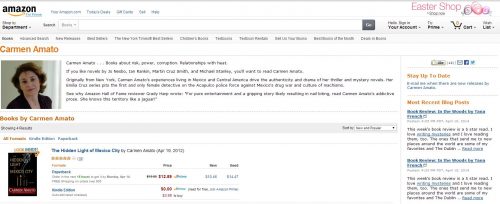
I’m not the expert in this field, but an online chat this morning with a Facebook friend led me to comment that too many authors neglect their Author page on Amazon, missing an important opportunity. Some don’t even link all their books to their page . But the Amazon author page is like a one-stop-shop for projecting your author image. So a couple of tips in case you are an author:

Capture_amazon


  1. Use the same picture for your author page as you do on Twitter, Facebook, etc.
  2. Write a bio that gets up front the sort of books you write and who would enjoy them. Amazon lets you write a sizeable bio but only a certain portion shows when folks land on the page and most won’t click to see more.
  3. Make sure all your books are linked to your page. This isn’t automatic, you must add them via the Author Central interface.
  4. Link your blog, using the RSS feed address, via the Author Central interface. Ditto book trailers and related videos.

This week Amazon liked my review of IN THE WOODS by Tana French so much it shows up 3 times on my author page. Tech love.

Discount

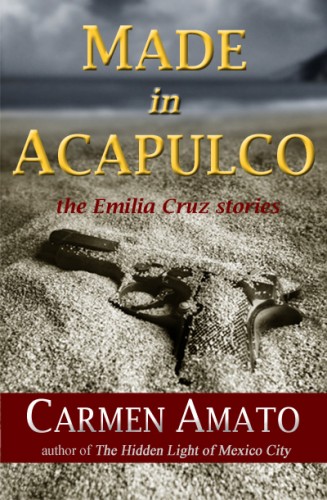
Made in Acapulco_final_300pxI recently realized that a troll left a 1 star review for MADE IN ACAPULCO, complaining about a computer program. Obviously this has nothing to do with the book. For those who don’t know, trolls are people who surf Amazon and Goodreads, leaving damaging reviews at random. Often, the same review is given to multiple books.
In defiance of the troll activity, I’m offering MADE IN ACAPULCO for $0.99 this week. MADE IN ACAPULCO is a collection of 5 Emilia Cruz short stories. (Get the first story FREE here.)

MADE IN ACAPULCO takes place before the action in CLIFF DIVER and HAT DANCE. They reveal Emilia’s first troubled first year as the first and only female police detective in Acapulco. Many of the stories are based on true events in Mexico, including poet Javier Sicilia’s rallies to raise awareness of the missing in Mexico.

Nothing to do with some computer program.

So in defiance of trolls, MADE IN ACAPULCO is $0.99 for Kindle this week. If you pick up a copy, please leave a very non-troll review. Thank you!

In Other News

Did you see the March update for water.org? The Writing for Water team has now provided 10 people with clean water for life  because of readers like you. Goal for the year is 25.

Have you gotten your copy of The 3 Minute Guide to Great Book Reviews? It’s free when you subscribe, along with a free copy of THE BEAST, the first Emilia Cruz Story, plus The Top 10 Most Riveting International Mystery Series.

Thank you! All the best, Carmen

You may also like

Book Review: In the Woods by Tana French

Book Review: In the Woods by Tana French

I love writing mysteries and I love reading them, too. The ones that send me to new places around the world are some of my favorites and The Dublin Murder Squad has quickly become a fascination. IN THE WOODS is the first in the series.

French, who is from Dublin and has a background in theater, writes as if she is narrating a play as the character of her main protagonist. In this case it is Adam Ryan, who now goes by Rob and is a detective on the fictional but fabled Dublin police Murder Squad. The reason for the name change is complicated: when Adam was a youngster, he and his two best friends went into the woods near their village outside Dublin. Two of the kids never were seen again, while Adam/Rob was found in shock, covered in blood, shirt torn, no memory of the trauma he’d survived. The case became a national outcry and investigation. To hide it, his family moved, he went to boarding school and college and changed his first name.

But the past catches up in an odd way; a girl is killed in the woods, in the same historic village. Ryan and his partner Cassie investigate without letting on that this is Ryan’s Waterloo.

The entire book is narrated by Ryan; his nightmares of the past, his piecing together of evidence, his relationship with Cassie, his drinking to dull his pain. The voice is deep inside his head, it’s relentless and addictive. The case is similar: relentless yet intangible; too many stray threads, people who are afraid yet manipulative. And then there are those who have been manipulated and they aren’t pretty. The story bogged a bit close to the end, but only for a few pages of complications. Otherwise it was engrossing and well paced. The slang is very Irish, good thing I already knew what a git was.

The undercurrent running throughout the book is what happened to Ryan and his friends when they were children. Why were the two other children never found? So there are really two crimes here, one in the past and one in the present. No spoilers, here, however, just a strong recommendation to read IN THE WOODS if you like your mysteries tall, dark, and Irish.

In the Woods

Writing for Water: March Update and Our Global Impact

Can a couple of indie authors make a global impact?

Yes,  and we are doing it.  In March 4 authors were part of the Writing for Water team: Jerry Last, Norm Hamilton and Sharon Lee Johnson joined me in pledging a portion of our book sales to Water.org, the charity co-founded by Matt Damon to bring clean and safe water and decent sanitation to communities worldwide.  The composition of the team changes monthly. If you are an author and want to pledge a month, please let me know: carmen@carmenamato.net.

This month’s progress

In 2014 the goal is to provide 25 people with clean and safe water for life. In March we added 5 for a total of 10 so far this year.

This means dozens of micro-loans through Water.org’s Water Credit program, rolling containers to transport large amounts of water, and toilet facilities instead of open sewers.  Here is the sort of change this means:


Global Impact

Our books and our readers are having a global impact! Still small, but as the March stats show, it is growing and I truly feel that our goal of 25 people is going to happen.

Writing for Water chart

Thanks to our readers

A big salute goes out to our readers, especially to those who bought Jerry Last’s THE DEADLY DOG SHOW, the best selling title for the team in March. Those who love dog shows and/or German Shorthaired Pointers, will find its behind-the-scenes peek into dog shows and dog training fascinating. Of course, it is a detective mystery so be prepared! Jerry will be part of the Writing for Water Team in April as well. Here’s the link to all the books for the March authors.

We need your help

If you are an author and would like to help, please consider joining the Writing for Water team. In exchange for your TAX FREE donation of at least $25, we’ll leverage our social media platforms (3k on Twitter, 2k on Facebook and that’s just me) to promote the heck out of your books for the entire pledge month. When was the last time you got a month’s worth of advertising for $25?? Check out more information here.

In other news

My next newsletter will have the complete first chapter of DIABLO NIGHTS, the next Emilia Cruz mystery. If you have not yet subscribed, you can do so here, and be the first to read a chapter with a VERY twisted end. I guarantee you will not see it coming.

Subscribers also get THE BEAST, the first Emilia Cruz story, plus THE 3 Minute Guide to Great Book Reviews, and my Top 10 Most Riveting International Mystery Series.

Happy reading! All the best, Carmen

Friday Fiesta: Of Water, Web Design, and Writing

The Friday Fiesta is stuff worth celebrating from the past week. This week it’s water and web design. Plus a bonus courtesy of omnimystery.com.

Water

In March, the Writing for Water Team was comprised of Jerry Last, Norm Hamilton, and Sharon Lee Johnson, plus, yours truly. What a great team! Norm really got the word out on Twitter, Sharon cornered Facebook, and Jerry found a new audience with dog lovers who have really embraced his latest mystery THE DEADLY DOG SHOW as well as his commitment to Water.org. Jerry is rocking on into April, as is Sharon, and he’s setting some pretty high goals.

If you haven’t already, check out Norm Hamilton’s novel of a dystopian Canada created by fracking, Sharon’s addictive zombie tales, and THE DEADLY DOG SHOW—murder goes to the dogs!

I’ll be doing the full Writing for Water Monthly Report next week but it’s looking like March brought another 5 people clean water for life.

If you are an author, please consider joining us with either a fixed pledge or a portion of sales. There is more information on joining the Writing for Water team here.

Oh, and here’s a great video from Water.org. When you see stories like this, you know your money is well spent.

Emilia dives in, too

I’m submitting a story to be included in OF WORDS AND WATER, an annual anthology of short stories, flash fiction and poetry. The purpose of the anthology is to raise awareness of the work done by the international charity WaterAid. It won’t be out until the end of 2014, but I’m excited to be part of the effort.

The story for the anthology is an Emilia Cruz story, but it is unlike anything I’ve done before. Subscribers to my monthly updates will get a free copy of it before the anthology goes to press. Working title: BROKEN MAIN.

Web Design

I spent three precious writing days reworking and updating this website. Over the 2.5 years I’ve had the site, it has experienced about 3 major upgrades. This week, I’ve come to some conclusions:

  1. Catchthemes.com has hands down the best and fastest customer service forum, plus tons of easy to follow instructions for their themes. No, I am not an affiliate, just a happy customer. I only wish they had more themes to choose from.
  2. Sliders take too long to load. I loved the look, but am just going with a large image on the home page for now. Until the next redesign.
  3. The site is like my living room. I’m inviting you in and want you to enjoy the time you spend here. Sure, I hope you sign up for my mailing list and get a free copy of THE BEAST, but I’m not going to put up acid green or sparkly orange forms. Mystery lovers pick apart clues all the time; they can find a tasteful form.

 The Next Great Thing

Together with fellow authors John Scherber, Christopher Irvin, Guillermo Paxton, and Jane Rosenthal, I am part of The Mexico Mystery Writers Cartel. We are all authors who write mysteries set in Mexico. From crime fiction to romantic suspense, we cover the genre and make Mexico the ultimate mystery destination.

Our new blog will have posts from all authors and should be live next month. Get ready for mystery with a touch of salsa fresca!

Writing the Ultimate Mystery Setting

I was hosted on Omnimystery.com last week and wrote about how authors can set a mood by describing a mystery setting in a mere 3 sentences. The post used examples to take the reader to Havana, Venice, Riga, Cairo, and of course, Mexico City. Read the post here.

Free Story

If you haven’t gotten a copy yet, THE BEAST, the first story in the MADE IN ACAPULCO collection is available as a free download. If you haven’t met Acapulco detective Emilia Cruz yet, you should. As Jane Rosenthal claims, “Emilia says all the things you wish you could–she calls BS on everything.”

That’s it for this week! Have a great weekend, hopefully with a margarita and a mystery.

All the best, Carmen

From Panama to Mexico and back again

From Panama to Mexico and back again

Every thriller needs the big climax, right? But suspense needs to be built with action scenes that intrigue us.

The mystery setting

Remember how in THE KEY TO REBECCA, there’s the big climax in the desert as the spy, Wolff, tries to get the radio he’s left with the Bedouins so he can transmit the stolen plans for D-Day? Author Ken Follett had already shown us the desert–we already knew its dangers and difficulties–in his careful build-up to the finale.

In the same manner, political thriller THE HIDDEN LIGHT OF MEXICO CITY takes us to the ocean at night. On the edge of a city called Panama, there’s a marina full of boats promising an instant getaway. Rain falls from an ashen sky and water swirls around the dock. It’s a build-up to the cartel jefe and the storm and the yacht and . . .

Er, well, sorry.

No spoiler today, just an explanation how a yacht came to feature in a thriller largely set in land-locked Mexico City.

Carmen at Panama City marina

Not the best picture I’ve ever taken but that’s me looking out over the marina by the Amador Causeway

Stormy skies over Panama

Panama is a skinny country bisected by the famous Canal and flanked by two oceans. Panama City is on the Pacific side of the country, with a marina where the rich and famous park their yachts. When I saw the marina for the first time, I knew it could be the ultimate mystery setting for some very nefarious business.

A black yacht, radar domes atop ocean-going vessels, locked piers–they were all found under a stormy sky at the end of a long strip of tarmac jutting into the ocean like an accusing finger.

Inspiration and illustration

Here are the pictures I took of Panama City’s marina, and the scene in THE HIDDEN LIGHT OF MEXICO CITY they inspired:

Marina in Panama

You can see Panama City’s skyscrapers in the distance

The ocean rippled gray under the night sky. In the far distance they saw the lights of ships lined up to pass through the Panama Canal. The soft rain made Eddo feel soggy but no cooler.

Panama City’s Amador Causeway ended in a parking lot that led to a pedestrian plaza lit by streetlamps and surrounded by water on three sides. A cluster of popular restaurants served people from the cruise ships docked nearby. Further from the parking lot, with the water lapping up to the railings, was a Duty Free store and a restaurant called Alfredo’s Café. Across the wide open space was a private marina full of glittering white yachts with signs to keep out those who didn’t belong. The marina was full.

Alfredo's cafe, Panam City

Alfredo’s Cafe occupies the left side of this building. The colored windows are a duty-free store for cruise ship passengers.

People could be seen through the windows of Alfredo’s Café. The sound of muted speech and laughter drifted along on the moist air from the covered outdoor seating areas of the restaurants beyond the parking lot. Eddo and Tomás strolled along the water’s edge, the only people outside in the soft night rain. Eddo resisted an urge to look at his watch.

“Ana and I decided to . . . uh . . . do the family thing when I get back,” Tomás said. His face was still puffy from yesterday’s punch.

Yachts against stormy sky

The dock next to the yachts bounces as the water laps at the boats

“About time,” Eddo said, forcing a smile.

A thin man in black, no bigger than a shadow, crossed the plaza from the distant parking lot. He stopped several yards from them, vaguely Asian in the uneven light. “Cortez?” His voice was a gravelly whisper.

“Yes,” Eddo said.

“Follow me.”

The thin man walked past them and they followed him to the marina gate. He unlocked it and gestured for them to step down onto the floating pier. Eddo heard Tomás say “Fuck” as the pier heaved under their weight.

They continued walking down the pier, the boats on either side moving gently in the swell caused by their passing. At the end of the pier the thin man indicated a boat. He said something to someone on board and a light flashed on.

Yacht with black hull

This yacht’s black hull made it the most striking boat in Panama City’s marina. I wondered who the owner might be . . .

The boat was one of the smallest in the marina. Eddo grabbed the ladder at the stern and clambered up. Another man dressed all in black met him at the top and pulled him into a dark cabin. Tomás got similar treatment.

From inside the cabin, the boat’s running lights glinted through the windows, making small, angular patterns on the walls. Engines revved and the boat began sliding out of the slip, throwing Eddo and Tomás against the built-in benches that lined the cabin. No one spoke as they were righted and roughly patted down. The lights of the Amador Causeway receded as the boat picked up speed, churning the gray ocean into dirty foam. They passed a few yachts anchored beyond the marina and kept going, apparently headed for open water.

Panama City marina in sunshine

A rare sunny day visit to the marina gave me this view of boats, taken while standing in front of the duty free store next to Alfredo’s

Eddo’s cell phone was pulled out of his pocket and handed to a guard who left the cabin. Through the window they watched him dump it over the side. Tomás swallowed a protest as his phone went overboard, too. The man in black found the CD.

“Señor Cortez can keep his CD.”

mystery setting

If you have read the book, please remember to leave a review on Amazon. It’s the best way to let other readers know the quality of a book and help an author at the same time.

You may also like

mystery setting

Book Review: The Bat by Jo Nesbo

Book Review: The Bat by Jo Nesbo

I have read all of the Harry Hole police procedural mysteries by Norwegian author Jo Nesbo, but read them out of order. Which probably was a good thing . . .

THE BAT is the first in the series, but was only recently made available in English and for Kindle. I was thrilled to read it, as the subsequent books in the series refer to Harry’s investigation of a serial killer in Australia. But as I gobbled it up, literarily speaking, one thought kept surfacing: this is a strange way to start a detective series.

The book introduces Harry Hole as an Oslo detective sent to Sydney, Australia to assist in the investigation of the murder of a Norwegian woman who was a moderately successful Norwegian TV star. His guide throughout the investigation is an Australian detective named Kensington who is of Aboriginal descent. Kensington’s boss isn’t thrilled to have Harry there and wants to shut him out even as Kensington keeps introducing Harry to strange folks in the outback as well as in bars in Sydney’s red light district called King’s Cross.

Now, I’ve been to both Oslo and Sydney (including a night of clubbing in King’s Cross) and the two cities have a lot in common. They are both vibrant and modern with an athletic vibe and a well-educated populace.  Lots of tall white people in rock band tees. Just like Harry.

But Nesbo makes the differences really speak to the reader by using the murder investigation to reveal the lifestyle, history, and integration difficulties of Australia’s Aboriginal population. We discover pain and passion through Harry’s eyes in a way that neither the Norwegian detective nor the reader expect to do so.

The serial killer does bad stuff, the ending is full of suspense, a romance goes awry, and the roots of Harry’s self-destructive behavior—more of a central issues in later books—are revealed. But overall, I can’t shake the feeling that this was an odd way to start a mystery series, because at no time do we see Harry as particularly Norwegian or in his natural element. We don’t meet his colleagues or understand the context for any continuing series. I recognized places in Australia, and loved the great descriptions, easy dialogue, and twisty plotting. But I’m not sure I’d be compelled to read more in a series set in Norway if I only had this story to go on.

Bottom line? Read THE BAT by Jo Nesbo, but not as your introduction to the Harry Hole series.

The Bat

Pin It on Pinterest