
You are here: Detective Emilia Cruz series > PACIFIC REAPER > Research behind the book
RESEARCH NOTES: PACIFIC REAPER

Every Detective Emilia Cruz novel uses unique aspects of Mexican culture to create unique plotlines. Santa Muerte, the occult-like folk saint forbidden by the Catholic Church, presented the greatest challenge yet to Detective Emilia Cruz.
In PACIFIC REAPER, Emilia confronts the cult of Santa Muerte, the saint of death embraced by drug cartels. Someone is killing gang members and leaving altars to Santa Muerte next to the victims.
The altars are a message, but who is the intended recipient?
Skeleton statues and the location of a Rambo movie heighten the drama.
SANTA MUERTE
A story that hinges on Santa Muerte, also known as the Bony Lady, Skinny Lady, White Girl and the Skeleton Saint, came about due to an outdoor book festival in Mexico City. Reforma, the wide boulevard that crosses the city, was transformed into an outdoor book market with vendors lining both sides. I spent hours poring over the stalls, wondering how many books I could stuff into my suitcase before I got charged an overweight fee.
These got my attention: a booklet of so-called prayers to Santa Muerte, and another entitled Dictionary of Demons.
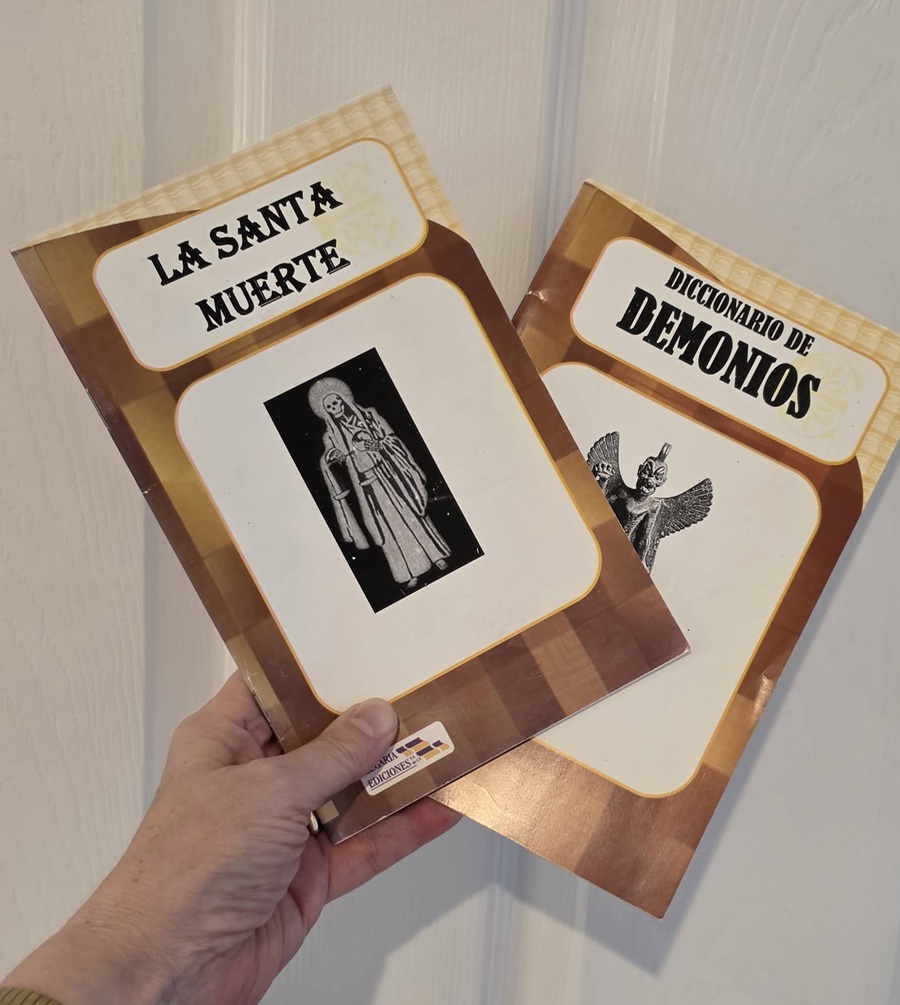
PHOTO: Booklets purchased by author at outdoor book festival in Mexico City.
I already knew a little about Santa Muerte, the folk saint personifying death. She wears many hats: angel of death, miracle worker, love doctor, supernatural healer, protector of believers. Santa Muerte has become strongly associated with cartel violence. Hitmen, called sicarios, invoke her power to protect them and their products.
Santa Muerte is always depicted as a female skeleton in a long hooded robe, holding a globe in one hand and a Grim Reaper scythe in the other. The color of the robe and coordinating candles matter because different colors carry different messages and meanings. Black is the most powerful and deadly, gold is for money and healing, red for love and passion and so on.
Worshippers build altars, receive “blessings” and make offerings to the saint that usually take the form of cigars, whiskey, candles, and money.
Beyond the books that I bought in Mexico City, DEVOTED TO DEATH by R. Andrew Chesnut provided a wealth of information. It’s a comprehensive study of the cult of Santa Muerte and how the phenomenon has become the patroness of the drug war.
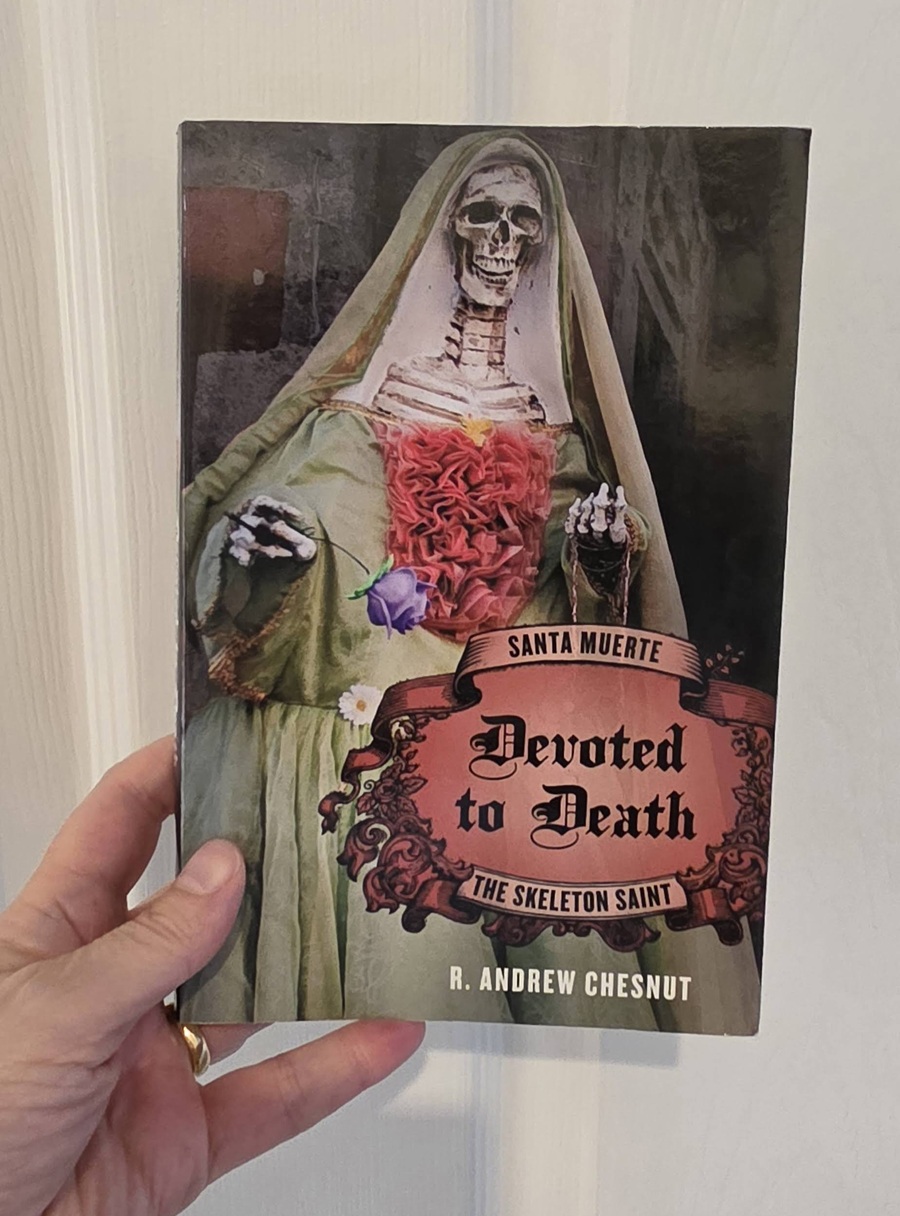
PHOTO: Author's copy of DEVOTED TO DEATH by R. Andrew Chesnut
MUERTOS
Initially made out of wire and papier mache, these skeleton figurines are associated with the Day of the Dead and are commonly posed on altars to commemorate those family members who have passed.
Often wearing colorful elegant period clothing, the figurines have become an art form. I’ve seen mermaid muertos, fisherman muertos, bride and groom muertos, mariachi muertos, and of course, Frida Kahlo muertos.
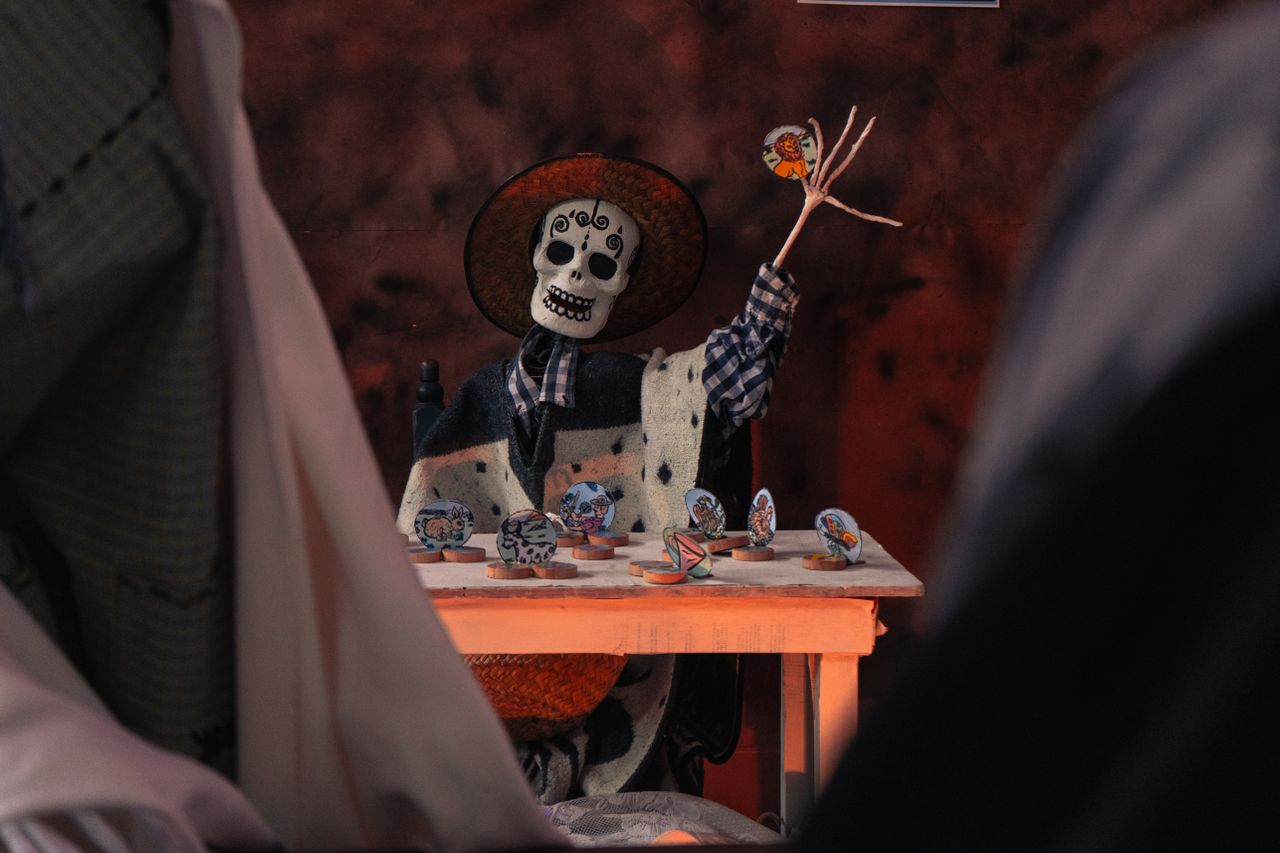
PHOTO: Muerto figurine selling talavera pottery by Kjalil Beyruti Garcia via Pexels
COYUCA LAGOON
On the west side of Acapulco bay, there's a spit of land bordering a large sandy-bottomed lake lined by palms and mangrove channels. A road runs along the beach to the tourist hamlet of Barrio de Coyuca where palapa umbrellas line the beach.
A Rambo movie was famously filmed in the swampy lagoon area, and you can buy all kinds of souvenirs featuring a terse Sylvester Stallone with long hair and a headband.
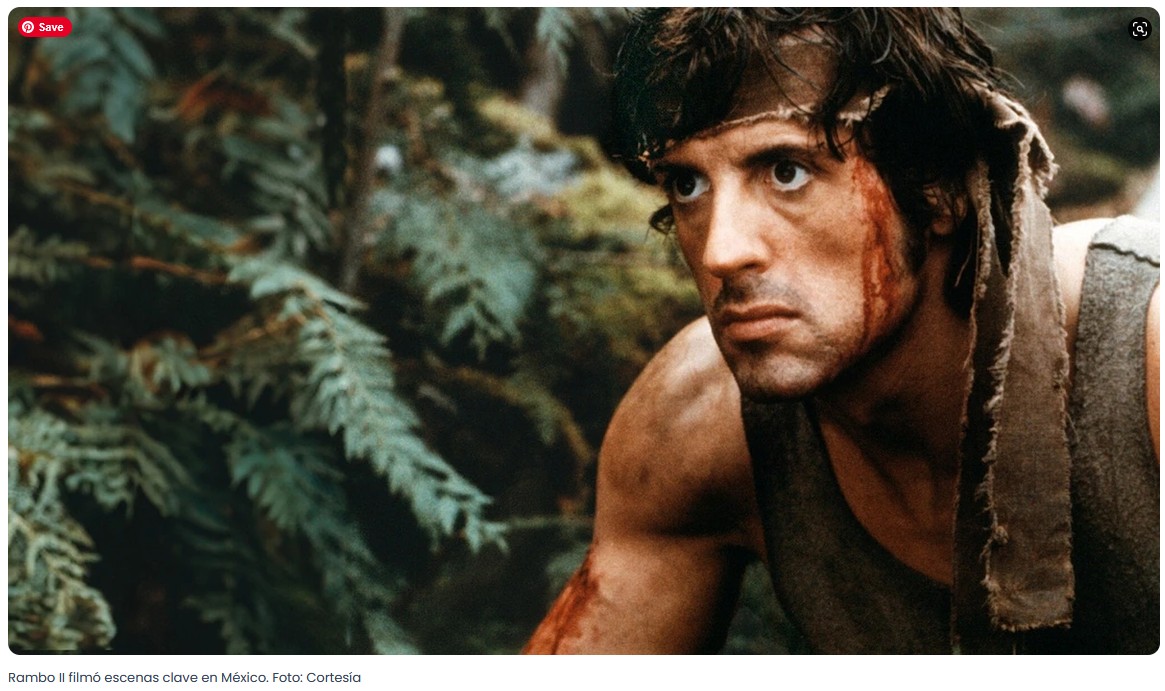
PHOTO: Sylvester Stallone as John Rambo, filming in the Coyuco Lagoon outside Acapulco by Cortesia via tusbuenosnoticias.com