The master of spy fiction, is of course, John le Carré. TINKER, TAILOR, SOLDIER, SPY is the classic Cold War counterintelligence tale. There’s a Soviet mole within the Circus, the author euphemism for British Intelligence. George Smiley is the retired spymaster called out of retirement to hunt the mole, reporting to the chief who is known only as Control.
But the very first book in the Smiley saga was THE SPY WHO CAME IN FROM THE COLD, a slim volume published while the author was still working for British Intelligence. The book was a monster hit and turned into a movie starring Richard Burton as doomed British intel officer Alec Leamas who goes behind the Iron Curtain in a risky operation and is killed at the Berlin Wall.
TINKER, TAILOR came next, but never really addressed the impact of Leamas’s death on George Smiley or any of the other Circus characters. Until now.
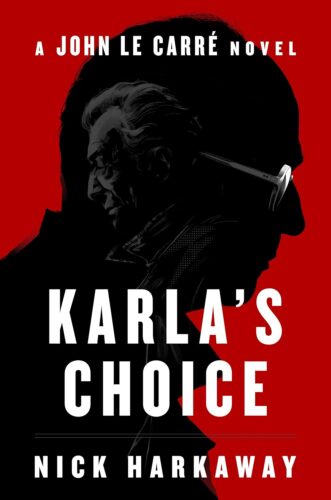
Nick Harkaway is le Carre’s son, who grew up having his father read portions of works-in-progress to him. So he was the perfect person to write a book that takes place between SPY and TINKER, TAILOR, showing how shaken everyone was by the failure of the Leamas operation and the missing backstory of Karla, the shadowy Soviet spy who is Smiley’s nemesis in TINKER, TAILOR and later in SMILEY’S PEOPLE.
Harkaway does all this in KARLA’S CHOICE while giving the story it’s own decisive plot. All the Circus characters from the other Smiley books—Toby Esterhase, Peter Guilliam, Bill Haydon, etc—are there, being positioned for what will happen later in his father’s books.
A Hungarian who escaped Communist rule alone at age 16, Susanna Gero is now secretary to László Bánáti, a fellow Hungarian who runs a publishing house in London. One day, Susanna is alone in the office when a strange man comes looking for Bánáti in order to assassinate him.
Susanna turns for help to the secretarial agency that placed her, which has ties to the Circus. The would-be assassin has had a change of heart and reveals that he’s been sent by Moscow. Bánáti is not a Hungarian after all, but a Soviet sleeper agent who has run afoul of his masters in Moscow. But why?
It’s up to Smiley to figure this out even as Bánáti is on an increasingly dangerous quest behind the Iron Curtain.
The book is filled with brilliant prose, with the kind of vocabulary that has gone out of style. Descriptions conjure mental images of the “unconvincing modern veneer” on a file cabinet. Cheap hotel beds: “Only the mattresses were traditional: flat, flaccid lozenges lying inert on their imported pine frames.” (I’m going to re-read and annotate as a lesson in better writing.)
As in TINKER, TAILOR, much of the story is told through passages in which someone is telling Smiley about past events, complete with slang terms and allusions to historical events. These voices are written so well, you can almost hear the conversation as dramatic events are retold, punctuated with drags on a cigarette or a boozy belch.
Smiley must piece together yet another Soviet puzzle, going both into the past and anticipating the future in order to resolve the present. Soviet evildoer Karla, whose true name no one knows, is an off-screen presence. Yet at the end his choice perfectly sets the stage for what is to come in TINKER, TAILOR.
KARLA’S CHOICE is a brilliant book that continues le Carré’s legacy in the best possible way.